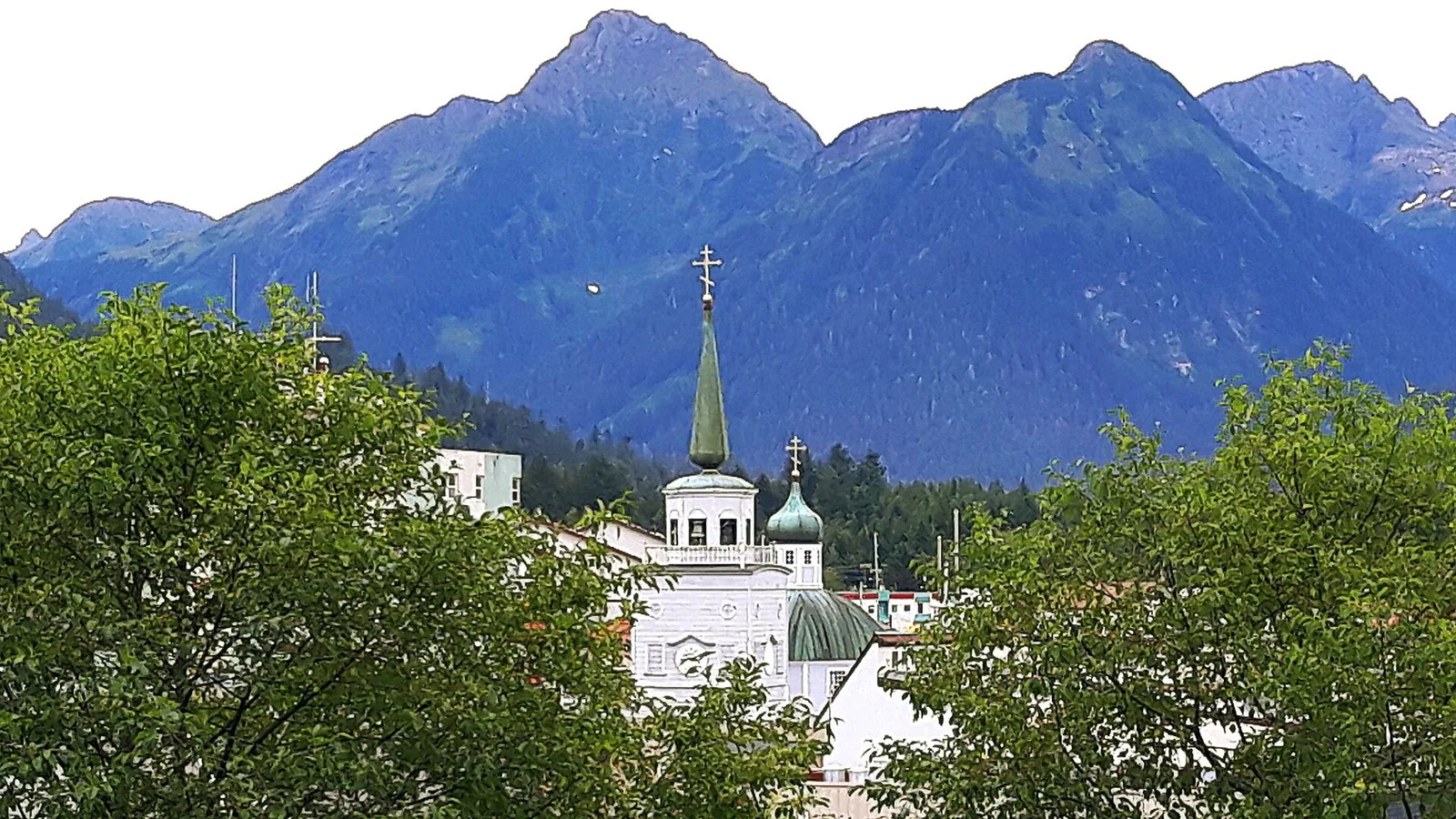
The best things to do in Sitka on a cruise are the totem trail in Sitka National Historical Park, the eagles at the Alaska Raptor Center, the orphaned bears at Fortress of the Bear, and the Russian-era core of downtown: St. Michael’s Cathedral, the Russian Bishop’s House and Castle Hill. Add a boat trip into Sitka Sound for sea otters and whales, and you have Alaska’s richest mix of Tlingit and Russian history with some of its best wildlife. The one catch is logistics: most big ships dock at a private terminal about 5 miles from town, with a free shuttle that needs a reservation.
This guide is for cruise passengers with a Sitka day on their itinerary, whether your ship docks at the terminal or anchors and sends you ashore by tender. It covers the shuttle, a walking route, timed plans for different call lengths, 2026 prices and what’s worth booking ahead. Last updated October 12, 2026. Every price, fee and schedule below is dated, and the sources are listed at the end.
Sitka cruise port facts
The essentials, as of the 2026 season.
| What | The details |
|---|---|
| Where ships dock | The privately operated Sitka Sound Cruise Terminal, 4513 Halibut Point Road, which can moor ships up to 1,100 feet |
| Distance to town | About 5 miles, 10 to 15 minutes by road |
| Shuttle | Free and continuous during port hours, to 330 Harbor Drive downtown; the terminal says it requires a reservation, with standby when shuttles are full |
| Tender days | On busy days some ships anchor and tender passengers ashore near Crescent Harbor, close to downtown |
| Walkable from downtown | St. Michael’s Cathedral, Castle Hill, the Russian Bishop’s House, and Sitka National Historical Park (a 15- to 25-minute walk from the downtown docks) |
| Needs transport or a longer walk | Fortress of the Bear (on Sawmill Creek Road east of town), wildlife and fishing boats |
| Key 2026 prices | Alaska Raptor Center $17 adults, $8 children 12 and under; Fortress of the Bear reported at $15 adults |
| Weather | Mild and wet: NOAA normals give July an average high of 60.4°F, and September averages 11.69 inches of rain |
What’s changed for 2027
- More lines are calling. In 2027, Royal Caribbean’s Quantum of the Seas calls at Sitka on its Seattle round trips and Serenade of the Seas on its Vancouver round trips; Holland America’s 7-day Alaska Explorer from Seattle stops here; and Viking’s 11-day Vancouver-to-Seward cruise includes Sitka. Virgin Voyages was reported with Sitka on its 2027 itinerary too.
- No cap on visitors. In a May 2025 special election, Sitka voters rejected a proposed cap of 4,500 cruise visitors a day and 300,000 a season, by 2,071 votes to 773. A memorandum between the city and the cruise terminal refers to a figure of 7,000 passengers a day.
- The Raptor Center’s 2026 prices. Adults paid $17, children 12 and under $8, veterans $11, and children 5 and under entered free, with summer hours of 8 a.m. to 4 p.m. daily from April 29.
- Fortress of the Bear’s residents. The rescue center says it currently cares for 8 orphaned bears in 3 enclosures.
Why Sitka is different
Sitka sits on the outer coast of Baranof Island, facing the open Pacific rather than the sheltered channels of the Inside Passage, with the snow-streaked cone of Mount Edgecumbe on nearby Kruzof Island across the sound. It’s also the port where Alaska’s layers of history are easiest to see. This is Tlingit country, and in 1804 the Kiks.ádi Tlingit fought the Russians here in a battle that, as the Park Service puts it, paved the way for the U.S. purchase of Alaska. The Russians made Sitka the capital of Russian America, and the town’s onion domes and yellow colonial buildings date from that era. In 1867, the formal transfer of Alaska from Russia to the United States took place on Castle Hill.
The result is a port that rewards curiosity more than shopping. Juneau has the glacier and Skagway has the gold rush, but Sitka has the deepest story, told by both sides, in a walkable downtown. It’s also quieter: voters rejected a cap in 2025, but the town sees far fewer ships than Juneau.
A short history of Sitka
Sitka’s past is the reason most visitors love it, and a few dates make the sights make sense.
| When | What happened |
|---|---|
| Time immemorial | Tlingit people live on the shores of Sitka Sound, with clan houses along the coast |
| 1799 | Russian traders build a fort north of today’s town |
| 1802 | Tlingit warriors destroy the Russian fort |
| 1804 | The Russians return; the Kiks.ádi Tlingit fight them at the site now protected by Sitka National Historical Park |
| 1808 | Sitka, then called New Archangel, becomes the capital of Russian America |
| 1843 | The Russian Bishop’s House is built |
| 1840s | St. Michael’s Cathedral is completed |
| 1867 | Russia transfers Alaska to the United States in a ceremony on Castle Hill |
| 1966 | Fire destroys the original St. Michael’s; parishioners save most of the icons, and the cathedral is rebuilt |
Two things are worth holding onto as you walk around. First, the Tlingit story didn’t end in 1804; the community is here, and its version of events is told at the national historical park alongside the Russian one. Second, the Russian buildings you see are survivors: the Park Service counts the Russian Bishop’s House among only four surviving examples of Russian colonial architecture in North America.
Mount Edgecumbe and the view across the sound
On a clear day, the symmetrical cone across Sitka Sound steals every photograph. Mount Edgecumbe is a dormant volcano on Kruzof Island, and it gives Sitka a skyline no other Southeast Alaska port has. It’s also the star of Sitka’s favorite story: on April Fools’ Day in 1974, a local prankster flew a load of old tires into the crater and set them alight, and the column of black smoke briefly convinced the town that the volcano had woken up. The best free views are from Castle Hill, the harbor breakwater and the shoreline paths of the national historical park.
Things to do in Sitka, ranked
Ranked for a first-time cruise visitor with one day, weighing how much each adds against the time it takes to reach.
1. Sitka National Historical Park and the totem trail
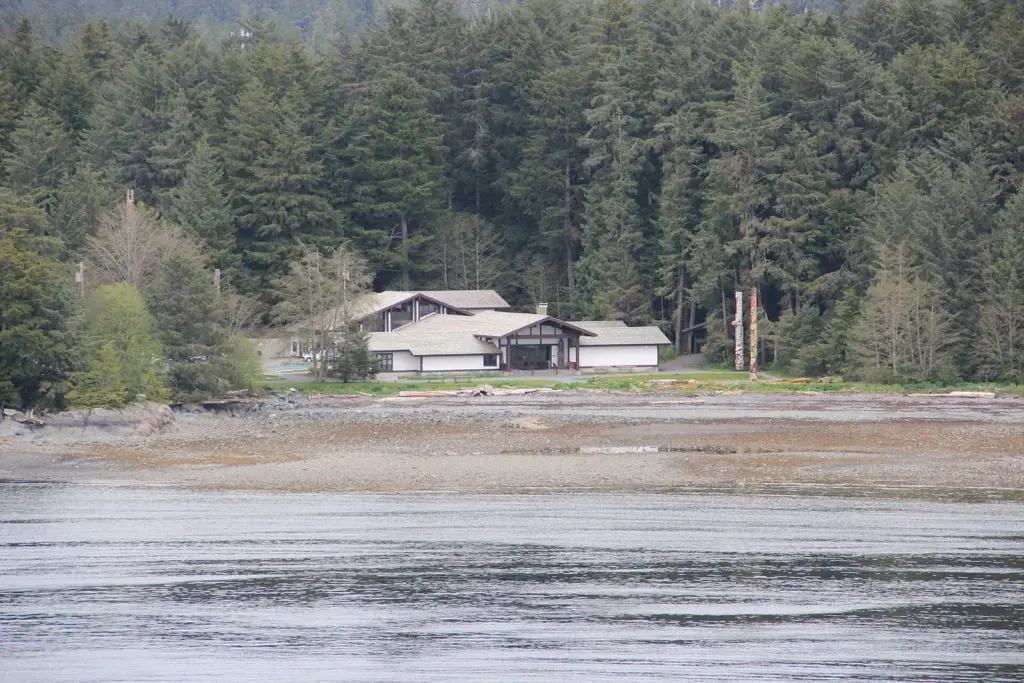
Sitka’s best attraction is a walk in the woods. The park preserves the site of the 1804 battle between the Tlingit and the Russians, and its totem trail winds through tall spruce and hemlock along the shore past 18 totem poles, according to the Park Service. The trail starts at the visitor center on Metlakatla Street, a 15- to 25-minute walk from the downtown docks, and the center itself has exhibits, a 15-minute park video and Tlingit and Haida art. Allow at least an hour; two if you want the forest loop and the river. For the full story of the battle site and the poles, see our guide to Sitka National Historical Park.
2. The Alaska Raptor Center
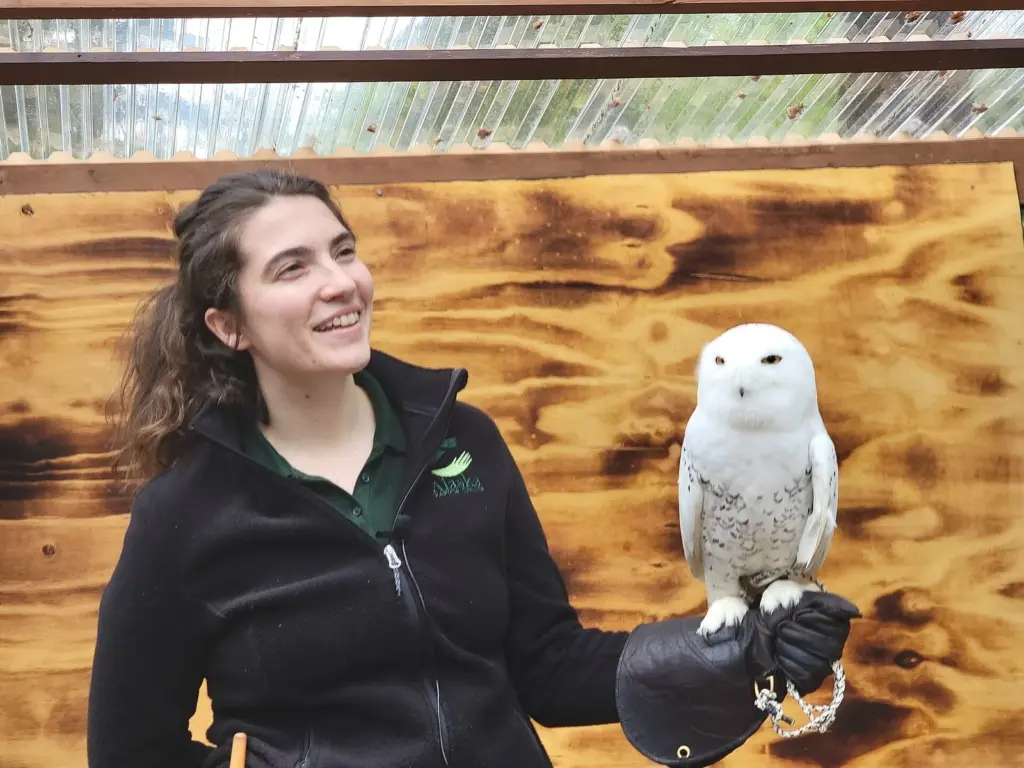
The Alaska Raptor Center rehabilitates injured bald eagles and other birds of prey, and it’s one of the best-loved stops in Southeast Alaska. The highlight is the Suzanne and Walter Scott Flight Training Center, where recovering eagles practice flying before release, and you’ll also meet resident “Avian Ambassadors” that can’t return to the wild. In 2026, admission was $17 for adults, $8 for children 12 and under, $11 for veterans and free for children 5 and under, with summer hours of 8 a.m. to 4 p.m. daily and last admission at 3:30 p.m. It’s at 1000 Raptor Way, a walk or short ride beyond the national historical park. Allow about an hour, and go earlier in the day if you can, because last admission in 2026 was 3:30 p.m. Our Alaska Raptor Center guide has the details.
3. Fortress of the Bear
Fortress of the Bear is an educational rescue center that takes in orphaned bear cubs from across Alaska and finds them homes in zoos and sanctuaries. It currently cares for 8 resident bears in 3 enclosures, and watching bears up close from its viewing areas is a guaranteed bear sighting in a way no wild bear tour can promise. Admission has been reported at $15 for adults, $5 for ages 8 to 18 and free under 8. It’s at 4639 Sawmill Creek Road, well east of downtown, so you’ll need a taxi, a tour or a long walk. Allow about an hour on site, plus the transfer each way, and combine it with the Raptor Center, which is on the way back toward town. Our Fortress of the Bear guide covers getting there and the best viewing times.
4. St. Michael’s Cathedral
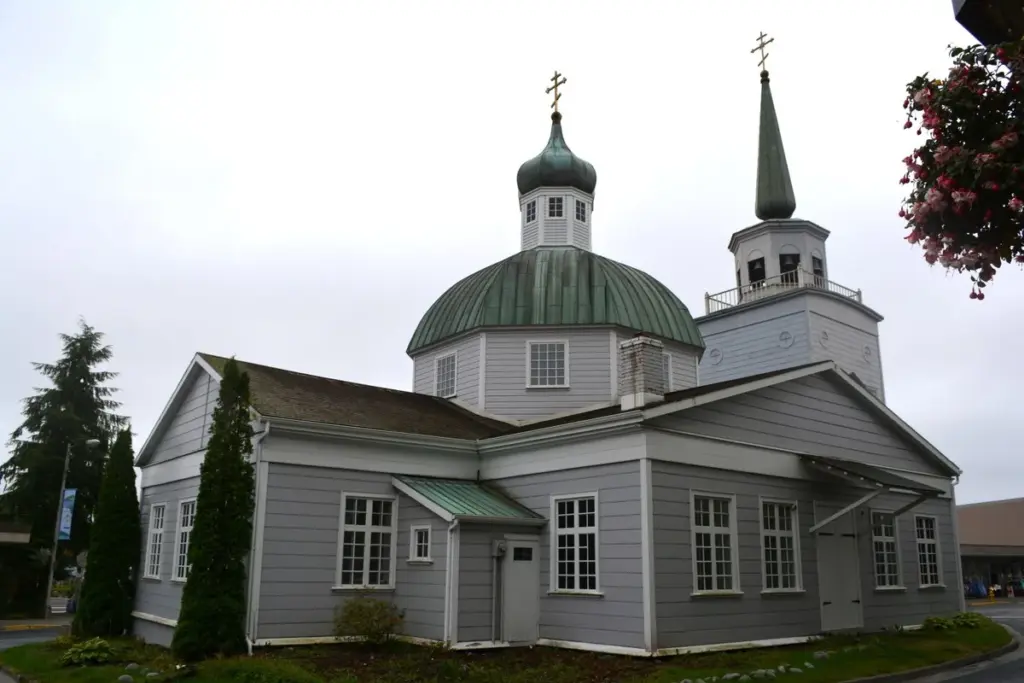
St. Michael’s, with its green onion dome and bell tower, is the symbol of Russian Sitka and sits in the middle of Lincoln Street, the main road through downtown. It’s an active Russian Orthodox cathedral. The building you see is a reconstruction: the original, from the 1840s, burned in 1966, and parishioners rescued most of the icons, which hang inside today. Visitors can usually go in for a small donation when services aren’t being held; dress respectfully and keep your voice down. Our page on St. Michael’s Cathedral in Sitka covers visiting hours and the icons.
5. The Russian Bishop’s House
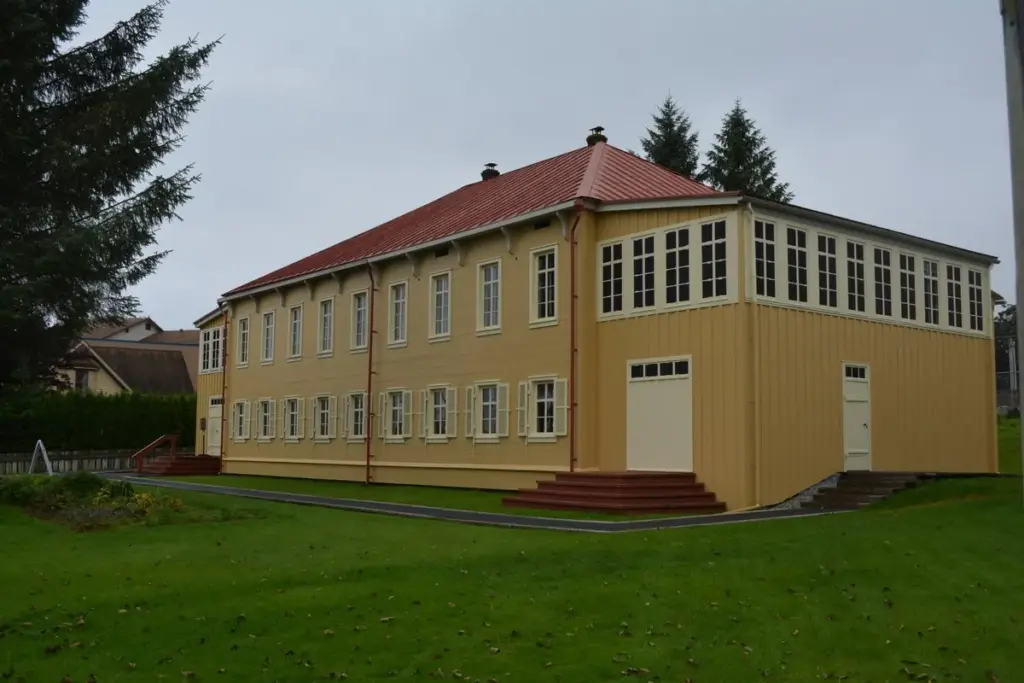
Part of Sitka National Historical Park, the Russian Bishop’s House was built in 1843 and served as the home of Orthodox bishops and clergy for more than 120 years. The Park Service calls it one of only four surviving examples of Russian colonial architecture in North America. The yellow two-story building sits a few minutes’ walk from the cathedral, and the house includes a small chapel. Check tour times at the park’s visitor center or on its website before you plan around it.
6. Castle Hill
Castle Hill, officially Baranof Castle State Historic Site, is a short climb from downtown with a big payoff: views over the harbor, the islands of Sitka Sound and the cathedral’s domes. It’s where Alaska’s transfer from Russia to the United States was formally carried out in 1867, and interpretive signs tell the story. It’s free and takes 20 to 30 minutes, including the stairs from Lincoln Street. Go early or late in the day for the best light on the domes, and on a clear day look west for Mount Edgecumbe across the sound. It’s also a good place to get your bearings: from the top you can see the harbor, the cathedral, the old Russian-era core and the forest where the totem trail begins.
7. Sea otters and whales in Sitka Sound
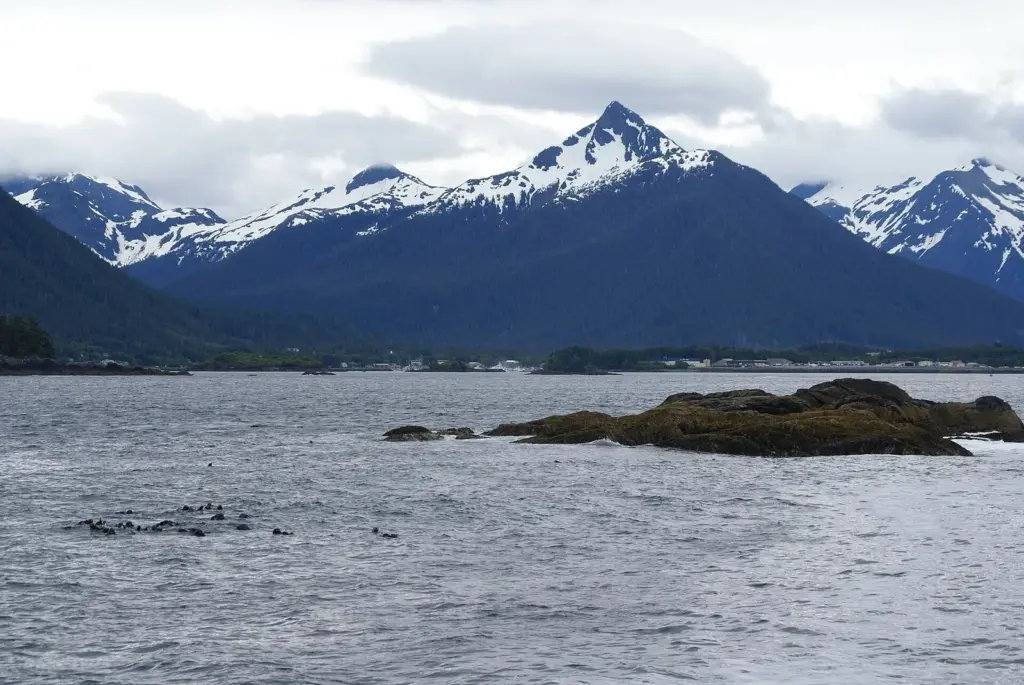
Sitka’s outer-coast location makes it one of the best ports for marine wildlife. Boat tours into Sitka Sound and beyond look for sea otters, which gather in rafts in the sound, plus humpback whales, sea lions, puffins and bald eagles. Tours typically last a few hours; longer trips head toward the open water and the volcanic cone of Mount Edgecumbe. It’s the best wildlife-for-time trip in the port. Our Sitka whale watching guide compares the boats and routes.
8. The Sheldon Jackson Museum
The Sheldon Jackson Museum, run by the State of Alaska, holds one of the oldest collections of Alaska Native art and objects in the state, in a building on the grounds of the former Sheldon Jackson College. It’s small, quiet and a good rainy-day stop, a short walk from the national historical park. Check current hours and admission before you go.
9. A hike in the rainforest
If you’d rather walk than tour, Sitka has trails that start near town. The easiest is the network of paths in the national historical park, along the shore and the Indian River. Steeper trails climb the mountains behind town for views over the sound, but they need time, good shoes and a close eye on the all-aboard clock. Our Sitka hikes guide lists trails by length and difficulty.
10. Fishing
Sitka is one of Alaska’s great fishing towns, known for salmon and halibut. Half-day fishing charters are popular with cruise passengers, and many can arrange to process and ship your catch. It’s a long, often wet morning, and it works best on a longer call. Our guide to Sitka fishing excursions covers what’s included and what to ask before booking.
Getting from the ship to town
How your day starts depends on where your ship is.
If your ship docks at the Sitka Sound Cruise Terminal
Most large ships use the privately operated terminal on Halibut Point Road, about 5 miles north of downtown. A free shuttle runs continuously during port hours to 330 Harbor Drive downtown, a 10- to 15-minute ride. The terminal says the shuttle requires a reservation, with a standby option when shuttles are full, so reserve as soon as you can and note your time. If you’ve booked a shore excursion through your ship, the tour usually picks you up at the terminal.
If your ship anchors
On busy days, some ships anchor in the sound and tender passengers ashore near Crescent Harbor, on the edge of downtown. That’s good news for walkers: you land close to the cathedral, Castle Hill and the national historical park. Tendering adds lines at both ends of the day, though, so start early and head back early. Our Sitka cruise port guide covers the terminal, the tender landing and which lines use which.
Terminal day or tender day: which is better?
You don’t get to choose, but it’s worth knowing what each means. A terminal day is smoother at the gangway and the terminal has facilities, but everything in town depends on the shuttle, and a reservation system adds a little planning. A tender day puts you close to downtown, which is ideal for walkers, but the tender lines at the start and end of the day can be long, especially when several ships are in port. Either way, the rule is the same: start early, put the farthest sight first, and come back early.
How Sitka handles cruise crowds
Sitka has made its own choices about cruise tourism. Its main cruise dock is private, which puts most big-ship passengers five miles from town and funnels them through a reservation shuttle rather than straight onto the main street. In May 2025, residents voted down a citizen initiative that would have capped visitors at 4,500 a day and 300,000 a season, by 2,071 votes to 773, and a memorandum between the city and the terminal refers to 7,000 passengers a day. The effect for you is a town that is busy on peak days but rarely overwhelmed the way Juneau can be.
You can help your own day by thinking against the flow. Most passengers head for the cathedral first; start at the national historical park instead, then work back toward the cathedral in the afternoon. Book the popular boat trips before the cruise, and don’t wait until the final hour to catch the shuttle.
Getting around Sitka without a tour
Downtown and the national historical park are best on foot. For anything farther, you have three choices. The free terminal shuttle links the cruise terminal with downtown. Taxis are available but limited in number, so on busy days arrange your ride back from Fortress of the Bear when you’re dropped off. And a small public bus system serves the town; ask at the terminal or visitor information desk for the current route and schedule. Rideshare apps can’t be relied on in a town this size, so don’t plan around them.
A walking route through downtown Sitka
Sitka’s historic core is compact, and this route covers the highlights in two to three hours at an easy pace, starting from the downtown shuttle stop or the tender landing.
- St. Michael’s Cathedral, in the middle of Lincoln Street. Look inside if it’s open.
- Castle Hill, up the stairs from Lincoln Street, for the view and the 1867 transfer site.
- Back along Lincoln Street past the shops and galleries, toward the harbor.
- The Russian Bishop’s House, a few minutes’ walk from the cathedral.
- Sitka National Historical Park, at the east end of downtown, for the visitor center and the totem trail.
- The Alaska Raptor Center, beyond the park, if you have time and energy for the extra walk.
Return the same way to the shuttle stop or the tender landing, allowing extra time if you went on to the Raptor Center. Fortress of the Bear is too far to add on foot; take a taxi or a tour.
Sample Sitka days by call length
A short call (5 to 6 hours)
- Early shuttle or tender to downtown
- St. Michael’s Cathedral and Castle Hill (45 minutes)
- Walk to Sitka National Historical Park; visitor center and totem trail (1.5 hours)
- Lunch downtown, then the shuttle back with a comfortable buffer
A full day (8 hours or more)
- Morning: a 2- to 3-hour wildlife boat trip in Sitka Sound
- Midday: lunch downtown, then the cathedral and Castle Hill
- Afternoon: the totem trail and the Alaska Raptor Center (last admission 3:30 p.m. in 2026)
- Or swap the Raptor Center for a taxi to Fortress of the Bear
The wildlife day
- A wildlife boat for otters and whales in the morning
- Fortress of the Bear by taxi or tour
- The Alaska Raptor Center on the way back toward town
A rainy day
- The national historical park’s visitor center and the Russian Bishop’s House
- St. Michael’s Cathedral
- The Sheldon Jackson Museum
- The totem trail anyway: it’s under the forest canopy, and the rain suits it
All-aboard math in Sitka
If your ship is at the terminal, the shuttle is the part of the day to plan around. Work backward from all-aboard:
| Step | Time to allow |
|---|---|
| Walk back to the downtown shuttle stop at 330 Harbor Drive | 10 to 25 minutes, depending on where you are |
| Wait for your reserved shuttle, or standby | Up to 20 minutes, more at peak times |
| Ride to the cruise terminal | 10 to 15 minutes |
| Security and boarding | 10 minutes |
| Safety buffer for full shuttles or weather | 45 to 60 minutes |
| Leave the park or the Raptor Center this long before all-aboard | About 1 hour 45 minutes to 2 hours 10 minutes |
On a tender day, replace the shuttle ride with the tender line and crossing, and allow extra time: the last tenders are always the busiest.
A Sitka day on any budget
| Budget | What you do | Cost per adult (2026 prices) |
|---|---|---|
| Free | Shuttle to town, St. Michael’s exterior, Castle Hill, the totem trail, the harbor | $0, plus a small donation if you go inside the cathedral |
| Low | Add the Alaska Raptor Center | $17 |
| Medium | Add Fortress of the Bear by taxi | About $15 admission, as reported, plus the taxi |
| Full | Add a wildlife boat trip in Sitka Sound | Varies by operator and length; book ahead |
The free tier alone makes a satisfying day. That’s rare in Alaska, and it’s one reason Sitka is so popular with travelers who’ve done the big three ports before.
Seasonal highlights
What you see in Sitka shifts through the cruise season. Early-season visitors in May get snow on the mountains and quieter streets. Midsummer brings the longest days, with sunset around 10 p.m. at the solstice, and the busiest port calendar. Late summer is when salmon return to the streams around town, including the Indian River in the national historical park, and eagles and bears follow the fish. By September the town is calmer and wetter, with the fall colors starting in the brush along the trails. Sea otters are in the sound all year.
Free things to do in Sitka
Sitka is one of the best Alaska ports for a low-cost day. The totem trail and the grounds of the national historical park are free to walk, Castle Hill costs nothing, the harbor and Lincoln Street make a good stroll, and the cathedral asks only a small donation. Sea otters and eagles are often visible from shore if you bring binoculars. For a longer list, see our guide to free things to do in Sitka.
- The totem trail and park grounds: 18 totem poles along a forest trail by the shore.
- Castle Hill: the 1867 transfer site and the best view in town.
- St. Michael’s Cathedral: free to admire from the street; a small donation to go inside.
- The harbors: Sitka’s working fishing fleet, with eagles overhead.
- Shoreline watching: sea otters and seabirds from the waterfront, with binoculars.
Sitka excursions: what to book
| Excursion | Book ahead? | Verdict |
|---|---|---|
| Wildlife boat (otters, whales) | Yes | The best use of a morning |
| Fortress of the Bear plus the Raptor Center combo | Useful if you don’t want to arrange taxis | A good wildlife day on land |
| Fishing charter | Yes | For keen anglers on a long call |
| Historic walking tour | Optional | Easy to do yourself with this guide |
| Kayaking | Yes | Beautiful, weather permitting |
Verdict: book one boat trip for wildlife and do the history on foot. For a comparison of every tour on offer, see our guide to Sitka excursions.
Sitka weather by month
Sitka’s outer-coast climate is mild and wet: cooler summers than inland Alaska, milder winters, and a lot of rain, about 84.5 inches a year at the airport. Here are NOAA’s 1991-2020 normals for the cruise months.
| Month | Average high | Average low | Rain |
|---|---|---|---|
| May | 53.3°F | 43.0°F | 3.81 in |
| June | 57.6°F | 48.3°F | 2.92 in |
| July | 60.4°F | 52.5°F | 4.62 in |
| August | 61.8°F | 52.9°F | 7.25 in |
| September | 57.9°F | 48.5°F | 11.69 in |
- Things to do in Sitka in May: cool and one of the drier months. Fewer ships, and the Raptor Center’s summer hours start in late April.
- In June: the driest month, with long days. The sun rises just after 4 a.m. and sets around 10 p.m. at the solstice.
- In July: the warmest stretch begins, with highs around 60°F. Peak season for visitors.
- In August: the warmest month on average, but rain is rising, to more than 7 inches.
- In September: quieter and much wetter, averaging 11.69 inches of rain; days shorten to about 12 hours 48 minutes by mid-month.
- In December: no cruise ships, short days (sunrise 8:39 a.m., sunset 3:21 p.m. at the solstice) and highs around 41°F. Sitka is a winter destination only for independent travelers.
Best photo spots in Sitka
- Castle Hill: the cathedral’s domes with the mountains behind, and the harbor below.
- Lincoln Street: St. Michael’s straight on, framed by the street; early morning is quietest.
- The totem trail: poles among tall trees, best in soft light or light mist.
- The harbor breakwater: fishing boats with Mount Edgecumbe across the sound on a clear day.
- A wildlife boat: sea otters floating on their backs, the classic Sitka shot. Use a long lens and a fast shutter.
If you’ve been to Sitka before
Returning visitors can go beyond the big names. A longer hike above town, a fishing charter, a kayak trip in the sheltered islands of Sitka Sound, or an afternoon at the Sheldon Jackson Museum all show a different side of the port. The harbors themselves are worth an unhurried walk, with the town’s working fishing fleet tied up alongside. And on a clear day, simply finding a bench on Castle Hill or the breakwater and watching the light change on Mount Edgecumbe is one of the best hours you can spend in Alaska.
Tlingit Sitka: visiting respectfully
Sitka’s Tlingit history isn’t only in the past tense. The totem poles in the national historical park, the clan houses and the community’s dance and arts traditions are living culture, and the story of 1804 is told from the Tlingit side as well as the Russian one. When you visit, treat the poles and cultural sites with the respect you’d give a church, ask before photographing people, and buy Native art directly from Native artists and organizations where you can. For more on Tlingit, Haida and Tsimshian culture across the whole trip, see our guide to Alaska Native culture.
Wildlife in and around Sitka
Sitka is one of the few ports where you can see eagles, bears and sea otters in a single day without a floatplane. The Raptor Center gives you eagles at arm’s length, Fortress of the Bear gives you brown bears up close, and Sitka Sound gives you sea otters, whales and seabirds in the wild. If animals are the main reason you’re going to Alaska, our Alaska wildlife cruise guide compares the best ports and excursions across the whole trip.
Sitka with kids
Sitka is one of the best Alaska ports for families. The Alaska Raptor Center charged $8 for children 12 and under in 2026, with free entry for those 5 and under, and kids love the eagles in the flight training center. Fortress of the Bear has been reported at $5 for ages 8 to 18 and free under 8. The totem trail is flat and short enough for small legs, with a beach and a river to explore, and Castle Hill’s stairs are a good quick climb with a big view at the top. A wildlife boat is the one outing to think about: great for otter-loving kids, but long for small ones on a cold day.
Sitka with limited mobility
Downtown Sitka’s historic core is compact and mostly flat, which helps. The cathedral sits at street level on Lincoln Street, and the walk to the national historical park is level along the waterfront, with graveled forest paths on the totem trail. Castle Hill involves stairs from Lincoln Street, so ask locally about the easiest approach. If your ship uses the terminal, ask the cruise line about accessible shuttle options before the day, and consider a taxi or an accessible tour for Fortress of the Bear and the Raptor Center.
Shopping and local art
Lincoln Street and the streets around the cathedral have galleries, bookstores and gift shops, and Sitka is a good place to buy work by local artists, including Tlingit carvers and weavers. If a piece is sold as Alaska Native-made, ask who made it; the state’s Silver Hand label marks work by Alaska Native artists. Smoked salmon and local art prints make better souvenirs than anything mass-produced, and they travel well.
What to pack for Sitka
- Real rain gear. Sitka averages about 84.5 inches of rain a year, and late summer is wettest.
- Layers. Summer highs are around 60°F, cooler on the water.
- Binoculars. For otters in the sound, eagles along the shore and whales on a boat trip.
- Comfortable waterproof shoes. The totem trail and forest paths are often wet.
- Your shuttle reservation and the ship’s all-aboard time.
Where to eat
Downtown Sitka has a handful of cafes, bakeries and seafood restaurants within a few blocks of the cathedral and the harbor, and most cruise visitors eat lunch there between the history walk and the park. Local salmon, halibut and chowder are the obvious orders. Lunch spots fill quickly around midday on busy port days, so eat early or late, or pick up something to take to a bench on Castle Hill. Our guide to the best restaurants in Sitka has current picks and what to order.
Sitka compared with the other ports
| Sitka | Juneau | Ketchikan | Skagway | |
|---|---|---|---|---|
| Best for | History, easy wildlife | Glaciers, whales | Totems, floatplanes | Gold rush, the train |
| Where you dock | Terminal 5 miles out, or tender downtown | Downtown docks | Downtown, or Ward Cove 7 miles out | Close to town |
| Crowds | Moderate | Heaviest | Heavy | Heavy on multi-ship days |
| Walkable highlights | Cathedral, Castle Hill, totem trail | Downtown, the tram | Creek Street, totems | Broadway’s historic district |
On an itinerary with Juneau, Skagway and Ketchikan, Sitka is the change of pace: fewer crowds, more history, and the open Pacific instead of a narrow channel. It doesn’t have Juneau’s glacier or Skagway’s train, but it has the best walking history and some of the best easy wildlife in Alaska. For how it fits alongside the other stops, see our guide to Alaska cruise ports.
Things to do in Sitka FAQ
Can you walk from the cruise ship to downtown Sitka?
Not from the main cruise terminal, which is about 5 miles north of downtown on Halibut Point Road. A free shuttle runs to 330 Harbor Drive in 10 to 15 minutes; the terminal says it requires a reservation. If your ship anchors and tenders passengers ashore near Crescent Harbor, you land within walking distance of downtown.
What are the top things to do in Sitka on a cruise?
Walk the totem trail at Sitka National Historical Park, see the eagles at the Alaska Raptor Center, visit the orphaned bears at Fortress of the Bear, and explore Russian Sitka: St. Michael’s Cathedral, the Russian Bishop’s House and Castle Hill. Add a boat trip in Sitka Sound for sea otters and whales if you have time.
How much is the Alaska Raptor Center?
In 2026, admission was $17 for adults, $8 for children 12 and under, $11 for veterans, and free for children 5 and under. Summer hours from April 29 were 8 a.m. to 4 p.m. daily, with last admission at 3:30 p.m. It’s at 1000 Raptor Way, beyond the national historical park.
Can you see bears in Sitka?
Yes, reliably at Fortress of the Bear, an educational rescue center that currently cares for 8 orphaned bears in 3 enclosures. Wild bears live on Baranof and Chichagof islands, but a cruise day rarely allows a wild bear trip here. Fortress of the Bear is east of downtown, so take a taxi or tour.
Is Sitka National Historical Park free?
The totem trail and the park grounds are free to walk, and the visitor center has exhibits, a 15-minute video and Tlingit and Haida art. The Russian Bishop’s House is part of the park; check the park’s website for tour times and any fee before you go.
What is Sitka like in June?
June is Sitka’s driest month, averaging 2.92 inches of rain, with highs around 58°F and very long days: at the solstice the sun rises just after 4 a.m. and sets around 10 p.m. It’s a great month for walking the historic core and wildlife boat trips. Pack layers and a rain jacket anyway.
What is Sitka like in September?
Wet and quiet. September averages 11.69 inches of rain in Sitka, highs fall to about 58°F, and days shorten to under 13 hours by mid-month. Fewer ships call, so the town and trails feel calmer. Bring full rain gear and plan indoor stops like the park visitor center.
How much time do you need in Sitka?
A full day is ideal: enough for the historic walk, the totem trail and either the Raptor Center, Fortress of the Bear or a wildlife boat. With five or six hours, focus on downtown and the national historical park, and allow extra time for the shuttle back to the terminal.
Related Alaska Cruise Guides
Sources and How We Checked
We checked the prices, rules, schedules and ship deployments in this guide against the sources below on September 24, 2026, and we log each one in our research database with the date it was checked. Cruise lines change ships, fares and fees every season, so confirm anything that affects your booking with the line or the agency concerned. Alaska Cruise Guide (AlaskaCruise.org) is an independent publication. It is not affiliated with any cruise line, port, tour operator or tourism office, and no one paid to be included.
- Alaska Public Media: Sitka passenger cap
- alaskaraptor.org: Alaska Raptor Center
- artchangeinc.org: Sitka passenger fees
- fortressofthebear.org: Fortress of the Bear
- fortressofthebear.org: Fortress of the Bear
- Holland America Line: Holland America Line
- National Park Service: Sitka National Historical Park
- National Park Service: Sitka National Historical Park
- National Park Service: Sitka National Historical Park
- NOAA National Centers for Environmental Information: Sitka weather
- PR Newswire (line press release): Royal Caribbean
- seatrade-cruise.com: Sitka passenger cap
- Sitka Sound Cruise Terminal: Sitka Sound Cruise Terminal
- Sitka Sound Cruise Terminal: Sitka Sound Cruise Terminal
- U.S. Naval Observatory: Sitka daylight
- vikingcruises.com: Viking
- virginvoyages.com: Virgin Voyages
Photo Credits
- St. Michael's Cathedral from Castle Hill (2021): photo by Kbh3rd, via Wikimedia Commons (CC BY-SA 4.0)
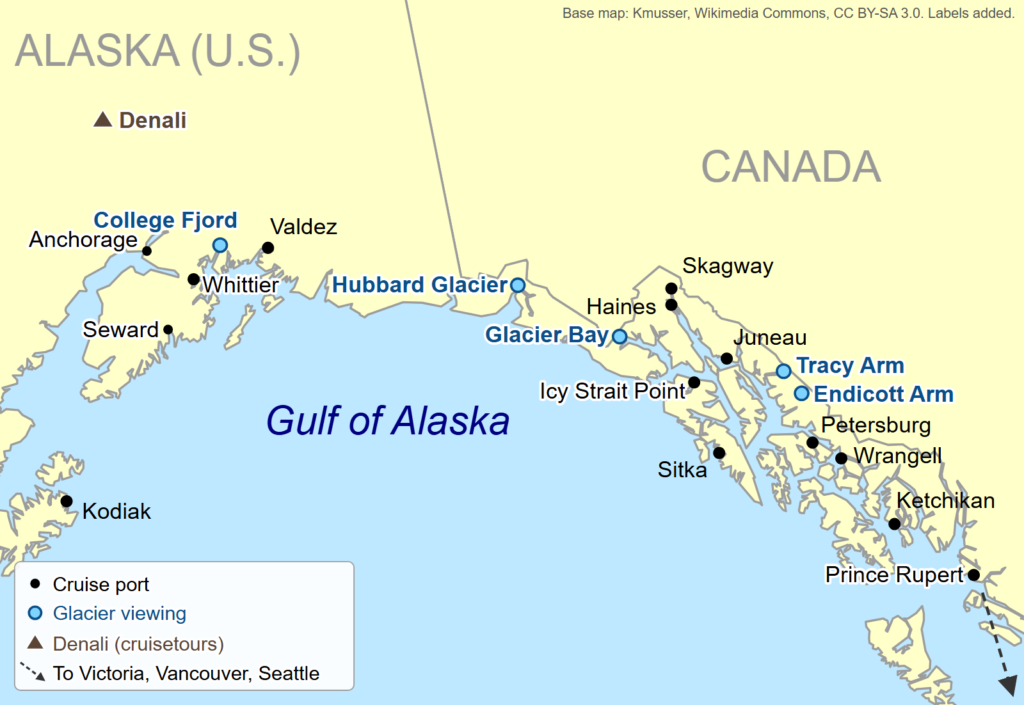
- Alaska cruise region map: map by Kmusser, via Wikimedia Commons (CC BY-SA 3.0); ferry routes removed; cruise ports, glacier-viewing areas and Denali added by Alaska Cruise Guide
- Sitka NHP visitor center (2013): photo by Thomson M, via Wikimedia Commons (CC BY 3.0)
- Alaska Raptor Center (2024): photo by Cullen328, via Wikimedia Commons (CC BY-SA 4.0)
- St. Michael's Cathedral (2016): photo by Jrozwado, via Wikimedia Commons (CC BY-SA 4.0)
- Russian Bishop's House (2016): photo by Jrozwado, via Wikimedia Commons (CC BY-SA 4.0)
- Sea otters in Sitka Sound (2008): photo by David Baron from Palo Alto, California, USA, via Wikimedia Commons (CC BY-SA 2.0)