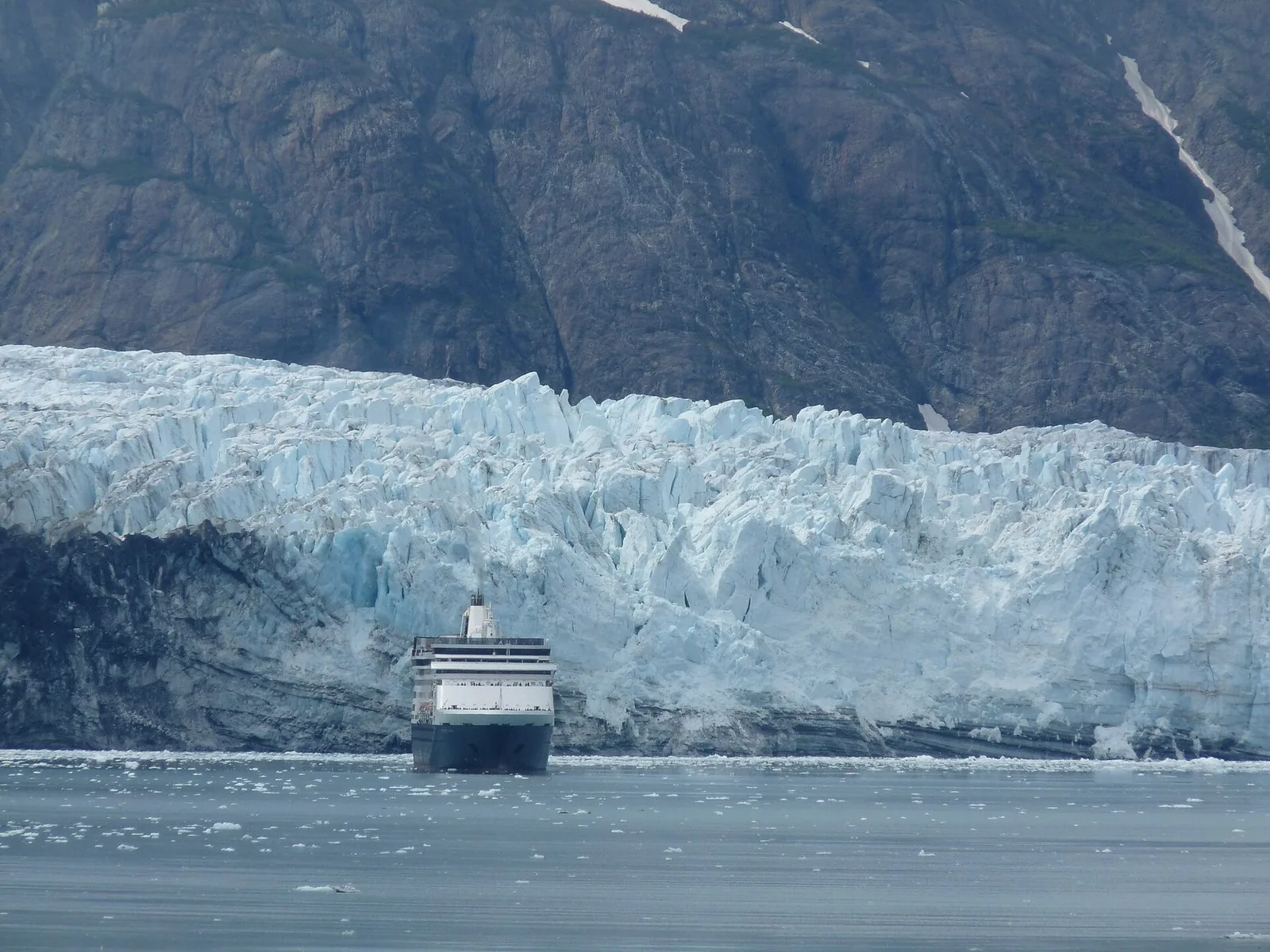
Glacier Bay National Park is a 3.3-million-acre wilderness of ice, rock and fjord in Southeast Alaska, and for most people who see it, it is one long day on a ship’s deck. Cruise ships don’t dock there and passengers don’t go ashore. A permitted ship spends nine to ten hours covering more than 120 miles up the bay and back, National Park Service rangers come aboard to narrate, and the ship holds for about an hour at the face of a tidewater glacier. At the head of Tarr Inlet, that glacier is Margerie. Only a few lines hold the permits, and no more than two cruise ships may enter on any day.
This page is for cruise passengers deciding whether a Glacier Bay itinerary is worth choosing, and for anyone already booked who wants to know how the day works. The one caveat that matters: a cruise line holding a Glacier Bay permit doesn’t mean your sailing goes in, so read the day-by-day itinerary before you pay a deposit. Last updated October 4, 2026. Every price, fee and schedule below is dated, and the sources are listed at the end.
Glacier Bay National Park at a glance
The short version, before the detail. Numbers come from the Park Service’s Glacier Bay fact sheet and its cruise pages, checked in September 2026.
| Question | Short answer | What it means for you |
|---|---|---|
| Where is it? | Southeast Alaska, west of Juneau. No road reaches it; you arrive by air or by water. | A cruise ship is the easy way in, which is why marine visitors make up over 90% of the park’s visitors. |
| How big is it? | 3,280,840 acres of park and preserve, 2,656,200 of them designated wilderness | You’ll see a sliver of it from the water, but it’s the sliver with the ice. |
| How many glaciers? | 1,059 at the park’s last count, seven of them active tidewater glaciers | Tidewater glaciers are the ones that reach the sea and calve icebergs. Those are the ones ships visit. |
| How many cruise visitors? | 691,387 cruise passengers in 2024 | It’s popular, but spread over a season, so the bay never feels like a port. |
| How many ships a day? | No more than two cruise ships | Permits are scarce, so only some sailings include it. |
| Which lines? | The park’s concession page lists Princess, Holland America, Norwegian, Seabourn, Cunard and Viking | Celebrity, Carnival, Disney, MSC and Virgin don’t hold concessions and can’t take you in. |
| Do you go ashore? | No. It’s a scenic cruising day of 9 to 10 hours. | Treat it as a sea day with the best views of the trip. |
| Who explains it? | National Park Service rangers board the ship for the day | Live commentary, a ranger desk and someone to ask what you’re looking at. |
What’s changed for 2027
Glacier Bay itself changes slowly, apart from the ice. The cruise schedules around it change every year, and 2027 has a few shifts worth knowing before you book.
- Princess has published 85 Glacier Bay calls for 2027. They’re spread across its Voyage of the Glaciers one-way cruises between Vancouver and Whittier, Royal Princess’s Seattle round trips, and Emerald Princess sailings from Vancouver and Los Angeles.
- Holland America adds a new route. Its new 8-day Alaska Inside Passage round trip from Vancouver includes Glacier Bay and a late-night departure from Juneau. The line’s Glacier Discovery one-ways and Eurodam’s Seattle round trips also go in.
- Viking holds a permit, but its 2027 route doesn’t use it. Viking’s 11-day Alaska and the Inside Passage cruise from Vancouver to Seward lists scenic sailing at Hubbard Glacier, not Glacier Bay.
- Cunard has reportedly left Alaska. Queen Elizabeth’s 2026 season from Seattle, which included Glacier Bay, was reported as Cunard’s last, and the line’s published 2027 deployment shows no Alaska program.
- Royal Caribbean isn’t a Glacier Bay option. It won a concession in the 2019 awards, but it isn’t on the park’s current concession list, and its 2027 Alaska release names no Glacier Bay itinerary.
- Tracy Arm’s problems don’t reach Glacier Bay. After the August 10, 2025 landslide and tsunami above South Sawyer Glacier, several lines swapped Tracy Arm for Endicott Arm and Dawes Glacier in 2026. Glacier Bay is a separate park with its own quota, so an itinerary that names it is on firmer ground than one that names Tracy Arm.
How do cruise ships get into Glacier Bay?
Most of Alaska’s cruise traffic is managed by ports, towns and voluntary agreements. Glacier Bay is different: the National Park Service decides how many ships come in, and it keeps the number low. The park allows no more than two cruise ships a day, year-round. Across the June-to-August prime season it allocates 153 cruise-ship “use days,” with 92 more in the shoulder months of May and September, and the superintendent reviews those quotas every year and can raise or lower them. A use day is simply one ship entering the park for one day.
Add those together and you get 245 cruise-ship entries for an entire season, shared by every permitted line. Princess’s 85 calls in 2027 are roughly a third of that. Compare it with Juneau, where a voluntary agreement allows up to five large ships a day, and you start to see why Glacier Bay feels empty by Alaska standards. On most days you’ll share the whole bay with one other ship, or none.
Those entries go only to companies holding a concession contract. In 2019 the Park Service awarded ten-year contracts to seven companies: Princess, Holland America, NCL (Bahamas), Carnival plc on behalf of Cunard, Seabourn, Viking and Royal Caribbean, effective October 1, 2019. The contracts run to about September 30, 2029. The park’s concession page currently lists six lines permitted to enter: Princess, Holland America Line, Norwegian Cruise Line, Seabourn, Cunard and Viking.
Smaller boats have their own ceiling. No more than three tour vessels a day may operate in the bay, and the daily tour boat from Bartlett Cove is run by the concessioner that operates Glacier Bay Lodge, Aramark. That matters only if you visit by land, which comes up further down.
Three practical consequences follow from the permit system:
- Not every sailing on a permitted line goes in. A line spreads its entries across its ships and dates, and fills the other sailings with Hubbard Glacier, Endicott Arm or College Fjord. The ship name and the date decide it, not the brand.
- You don’t pay extra for it. Glacier Bay isn’t an excursion you add; it’s a line on the itinerary. If your cruise includes it, the day is part of the fare.
- You can’t sail in on a line without a concession. If the park is the reason you’re going, it has to drive your choice of line and sailing, not the other way around.
Which cruise lines go to Glacier Bay in 2027?
Here’s where each line stands for the 2027 season, based on the park’s concession list and the lines’ own published itineraries as of September 2026. Deployments move every year, so confirm the day-by-day plan for your exact sailing.
| Line | Permit status | 2027 Glacier Bay sailings, as published |
|---|---|---|
| Princess | On the park’s concession list | 85 calls scheduled. Voyage of the Glaciers one-ways between Vancouver and Whittier on Coral, Island, Crown and Discovery Princess; Royal Princess’s 7-day Seattle round trips; some Emerald Princess round trips from Vancouver, plus two 16-day round trips from Los Angeles. |
| Holland America Line | On the list | Glacier Discovery one-ways between Vancouver and Whittier on Nieuw Amsterdam and Westerdam; Eurodam’s 7-day Alaska Explorer from Seattle; a new 8-day Vancouver round trip. Rangers board during its Glacier Bay visits. |
| Norwegian Cruise Line | On the list | 2027 voyages include scenic cruising at Hubbard Glacier or Glacier Bay, depending on the sailing. Norwegian Jade sails between Vancouver and Whittier from May 10 to September 20, 2027. |
| Seabourn | On the list | Seabourn Encore was reported to debut in Alaska in 2026 with 7- to 15-day voyages from Vancouver or Juneau. Check each 2027 itinerary. |
| Viking | On the list | The 2027 Alaska and the Inside Passage cruise lists Hubbard Glacier, not Glacier Bay. |
| Cunard | On the list | Reported to have no Alaska season in 2027. |
| Royal Caribbean | Awarded in 2019; not on the current list | No 2027 itinerary names Glacier Bay. |
| Celebrity, Carnival, Disney, MSC, Virgin | No concession | Can’t enter. Their glacier days are Hubbard Glacier, Endicott Arm or other fjords outside the park. |
| UnCruise (small ships) | Small-ship expedition line | Ships of 22 to 86 guests on 7- to 15-night voyages from Juneau, Sitka or Ketchikan, and many include Glacier Bay. |
Verdict: if Glacier Bay is non-negotiable, start with Princess and Holland America. Between them they publish the widest spread of 2027 Glacier Bay itineraries: one-way and round trip, from Seattle and from Vancouver, on several ships. Norwegian works if you check the exact date, because its ships alternate between Glacier Bay and Hubbard Glacier. Seabourn and the small-ship lines suit travelers who want fewer people on deck and are paying for it anyway.
Line deployments shift every season, so our running list of which cruise lines go to Glacier Bay checks the concession page against each line’s published sailings. And if you’re still choosing a line on everything else (food, cabins, price, the crowd onboard), our ranking of the best cruise line for Alaska puts Glacier Bay access alongside those factors.
How can you tell if your cruise includes Glacier Bay?
Cruise marketing makes this harder than it should be. “Glacier viewing,” “scenic cruising” and “glacier day” can each mean Glacier Bay, Hubbard Glacier, Endicott Arm, College Fjord or, on older itineraries, Tracy Arm. Here’s how to read an itinerary without guessing.
- Look for the park’s full name on a specific day. You want a line like “Scenic cruising: Glacier Bay National Park” on the day-by-day schedule. A generic “glacier viewing” day is not a promise.
- Check the ship and date, not just the itinerary name. Emerald Princess’s 7-day round trips from Vancouver go to Glacier Bay on some dates and Endicott Arm and Dawes Glacier on others. Norwegian describes its voyages as scenic cruising at Hubbard Glacier or Glacier Bay. Holland America’s Seattle-based Eurodam goes into Glacier Bay while sister ship Noordam, on the same 7-day route name, visits Dawes Glacier instead.
- One-way Gulf of Alaska cruises often give you two glacier days. Princess’s Voyage of the Glaciers between Vancouver and Whittier includes two glacier-viewing days, one of them Glacier Bay. Holland America’s Glacier Discovery pairs Glacier Bay with College Fjord northbound and Hubbard Glacier southbound.
- Round trips can include it too. Royal Princess and Eurodam do it from Seattle; Holland America’s new 8-day route does it from Vancouver.
- It isn’t guaranteed even when listed. Like any scenic cruising day, the captain can change the plan for weather, a medical emergency or an operational problem, which is why cruise contracts reserve the right to change the itinerary.
| Itinerary type | Includes Glacier Bay? | 2027 examples |
|---|---|---|
| One-way, Vancouver to Whittier (or reverse) | Often, usually with a second glacier day | Princess Voyage of the Glaciers; Holland America Glacier Discovery; Norwegian Jade (Glacier Bay or Hubbard) |
| 7-day round trip from Seattle | On some ships | Royal Princess; Holland America’s Eurodam (not Noordam) |
| Round trip from Vancouver | On some sailings | Holland America’s new 8-day; Emerald Princess (Glacier Bay or Endicott Arm) |
| Round trip from California | Rarely, on long voyages | Emerald Princess’s 16-day round trips from Los Angeles |
| Small-ship expedition cruise | Often | UnCruise voyages of 7 to 15 nights |
For a sailing-by-sailing look at how to book a Glacier Bay cruise, including which itineraries give you the best odds and the most time in the park, see our dedicated planner. And if your shortlist has one ship going to Glacier Bay and another going to Hubbard, our comparison of Glacier Bay vs Hubbard Glacier explains what you gain and lose with each.
What does a Glacier Bay cruise day look like?
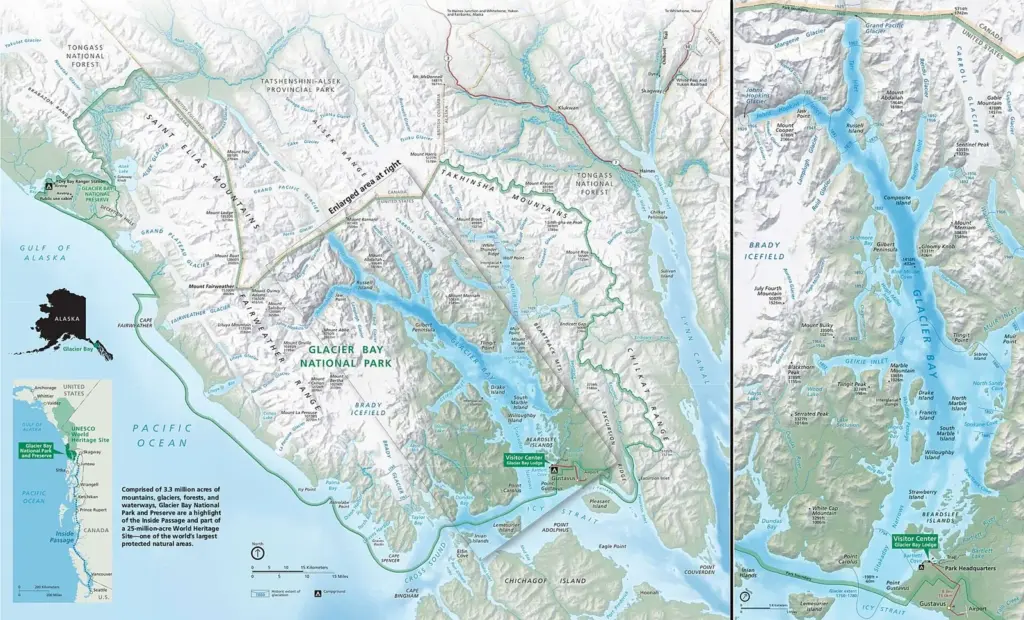
The Park Service’s own description of a cruise ship visit is short: a full day, more than 120 miles of travel north to the mouth of Johns Hopkins Inlet and the head of Tarr Inlet, and a full hour at the face of a tidewater glacier. Here’s how that plays out on deck, in the order you’ll live it. Times move with the ship, the tide and the weather, so treat this as the shape of the day rather than a timetable.
1. Rangers board near the park entrance
The day starts before the scenery does. As the ship approaches the park, rangers from the headquarters at Bartlett Cove come aboard for the day. The Park Service says boarding times vary with the day, the cruise line and the weather, so check the daily program the night before and listen for the announcement.
Once aboard, the rangers give commentary over the ship’s speakers and staff an information desk. Holland America, for one, makes a point of the rangers who board during its Glacier Bay visits. Find the desk early, while it’s quiet. By the time the ship reaches the ice, everyone else will have the same idea.
2. Sitakaday Narrows and the lower bay
The standard cruise route starts near Sitakaday Narrows at the park entrance, and the first couple of hours cross the wide, forested lower bay. It doesn’t look like a glacier landscape yet, and that’s the point. About 250 years ago a single tidewater glacier filled all of Glacier Bay. It started retreating around 1750 and has since pulled back about 60 miles. Everything you sail over in the morning was under ice when the United States was a new country.
This is the stretch where binoculars earn their space in your suitcase. The lower bay is where many visitors spot humpback whales and sea otters, and the rangers call out sightings as they happen. If you want breakfast outside, take it now. The ice comes later, and you won’t want to leave the rail then.
3. North up the bay
The middle hours are a long run north. Watch the shoreline change as you go: the lower bay has had the better part of two centuries to grow a forest, while the upper arms were under ice within the last 150 years, and their slopes are still mostly bare rock, scrub and waterfalls. It’s a lesson in how land recovers after ice, taught at about the speed of a ship.
Expect the rangers’ longer talks somewhere in these hours: the glaciers’ retreat, the wildlife, and the Huna Tlingit history of the bay. It’s also the best time to get your layers sorted, fill a thermos, and pick where you’ll stand at the ice. Scan the cliffs for mountain goats and the beaches for bears. From a big ship they’ll be small, which is why the binoculars matter.
4. Johns Hopkins Inlet and Lamplugh Glacier
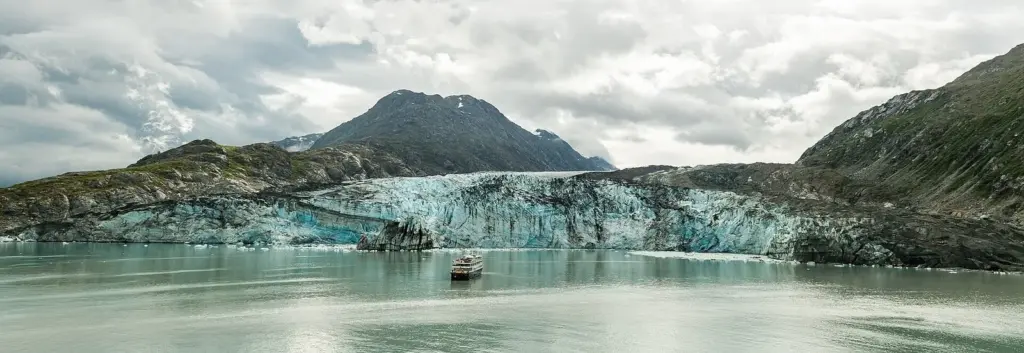
Near the top of the bay, the route reaches the mouth of Johns Hopkins Inlet. Johns Hopkins Glacier sits at the head of the inlet, below a wall of peaks, and the inlet is often crowded with floating ice. The Park Service describes cruise ships traveling to the inlet’s mouth rather than all the way to the glacier face, and the inlet is also a place where the park weighs glacier viewing against the harbor seals that use the ice. Expect a long look from a distance, not a close approach.
Lamplugh Glacier’s broad face is near the inlet’s mouth, and on a clear day its blue ice is one of the best photographs of the morning. If your ship pauses here, use the time: it’s often less crowded at the rail than the main event an hour later.
5. Tarr Inlet: Margerie and Grand Pacific
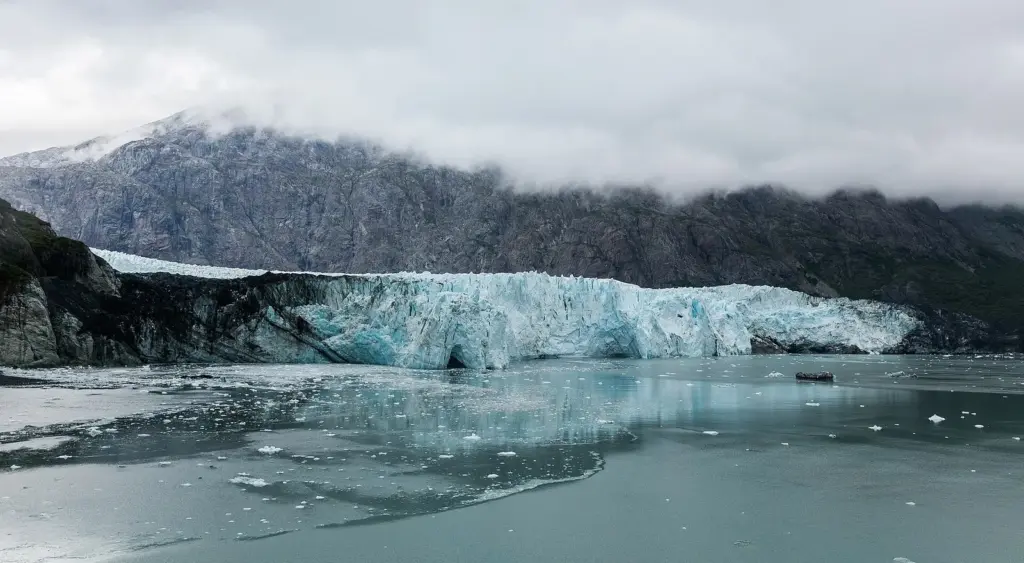
The ship then turns up Tarr Inlet to its head, where two glaciers meet the water side by side and look nothing alike. Margerie Glacier is the white-and-blue wall that ends up on every postcard. Grand Pacific Glacier, next to it, is darker, streaked with rock and gravel, and no longer reaches tidewater. First-timers often assume the dark one is a hill. It’s ice, and a lot of it.
6. The hour at the ice
This is the hour you came for. The ship holds position near the glacier face for about an hour, and the rangers keep talking you through what you’re seeing. Watch the face, not your phone screen. Calving is unpredictable: long quiet stretches, then a crack like a rifle shot, a rumble, and a slab of ice dropping into the water. The Park Service says blocks up to 200 feet high can break away from tidewater glacier faces. The ice you’re looking at is estimated to be about 200 years old, and the icebergs it drops can last a week or more.
Stay out for the whole hour if you can. Many people come out for fifteen minutes, get cold, and go in just before the best calving of the day. Dress properly and it’s easy to stay.
7. The run back south
The return covers much of the same water, which is a gift rather than a repeat: the light has changed, the whales may have moved, and you’ll see the other side of the bay properly this time. The rangers leave the ship before it exits the park, so ask your questions and pick up anything from the ranger desk before then. By evening the ship is back in Icy Strait and heading for its next port or the Gulf of Alaska.
| Part of the day | Roughly | What to do |
|---|---|---|
| Rangers board, lower bay | First 1 to 2 hours | Breakfast, find the ranger desk, binoculars out for whales |
| North up the bay | Next 2 to 3 hours | Layers on, ranger talks, choose your spot |
| Johns Hopkins Inlet and Tarr Inlet | Middle of the day | Stay outside; this is the best hour of the cruise |
| Return south | Last 3 to 4 hours | Second chance at wildlife; last questions for the rangers |
Which glaciers will you see in Glacier Bay?
The park counts 1,059 glaciers, and seven are active tidewater glaciers that calve icebergs into the sea. From a cruise ship you’ll see a handful up close and dozens more as white tongues high in the mountains. Collectively they’re shrinking: the Park Service says there’s 11% less glacial ice in Glacier Bay than in the 1950s, and that 95% of Alaska’s more than 100,000 glaciers are thinning, stagnating or retreating.
Margerie Glacier
Margerie is the star. The Park Service describes it as a tidewater glacier about 21 miles long, starting in the Fairweather Range at elevations above 9,000 feet and flowing about 2,000 feet a year, or roughly six feet a day. That speed is why its face stays so clean and blue: the ice at the front is always being replaced. The park also describes Margerie as both rapidly thinning and receding, so don’t believe anyone who tells you it’s permanent. Our full guide to Margerie Glacier covers its size, behavior and the best viewing angles from a ship.
Johns Hopkins Glacier
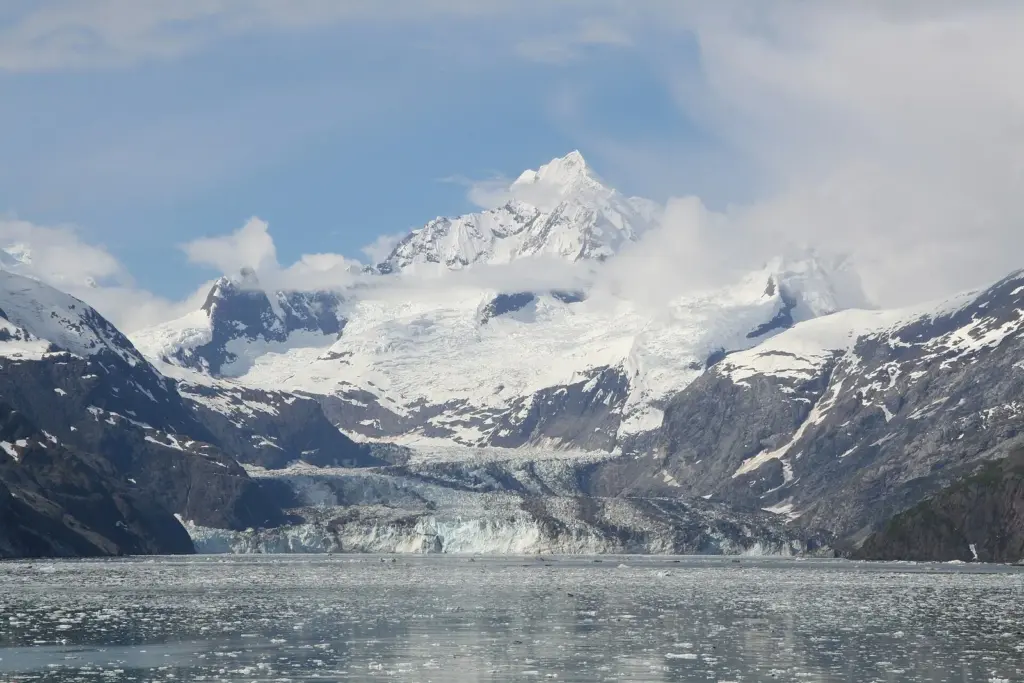
Johns Hopkins is the odd one out. According to the Park Service, it’s one of the few tidewater glaciers in Alaska that is advancing: its face has moved forward more than a mile since 1948, and its lower reaches have thickened by more than 300 feet. It was named by the geologist Harry Fielding Reid when he visited in 1892, after the university. Because the ship usually views it from the mouth of its inlet, it looks smaller than it is. Our page on Johns Hopkins Glacier explains why it’s growing while its neighbors shrink.
Grand Pacific Glacier
Grand Pacific is the glacier that made the bay, in a sense. John Muir named it in 1879, when its face reached south to what is now Russell Island. The Park Service says it has since receded to the head of Tarr Inlet, where its terminus no longer reaches tidewater. Today it’s the dark, debris-covered mass beside Margerie. It’s not photogenic, but it’s the best illustration of retreat you’ll see all day.
Lamplugh and the glaciers that left the water
When Glacier Bay was first protected in 1925, a ship could reach a string of tidewater glaciers: Muir, Grand Pacific, Margerie, Lamplugh, McBride, and Johns Hopkins with its neighbor Gilman. Writing in the Park Service’s Alaska Park Science journal, park scientists note that today only Margerie and Johns Hopkins/Gilman are both tidewater and accessible. Lamplugh is still a fine sight near the mouth of Johns Hopkins Inlet, and Muir Glacier, named for the naturalist, is no longer on the list at all. The list shrinks every few decades. That’s the honest reason to go sooner rather than later.
Verdict: Margerie is the glacier to plan your day around, and it’s the one you’ll spend your hour in front of. Treat Johns Hopkins as the view of the day, and Grand Pacific as the lesson.
What wildlife can you see in Glacier Bay?
The Park Service records 247 bird species and 46 mammal species in the park and preserve, 12 of them marine and 34 on land. From a cruise ship, the ones you’re most likely to spot are humpback whales, sea otters, harbor seals, Steller sea lions, mountain goats, bald eagles, and brown and black bears on the beaches. Moose live in the park too, though you’re less likely to see one from the water.
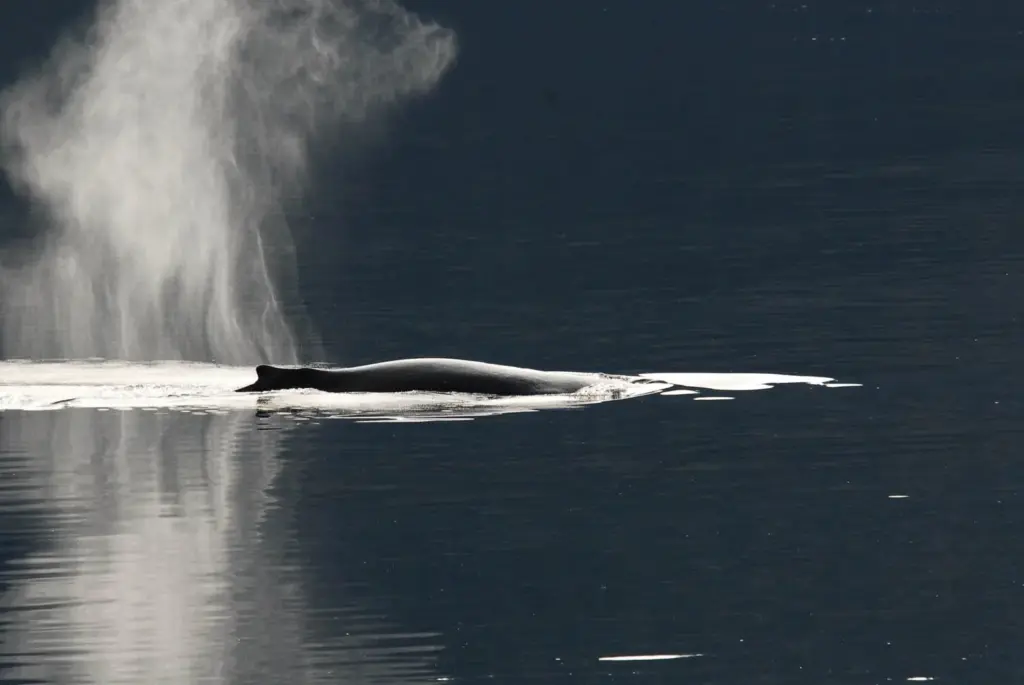
Set your expectations honestly. A cruise ship is a big, high platform, and most of what you see will be distant: a spout, a dark back, a brown dot moving along a beach that the ranger swears is a bear. Binoculars turn those dots into animals. A pair of 8x or 10x binoculars per person is the single best purchase for this day, and far cheaper than a better cabin.
- Whales: watch for spouts in the lower bay on the way in and on the way out. Calm, gray mornings make spouts easier to see.
- Seals: in the upper inlets, look for dark shapes on the floating ice. Those are harbor seals hauled out, not rocks.
- Mountain goats: scan the steep cliffs as you head north. They look like white specks until one moves.
- Bears: check the beaches and the edges of the meadows, especially at low tide.
- Birds: bald eagles are everywhere; seabirds gather around islands in the lower and middle bay.
For the full species list and where each one turns up, see our guide to Glacier Bay wildlife. If animals are the main reason you’re going to Alaska, our Alaska wildlife cruise guide compares the itineraries, ports and excursions that give you the best odds across the whole trip.
The rangers onboard and the Huna Tlingit homeland
Glacier Bay is the ancestral homeland of the Huna and Yakutat Lingít, or Tlingit, and has been since long before the park existed. The Huna Tlingit connection to the bay is older than the ice that filled it in the 1700s, and it didn’t end when the glaciers pulled back. The modern Huna Tlingit community is Hoonah, across Icy Strait from the park.
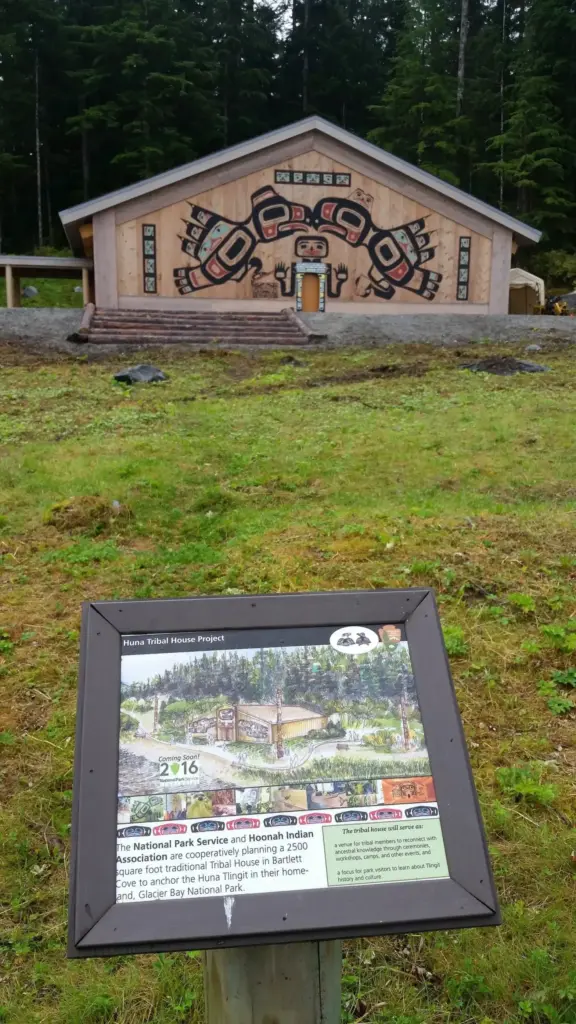
At Bartlett Cove, the Park Service and the Huna Tlingit community dedicated Xunaa Shuká Hít, meaning Huna Ancestors’ House, in August 2016. According to the Park Service, the carved and painted house memorializes the clan houses that once lined the shore of Bartlett Cove. Cruise passengers don’t get ashore to see it, but it’s worth asking the rangers about, and it’s the most meaningful stop for anyone visiting by land. Our page on the Huna Tribal House covers its carvings, its story and how to visit.
The rangers themselves are the most underrated part of the day. They’re Park Service staff, not the ship’s entertainment team, and they know the bay. A few ways to get more from them:
- Ask specific questions. “Where do the mountain goats usually show up?” gets a better answer than “What’s that?”
- Go to the desk early. It’s busiest in the hour before the glacier.
- Bring children. The desk is a good place for kids to ask about the park and the ice.
- Listen from indoors if it’s pouring. If your ship pipes the commentary into its lounges, you can take a break from the rain without missing the story.
How to make the most of your Glacier Bay day
A Glacier Bay day is easy to waste. People sleep through the lower bay, come out at the glacier without enough clothing, leave after twenty minutes and spend the afternoon at the buffet. Here’s how to do better.
Dress for colder air than you expect
Even in July, the air near a tidewater glacier is noticeably colder than the air in Juneau or Ketchikan, and the wind on an open deck adds to it. Wear a warm hat, gloves, a fleece or insulated layer and a waterproof shell. Nobody should book Glacier Bay for warm weather. The people who enjoy the hour at the ice are the ones who dressed for a cold, wet boat ride and then got lucky with the sun.
Where to stand
If your ship opens forward deck areas for scenic cruising, that’s the best angle on the approach, but it fills early. The upper open decks on either side work well at the glacier itself. Promenade decks, where a ship has them, put you closer to water level, which makes the ice look taller. If you’re sailing with someone, split up and text each other when something appears on your side.
Do you need a balcony?
A balcony is nice for Glacier Bay but not essential. The ship spends hours moving through the bay, the view changes sides constantly, and at the glacier you’ll want to be on an open deck anyway, where you can move. If you’re choosing a cabin mainly for this one day, don’t pay a big premium for a particular side. Spend the difference on binoculars and a better jacket.
Cameras and phones
Blue ice photographs best under an overcast sky, so don’t despair at gray weather. A zoom lens or a phone with a telephoto setting helps with wildlife and the glacier face; a wide setting helps with the whole scene, ship rail and all. For calving, record video rather than trying to time a still. Keep spare batteries warm in an inside pocket, because cold drains them fast.
Eat around the ice, not during it
Have a big breakfast, then plan lunch for before or after the hour at the glacier. Room service and grab-and-go counters are your friends on this day. Missing the best calving because you were waiting at a dining room table is a common, avoidable mistake.
Rain and low cloud
Southeast Alaska is a rainforest, and a Glacier Bay day can be wet. Low cloud can hide the Fairweather Range completely, which is a real loss, because on a clear day those peaks are the backdrop to everything. The ice at the waterline is usually still there to see. A wet Glacier Bay day is still a Glacier Bay day; bring a rain shell and stay out anyway.
When is the best time to see Glacier Bay by cruise ship?
Cruise ships visit from May to September. The park allocates most of its cruise entries to the June-to-August prime season, with fewer in May and September, so the widest choice of sailings falls in summer.
| Month | What you get | The trade-off |
|---|---|---|
| May | Snow still low on the mountains, fewer ships, lower fares | Colder days and fewer sailings to choose from |
| June to August | The most sailings, the longest days, the warmest weather | Peak fares and full decks |
| September | Quieter ships and shoulder-season fares | Wetter, darker, and fewer sailings |
There’s no bad month for the glaciers themselves. The choice is really about price, crowds and how much snow you want on the peaks. For month-by-month detail on weather, daylight and wildlife, see our guide to the best time to visit Glacier Bay National Park.
Can you visit Glacier Bay without a cruise ship?
Yes, and it’s a completely different trip. The park’s headquarters is at Bartlett Cove, near the small town of Gustavus, home to the historic Glacier Bay Lodge and the visitor center. No road reaches it: you arrive by small plane or by boat, usually from Juneau.
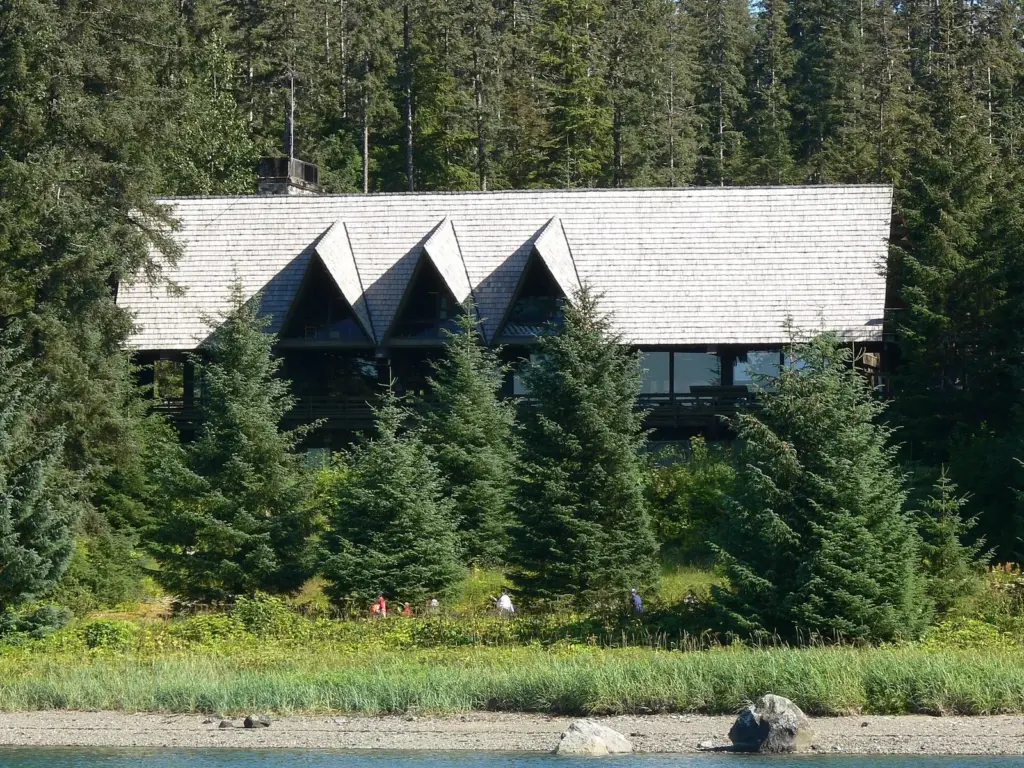
From Bartlett Cove, the daily tour boat run by the lodge concessioner goes up the bay toward the glaciers, which is the land visitor’s version of the cruise day. There are also forest trails, the Huna Tribal House, and sea kayaking in the sheltered waters near the cove. For the details, see our pages on Glacier Bay Lodge, the Glacier Bay day tour and Glacier Bay kayaking.
Is it worth it? For most cruise passengers, no: the ship already gives you the glaciers, with rangers, without an extra flight. A land visit makes sense if you want to walk in the rainforest, paddle among icebergs, see the Tribal House, or spend time in the park without a crowd. It’s an addition to an Alaska trip, not a substitute for the cruise day.
A short history of Glacier Bay
The bay you’ll sail through is young. The Little Ice Age began here about 4,000 years ago and reached its greatest extent around 1750, when ice filled the whole bay. What followed was a retreat of about 60 miles in roughly two and a half centuries, fast enough that each generation of visitors has found a different bay.
| When | What happened |
|---|---|
| About 4,000 years ago | The Little Ice Age begins in the region |
| About 1750 | Ice reaches its maximum; a single tidewater glacier fills Glacier Bay, then starts to retreat |
| 1879 | John Muir names Grand Pacific Glacier, whose face then reached present-day Russell Island |
| 1892 | Harry Fielding Reid names Johns Hopkins Glacier |
| February 26, 1925 | Glacier Bay is proclaimed a national monument |
| December 2, 1980 | It becomes Glacier Bay National Park and Preserve |
| 1986 | Named a biosphere reserve |
| 1992 | Becomes part of a World Heritage Site |
| August 2016 | Xunaa Shuká Hít, the Huna Tribal House, is dedicated at Bartlett Cove |
| October 1, 2019 | The current ten-year cruise concession contracts take effect |
| 2025 | The park marks 100 years of protection |
The ice has retreated about 60 miles since the mid-1700s, and it’s still changing: the Park Service measures 11% less glacial ice in the bay than in the 1950s. For the fuller story of the Tlingit homeland, the early explorers and scientists, and how the park came to be, read our Glacier Bay history page.
What if your cruise doesn’t go to Glacier Bay?
Plenty of excellent Alaska cruises never enter the park, and a different glacier day doesn’t mean a lesser trip. Hubbard Glacier, in Disenchantment Bay near Yakutat, is North America’s largest tidewater glacier. Endicott Arm ends at Dawes Glacier, and College Fjord lines up a series of glaciers on a Gulf of Alaska cruise. Princess, for example, offers all four glacier areas: Glacier Bay, Hubbard Glacier, College Fjord, and Endicott Arm and Dawes Glacier.
What sets Glacier Bay apart is the combination: a full day inside one park, Park Service rangers aboard for all of it, several tidewater glaciers in a single day, and wildlife on the way in and out. Hubbard is one enormous face; Endicott Arm is a narrow fjord with a glacier at the end. Our Alaska glacier cruise guide compares every glacier day on the major itineraries, and our Glacier Bay vs Hubbard Glacier page helps if you’re choosing between two specific sailings.
Verdict: if you only get one glacier day, Glacier Bay is the one to pick when the choice is yours. If it isn’t, Hubbard Glacier is a worthy second, and few people watching it calve feel shortchanged.
Glacier Bay National Park FAQ
Can you get off the ship in Glacier Bay National Park?
No. Cruise ships don’t dock anywhere in the park, so passengers stay aboard for the whole visit. It’s a scenic cruising day: the ship sails more than 120 miles up the bay and back over nine to ten hours, with park rangers aboard and about an hour spent at the face of a tidewater glacier.
Which cruise lines go to Glacier Bay National Park?
Only lines with a park concession can enter. The Park Service’s concession page lists Princess, Holland America, Norwegian, Seabourn, Cunard and Viking. In 2027, Princess and Holland America publish the widest choice of Glacier Bay itineraries, Viking’s Alaska route lists Hubbard instead, and Cunard reportedly has no Alaska season. Always check your exact sailing.
How long do cruise ships stay in Glacier Bay?
Most ships spend a full day in the park, about nine to ten hours from the moment the rangers board to the moment they leave. Around an hour of that is spent holding position near a tidewater glacier face, often at the head of Tarr Inlet, where Margerie Glacier meets the water. The rest is spent traveling up and down the bay.
Is a Glacier Bay National Park cruise worth it?
For most first-time Alaska cruisers, yes. You get several glaciers in one day, a national park setting, rangers explaining what you’re seeing, and a strict two-ship limit that keeps the bay quiet. Its main rival is Hubbard Glacier, which has a bigger single face but gives you one glacier rather than several.
Where is Glacier Bay National Park, Alaska?
It’s in Southeast Alaska, west of Juneau, on the northern side of Icy Strait. The park headquarters is at Bartlett Cove, near Gustavus. There’s no road access: independent visitors fly or take a boat from Juneau, while cruise passengers arrive on their ship as part of an Inside Passage or Gulf of Alaska itinerary.
Is there a Glacier Bay National Park map for the cruise day?
The Park Service publishes a park map in its official brochure, reproduced near the top of this page. If your ship has a navigation channel on the cabin TV, it shows your position as you go, and the rangers point out features along the way. Look for Tarr Inlet and Johns Hopkins Inlet at the top of the bay: that’s where the day’s main glaciers are.
Which side of the ship is best for Glacier Bay?
Neither side wins. The ship travels up and back down the bay, so each side gets views in turn, and at the glacier you’ll want to be on an open deck anyway. Don’t pay a premium for a particular balcony side for this day; binoculars and warm clothing make a bigger difference.
What is the best month for a Glacier Bay cruise?
June through August has the most sailings, longest days and mildest weather, which suits most travelers. May offers snowier peaks, fewer ships and lower fares. September is quieter and cheaper but wetter. The glaciers are there all season, so choose on price, crowds and weather rather than on the ice.
Related Alaska Cruise Guides
Sources and How We Checked
We checked the prices, rules, schedules and ship deployments in this guide against the sources below on September 24, 2026, and we log each one in our research database with the date it was checked. Cruise lines change ships, fares and fees every season, so confirm anything that affects your booking with the line or the agency concerned. Alaska Cruise Guide (AlaskaCruise.org) is an independent publication. It is not affiliated with any cruise line, port, tour operator or tourism office, and no one paid to be included.
- City and Borough of Juneau: Juneau five-ship limit
- deeparrival.com: Cunard
- Holland America Line: naturalists / rangers, Holland America Line
- luxurytraveladvisor.com: Seabourn
- National Park Service: Glacier Bay glaciers
- National Park Service: Glacier Bay cruise permits
- National Park Service: Glacier Bay park facts, Glacier Bay glaciers, Glacier Bay history, Glacier Bay wildlife
- National Park Service: Glacier Bay glaciers, Glacier Bay history
- National Park Service: Glacier Bay access
- National Park Service: Glacier Bay cruise visit
- National Park Service: Glacier Bay access
- National Park Service: Glacier Bay cruise visit
- National Park Service: Grand Pacific Glacier
- National Park Service: Huna Tribal House
- National Park Service: Johns Hopkins Glacier
- National Park Service: Margerie Glacier
- National Park Service: Hubbard Glacier
- Norwegian Cruise Line: Norwegian Cruise Line
- Princess Cruises: Princess Cruises
- U.S. Geological Survey: Tracy Arm landslide
- UnCruise Adventures: UnCruise Adventures
- vikingcruises.com: Viking
Photo Credits
- Statendam in Glacier Bay (2011): photo by Edward Weston from Wilmington, DE, USA, via Wikimedia Commons (CC BY-SA 2.0)
- Glacier Bay park map (NPS brochure): photo by U.S. National Park Service, via Wikimedia Commons (Public domain)
- Lamplugh Glacier (2017): photo by Diego Delso, via Wikimedia Commons (CC BY-SA 4.0)
- Margerie Glacier (2017): photo by Diego Delso, via Wikimedia Commons (CC BY-SA 4.0)
- Johns Hopkins Glacier (2014): photo by MusikAnimal, via Wikimedia Commons (CC BY-SA 4.0)
- Humpback whale (NPS): photo by National Park Service, via Wikimedia Commons (Public domain)
- Huna Tribal House, Bartlett Cove: photo by Pi3.124, via Wikimedia Commons (CC BY-SA 4.0)
- Glacier Bay Lodge (NPS): photo by NPS Photo, via Wikimedia Commons (Public domain)