An Alaska cruise for seniors is one of the easiest big trips an older traveler can take, because the glaciers, mountains and whales come to the ship, and most ports are docks you can walk off rather than beaches you climb onto. The best fits are Holland America and Princess for their pace, Glacier Bay access and Alaska experience, with the luxury lines and American Cruise Lines for smaller ships. The things to plan carefully are port access if you use a wheelchair or scooter, which excursions involve steps or long walks, and medical coverage, since Medicare’s help at sea is limited.
This page is for travelers in their 60s, 70s and 80s, and for anyone with limited mobility, planning a first Alaska cruise: which lines and ships suit a slower pace, which ports dock and which tender, which excursions keep walking to a minimum, how medical care at sea works, and whether a Denali cruisetour is too tiring. The caveat that matters: accessibility varies by ship, port, tide and weather, so confirm every need with the line before you book. Last updated October 19, 2026. Every price, fee and schedule below is dated, and the sources are listed at the end.
Alaska cruise for seniors: the short answer
| If you want | Pick | Why |
|---|---|---|
| A calm ship with deep Alaska know-how | Holland America | Six ships in 2027, its 80th Alaska season; rangers aboard in Glacier Bay |
| Glacier Bay and a full cruisetour network | Princess | 85 Glacier Bay calls in 2027 and five Alaska lodges |
| A small ship without skiffs and wet landings | American Cruise Lines | U.S.-flagged ships of 90 to 180 guests, per the line |
| Luxury and service | Seabourn, Silversea or Regent | All-suite ships; Regent includes shore excursions |
| Upscale with a clear price | Viking | 11 days Vancouver to Seward from $6,499 for 2027 |
| The least walking | A round trip with docked ports and scenic cruising | The best of Alaska is visible from the deck |
| Denali without exhaustion | A line-run cruisetour with a tour director | Luggage, transfers and lodges handled for you |
Verdict: For most seniors, a 7- or 8-night Holland America or Princess cruise that includes Glacier Bay, with a balcony and two or three low-walking excursions, is the sweet spot. Add Denali only if you’re comfortable with long travel days.
What’s changed for 2027
- Holland America’s 80th year. The line sends six ships to Alaska from April to September 2027, and adds an 8-day Alaska Inside Passage round trip from Vancouver that includes Glacier Bay, a gentle pace for travelers who like a few extra days.
- Denali’s park road reopens. After the Pretty Rocks landslide stopped buses at Mile 43 for all of 2026, the Park Service expects full bus service to resume in 2027. Longer bus trips mean more wildlife, and longer days in a seat.
- Juneau is calmer. Voluntary agreements cap Juneau at five large ships and 16,000 lower berths a day, 12,000 on Saturdays, so the busiest days are less crushing than before the caps.
- Skagway’s shuttle. Skagway’s Railroad Dock has been closed to pedestrians since 2022 because of a rockslide hazard, so passengers docked there ride a shuttle into town.
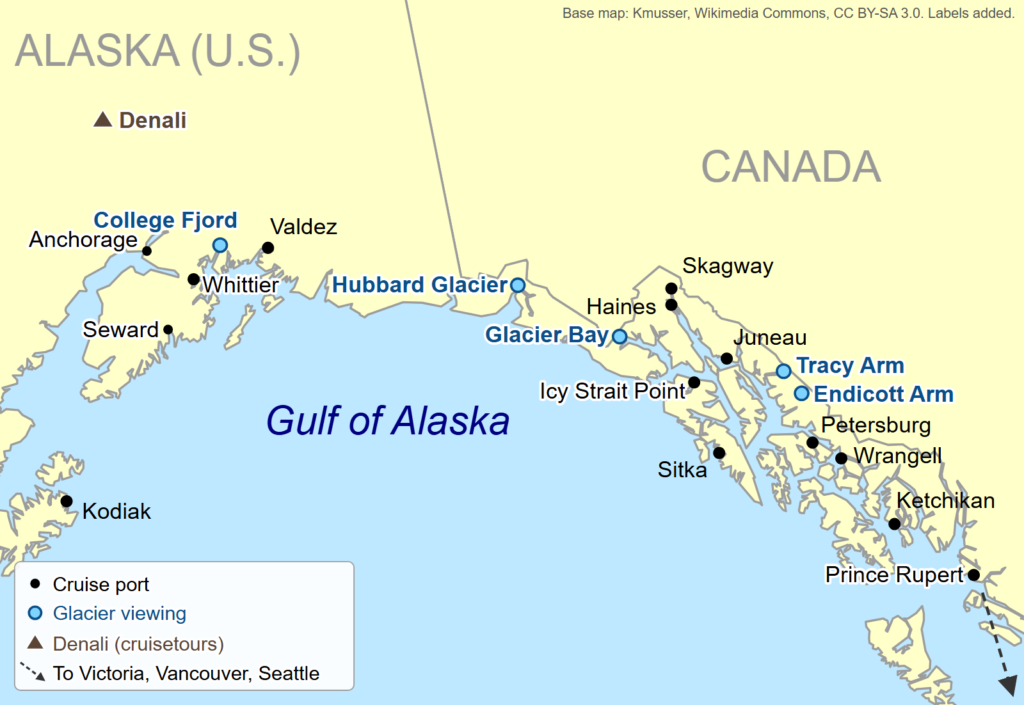
- Tracy Arm is uncertain. After the August 10, 2025 landslide-tsunami, several lines switched to Endicott Arm and Dawes Glacier in 2026. Both are seen from the ship, with no walking at all.
- ID rules for flying. Since May 7, 2025, TSA requires a REAL ID-compliant license or another acceptable ID, such as a passport, for domestic flights. Check your license before you fly to Seattle or Vancouver.
Why Alaska suits older travelers, and where it doesn’t
Alaska’s reputation as a favorite of retirees is earned. The scenery is the main event, and you can see most of it from a deck chair or a window seat. Most ports have docks close to town, English is spoken everywhere, and the ports are in the United States, with American hospitals in the larger towns. There’s no tropical heat, no beach landings and little of the party atmosphere of a Caribbean cruise.
The honest challenges:
- Cold and wet weather. Juneau’s average July high is 64°F, and it rains on 16 to 22 days a month through the season. Decks can be slippery, and glacier days are cold.
- Tender days. Some calls use small boats to go ashore, which involves steps and can exclude scooters and power chairs.
- Steep gangways at low tide. Alaska’s large tidal ranges can make gangway ramps steep, and cruise lines warn that tides and weather can limit access ashore.
- Excursions with steps. Floatplanes, helicopters, small boats and trails all involve some climbing, stepping or balance.
- Long days. Summer daylight lasts 17 hours or more, and it’s easy to overdo it.
Verdict: Alaska is one of the best cruise regions for seniors, and one of the best for travelers with limited mobility, as long as you plan port days around your abilities rather than the brochure.
Best Alaska cruise lines for seniors
Here are the lines that suit older travelers best, and why. Our ranking of the best cruise line for Alaska covers every line for every type of traveler, and a separate guide will cover the best Alaska cruise for seniors in more depth.
1. Holland America Line
Holland America is the classic senior pick for Alaska, and for good reason. It has sailed Alaska for 80 years as of 2027, sends six ships (Eurodam, Koningsdam, Nieuw Amsterdam, Noordam, Westerdam and Zaandam) and offers more than 100 cruises of 7 to 28 days. It sails round trip from Seattle or Vancouver, or one-way between Vancouver and Whittier, holds one of the six Glacier Bay permits, brings park rangers and onboard wildlife experts aboard, and offers more than 175 shore excursions. The mid-size ships are easy to navigate, and the onboard atmosphere is calm. Its Denali cruisetours include stays at its own Denali Lodge and dedicated tour directors.
Verdict: The best all-around line for seniors, especially for a first Alaska cruise.
2. Princess Cruises
Princess runs the largest Alaska program, with 187 departures on 17 itineraries from five homeports in 2027, and it schedules 85 Glacier Bay calls. It owns five Alaska wilderness lodges, including two near Denali, and offers 28 cruisetour itineraries. The ships are larger than Holland America’s and livelier, with more families in July, but the Alaska program is deep and well organized.
Verdict: The pick for Glacier Bay and for cruisetours, with a little more going on around you.
3. Celebrity Cruises
Celebrity offers a more modern, polished ship with good food and a quieter feel than the mass-market lines. Its Alaska itineraries feature Hubbard Glacier, Endicott Arm and Icy Strait Point, and it sells Denali cruisetours. Celebrity isn’t a Glacier Bay permit holder, so the glacier day will be elsewhere.
Verdict: A good choice for seniors who value a stylish ship and don’t need Glacier Bay.
4. Viking
Viking’s 2027 Alaska and the Inside Passage is an 11-day one-way from Vancouver to Seward, calling at Ketchikan, Sitka, Juneau, Skagway, Icy Strait Point and Valdez, with scenic cruising at Hubbard Glacier. It was listed from $6,499 per person when we checked in September 2026. Viking’s mid-size ships and calm style appeal to many older travelers, and the longer itinerary means a more relaxed pace. Viking holds a Glacier Bay permit, though this route lists Hubbard instead.
Verdict: The pick for seniors who want an upscale ship and a slower, longer trip.
5. Seabourn, Silversea and Regent
The luxury lines offer all-suite ships, attentive service and fewer passengers. Seabourn holds a Glacier Bay permit, and per the line it sailed Seabourn Encore on 7- to 15-day trips from Vancouver or Juneau in 2026. Silversea sailed Vancouver-Seward in 2026, and Regent linked Vancouver with Whittier or Seward, with shore excursions included in its fares, according to Regent. Our guide to Alaska cruise cost helps compare their all-in prices with the mainstream lines.
Verdict: Worth the premium for travelers who want space, service and an inclusive fare.
6. American Cruise Lines
American Cruise Lines sails small, U.S.-flagged ships of 90 to 180 guests, according to the line, from Juneau, Ketchikan and Tacoma, with seven Alaska itineraries of 9 to 19 days. The line says guests on itineraries that stay within the United States need only a photo ID, not a passport. Unlike expedition ships, it’s a coastal cruise without Zodiac landings, which makes it one of the more accessible small-ship options. A separate guide will cover small ship Alaska cruises for seniors in detail.
Verdict: The best small-ship choice for seniors who want intimacy without the scrambles.
7. Norwegian Cruise Line
Norwegian’s flexible dining suits travelers who don’t want fixed times, and its 2027 program includes Norwegian Jade between Vancouver and Whittier with scenic cruising at Hubbard Glacier or Glacier Bay, plus big ships from Seattle. The atmosphere is livelier than Holland America’s, and its service charge is higher, at $20 per person per day in 2026.
Verdict: A good fit for active seniors who like choice and don’t mind a busier ship.
8. Royal Caribbean and Carnival
Royal Caribbean and Carnival are the family and value lines. They’re perfectly comfortable for seniors, but the ships are busy, especially in July, and neither enters Glacier Bay in 2027. Choose them if price matters most, or if you’re traveling with grandchildren.
Docked ports and tender ports: what to expect
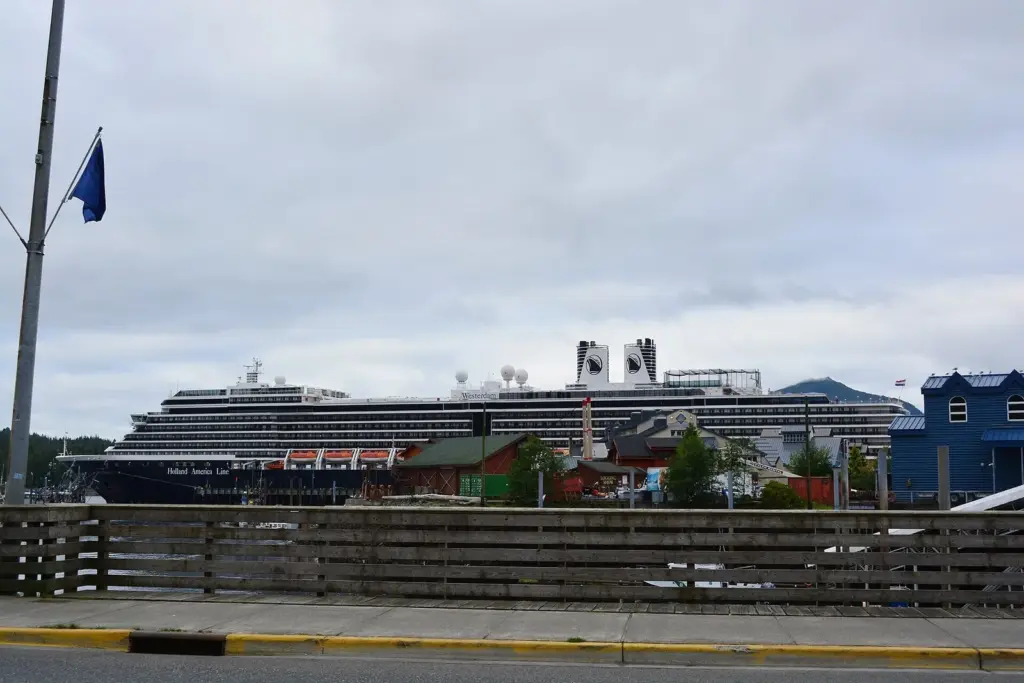
For travelers with limited mobility, the most important question about any port is how you get ashore. The good news: most Alaska cruise calls are at docks, often within walking distance of town. Our guide to Alaska cruise ports covers each port in detail; here’s the summary for accessibility.
| Port | How ships usually arrive | Accessibility note |
|---|---|---|
| Ketchikan | Docks along the downtown waterfront | Flat walk to Creek Street and the shops |
| Juneau | Docks downtown; on the busiest days a fifth ship may anchor and tender | Tram station next to the docks |
| Skagway | Docks; passengers at the Railroad Dock ride a shuttle | Flat town on a grid; boardwalks |
| Sitka | The Sitka Sound Cruise Terminal, about 5 miles out, or on some calls tenders into town | Free shuttle bus from the terminal during port hours |
| Haines | Port Chilkoot dock, less than half a mile from downtown | Shuttle when a ship is in port |
| Glacier Bay, Hubbard, Endicott Arm | Scenic cruising only; no going ashore | Fully accessible from the ship |
| Seward and Whittier | Docks at the end of one-way cruises | Seward’s new terminal has rail on the dock |
The tender rules for wheelchairs and scooters
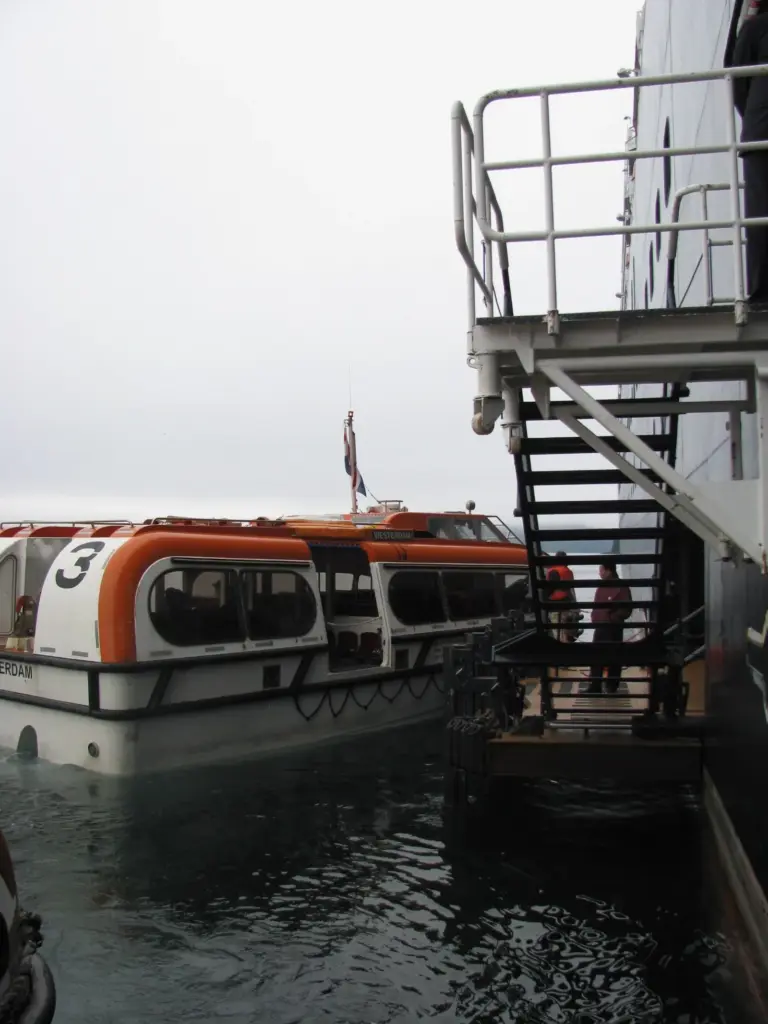
Tendering is the main accessibility hurdle. Cruise lines’ accessibility policies say that guests who can’t take a few steps can’t board most tenders unless roll-on capability is available, that boarding generally requires the ability to take steps and use a collapsible manual wheelchair, and that motorized wheelchairs and scooters can’t go on tenders without roll-on capability. At least one line’s policy says crew can’t carry scooters or wheelchairs heavier than 100 pounds without the battery. And Princess warns that guests with limited mobility may be unable to go ashore when they want, or at all, in some ports because of gangway steepness, tendering, weather, tides, sea conditions and shore facilities.
In practice, that means checking your itinerary for tender calls before you book, asking the line whether your ship’s tenders have roll-on access, and, if you use a scooter, bringing or renting a model light enough to fold. On a docked-port itinerary, those problems mostly disappear.
Why Glacier Bay matters for older travelers
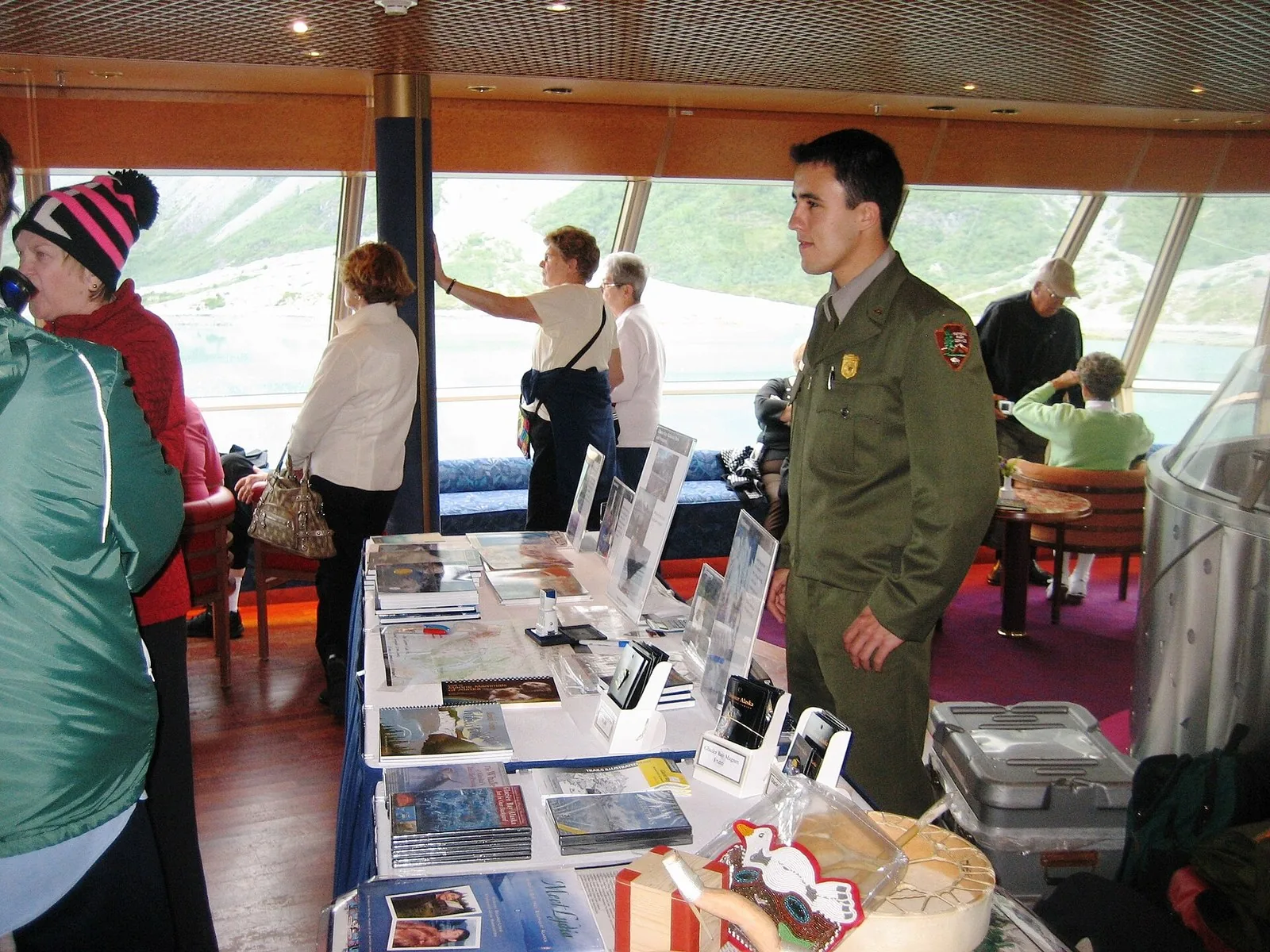
For travelers who can’t walk far, Glacier Bay National Park is the single best reason to choose one line over another. The whole visit happens from the ship: a full day of scenic cruising past tidewater glaciers, with no gangway, no tender and no trail. National Park Service rangers board each ship to narrate over the speakers, give presentations and staff an information desk, and the park, the ancestral homeland of the Huna and Yakutat Tlingit, allows no more than two cruise ships a day, so it never feels crowded.
Only six lines hold Glacier Bay permits: Princess, Holland America, Norwegian, Seabourn, Cunard and Viking, and not every sailing on those lines goes in. If mobility limits your port days, a sailing that includes Glacier Bay gives you the trip’s highlight with no physical effort at all. Book a balcony on the side you prefer, or find a window seat in a forward lounge, and let the park come to you.
Wheelchair and limited-mobility cruising
A wheelchair accessible Alaska cruise is very achievable, but it takes more planning than a Caribbean trip, because of the weather, the tides and the excursions. The same applies to anyone with limited stamina or balance. Here’s the checklist.
- Book an accessible cabin early. Ships have a limited number, and they go first on popular summer sailings. Ask for one close to the elevators.
- Tell the line your needs at booking. Lines have accessibility departments that can note mobility equipment, oxygen, dietary needs and assistance at the terminal.
- Bring or rent the right equipment. A lightweight folding wheelchair or scooter gives you the most options ashore and on tenders.
- Request help at the terminal. Boarding and disembarkation assistance is typically free on the major lines and saves long walks and waits.
- Choose docked ports and scenic days. A round trip with docked calls and a glacier day seen from the ship avoids most barriers.
- Pick excursions by transfer, not by title. Ask how you get on the boat, train, bus or plane, and whether there are steps.
- Plan around low tide. Gangways can be steepest at low tide. If a ramp looks too steep, wait an hour and try again.
A separate guide will cover Alaska cruise limited mobility planning port by port.
Low-walking excursions for seniors
The best Alaska cruise excursions for seniors show you the big sights without long hikes or awkward transfers. Here are the options that work best, with what’s involved.
| Excursion | Port | Walking and transfers | Price (2026) |
|---|---|---|---|
| White Pass Summit train | Skagway | A seat for the whole ride; the train has a wheelchair lift, with limited space | $155 adult |
| Goldbelt Tram | Juneau | Gondola from the docks; accessible trail at the top | $60 adult day ticket |
| Whale watching | Juneau | Catamaran; some steps to board | $159 (Harv and Marv’s) |
| Mendenhall Glacier Visitor Center | Juneau | Short paths to viewpoints; longer trails optional | $5 day fee (proposed $15) |
| Alaska Raptor Center | Sitka | Mostly indoor, with eagles in a flight center | $17 adult, $11 veterans |
| Misty Fjords floatplane | Ketchikan | Must step onto a float and into the plane | From $329 |
| Denali bus tours | Denali (cruisetour) | 4.5 to 5.5 hours seated on a bus | $116.75 to $144.75 |
Skagway: the White Pass and Yukon Route
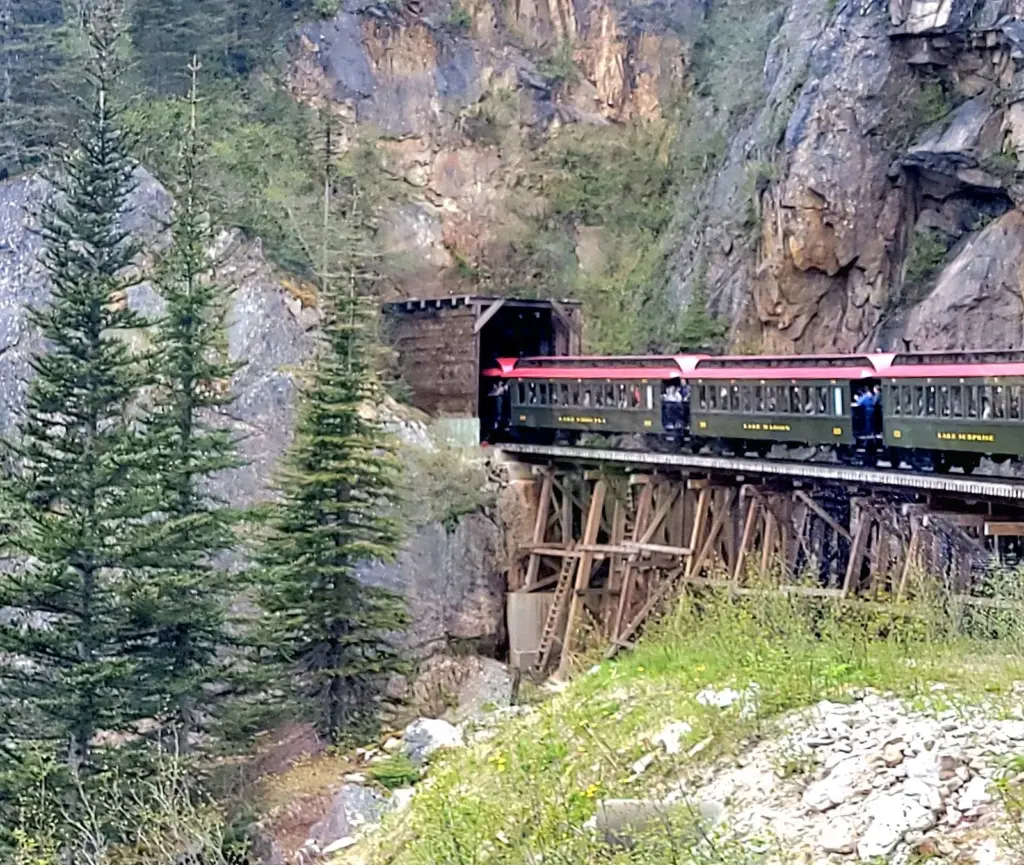
The Summit Excursion is the classic low-effort Alaska excursion: a 40-mile round trip of about 2.5 hours, climbing from the harbor to the international border without leaving your seat. The adult fare was $155 in 2026, and it needs no passport. The railway’s Summit train has a wheelchair lift, but space in the lift-equipped cars is limited, so tell the railway, or your cruise line, when you book. Holland America and Princess both sell wheelchair-accessible versions of the tour.
Juneau: the tram, the whales and Mendenhall
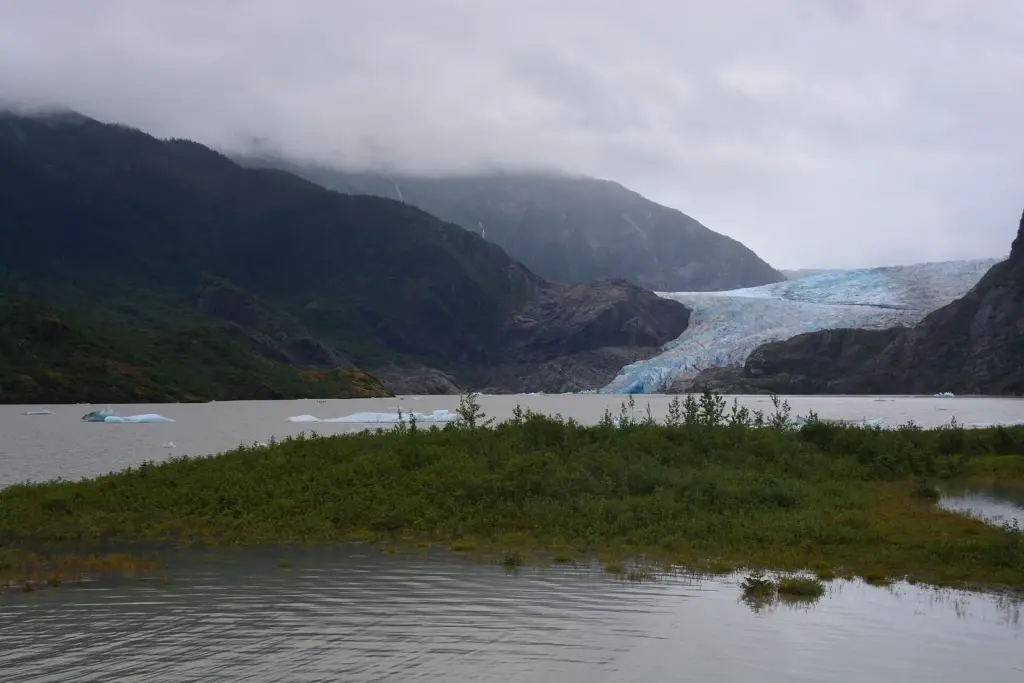
The Goldbelt Tram climbs from the cruise docks to viewpoints high above Juneau. Holland America’s listing for it says the tram can accommodate manual wheelchairs, electric wheelchairs and scooters, and that the trails at the top include an accessible trail. Adult day tickets were $60 in 2026 with unlimited rides. Whale watching on a catamaran is another good choice: Harv and Marv’s four-hour trip cost $159 in 2026, with about three hours on the water. At Mendenhall Glacier, the visitor center, open 9 a.m. to 6 p.m. in summer 2026, looks across the lake to the ice, and the day fee was $5, with a proposal to raise it to $15.
Sitka and Ketchikan
Sitka’s Alaska Raptor Center is mostly indoor and charged $17 for adults and $11 for veterans in 2026, and its flight training center lets you watch bald eagles up close. In Ketchikan, the downtown waterfront, Creek Street and the Totem Heritage Center are all close to the docks, and a floatplane to Misty Fjords, from $329 in 2026, gives a glacier-carved wilderness without any hiking, if you can manage the step onto the float.
Glacier days: the best excursion is free
The most spectacular part of an Alaska cruise, the glacier day, requires no excursion at all. In Glacier Bay, park rangers board each ship to narrate and staff an information desk, and you can watch the whole day from a window seat, a balcony or the deck. For many seniors, that day alone justifies the trip.
A sample low-effort week
Here’s how a senior couple, or anyone who wants to keep walking to a minimum, might spend a typical 7-night round trip from Seattle or Vancouver. Every day includes something memorable, and none requires more than a short, level walk.
| Day | Where | Low-effort plan |
|---|---|---|
| 1 | Sailing day | Board with terminal assistance, settle in, dinner at an early seating |
| 2 | At sea | Naturalist talk, a slow breakfast, whale watching from a window seat |
| 3 | Ketchikan | A level stroll to Creek Street, then the Totem Heritage Center, or the floatplane if you can manage the step |
| 4 | Juneau | The Goldbelt Tram from the docks, or a whale-watching catamaran |
| 5 | Skagway | The White Pass Summit train, seated the whole way, then a short boardwalk stroll |
| 6 | Glacier day | Glacier Bay with the rangers, or Endicott Arm or Hubbard Glacier, from your balcony or a window seat |
| 7 | At sea or Victoria | A spa appointment or a lecture, and a gentle evening ashore if you call at Victoria |
The pattern is one outing per port and plenty of rest in between. If a day’s weather is poor, skip the excursion and watch from the ship; Alaska rewards the traveler who doesn’t try to do everything.
Medical care at sea and evacuation
Alaska medical care at sea deserves more planning than most travelers give it, because the route is remote and your usual insurance may not follow you. A separate guide will cover Alaska cruise medical care in detail; the essentials:
- Ship medical centers charge. Every big ship has a medical center with a doctor and nurses, but visits and treatment are billed to your onboard account, often at high rates.
- Medicare’s help at sea is limited. According to Medicare, Part B may pay for medically necessary services on a cruise ship only if the doctor is legally allowed to provide services on the ship and the ship is in a U.S. port, or no more than 6 hours from one, when you get the care. In most situations, Medicare doesn’t pay for care outside the United States, which matters on calls in Canada.
- Medicare Advantage and supplement plans vary. Some include limited foreign travel emergency coverage. Check your plan before you go.
- Buy travel insurance with medical evacuation. A serious illness near a remote glacier can mean a helicopter or air ambulance, which is extremely expensive without coverage.
- Bring medications in your carry-on, enough for the trip plus a few days, with a list of your prescriptions and conditions.
- Wash your hands with soap. CDC says hand sanitizer doesn’t work well against norovirus, so soap and water for at least 20 seconds is the best defense.
Verdict: Travel insurance with medical and evacuation coverage isn’t optional for older travelers on an Alaska cruise. It’s the most important purchase after the cruise itself.
Choosing a cabin for comfort
The right cabin makes a real difference for older travelers. A midship cabin on a lower deck moves the least in rough water and is closer to the main public areas. A cabin near the elevators saves long corridor walks, especially on big ships. A balcony is worth more in Alaska than on most routes, because on glacier days and in narrow channels you can watch from a private seat, out of the wind and away from crowded rails. And if you need an accessible cabin, book it as early as possible, since each ship has only a handful.
| Cabin | Why seniors like it | Drawback |
|---|---|---|
| Accessible cabin | Roll-in shower, wider doors, grab bars, room to turn a wheelchair | Few per ship; book very early |
| Balcony, midship | Private glacier viewing, steadiest location, fresh air on demand | Costs more; balcony thresholds can be a step |
| Oceanview | Daylight and a view at a lower price | No private outdoor space on glacier day |
| Inside | The best sleep in 17-hour daylight, and the lowest price | No view; more walking to public viewing areas |
| Suite | Space, priority boarding and, on some lines, concierge help | The highest price |
Getting to the ship without the stress
The journey to the ship is often harder on older travelers than the cruise itself. A few steps make it easier.
- Fly in a day early and stay near the port. From Seattle-Tacoma airport, the cruise terminals are about 30 to 45 minutes by car, depending on traffic.
- Book airport wheelchair assistance with your airline if long concourses are a problem; it’s free and can be requested when you book or at check-in.
- Know the drop-off at Pier 91. At Seattle’s Smith Cove Cruise Terminal, rideshare drop-off is about a 10-minute walk from the terminal, with a free shuttle available, and parking, from $27 a day in 2026, includes a shuttle to the ship and luggage help.
- Use the luggage services. On disembarkation day in Seattle, the Port Valet program can check your bags from the ship straight to participating airlines for same-day flights, so you don’t handle suitcases at all.
- Consider the cruise line’s transfers at the Alaska end of a one-way, where Seward is about 2.5 to 3 hours from Anchorage and Whittier about 1.5 hours. Luggage is handled, and the schedule is built around the ship.
Choosing an itinerary for the right pace
A 7-night Inside Passage cruise with four ports and a glacier day is busy. For a gentler pace, look at itineraries with more sea days or longer port stays. Holland America’s new 8-day Alaska Inside Passage round trip from Vancouver calls at Skagway, Ketchikan, Prince Rupert and Juneau, with Glacier Bay, and its 14-day Great Alaska Explorer calls at less-visited ports including Kodiak and Valdez. Longer cruises cost more in total, but the extra days mean you can skip a port without missing anything important.
Round trips from Seattle or Vancouver avoid the extra flights and transfers of a one-way. If your home airport has good connections to Seattle, a Seattle round trip is the simplest option: a closed-loop cruise, with no border crossing at the start and the finish.
Small ships for seniors: which kind works
Small ships appeal to many older travelers because they’re quiet, social and easy to navigate. But “small ship” covers very different trips, and the difference matters if your balance or stamina is limited.
- Coastal small ships such as American Cruise Lines, with 90 to 180 guests per the line, dock in town and don’t rely on skiff landings. They’re the most accessible small-ship option.
- Expedition ships such as UnCruise, with 22 to 86 guests, build their days around kayaking, hiking and skiff trips from the ship. Getting into a skiff from a moving platform takes balance, and beach landings can be wet and uneven. Active seniors love them; others find them hard work.
- Luxury ships from Seabourn, Silversea and Regent use the same docks as the big ships, with fewer passengers and more service. They’re comfortable and accessible, if expensive.
Verdict: If you want small and easy, choose a coastal or luxury ship. Choose an expedition ship only if you’re comfortable stepping into a small boat and walking on rough ground.
Cruisetours for seniors: is Denali too tiring?
An Alaska cruise and land tour adds Denali National Park, the Alaska Railroad and inland lodges to the cruise, and it’s the most complete Alaska trip. It’s also more demanding: several hotel changes, long train and bus rides, and early starts. Our Alaska cruise and land tour guide covers every option; here’s how to judge the pace.
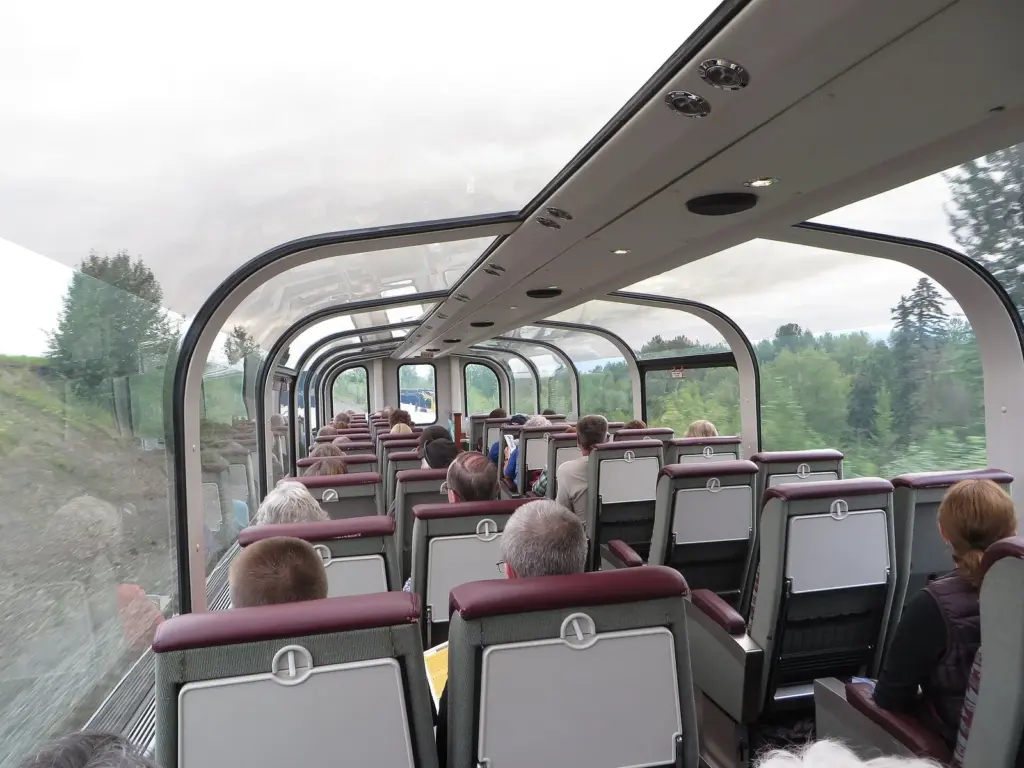
The line-run cruisetours are the easiest way to do it. Holland America’s include stays at its own Denali Lodge, dedicated tour directors and a visit to the Alaska Wildlife Conservation Center, and Princess operates five lodges with two near Denali. Luggage is handled between hotels, though Holland America allows only one full-size bag per guest during the Denali stay, per the line. The train ride is a highlight: the Alaska Railroad’s GoldStar dome service, $393 one way from Anchorage to Denali in 2026, gives you a glass-roofed car high above the tracks.
The park tours are long. In 2026, the Tundra Wilderness Tour lasted 5 to 5.5 hours and cost $144.75, and the Denali Natural History Tour lasted 4.5 to 5 hours, turning around at Mile 17, and cost $116.75, including Alaska Native presentations. With full road access expected in 2027, some tours will run longer. For many seniors, the shorter Natural History Tour is the better choice, and a separate guide will cover the Alaska cruisetour for seniors in detail.
Verdict: A cruisetour is very doable for most seniors if you choose a line-run package, allow rest days and pick the shorter park tour. If long days in a seat are hard for you, do the cruise alone and see Glacier Bay instead.
Traveling solo as a senior
Many older travelers cruise Alaska on their own, and it’s an easy trip to do solo: the ship is sociable, excursions are group-based and the ports are safe and English-speaking. The catch is price, since most cabins are priced for two and solo travelers often pay a single supplement. A few lines have solo cabins; Norwegian’s service charge schedule, for example, lists Studios, its solo cabins, among its categories. Look for solo meetups on the first evening, join the naturalist talks, and choose shared-table dining if you’d like company at dinner.
Hearing, vision, oxygen and other needs
Accessibility isn’t only about wheelchairs. Most major lines can provide accessible cabins with visual alerts, hearing kits or assistive listening devices in theaters, and they can accommodate service animals with advance notice and the right paperwork. Travelers who use medical oxygen need to arrange it in advance with the line and an approved supplier, and anyone with complex medical needs should talk to the line’s accessibility or medical department before booking. Dietary needs, from diabetes to allergies, are handled routinely if you note them on your booking and confirm with the dining room on the first night.
Alaska cruise packages for seniors: which extras are worth it
Cruise lines sell bundles of drinks, Wi-Fi, dining and gratuities, and the sales pitch is strong at booking time. For many older travelers, a few of them are worth it and most aren’t.
- Drink packages: mainstream-line packages typically cost about $60 to $90 per person per day before service charges, and most lines require every adult in a cabin to buy one if one person does. Unless you drink several cocktails or glasses of wine a day, paying as you go is usually cheaper.
- Wi-Fi: worth buying if you want to share photos with family or video-call the grandchildren. Most big lines now use Starlink; Princess, for example, sells its prioritized Starlink tier in its Princess Plus and Premier bundles. Coverage still drops in steep fjords.
- Prepaid gratuities: they’re charged either way, so prepaying simply moves the cost to before the trip. Some travelers like knowing the bill is settled.
- Shore excursion bundles: useful if you’ll book three or more ship tours; Regent, at the luxury end, includes shore excursions in its fares, according to the line.
- Specialty dining: a nice treat on a sea day, but the main dining rooms are good, and window tables on scenic evenings are free.
Verdict: Skip the drink package unless you’re sure you’ll use it, buy Wi-Fi if staying in touch matters, and spend the savings on one excellent excursion or a balcony.
Money matters for senior travelers
Senior discounts exist on some lines for travelers 55 and over, but the best price is often a regular fare booked early or a last-minute deal. Our Alaska cruise cost guide explains the discounts and the extras. Budget for daily gratuities of $18 to $20 per person on the big lines, which apply per person whatever you use on board, and for Alaska’s $34.50 passenger tax, usually included in taxes and fees. Veterans get a discount at some attractions, such as the Alaska Raptor Center’s $11 veteran price in 2026.
Staying well and comfortable on board
- Prevent falls. Decks get wet in Alaska’s rain, and ships move. Wear non-slip shoes, use the handrails on stairs and outer decks, and take the elevator when the ship is moving.
- Manage motion. Most of the Inside Passage is sheltered, but Seattle and Vancouver sailings cross exposed water at Queen Charlotte Sound and Hecate Strait, and one-ways cross the Gulf of Alaska. A midship cabin helps, and your doctor can advise on remedies that work with your other medications.
- Stay warm. Glacier decks are cold, even in July. Layers, a hat and gloves let you stay out for the best hour.
- Protect your sleep. On the June solstice, Juneau’s sun rises at 3:51 a.m. and sets at 10:08 p.m. An eye mask and a regular bedtime keep the days from blurring together.
- Watch the clock for medications. Alaska is one hour behind Pacific time, and ships may change their clocks during the cruise. Keep medication times on your home schedule or adjust with your doctor’s advice.
- Pace yourself. With so much daylight, it’s easy to overdo it. Plan a rest day after a big excursion.
What the extras cost, as of 2026
Here are sample costs for a couple on a 7-night cruise, beyond the fare. They help you compare a mainstream line with a more inclusive one.
| Item | Example | Cost for two |
|---|---|---|
| Gratuities | $18 per person per day, 7 days (Princess or Holland America standard cabin) | $252 |
| Alaska passenger tax | $34.50 per person, usually in taxes and fees | $69 |
| White Pass Summit train | $155 per adult | $310 |
| Goldbelt Tram | $60 per adult day ticket | $120 |
| Whale watching in Juneau | $159 per person (Harv and Marv’s) | $318 |
| Alaska Raptor Center | $17 per adult, $11 for veterans | $28 to $34 |
| GoldStar train to Denali (cruisetour) | $393 per adult, one way | $786 |
A couple doing the train, the tram and a whale tour spends about $750 on those three alone, before gratuities. Luxury lines that include tips, drinks or excursions look expensive until you add up tables like this one.
Documents and travel logistics
- Passports: a closed-loop Seattle round trip accepts a birth certificate and photo ID for U.S. citizens, but a passport book is the safer choice, and one-ways and Vancouver departures need one.
- Flying: since May 7, 2025, TSA requires a REAL ID-compliant license or another acceptable ID, such as a passport, for domestic flights. Since February 1, 2026, travelers without acceptable ID can pay $45 for TSA’s ConfirmID identity check.
- Canada: a past conviction for impaired driving, wherever it happened, can make a traveler inadmissible to Canada, so check the rules before any cruise that calls in Canada or starts in Vancouver.
- Fly in the day before. A spare day before sailing removes the stress of delayed flights, and gives you time to rest.
Packing and comfort tips for older travelers
- Non-slip, waterproof shoes. Wet decks, gangways and boardwalks are the most common place to slip.
- Layers and a warm hat. Glacier days are cold even in July.
- A folding cane or walking poles for uneven ground in port.
- Binoculars to see wildlife and glaciers without walking to the rail.
- A small daypack for medications, water and a rain jacket on excursions.
- An eye mask for sleeping through Alaska’s long summer daylight.
Questions to ask before you book
Before you pay a deposit, ask the cruise line or your travel agent these questions. The answers will tell you whether a particular sailing suits you.
- Which ports on this itinerary are scheduled as tender calls?
- Do this ship’s tenders have roll-on access for wheelchairs or scooters?
- How many accessible cabins does the ship have, and which are still available?
- Does this sailing enter Glacier Bay, and will park rangers be aboard?
- Which shore excursions are rated easy or wheelchair accessible, and what are the transfers like?
- What medical facilities are on board, and how are charges billed?
- Is terminal assistance available at boarding and disembarkation?
- What’s included in the fare: gratuities, drinks, Wi-Fi, excursions?
- On a cruisetour, how long are the train and bus days, and how is luggage handled?
- What happens if weather prevents me from going ashore?
The best time to cruise Alaska for seniors
June is often the best month for older travelers: drier and cooler than August, with long daylight and fewer families than July. Juneau averages 3.82 inches of rain in June against 6.41 in August and 9.15 in September. July is the warmest month but the busiest, with more children on board. May and September are cheaper and quieter, but colder, and September is the wettest month of the season. For a mix of comfort, crowds and price, aim for the first three weeks of June.
Alaska Cruise for Seniors FAQ
What is the best Alaska cruise for seniors over 70?
Holland America is the most popular choice, with calm mid-size ships, deep Alaska experience, Glacier Bay permits and park rangers aboard. Princess is a close second for Glacier Bay and cruisetours. For a small ship without skiff landings, American Cruise Lines is the most accessible option.
Is an Alaska cruise good for seniors with limited mobility?
Yes. Most Alaska ports have docks close to town, and the glacier days are seen from the ship. The main hurdles are tender days, steep gangways at low tide and excursions with steps. Book an accessible cabin early, choose docked ports, and tell the line about any mobility equipment.
Does Medicare cover me on an Alaska cruise?
Only partly. Medicare says Part B may cover medically necessary care on a ship in a U.S. port or within 6 hours of one, if the doctor is allowed to practice on the ship. It generally doesn’t cover care outside the United States. Buy travel insurance with medical and evacuation coverage.
Can I use a scooter or power wheelchair on an Alaska cruise?
On the ship and in docked ports, usually yes. On tender days, cruise lines say motorized wheelchairs and scooters generally can’t board tenders without roll-on capability, and one line limits crew to lifting devices under 100 pounds without the battery. A light folding model gives the most flexibility.
What are the best excursions for seniors in Alaska?
The White Pass Summit train in Skagway ($155 in 2026, with a wheelchair lift), the Goldbelt Tram in Juneau ($60), whale watching on a catamaran, the Mendenhall Glacier Visitor Center and the Alaska Raptor Center in Sitka. Floatplanes and helicopters are spectacular but involve steps.
Is a Denali cruisetour too tiring for seniors?
Not for most, if you choose a line-run package with a tour director and allow rest time. Expect several hotel changes and long rides; Denali’s bus tours ran 4.5 to 5.5 hours in 2026. The shorter Natural History Tour is the easier choice.
What month is best for seniors to cruise Alaska?
June. It’s drier than later summer, with 3.82 inches of rain in Juneau on average, and it has long daylight and fewer families than July. May and September are cheaper and quieter but colder, and September is the wettest month.
Do seniors need a passport for an Alaska cruise?
For a Seattle round trip, U.S. citizens can use a birth certificate and photo ID, but a passport book is recommended. One-way cruises and any sailing from Vancouver need a passport. For flights, you’ll need a REAL ID-compliant license or a passport.
Related Alaska Cruise Guides
- Best Cruise Line for Alaska (2027): Every Alaska Cruise Line Compared and Ranked
- How Much Does an Alaska Cruise Cost? 2027 Prices, Budgets and Hidden Fees
- Alaska Cruise and Land Tour Guide: Denali Cruisetours Compared
- Alaska Cruise Ports: Every Port of Call Ranked, Mapped and Explained
Sources and How We Checked
We checked the prices, rules, schedules and ship deployments in this guide against the sources below on September 24, 2026, and we log each one in our research database with the date it was checked. Cruise lines change ships, fares and fees every season, so confirm anything that affects your booking with the line or the agency concerned. Alaska Cruise Guide (AlaskaCruise.org) is an independent publication. It is not affiliated with any cruise line, port, tour operator or tourism office, and no one paid to be included.
- Alaska Department of Commerce: Alaska head tax
- Alaska Public Media: Skagway Railroad Dock rockslide
- Alaska Public Media: Tracy Arm 2026 itineraries
- Alaska Railroad: Alaska Railroad fares
- Alaska Railroad terminal (alaskarails.org): Seward cruise terminal
- alaska.org: Seward transfers
- alaskaraptor.org: Alaska Raptor Center
- americancruiselines.com: American Cruise Lines
- americancruiselines.com: American Cruise Lines
- cdc.gov: norovirus
- Celebrity Cruises: Celebrity Cruises
- City and Borough of Juneau: Juneau five-ship limit
- City and Borough of Juneau: Juneau five-ship limit
- City and Borough of Juneau: Juneau passenger cap
- Goldbelt Tram: Mount Roberts Tramway
- Government of Canada: Canada entry – DUI
- harvandmarvs-juneau-whale-watching.com: Harv & Marv's Outback Alaska
- Holland America Line: Mount Roberts Tramway
- Holland America Line: Holland America cruisetours
- Holland America Line: gratuities – Holland America
- Holland America Line: Wi-Fi / Starlink
- Holland America Line: Holland America Line, naturalists / rangers
- Juneau Independent: Mendenhall Glacier
- Juneau Independent: Mendenhall Glacier
- luxurytraveladvisor.com: Seabourn
- Medicare.gov: Medicare at sea
- National Park Service: Denali Park Road
- National Park Service: Denali bus tours
- National Park Service: Glacier Bay cruise permits
- National Park Service: Glacier Bay park facts
- National Park Service: Glacier Bay cruise visit
- nauticalcharts.noaa.gov: rough water
- NOAA National Centers for Environmental Information: Juneau weather
- Norwegian Cruise Line: gratuities – Norwegian
- Norwegian Cruise Line: Norwegian Cruise Line
- Port of Seattle: Seattle SEA airport
- Port of Seattle: Seattle Pier 91
- PR Newswire (line press release): Royal Caribbean
- Princess Cruises: tenders and mobility
- Princess Cruises: time zones
- Princess Cruises: gratuities – Princess
- Princess Cruises: Princess Cruises, Anchorage gateway
- Royal Caribbean: tenders and mobility
- Royal Caribbean: Wi-Fi / Starlink
- rssc.com: Regent Seven Seas
- Seward Chamber of Commerce: Seward cruise terminal
- silversea.com: Silversea
- Sitka Sound Cruise Terminal: Sitka Sound Cruise Terminal
- taquanair.com: Taquan Air
- thepointsguy.com: drink packages
- Transportation Security Administration: REAL ID
- Transportation Security Administration: REAL ID
- U.S. Customs and Border Protection: passport rules
- U.S. Forest Service: Mendenhall Glacier
- U.S. Geological Survey: Tracy Arm landslide
- U.S. Naval Observatory: Juneau daylight
- UnCruise Adventures: UnCruise Adventures
- vikingcruises.com: Viking
- visithaines.com: Haines port
- White Pass & Yukon Route: White Pass & Yukon Route
Photo Credits
- Park ranger aboard a cruise ship, Glacier Bay: photo by National Park Service, via Wikimedia Commons (Public domain)
- Westerdam in Ketchikan: photo by Photo by Joe Mabel, via Wikimedia Commons (CC BY-SA 4.0)
- Tender boat from Westerdam, Sitka: photo by Barek, via Wikimedia Commons (Public domain)
- White Pass and Yukon Route train: photo by Cullen328, via Wikimedia Commons (CC BY-SA 4.0)
- Mendenhall Glacier from Photo Point: photo by Photo by Joe Mabel, via Wikimedia Commons (CC BY-SA 4.0)
- Alaska Railroad GoldStar dome car: photo by Bernt Rostad from Oslo, Norway, via Wikimedia Commons (CC BY 2.0)
- Alaska cruise region map: map by Kmusser, via Wikimedia Commons (CC BY-SA 3.0); ferry routes removed; cruise ports, glacier-viewing areas and Denali added by Alaska Cruise Guide