An Alaska glacier cruise almost always includes at least one scenic cruising day, when the ship leaves the port schedule behind, sails up a fjord and holds position near a tidewater glacier so you can watch it calve. Which glacier you get depends entirely on your itinerary. The big ships go to Hubbard Glacier, Glacier Bay, Endicott Arm and Dawes Glacier, or College Fjord, and day boats from Whittier and Seward reach Prince William Sound and Kenai Fjords. Tracy Arm, for years a standard glacier day on Inside Passage round trips, has been off most itineraries since a landslide set off a tsunami there in August 2025.
This page is for first-time Alaska cruisers comparing itineraries, and for anyone already booked who wants to know what their glacier day will actually look like. The caveat: every glacier day is weather- and ice-dependent, and the names on 2027 itineraries (Tracy Arm especially) can still change. Last updated October 5, 2026. Every price, fee and schedule below is dated, and the sources are listed at the end.
Alaska’s cruise glaciers at a glance
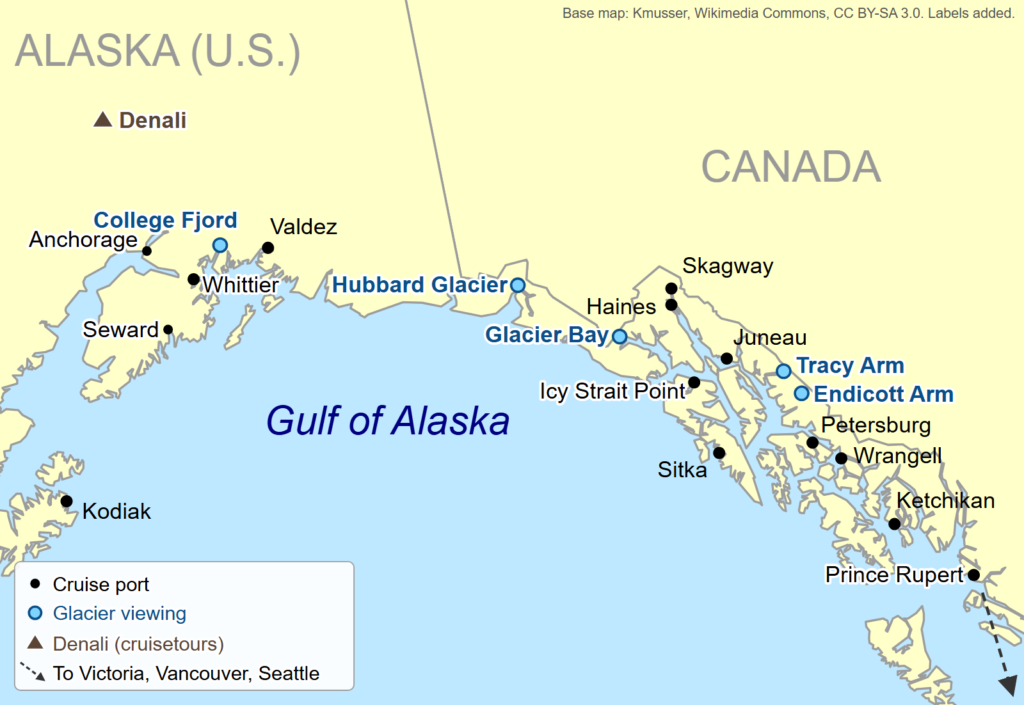
Here’s every glacier and fjord a cruise passenger can realistically see, how you get there, and whether it’s worth planning around. Status is as of September 2026.
| Glacier or fjord | Where | How you see it | Status for 2027 | Verdict |
|---|---|---|---|---|
| Hubbard Glacier | Disenchantment Bay, near Yakutat | From your ship, on one-way Gulf of Alaska cruises and some round trips | Stable and on many 2027 itineraries | The biggest single face you can sail to |
| Glacier Bay National Park | West of Juneau | From your ship, a full day with park rangers aboard | Permit lines only, two ships a day | The best all-around glacier day |
| Endicott Arm and Dawes Glacier | South of Juneau | From your ship, or a day boat from Juneau | The main 2026 substitute for Tracy Arm, widely used in 2027 | A solid fjord day; ice can stop the approach |
| Tracy Arm and the Sawyer glaciers | South of Juneau | From your ship or a day boat | Provisional after the 2025 landslide | Don’t book an itinerary for it |
| College Fjord | Northern Prince William Sound | From your ship, usually on Gulf of Alaska one-ways | On Princess and some Holland America northbound sailings | Many glaciers in one fjord |
| 26 Glacier Cruise | Prince William Sound, from Whittier | Day catamaran, about 5.25 hours | Runs in summer; Barry Arm is a monitored hazard | The best pre- or post-cruise glacier day |
| Kenai Fjords National Park | From Seward | Half-day or full-day boat tours | Runs daily in summer | Best for wildlife plus glaciers |
| Exit Glacier | Near Seward | By road and a short walk | Road usually open mid-May to late October | The easiest glacier to walk toward |
| Portage Glacier | Between Anchorage and Whittier | By road, then a short boat trip | Summer only | A quick stop on a transfer day |
| Mendenhall Glacier | Juneau | By road from the cruise docks | Visitor center open daily in summer 2026 | The one you can see from a port day |
What’s changed for 2027
Glaciers move slowly. Glacier days on cruise itineraries don’t. Here’s what’s different heading into the 2027 season.
- Tracy Arm is still uncertain. After the August 10, 2025 landslide above South Sawyer Glacier, Carnival, Holland America and Royal Caribbean replaced Tracy Arm with Endicott Arm and Dawes Glacier for 2026, and MSC, Virgin and the Juneau tour operator Allen Marine were reported to have done the same. Trade press has reported the 2027 season as still in question, and USGS expects continued rockfall from the slide scar.
- Some 2027 itineraries still say Tracy Arm. Carnival Luminosa’s 10-day cruises from San Francisco, starting May 3, 2027, list Tracy Arm Fjord, but Carnival announced them in July 2025, before the slide. Virgin’s Brilliant Lady was also reported with Tracy Arm on its 2027 Seattle round trips. Treat any Tracy Arm listing as provisional.
- Royal Caribbean names two glaciers, on two ships. Its 2027 release lists Endicott Arm and Dawes Glacier for Voyager of the Seas’ Seattle round trips and Hubbard Glacier for Anthem of the Seas’ one-ways between Vancouver and Seward. It names no glacier for Quantum or Serenade.
- Barry Arm is under watch. The Barry Arm landslide in northwestern Prince William Sound could fail rapidly and send tsunami waves into Barry Arm, Harriman Fjord and Port Wells. As of September 4, 2026, Alaska’s geological survey rated it Level 1, with slow movement, and some tour boats have been reported skipping Barry Arm and Surprise Inlet.
- Holland America gives one-way cruisers two different glacier days. Its 2027 Glacier Discovery cruises between Vancouver and Whittier include Glacier Bay in both directions, plus College Fjord northbound and Hubbard Glacier southbound.
What is scenic cruising?
On an itinerary, a glacier day usually appears as “scenic cruising” with a place name next to it. It isn’t a port: the ship doesn’t dock or tender, and nobody goes ashore. Instead, the ship spends several hours sailing into a fjord or bay, slows as it nears the ice, and holds position near the glacier face for a while before turning back. How close it gets depends on the floating ice, the weather, the tide, and the captain’s judgment on the day.
That last point is the one first-timers miss. A glacier on an itinerary is a plan, not a promise. Heavy ice can stop a ship well short of the face; fog can hide the whole thing; a medical emergency or bad weather can cancel the day entirely. When the planned glacier is out of reach, the captain may spend the time in another fjord nearby or simply keep sailing. For a fuller explanation of how these days work and how to spend them, see our page on scenic cruising in Alaska.
How a fjord day unfolds
Fjord days such as Endicott Arm follow a pattern. The ship enters the mouth of the fjord and follows a channel that narrows for hours. The walls get steeper and closer, waterfalls pour off both sides, and the floating ice thickens as you get nearer the glacier. In heavy ice the ship slows to a crawl, and this is where the captain decides how far to go. If the way is clear, the ship reaches a viewing spot in front of the face, lingers, turns in water that looks far too tight for a ship that size, and retraces its route out.
The best part of a fjord day is often the approach, not the face. The walls, the waterfalls and the ice around the ship are the scenery for hours, and people who wait indoors for the announcement that the glacier is in sight miss most of it. Go out when the ship enters the fjord, not when it arrives at the end.
How an open-bay day differs
Hubbard Glacier works differently. Instead of a narrow fjord, ships cross a wide bay toward a face that looks close long before it is, because there’s nothing nearby to judge the scale by. The glacier fills the whole view for a long time. When the ship does stop, it holds position, and captains often turn slowly so both sides get a look. College Fjord sits in between: a fjord wide enough to sail up the middle, with glaciers coming down both walls. Glacier Bay is its own case, a full day with several stops that our Glacier Bay guide covers in detail.
Every glacier you can see on an Alaska cruise
Here are the ten glacier experiences open to cruise passengers, starting with the ones your ship takes you to and ending with the ones you reach by boat or road from a port.
1. Hubbard Glacier
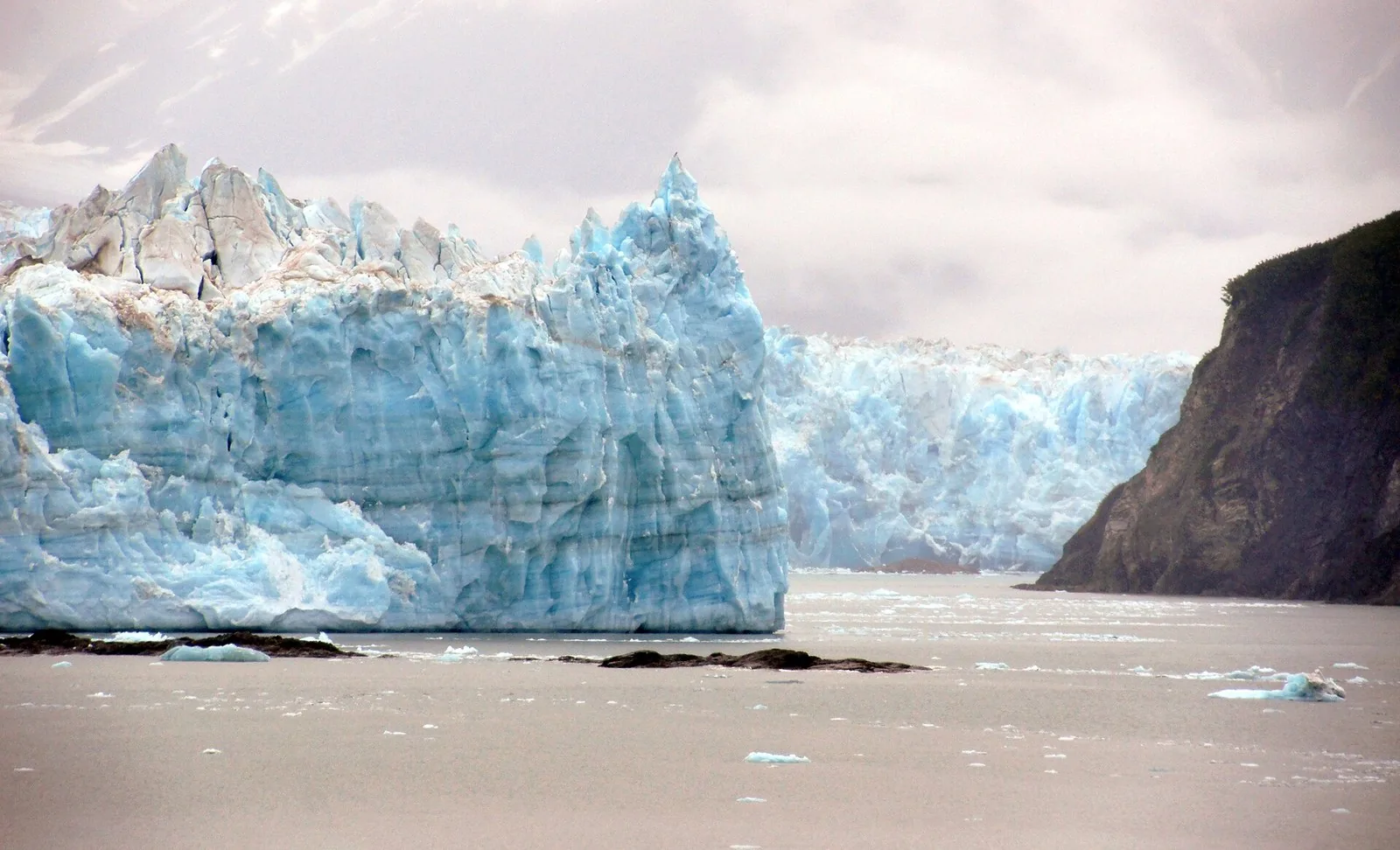
Hubbard is the biggest glacier face you can sail to in Alaska. The Park Service calls it North America’s largest tidewater glacier: it starts near Mount Logan (19,850 feet) in Canada’s Yukon and ends 76 miles later in Disenchantment Bay, inside Wrangell-St. Elias National Park and Preserve near Yakutat. The glacier is about 7 miles wide, and its terminal face is roughly 600 feet tall, with about 350 feet above the water and 250 below. When a ship stops in front of it, the scale is hard to believe until you spot another vessel near the ice for comparison.
Hubbard is also unusual because it isn’t shrinking. Unlike most Alaska glaciers, it has advanced over the past 100 years, and the Park Service describes it as currently stable and still thickening. Twice, in 1986 and 2002, it advanced far enough to reach Gilbert Point and dam Russell Fiord behind it; both times the ice dam broke and the fiord reconnected with the sea.
Who goes: Hubbard is the standard glacier day on one-way cruises between Vancouver or Seattle and Seward or Whittier. In 2027 that includes Royal Caribbean’s Anthem of the Seas, Holland America’s southbound Glacier Discovery sailings, Norwegian sailings that alternate Hubbard with Glacier Bay, and Viking’s 11-day Vancouver-to-Seward cruise. Celebrity features it on its Alaska itineraries too, and it’s one of Princess’s four glacier areas. Our full guide to Hubbard Glacier covers the approach, the calving and which ships get closest.
2. Glacier Bay National Park
Glacier Bay is the glacier day to pick if you can: a full day of scenic cruising inside a national park, with Park Service rangers aboard and several tidewater glaciers along the way. It’s also the hardest to get. The park allows no more than two cruise ships a day, and only lines with a park concession can enter: the park’s list names Princess, Holland America, Norwegian, Seabourn, Cunard and Viking. Our complete guide to Glacier Bay National Park explains the permits, the day hour by hour, and which 2027 sailings go in.
3. Endicott Arm and Dawes Glacier
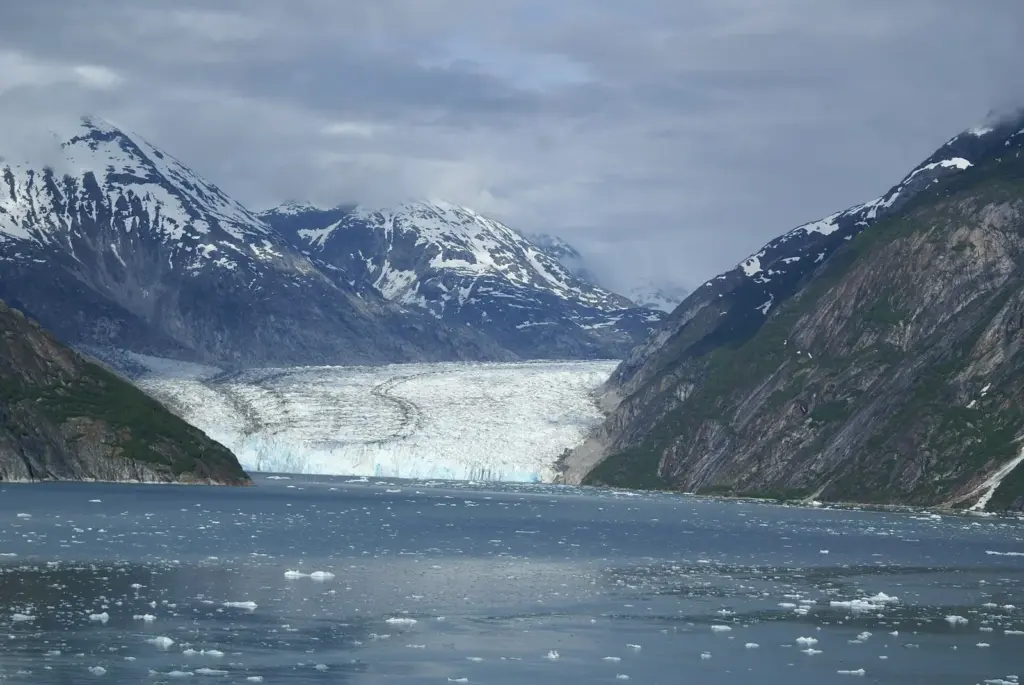
Endicott Arm is the fjord just south of Tracy Arm, and since 2026 it has become the default glacier day on many Inside Passage round trips. It ends at Dawes Glacier. The two fjords are neighbors, and they look alike from a ship’s deck: steep granite walls, waterfalls, floating ice and a glacier at the end.
Who goes: In 2027, Princess’s Coral, Crown and Discovery Princess round trips from Vancouver use Endicott Arm, as do some Emerald Princess sailings and Ruby Princess’s 10-day trips from San Francisco. Holland America’s Noordam visits Dawes Glacier on its Seattle round trips, Royal Caribbean’s Voyager of the Seas goes on its Seattle sailings, and Celebrity lists Endicott Arm on its Alaska itineraries.
The honest drawback is the same as Tracy Arm’s: the fjord is long and narrow, and ice can keep a big ship from reaching the face. When that happens you still get the fjord, just not the glacier up close. For the details, including how often ships reach the face and where to stand, see our page on Endicott Arm.
4. Tracy Arm and the Sawyer glaciers
Tracy Arm used to be one of the most common glacier days on Inside Passage round trips from Seattle and Vancouver. It ends at two glaciers, North Sawyer and South Sawyer, and its narrow, twisting walls made it a favorite. That changed at 5:26 a.m. Alaska time on August 10, 2025, when a landslide above the toe of South Sawyer Glacier fell into the fjord and set off a tsunami.
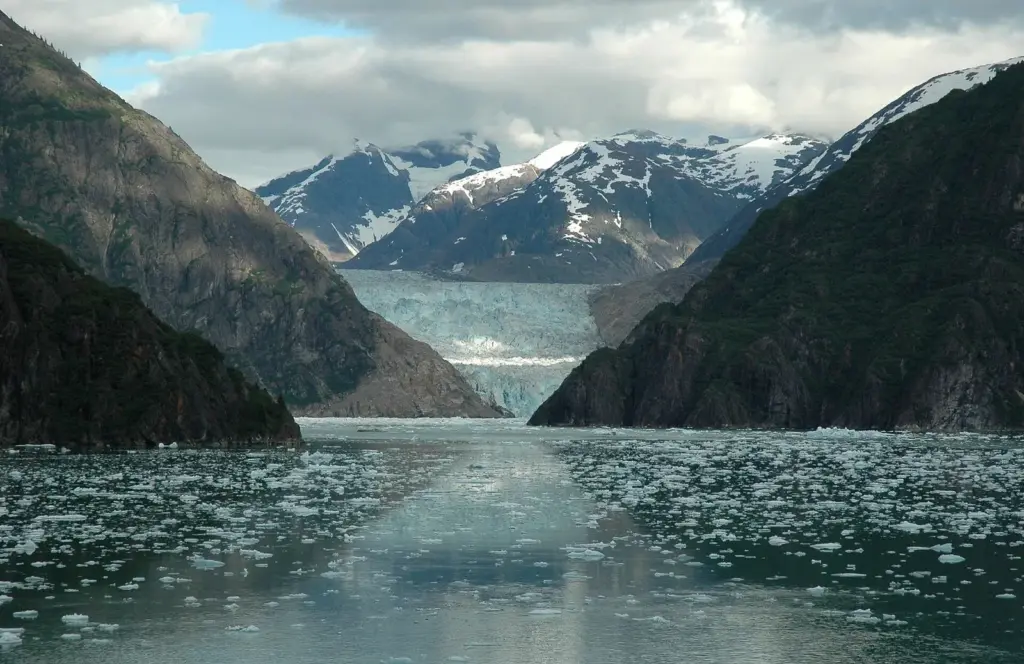
The U.S. Geological Survey estimated the slide at up to about 100 million cubic meters of rock, with a preliminary maximum runup of 1,500 to 1,600 feet on the opposite wall and at least 100 feet at Sawyer Island. No injuries or deaths were reported, though kayakers camped on Harbor Island reported waves sweeping away their gear. USGS expects continued rockfall and smaller landslides from the exposed scar, which could cause future local tsunamis.
That’s why most lines moved to Endicott Arm for 2026, and why any Tracy Arm fjord listing on a 2027 itinerary should be read as “Tracy Arm or a substitute.” Our explainer on the Tracy Arm tsunami covers what happened and what the scientists are watching, and our page on the Tracy Arm tour from Juneau tracks whether the day boats have gone back. As of 2026, Allen Marine was reported to be running its Juneau tours to Endicott Arm instead.
Verdict: don’t choose a 2027 itinerary because it says Tracy Arm. Choose it for its other ports and glacier days, and count Tracy Arm as a bonus if it happens.
5. College Fjord
College Fjord, in northern Prince William Sound, is the place to see many glaciers in one sitting. Glaciers spill down both walls of the fjord, several of them reaching the water, and a ship can sail up the middle with ice on either side. It appears mostly on one-way Gulf of Alaska cruises: Princess counts it as one of its four glacier areas, and Holland America’s 2027 northbound Glacier Discovery sailings include it.
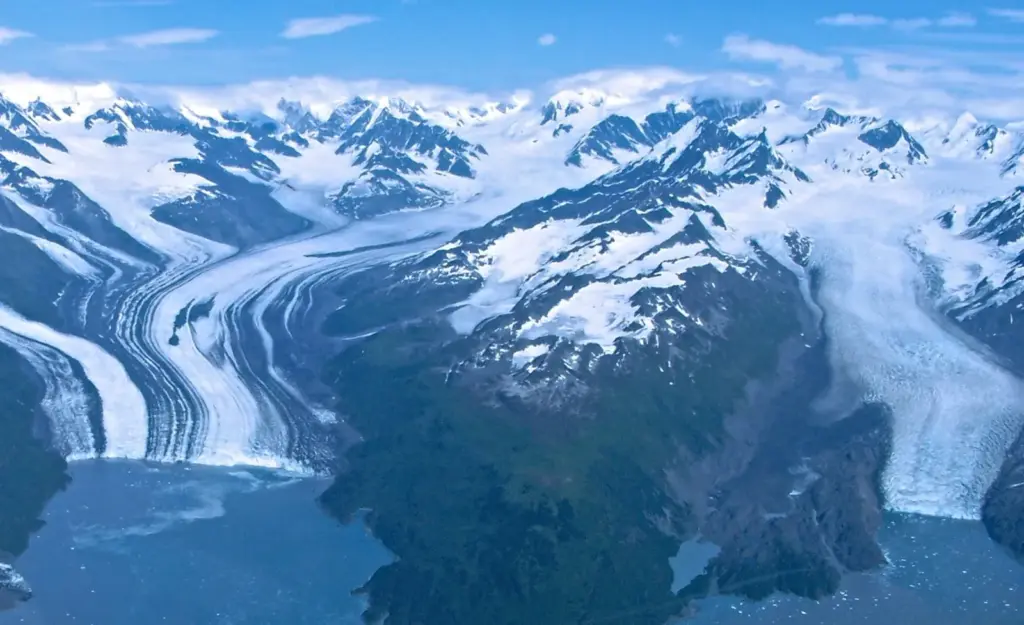
The names are the fun part. According to the story Princess tells, members of the 1899 Harriman Alaska Expedition entered the fjord on June 26 of that year and named its glaciers after East Coast colleges: men’s colleges such as Harvard, Yale and Amherst on one side, and women’s colleges such as Smith, Bryn Mawr, Vassar, Wellesley and Barnard on the northwest side. If your ship carries a naturalist, expect a roll call. Our page on College Fjord covers which glaciers you’ll see and how it compares with Hubbard.
6. Prince William Sound from Whittier: the 26 Glacier Cruise
If your cruise starts or ends in Whittier, or you have a day in Anchorage, the 26 Glacier Cruise is the easiest big glacier day you can add. The Alaska Railroad describes it as a 5.25-hour, roughly 130-mile catamaran trip from Whittier through College Fjord and Harriman Fjord, with a hot meal included. The Alaska Railroad’s Glacier Discovery train runs to Whittier in summer (the railroad listed its 2026 full-route season as May 30 to September 14), so you can do it as a day trip from Anchorage without a car.
One current caution: the Barry Arm landslide sits at the edge of this area. Alaska’s Division of Geological and Geophysical Surveys advises mariners near Barry Arm to leave if they see or hear unusual rockfall or notice unusual waves, currents or tides, and a sensor network watches the slide. Some operators have been reported rerouting around Barry Arm and Surprise Inlet, which is why published routes and glacier counts differ between the operator and resellers. Check the current route when you book. Our 26 Glacier Cruise page has the details.
7. Kenai Fjords National Park from Seward
Seward is the other gateway to Anchorage, and Kenai Fjords National Park starts at its doorstep. Boat tours leave Seward’s small boat harbor daily in summer. Half-day tours stay in sheltered Resurrection Bay; full-day tours reach the park’s tidewater glaciers. The Park Service says nearly 40 glaciers flow from the Harding Icefield into and around the park.
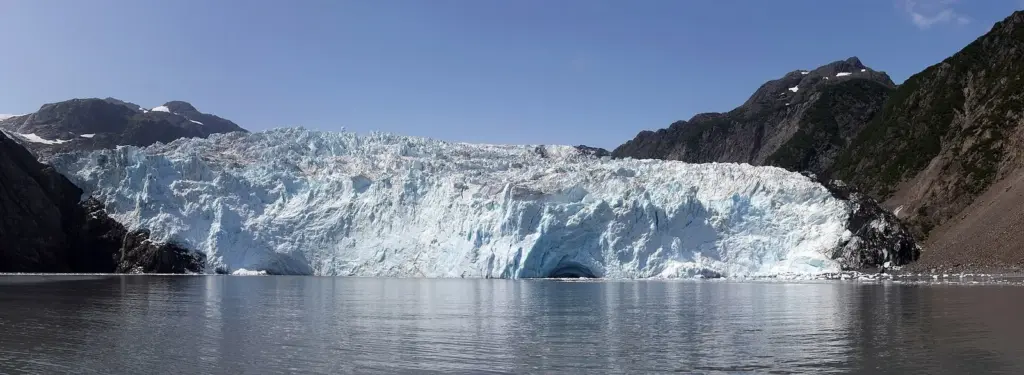
Two details surprise people. The park charges no entrance fee, and it has no authorized boat-tour concessioners, so no park rangers ride the boat tours; your commentary comes from the tour company’s crew. For wildlife, though, Kenai Fjords is hard to beat. Full-day trips go farther, which means more hours to spot whales, sea lions and seabirds. If you want glaciers and animals in one outing, pick a full-day tour over a half-day one. Our guide to Kenai Fjords tours compares the half-day and full-day options.
8. Exit Glacier
Exit Glacier is the glacier you can walk toward. It’s part of Kenai Fjords National Park but reached by road: turn onto Exit Glacier Road (officially Herman Leirer Road) at mile 3 of the Seward Highway and follow it 8.4 miles. The road is usually impassable to cars from late October to mid-May because of snow, so it’s a summer outing, and there’s a shuttle bus and taxi service from Seward if you don’t have a car.
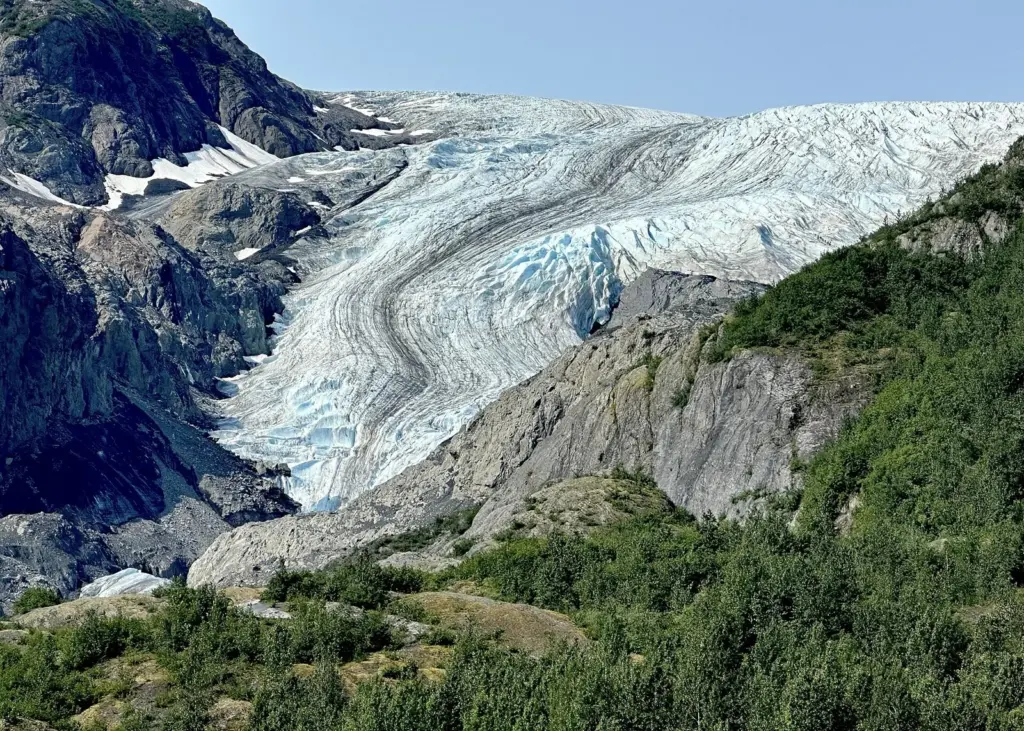
The trails suit every fitness level. The Glacier View Loop is a one-mile accessible trail; the Glacier Overlook Trail continues 0.6 mile to the Exit Glacier Overlook; and the Harding Icefield Trail is an 8-mile round trip for strong hikers with a full day. Along the way, the landscape shows how plants reclaim bare rock after the ice retreats. Our Exit Glacier page covers timing it around a Seward departure or arrival day.
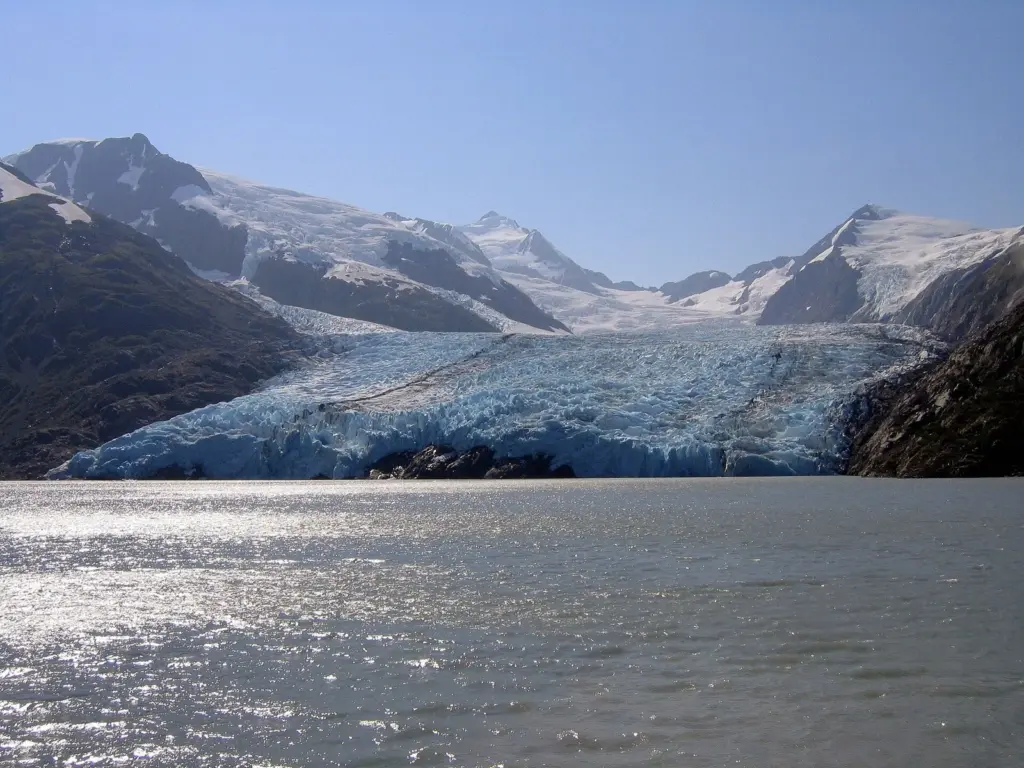
9. Portage Glacier
Portage Glacier sits in the valley between Anchorage and Whittier, and the Alaska Railroad lists Portage as a stop on the Glacier Discovery train’s summer route. A summer boat cruise across Portage Lake gets you to the face, which makes it a quick add-on for a transfer day rather than a destination in itself. It’s a much smaller experience than a full fjord day, but it’s also much easier. Our Portage Glacier page covers how to fit it into a Whittier transfer.
10. Mendenhall Glacier
Mendenhall is the glacier most cruise passengers actually stand near, because it’s a short drive from Juneau’s cruise docks. In summer 2026 its visitor center was open 9 a.m. to 6 p.m. daily, after a year of limited staffing in 2025. It belongs to the Juneau port day rather than to a glacier cruise, so our guide to things to do in Juneau covers getting there, the trails, and how to fit it around a ship’s schedule.
How to choose an Alaska glacier cruise
You rarely choose a glacier directly. You choose an itinerary, and the itinerary brings its glacier with it. The table below shows what each common route type tends to include in 2027. For help picking the route itself, see our guide to choosing an Alaska cruise itinerary.
| Itinerary type | Typical glacier days (2027) | What to watch for |
|---|---|---|
| 7-day round trip from Seattle | Endicott Arm and Dawes Glacier on many ships; Glacier Bay on a few (Royal Princess, Holland America’s Eurodam) | Some ships name no glacier at all |
| Round trip from Vancouver | Endicott Arm on most Princess sailings; Glacier Bay on Holland America’s new 8-day route and some Emerald Princess dates | Check the ship and the date, not the itinerary name |
| One-way Gulf of Alaska (Vancouver to Seward or Whittier) | Hubbard Glacier, often with Glacier Bay or College Fjord as a second day | Two glacier days is common, and the best value for ice |
| From San Francisco or Los Angeles | Endicott Arm (Ruby Princess), Glacier Bay (Emerald Princess), Tracy Arm (Carnival, provisional) | Long sea days to get north |
| Pre- or post-cruise days in Anchorage | 26 Glacier Cruise, Kenai Fjords, Exit Glacier, Portage Glacier | Book these once your flights are fixed |
If you’re starting or ending in Southcentral Alaska anyway, the day-boat options are a real advantage: a one-way cruise plus a Kenai Fjords or 26 Glacier day gives you more ice than any single round trip. Our guide to an Alaska cruise from Anchorage explains how the Seward and Whittier ports fit into that plan.
Verdict: for the most glacier time, pick a one-way Gulf of Alaska cruise that pairs Hubbard Glacier with Glacier Bay or College Fjord, then add a day boat from Seward or Whittier. For a round trip, pick a sailing that names Glacier Bay; failing that, Endicott Arm is a good day as long as you expect the ice to have the final say.
Which glaciers does each cruise line visit in 2027?
Here’s what each major line names on its 2027 Alaska itineraries, from its own releases and itinerary pages as of September 2026. Lines change glacier days from one season to the next, and sometimes from one sailing to the next, so check the day-by-day plan for your exact date.
| Line | Glacier days named for 2027 | Worth knowing |
|---|---|---|
| Princess | Glacier Bay (85 calls), Hubbard Glacier, College Fjord, Endicott Arm and Dawes Glacier | Four glacier areas, the widest choice of any big line |
| Holland America | Glacier Bay; College Fjord (northbound Glacier Discovery); Hubbard Glacier (southbound); Dawes Glacier (Noordam) | Rangers board for its Glacier Bay days |
| Royal Caribbean | Endicott Arm and Dawes Glacier (Voyager of the Seas); Hubbard Glacier (Anthem of the Seas) | Quantum and Serenade itineraries name no glacier |
| Norwegian | Hubbard Glacier or Glacier Bay | Which one depends on the sailing |
| Celebrity | Hubbard Glacier, Endicott Arm | No Glacier Bay concession |
| Carnival | Tracy Arm Fjord listed on Carnival Luminosa’s San Francisco sailings | Announced before the slide; Carnival used Endicott Arm in 2026 |
| Viking | Hubbard Glacier, with a Valdez call | Holds a Glacier Bay permit but its 2027 route doesn’t use it |
| Virgin Voyages | Tracy Arm, as reported for Brilliant Lady’s Seattle round trips | Provisional; reported to have used Endicott Arm in 2026 |
| MSC | Endicott Arm and Dawes Glacier in 2026, as reported | Check the 2027 day-by-day plan |
| UnCruise (small ships) | Glacier Bay on many voyages | Ships of 22 to 86 guests reach smaller fjords too |
Verdict: Princess and Holland America give glacier lovers the most options, and with Norwegian they’re the mainstream lines that can take you into Glacier Bay. If you’re sailing Royal Caribbean or Celebrity, pick a one-way sailing with Hubbard Glacier over a round trip that names no glacier at all. And if your itinerary says Tracy Arm, assume Endicott Arm until the line confirms otherwise.
Three ways to build a glacier-heavy Alaska trip
If ice is the main reason you’re going, the itinerary is only half the plan. Here are three ways to combine a cruise with the right extras, using 2027 sailings as examples.
The maximum-ice plan: one-way cruise plus a day boat
Book a one-way Gulf of Alaska cruise with two glacier days, such as Holland America’s northbound Glacier Discovery (Glacier Bay and College Fjord) or Princess’s Voyage of the Glaciers (Glacier Bay plus a second glacier day). Then add a day in Southcentral Alaska before your flight home: the 26 Glacier Cruise from Whittier or a full-day Kenai Fjords tour from Seward. That’s three or four glacier experiences in about ten days, each different from the last. The catch is cost: one-way cruises need open-jaw flights, and the extra hotel night adds up.
The round-trip plan: pick the sailing that names Glacier Bay
If you want to fly in and out of the same city, choose a round trip that names Glacier Bay on its day-by-day plan. From Seattle in 2027, that means Royal Princess or Holland America’s Eurodam; from Vancouver, Holland America’s new 8-day route or the Emerald Princess dates that include it. Then use your Juneau port day for Mendenhall Glacier, and you’ll have seen a national park’s tidewater glaciers and a road-accessible glacier in one week.
The budget plan: Endicott Arm and a port-day glacier
The cheapest Alaska cruises are often 7-day round trips from Seattle that name Endicott Arm and Dawes Glacier, or no glacier at all. You can still build a good glacier week. Treat the fjord day as a bonus that depends on the ice, and see Mendenhall Glacier on your own from Juneau rather than on a pricey excursion. If you have extra budget for one splurge, a helicopter glacier landing gets you onto the ice itself, which no ship can do.
Verdict: the maximum-ice plan is the best Alaska glacier cruise for most people who can manage the flights. Everyone else should prioritize a round trip that names Glacier Bay, and only fall back on Endicott Arm when price or dates force the choice.
Which glacier day is best?
Opinions differ, but here’s how the main options compare for a first-time cruiser, judged on the day as a whole rather than the size of one glacier.
| Rank | Glacier day | Why | The catch |
|---|---|---|---|
| 1 | Glacier Bay | A full day, several glaciers, rangers aboard, two-ship limit | Only some sailings on six permit lines |
| 2 | Hubbard Glacier | The largest face and a stable, advancing glacier | One glacier; floating ice decides how close you get |
| 3 | College Fjord | Many glaciers in one fjord | Mostly on one-way sailings |
| 4 | Endicott Arm and Dawes | Dramatic fjord walls, waterfalls, a glacier at the end | Ice can stop the ship short |
| 5 | Tracy Arm | Historically the most dramatic fjord | Provisional since the 2025 landslide |
If you have a choice between two otherwise similar sailings, our comparison of Glacier Bay and Hubbard is a good tiebreaker. Otherwise, don’t let the glacier day decide everything: ports, ship and dates matter more over a week.
Glacier calving: what you’re waiting for
Calving is the moment a piece of ice breaks off a tidewater glacier’s face and falls into the sea. It’s what everyone on deck is waiting for, and it’s unpredictable: a face can stay quiet for twenty minutes, then shed a slab the size of a building. The Park Service says blocks up to 200 feet high can calve from tidewater glaciers, and the resulting icebergs can last a week or more.
A few things help. Watch the whole face rather than one spot, because the sound often arrives a beat after the ice starts to fall. Listen for cracks, which can mean movement is coming. Keep your camera on video rather than trying to time a still. And stay out for the full time at the glacier; the people who leave after ten minutes are the ones who miss it. Our page on glacier calving explains why it happens and why some glaciers calve more than others.
Glacier landings and flightseeing
Scenic cruising shows you glaciers from the water. Several port excursions put you on the ice itself. The best known is the helicopter dog-sledding trip in Juneau: Temsco’s Mendenhall Glacier tour cost $699 per person (ages 2 and up) in 2026 and lasted about 2 hours 45 minutes, including about an hour at the glacier camp and 20 to 25 minutes of mushing. Helicopter glacier landings and fixed-wing flightseeing run from other ports too.
These are expensive, weather-dependent, and among the most memorable things people do in Alaska. Book them early, expect cancellations in low cloud, and make sure the tour returns well before your ship’s all-aboard time.
Are Alaska’s glaciers melting?
Mostly, yes. The Park Service says 95% of Alaska’s more than 100,000 glaciers are thinning, stagnating or retreating, and it measures 11% less glacial ice in Glacier Bay than in the 1950s. Photos only a decade or two old show faces that have since pulled back, which is why every image on this page carries its year.
There are exceptions, and they’re worth knowing because they often end up on cruise itineraries. Hubbard Glacier has advanced over the past century and is described by the Park Service as stable and thickening, and the Park Service reports that Johns Hopkins Glacier in Glacier Bay has advanced too. Our page asking are Alaska glaciers melting looks at the science, the exceptions and what the change means for cruise visitors over the next decade.
Glacier terms you’ll hear on deck
Naturalists and rangers use a vocabulary that nobody explains on the itinerary. Here’s what the words mean, in the order you’re likely to hear them.
- Tidewater glacier: a glacier that flows all the way to the sea and ends in the water. These are the ones ships visit, because they calve icebergs.
- Face or terminus: the glacier’s front edge. On a tidewater glacier, it’s the wall of ice rising from the water.
- Calving: ice breaking off the face and falling into the sea. The big event of any glacier day.
- Icefield: a broad expanse of ice high in the mountains that feeds many glaciers at once. Exit Glacier and the glaciers of Kenai Fjords flow from the Harding Icefield.
- Valley glacier: a glacier flowing down a mountain valley. Some reach the sea; many, like Exit Glacier, end on land.
- Hanging glacier: ice perched high on a mountainside that ends at a cliff rather than reaching the valley floor. Fjord days are full of them.
- Fjord: a long, narrow, steep-walled inlet carved by glaciers and later flooded by the sea. Tracy Arm, Endicott Arm and College Fjord are all fjords.
- Moraine: rock and gravel carried and dropped by a glacier. The dark stripes running down a glacier are moraines, often marking where two streams of ice have merged.
- Growlers and bergy bits: small icebergs. Growlers are the smallest pieces, low in the water, and they’re why ships slow down in ice-filled fjords.
- Advancing and retreating: whether a glacier’s face moves forward or back over the years. Glacier ice always flows downhill; a glacier retreats when melting and calving remove ice faster than the flow replaces it.
Why is glacier ice blue?
Glacier ice is dense. Over time, the weight of the snow above squeezes out most of the air bubbles, and the compact ice absorbs the red end of the light spectrum more than the blue. The deeper and denser the ice, the bluer it looks, which is why fresh calving faces and overturned icebergs show the most intense color. Snow and bubbly surface ice scatter all colors and look white. Overcast days, when there’s no glare, show the blue best.
How to make the most of a glacier day
Dress for a cold boat ride
Even in July, the air near a tidewater glacier is noticeably colder than in port, and the wind on an open deck makes it worse. Wear a warm hat, gloves, an insulated layer and a waterproof shell. You’ll enjoy the hour at the ice far more if you can stay outside for all of it.
Where to stand, and whether you need a balcony
A balcony is pleasant on a glacier day but not essential. Ships move constantly, the view changes sides, and at the face you’ll want an open deck where you can move around. If your ship opens forward areas for scenic cruising, that’s the best view of the approach. Don’t pay a big premium for a particular side of the ship just for glaciers; spend it on binoculars and a better jacket.
Bring binoculars
The glacier doesn’t need magnifying, but everything around it does: seals on the ice, mountain goats on the cliffs, waterfalls, the texture of the face. One pair per person saves arguments.
Plan meals around the ice
Eat a big breakfast, then plan lunch for before or after the time at the glacier. Missing the day’s best calving because you were waiting for a table is common and avoidable.
Don’t write off a gray day
Blue ice shows best under overcast skies, and low cloud can make a fjord feel even more dramatic. Rain is normal in Southeast Alaska. The only real loss is fog thick enough to hide the face, and even then it often lifts.
Alaska glacier cruise FAQ
Which Alaska cruise sees the most glaciers?
One-way Gulf of Alaska cruises between Vancouver and Seward or Whittier usually see the most, because they often include two glacier days: Hubbard Glacier plus Glacier Bay or College Fjord. Holland America’s 2027 Glacier Discovery sailings, for example, include Glacier Bay in both directions plus College Fjord northbound or Hubbard Glacier southbound.
Is Tracy Arm open to cruise ships in 2027?
It’s uncertain. After the August 2025 landslide-tsunami, most lines replaced Tracy Arm with Endicott Arm and Dawes Glacier for 2026, and trade press reported the 2027 season as still in question. A few 2027 itineraries still list Tracy Arm, but some were announced before the slide. Treat any listing as provisional.
Is Hubbard Glacier worth it on an Alaska cruise?
Yes. Hubbard Glacier is North America’s largest tidewater glacier, about 7 miles wide, and unlike most Alaska glaciers it has advanced over the past century. It’s a single, enormous glacier rather than several, so it’s a different day from Glacier Bay, but few people watching it calve feel shortchanged.
Do you need a balcony for an Alaska glacier route?
No. A balcony is a comfortable extra, but the best glacier viewing is from open decks, where you can move as the ship turns and the view changes sides. If you’re choosing a cabin mainly for glaciers, a better jacket and good binoculars will improve the day more than a premium balcony.
Can you take a glacier cruise from Valdez, Alaska?
Yes. Valdez sits on Prince William Sound, and local operators run glacier and wildlife day cruises from its harbor in summer. A few cruise itineraries call there: Viking’s 2027 Vancouver-to-Seward cruise stops in Valdez after scenic sailing at Hubbard Glacier. Most cruise passengers reach Prince William Sound from Whittier instead.
How close do cruise ships get to glaciers?
It varies by glacier and by day. Floating ice, weather, tide and the captain’s judgment decide the distance, and ships keep well back from active faces because falling ice creates waves. In Glacier Bay the Park Service describes about an hour near the face. In narrow fjords like Endicott Arm, heavy ice can stop a ship well short.
What should you wear on a glacier day?
Dress for a cold, windy boat ride, even in July. A warm hat, gloves, an insulated layer and a waterproof shell let you stay outside for the whole time at the glacier, which is when calving happens. Waterproof shoes with grip help on wet decks. Layers beat one heavy coat, because the ship’s interior is warm.
Can you see glaciers on a day trip from Anchorage?
Yes, easily. The 26 Glacier Cruise from Whittier and full-day Kenai Fjords boat tours from Seward are the big glacier days, and both towns are reachable by the Alaska Railroad in summer. For something shorter, Portage Glacier and Exit Glacier are reachable by road, with Exit Glacier’s trails starting from a parking area outside Seward.
Related Alaska Cruise Guides
- Glacier Bay National Park: The Complete Guide for Cruise Visitors
- Alaska Cruise Itineraries: Every Route, Port Combination and Length Compared
- Things to Do in Juneau on a Cruise: The Complete Juneau Cruise Port Guide
Sources and How We Checked
We checked the prices, rules, schedules and ship deployments in this guide against the sources below on September 24, 2026, and we log each one in our research database with the date it was checked. Cruise lines change ships, fares and fees every season, so confirm anything that affects your booking with the line or the agency concerned. Alaska Cruise Guide (AlaskaCruise.org) is an independent publication. It is not affiliated with any cruise line, port, tour operator or tourism office, and no one paid to be included.
- adn.com: Tracy Arm 2026 itineraries
- Alaska DGGS: Barry Arm landslide
- Alaska Public Media: Tracy Arm 2026 itineraries
- Alaska Public Media: Barry Arm landslide
- Alaska Railroad: Alaska Railroad
- Alaska Railroad: 26 Glacier Cruise
- Carnival Cruise Line news: Carnival Cruise Line
- Celebrity Cruises: Celebrity Cruises
- Holland America Line: Holland America Line
- Juneau Independent: Mendenhall Glacier
- mscpressarea.com: MSC Cruises
- National Park Service: Glacier Bay cruise permits
- National Park Service: Glacier Bay glaciers
- National Park Service: Kenai Fjords boat tours
- National Park Service: Kenai Fjords, Exit Glacier
- National Park Service: Johns Hopkins Glacier
- National Park Service: Hubbard Glacier
- Norwegian Cruise Line: Norwegian Cruise Line
- PR Newswire (line press release): Royal Caribbean
- Princess Cruises: College Fjord
- Princess Cruises: Princess Cruises
- Temsco Helicopters: Glacier dog sledding
- travelweekly.com: Tracy Arm 2026 itineraries
- U.S. Geological Survey: Tracy Arm landslide
- UnCruise Adventures: UnCruise Adventures
- vikingcruises.com: Viking
- virginvoyages.com: Virgin Voyages
Photo Credits
- Hubbard Glacier face: photo by Bernard Spragg. NZ, via Wikimedia Commons (CC0)
- Alaska cruise region map: map by Kmusser, via Wikimedia Commons (CC BY-SA 3.0); ferry routes removed; cruise ports, glacier-viewing areas and Denali added by Alaska Cruise Guide
- Dawes Glacier, Endicott Arm: photo by Richard Martin, via Wikimedia Commons (CC BY 2.0)
- Tracy Arm (2007): photo by Peter Mulligan, via Wikimedia Commons (CC BY 2.0)
- Harvard and Yale Glaciers (2011): photo by Erik Kohler, via Wikimedia Commons (CC BY-SA 3.0)
- Aialik Glacier (2009): photo by Ianaré Sévi, via Wikimedia Commons (CC BY-SA 3.0)
- Exit Glacier (2023): photo by OKJaguar, via Wikimedia Commons (CC BY 4.0)
- Portage Glacier (2003): photo by Zdenek Svoboda from Prague, Czech Republic, via Wikimedia Commons (CC BY 2.0)