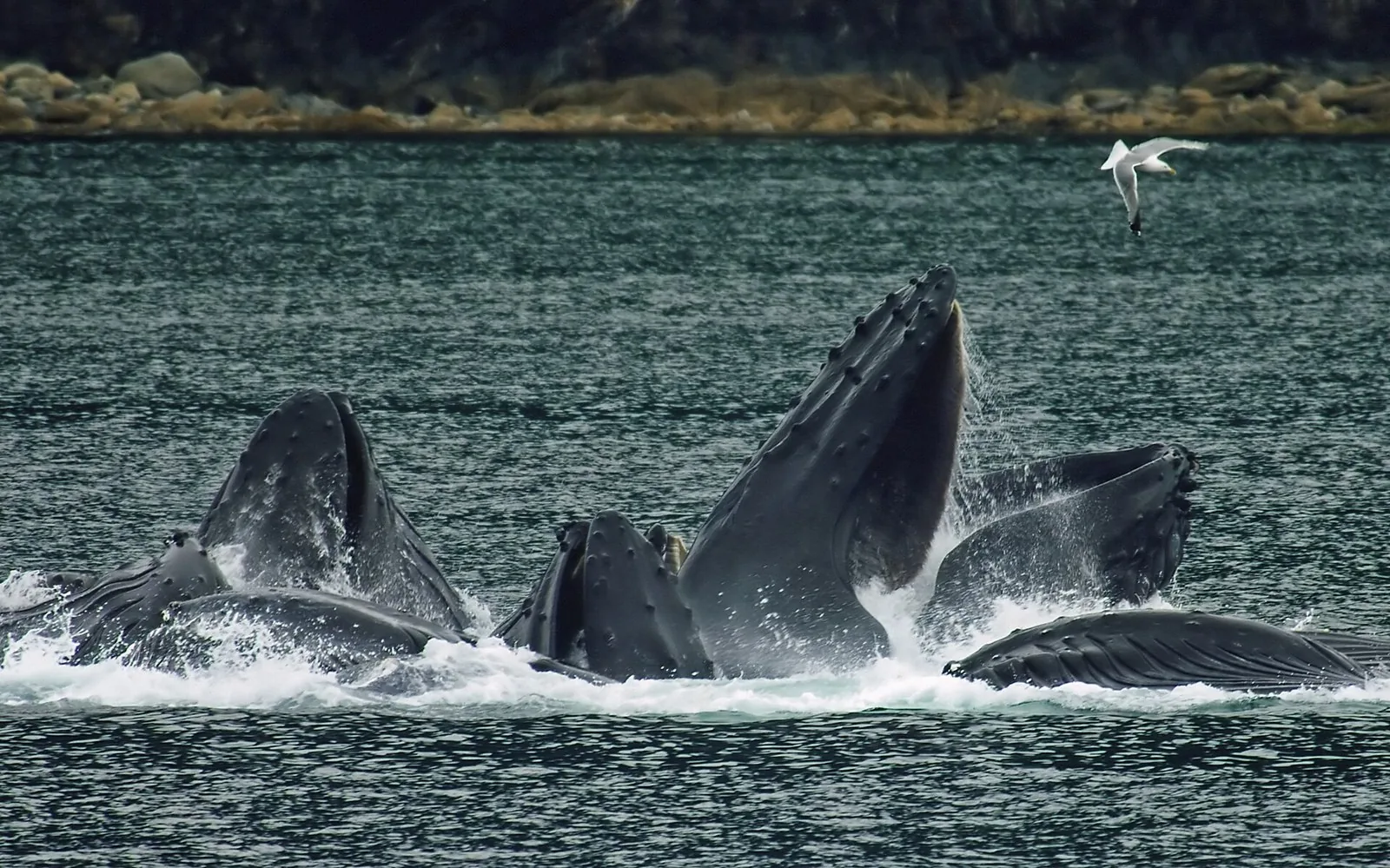
The best time to cruise Alaska for most people is mid-June to mid-August. That window has the warmest weather (average highs of about 60 to 66°F in the main ports), days of 15 to 18 hours in Juneau, humpback whales feeding in the Inside Passage, and salmon runs that pull bears to the streams from July. The trade-offs are the highest fares, the busiest ports and rain that climbs steadily through August. If price matters more than a few degrees, late May is drier and cheaper; September is cheaper still, and much wetter.
This page is for travelers deciding which week to book, and it replaces the usual “it depends” with numbers: NOAA climate normals for five ports, US Naval Observatory sunrise and sunset times, a wildlife calendar and the 2027 season dates. One caveat: normals are averages, not forecasts. A July week can be cold and gray, and a September week can be glorious, so pack for all of it whenever you go. Last updated September 26, 2026. Every price, fee and schedule below is dated, and the sources are listed at the end.
The Best Time to Cruise Alaska at a Glance
Start with your priority. The month sections and data tables below explain each answer.
| If your priority is | Go in | Why |
|---|---|---|
| Warmest weather | July, or early August | July averages 64 to 66°F highs in Juneau, Skagway and Anchorage; Ketchikan peaks in August |
| Driest weather | May and early June | Juneau averages 3.5 inches of rain in May against 9.2 in September; Skagway gets about an inch |
| Longest days | Mid-June | 18 hours 17 minutes of daylight in Juneau on June 21 |
| Whales | June through August | Humpbacks feed all summer; June and July are best for bubble-net feeding |
| Bears and salmon | Mid-July to late August | Pink and chum runs; Anan’s bear-viewing permit season runs July 5 to August 25 |
| Lowest fares and fewest crowds | May or September | The shoulder months, with fewer families aboard |
| A trip with school-age kids | Late June to mid-August | School calendars, warmest weather, long evenings |
| Northern lights | Late September | The darkest nights of the cruise season; odds are low |
What’s Changed for 2027
- Season dates. The first big-ship sailings of 2027 are Carnival Legend’s Seattle round trips from April 20, MSC Poesia’s from April 26 (as reported) and Carnival Spirit’s from April 29, with Norwegian’s three Seattle ships starting in late April. Holland America sails April to September, Norwegian Jade runs from May 10 to September 20, and Carnival Luminosa starts from San Francisco on May 3.
- A solstice special. Holland America’s 28-day Legendary Alaska Arctic Circle Solstice leaves Seattle on June 6, 2027 and sails as far as the Bering Sea and the Arctic Circle in the weeks around the longest day.
- Denali reopens farther. The Park Service finished the Pretty Rocks Bridge on the Denali Park Road in September 2026. Buses stopped at East Fork (mile 43) all of 2026, and the park expects full bus service to Eielson, Wonder Lake and Kantishna to resume for the 2027 season, which matters if a cruisetour is part of your plan.
- Juneau’s limits. Juneau’s voluntary agreements with the cruise industry cap the port at five large ships and 16,000 lower berths a day, and 12,000 on Saturdays. The busiest months still feel busy, but the ceiling is lower than it was before 2024.
- Tracy Arm is provisional. After the August 2025 landslide, several lines used Endicott Arm and Dawes Glacier instead in 2026. That’s an itinerary issue in any month, but it’s worth knowing before you pick a sailing for its glacier.
Month by Month: The Alaska Cruise Season
The big-ship season runs from late April to late September, with a few small ships at either end. Here is what each month is really like, with the numbers behind it.
1. April: The First Ships
April is the start of the season rather than part of it. In 2026 Victoria’s cruise season opened on April 10, Ketchikan’s first ship was due April 12 and Juneau’s season opened April 27. For 2027, Carnival’s Seattle departures start on April 20 and April 29, and Holland America’s season also begins in April.
Expect late-winter conditions. Juneau’s 1991-2020 normals for April are a high of 48.7°F and a low of 32.9°F, with 3.47 inches of precipitation spread over about 17 days. Snow still covers the mountains above the towns, which looks wonderful from the deck, and some tours and attractions are only just opening. The White Pass & Yukon Route’s summit trips out of Skagway started on April 30 in 2026, for example. The first humpbacks arrive in late April, according to Juneau whale-watch operators, but the summer crowds of whales haven’t come yet.
Land tours aren’t really an option yet. Denali’s park buses and the Alaska Railroad’s summer trains don’t start until mid-May, so an April cruise is a cruise only, and it’s usually a round trip or a repositioning sailing.
Verdict: An Alaska cruise in April is for bargain hunters and people who like being first. Bring winter layers.
2. May: Dry, Cheap and Snowy on Top
May is the most underrated month to cruise Alaska. It’s the driest month in most ports: Juneau averages 3.51 inches of rain, Skagway just 1.07 inches, and Anchorage 0.65 inches. It’s cool, with average highs of 56 to 58°F in Juneau, Ketchikan, Skagway and Anchorage and lows in the low 40s, and the days are already long. On May 15, 2027 the sun rises in Juneau at 4:31 a.m. and sets at 9:18 p.m.
The mountains keep their snow through May, so glacier and fjord scenery looks its most dramatic, and the ports are quieter before school lets out. Holland America calls May and September the shoulder months, with fewer crowds and lower fares. Whale numbers build through the month, operators say, and most trains and tours are running by the second half of May.
Early and late May are different trips. On May 1, 2027 Juneau gets 15 hours 43 minutes of daylight; by May 15 it’s 16 hours 47 minutes, and by the end of the month the evenings run past 9:30 p.m. Late May also brings the first cruisetours, as the Denali buses and summer trains start.
The catches: it’s chilly on deck, some tours and trains don’t start until mid-May, and the salmon and bear season is still weeks away.
Verdict: The best value in the season. An Alaska cruise in May suits anyone who cares more about clear views and a lower fare than about bears. Skip it if bears are the point of the trip.
3. June: Longest Days, Best All-Round
June is the month we’d pick if we could only pick one. It’s still relatively dry (Juneau averages 3.82 inches, Skagway 1.16 and Anchorage 1.02), it’s warming up, with average highs of 61 to 63°F in the Southeast ports, and it has the longest days of the year. On June 21, 2027 the sun rises in Juneau at 3:51 a.m. and sets at 10:08 p.m., and civil twilight lasts until 11:27 p.m. In Anchorage it never gets fully dark.
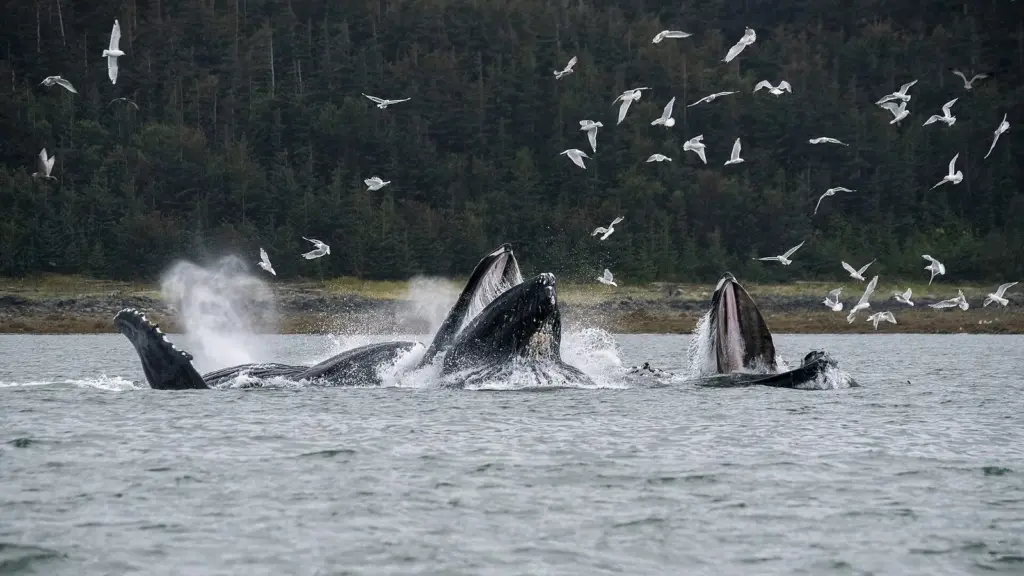
Alaska’s wildlife agency calls June and July the best months to see humpbacks bubble-net feeding, when a group circles a school of fish in a net of bubbles and lunges up through it. The crowds build through the month, and fares climb once school is out.
June is also when Glacier Bay’s prime season begins. The park allows no more than two cruise ships a day all year, and it allocates 153 cruise-ship use days to June, July and August, against 92 for May and September combined. So the park sees its busiest cruise days from June.
Verdict: For most first-timers, an Alaska cruise in June, especially in the first three weeks, is the best time to cruise Alaska: long days, decent weather and the full whale season, just before peak-summer prices and crowds. Skip early June only if you need school-holiday dates.
4. July: Warmest and Busiest
July is the warmest month in most ports. Average highs are 64.0°F in Juneau, 64.5°F in Ketchikan and Skagway and 66.2°F in Anchorage, with lows around 50 to 53°F. That still means a jacket on deck, especially on a glacier day, and occasional days in the 70s are a treat rather than a promise. Rain starts to climb: Juneau averages 5.14 inches in July, up from 3.82 in June.
July is also when the wildlife calendar fills up. Bubble-net feeding continues, the pink and chum salmon runs build through the month, and bears follow the fish. Anan Wildlife Observatory near Wrangell, a famous black bear viewing site, runs its permit season from July 5. Ketchikan Creek, right in town, has viewable salmon from July through October.
The downside is people. This is the heart of the family season, fares peak, and Juneau, Ketchikan and Skagway see their busiest days. July is also when fireweed turns the roadsides magenta and the evenings stay light enough for a walk after dinner: on July 15, 2027 the sun sets in Juneau at 9:50 p.m.
Verdict: An Alaska cruise in July is the safest bet for warmth and wildlife together. Book early and plan your port days around the crowds. Skip it if crowds bother you more than rain does.
5. August: Bears, Salmon and More Rain
August is the month for bears and salmon. Pink and chum salmon fill the streams, black bears crowd Anan Creek until its permit season ends on August 25, and chum salmon can be seen from the Sheep Creek bridge outside Juneau. Humpbacks are still feeding: the photo at the top of this page was taken on August 18.
It’s still warm, and Ketchikan’s warmest month is August (a 64.7°F average high). But rain climbs fast. Ketchikan averages 11.30 inches in August, Juneau 6.41 and Seward 5.39, and the days shorten noticeably: on August 15, 2027 Juneau gets 15 hours 23 minutes of daylight, down from more than 18 at the solstice. Family crowds thin out after mid-August, when school starts in many states, and late August is when fall color begins inland around Denali, a bonus for anyone adding a cruisetour.
Verdict: An Alaska cruise in August is the best time for bears and salmon, and late August is a good compromise on crowds. Pack serious rain gear. Skip it if a flightseeing tour is the one thing you can’t miss, since rising rain means more cancellations.
6. September: Cheapest, Wettest, Darkest
September is the season’s final act, and it splits opinion. It is the wettest cruise month by a distance: Juneau averages 9.15 inches of rain on about 22 days, Ketchikan 14.30 inches and Seward 9.90. Average highs drop to about 56°F in Juneau and Anchorage and 59°F in Ketchikan. The days shorten fast, from 12 hours 50 minutes in Juneau on September 15, 2027 to 11 hours 34 minutes on September 30.
In return, you get the lowest fares and the thinnest crowds of the main season, fall color on the hillsides, and the darkest nights of the season, which bring a small chance of northern lights. Whales are still feeding, and coho salmon are running. One practical warning for Seattle round trips: in 2026 Butchart Gardens in Victoria closed at 5 p.m. daily after September 15, so an evening Victoria call that month means no gardens.
Land tours wind down in mid-September, when Denali’s buses and the Alaska Railroad’s summer trains end their seasons, so a cruisetour needs an early-September departure. The Gulf of Alaska also gets stormier as autumn arrives, which makes a round trip in the sheltered Inside Passage the calmer choice late in the month.
Verdict: An Alaska cruise in September is the cheapest way to see Alaska and the likeliest to be wet. Go if price or the aurora matters more than sunshine. Skip it if you’re adding Denali after mid-September or you hate being wet.
7. October: Barely a Cruise Month
By October the big ships have left for the Caribbean, Mexico or Hawaii, and only a few small expedition ships linger. Victoria’s 2026 season ends on October 18 with National Geographic Venture. Juneau’s October normals are a high of 47.3°F and 8.42 inches of precipitation on about 23 days. The White Pass railroad’s summit trips ran until October 7 in 2026, and the big bald eagle gathering in the Chilkat Valley near Haines doesn’t peak until late fall and early winter, after the ships have gone.
Verdict: An Alaska cruise in October is really a repositioning cruise or a small-ship curiosity. Choose September instead.
Week by Week: A Cheat Sheet
Months hide big differences. Early May and late May are different trips, and so are mid-August and late September. This table pins the season to specific dates, using Juneau as the reference port.
| Around | Juneau daylight (2027) | Weather that month (Juneau normals) | Wildlife | Crowds and fares |
|---|---|---|---|---|
| May 1 | 15h 43m | 57.6°F high, 3.51 in of rain | First whales; snow on the peaks | Quiet; among the lowest fares |
| May 15 | 16h 47m | 57.6°F high, 3.51 in of rain | Whale numbers building | Quiet; low fares |
| June 21 | 18h 17m | 62.4°F high, 3.82 in of rain | Bubble-net feeding season | Busy, rising fares |
| July 15 | 17h 34m | 64.0°F high, 5.14 in of rain | Whales; salmon runs building; bears at Anan | Peak crowds and fares |
| August 15 | 15h 23m | 62.9°F high, 6.41 in of rain | Bears and salmon; whales still feeding | Busy, easing late in the month |
| September 15 | 12h 50m | 56.1°F high, 9.15 in of rain | Whales; coho salmon | Quiet; low fares |
| September 30 | 11h 34m | 56.1°F high, 9.15 in of rain | Whales starting to leave | Last sailings; often the lowest fares |
If you’re flexible by a week or two, the dates that give the most for the money are late May to mid-June, before school lets out, and the last ten days of August, after it goes back in many states.
Alaska Cruise Weather by Port
Alaska cruise weather varies more between ports than most people expect. Skagway sits in a rain shadow and gets a fraction of Ketchikan’s rain; Anchorage is warmer in midsummer and drier all season; Seward is the coolest. These are NOAA’s 1991-2020 normals from each town’s airport station.
| Average high (°F) | May | June | July | August | September |
|---|---|---|---|---|---|
| Ketchikan | 56.9 | 61.3 | 64.5 | 64.7 | 58.9 |
| Juneau | 57.6 | 62.4 | 64.0 | 62.9 | 56.1 |
| Skagway | 58.1 | 62.9 | 64.5 | 63.4 | 57.0 |
| Seward | 53.4 | 59.0 | 62.2 | 62.0 | 55.7 |
| Anchorage | 56.3 | 63.4 | 66.2 | 64.0 | 55.7 |
| Average rain (inches) | May | June | July | August | September |
|---|---|---|---|---|---|
| Ketchikan | 8.68 | 7.02 | 7.33 | 11.30 | 14.30 |
| Juneau | 3.51 | 3.82 | 5.14 | 6.41 | 9.15 |
| Skagway | 1.07 | 1.16 | 1.38 | 2.35 | 3.89 |
| Seward | 3.50 | 2.34 | 3.11 | 5.39 | 9.90 |
| Anchorage | 0.65 | 1.02 | 1.82 | 2.93 | 3.10 |
Three patterns stand out. First, rain rises through late summer everywhere, and September totals run two to three times June’s in Juneau, Ketchikan and Seward. Second, the temperature range across the season is narrow: the difference between a May and a July day is about 6 to 10 degrees. Third, the airport stations understate how wet some towns feel, since downtown Juneau, where the ships dock, is wetter than its airport. None of these towns is hot, and none is reliably dry.
How the Weather Changes Your Port Days
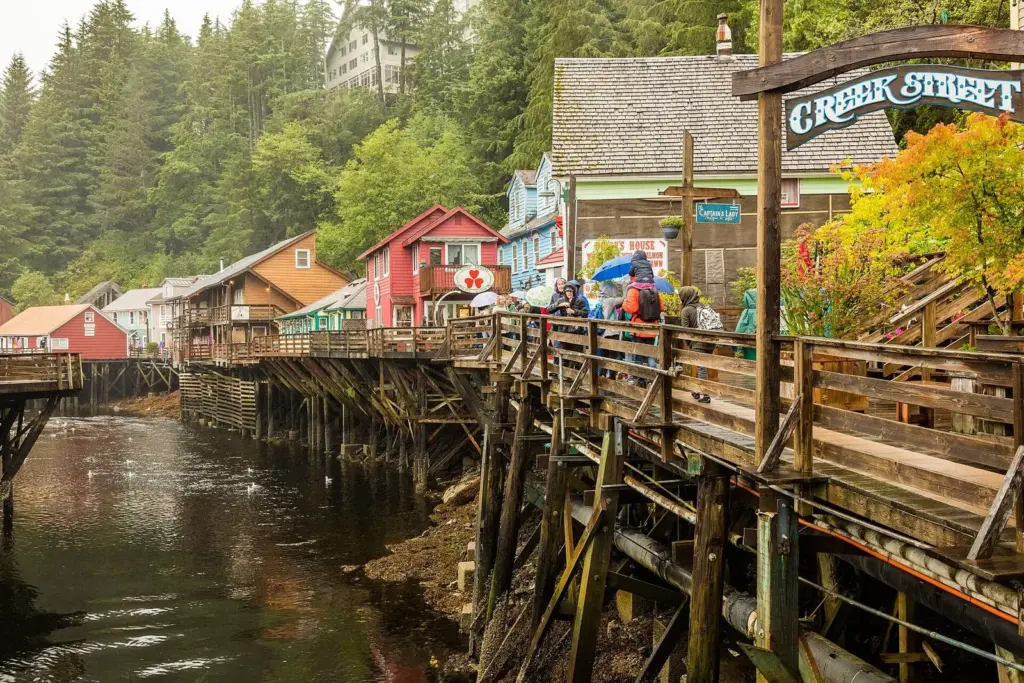
Rain in Southeast Alaska is more often a steady drizzle than a downpour, and most port days go ahead in it. Juneau’s normals show measurable precipitation on about 16 days in May and 22 in September, so the question isn’t whether it rains during your cruise but how it affects what you’ve booked.
- Flightseeing is the first casualty. Floatplane trips from Ketchikan and helicopter glacier tours from Juneau and Skagway need a workable cloud ceiling. Temsco, which flies helicopter glacier tours from Juneau and Skagway, gives a full refund if weather prevents flying. The odds of a cancellation rise with the rain, so a flightseeing tour is a better bet in May or June than in September.
- If a tour matters, book it early in the cruise. A flight canceled in your first port can sometimes be rebooked in a later one; a flight canceled in the last port can’t.
- Some attractions close in bad weather. Juneau’s Goldbelt Tram up Mount Roberts, for example, has hours that vary daily and can stop for weather.
- Boat tours usually run. Whale watching, fjord cruises and harbor tours go out in the rain, and whales don’t mind. They’re the safest excursions in a wet month.
- Glacier days depend on visibility. Fog or low cloud can hide the ice, and ice or wind can keep the ship back. Dry May and June give the best odds of a clear view.
- The open sea gets livelier late in the season. Autumn storms build over the Gulf of Alaska in September, which matters more on a one-way cruise across the gulf than on an Inside Passage round trip.
Daylight: How Long the Days Are
Long days are one of Alaska’s great summer gifts, and they’re easy to underestimate. These are US Naval Observatory figures for 2027, from sunrise to sunset.
| Hours of daylight, 2027 | May 15 | June 21 | July 15 | August 15 | September 15 |
|---|---|---|---|---|---|
| Ketchikan | 16h 13m | 17h 27m | 16h 52m | 15h 01m | 12h 44m |
| Juneau | 16h 47m | 18h 17m | 17h 34m | 15h 23m | 12h 50m |
| Skagway | 17h 03m | 18h 40m | 17h 53m | 15h 34m | 12h 52m |
| Seward | 17h 12m | 18h 55m | 18h 04m | 15h 39m | 12h 53m |
| Anchorage | 17h 29m | 19h 23m | 18h 27m | 15h 50m | 12h 56m |
The farther north you go, the longer the midsummer day. In Anchorage the sun sets at 11:43 p.m. on June 21 and civil twilight lasts all night, and in Skagway the sun is up until 10:23 p.m. The flip side is fast change: by mid-September every port gets under 13 hours, and the evenings are properly dark by 8 or 9 p.m. If you’re a light sleeper, bring a sleep mask for a June or July cruise; if you want the northern lights, you need those September nights.
Wildlife Calendar: Whales, Bears, Salmon and Eagles
Wildlife timing is the question behind most “when should we go” debates. The table below covers what a cruise passenger can realistically see; our Alaska wildlife cruise guide goes species by species.
| Wildlife | Best window | Where on a cruise | Worth knowing |
|---|---|---|---|
| Humpback whales | June through August; present spring to fall | Whale-watching tours from Juneau; Icy Strait and Lynn Canal | Over 500 humpbacks gather in the Inside Passage; June and July are best for bubble-net feeding |
| Orcas | All season | Anywhere in the Inside Passage | Seen through the season, but never on a schedule |
| Black and brown bears | Mid-July to late August | Anan (by floatplane or boat, near Wrangell), bear-search tours at Icy Strait Point | Bears follow the salmon; Icy Strait Point says sightings aren’t guaranteed |
| Salmon runs | July to September | Ketchikan Creek (July to October), Juneau’s Sheep Creek (July and August) | King salmon run earlier, coho later |
| Bald eagles | All season | Every Southeast port | The big Chilkat gathering near Haines is in late fall, after the cruise season |
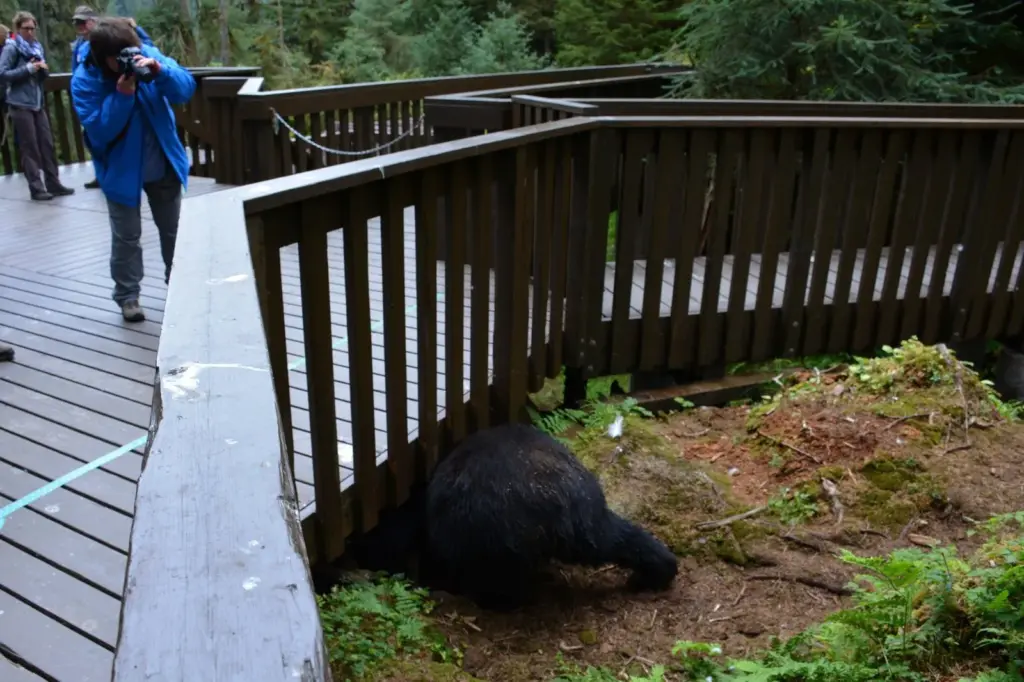
Two rules of thumb follow from the table. Whales are the safest bet in Alaska, and any June, July or August cruise has excellent odds on a whale-watching tour. Bears are the opposite: they’re tied to salmon, so they’re a July and August thing, and even then the best viewing is at a few specific sites. If bears are the reason you’re going, book a mid-July to mid-August sailing and reserve the bear excursion when you book the cruise.
The Best Excursions for Each Month
Some shore excursions are good in any month; others depend heavily on timing. Here’s how we’d match them to the calendar.
| Month | Best bets | Why then |
|---|---|---|
| May | Flightseeing, helicopter glacier tours, the White Pass railroad | The driest weather gives flights their best odds, and snow still lines the high country |
| June | Whale watching, glacier hikes, long evening walks in port | Bubble-net feeding season, dry-ish weather and the longest days |
| July | Bear viewing at Anan, whale watching, fishing charters | Anan’s permit season opens July 5 and the salmon runs build |
| August | Bear viewing, salmon viewing at Sheep Creek and Ketchikan Creek, whale watching | Peak salmon and bear activity; whales still feeding |
| September | Whale watching, boat tours, rail trips for fall color | Boat tours run in the rain, and flights are more often grounded |
Whatever the month, a boat-based tour is the safest booking in wet weather, and flightseeing is the riskiest. If a floatplane or helicopter trip is the highlight of your cruise, a late May or June sailing gives it the best chance of going ahead.
Prices and Crowds by Month
Alaska cruise fares follow demand, and demand follows school calendars and the weather. Holland America’s own Alaska FAQ describes May and September as the shoulder months, with fewer crowds and lower fares, and June and July as the peak season, with long days, warmer weather and lots of families. In practice:
- Cheapest: the first sailings in late April and May, and the last in September. The very first and very last weeks are often the lowest fares of the year.
- Most expensive: late June through mid-August, when school holidays and the best weather line up.
- Quietest ports: May and September. Juneau’s cap of 16,000 lower berths a day (12,000 on Saturdays) limits the worst peaks, but summer days in Juneau, Ketchikan and Skagway are still crowded. Ketchikan expected a record of more than 1.6 million cruise passengers in 2026.
The scale is worth knowing. Juneau projected about 1.69 million cruise passengers for 2026, Ketchikan expected more than 1.6 million, and Victoria, the Canadian stop on most Seattle round trips, about a million from 335 calls. Seattle forecast a record 330 ship calls. Those numbers are spread across a season of roughly 22 weeks, but they’re not spread evenly: the peak is July.
One scheduling quirk helps. Juneau’s agreement caps Saturdays at 12,000 lower berths, against 16,000 on other days, so if your itinerary puts Juneau on a Saturday, expect a quieter town. Early mornings and late evenings are quieter everywhere, which is another reason a late-night Juneau stay is worth having.
The cheapest time to cruise Alaska is also the wettest or coldest time, so price the whole trip, not just the fare. Our Alaska cruise cost guide covers the extras that don’t change by month, such as gratuities, excursions and flights.
The Best Time to Cruise Alaska for Whales, Glaciers, Kids and the Aurora
For Whale Watching
June through August, with June and July best for bubble-net feeding. Juneau whale-watch operators run a season from late April to early November and describe June through August as the peak. The best time to cruise Alaska for whale watching is therefore any midsummer week, and the whale-watching tour from Juneau is the one excursion most worth booking for it.
For Glaciers
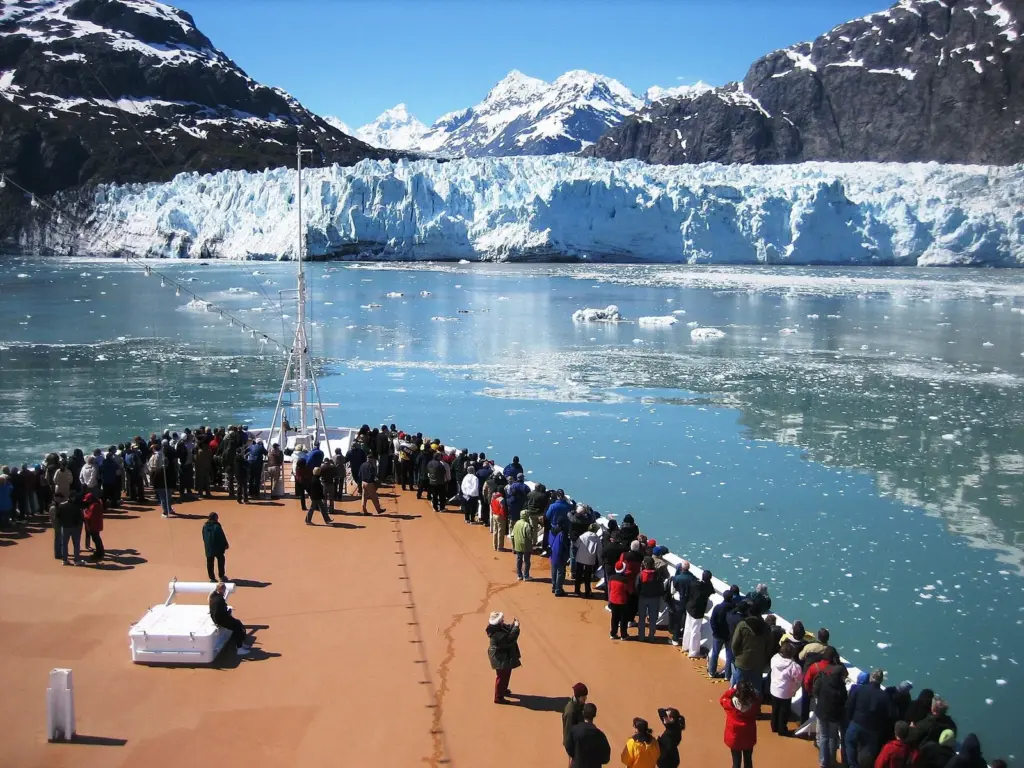
The glaciers don’t go anywhere, so the question is visibility. May and June are the driest months, which means better odds of blue sky over the ice, and the surrounding peaks are still white. Midsummer brings warmer air and, often, more calving. The best time to see glaciers in Alaska for photographs is late May through June; for sheer activity, July.
With Kids
The best time for an Alaska cruise with kids is late June to mid-August, when school is out and the weather is warmest. If your children’s schools finish early or start late, the first half of June and the last two weeks of August give you most of the summer with fewer crowds.
For the Northern Lights
Late September, and keep your expectations low. The aurora needs dark skies, and Alaska cruise ports don’t get properly dark until late August or September. Explore Fairbanks gives its aurora season as August 21 to April 21, but Fairbanks sits under the auroral oval far to the north; the cruise ports of Southeast Alaska are well south of it and often under cloud. A northern lights Alaska cruise is possible in September if the sky clears and the display is strong. It isn’t something to plan a cruise around.
For the Inside Passage and the Best Weather
The best time to cruise Alaska’s Inside Passage for weather is late May to mid-July, when rain totals are lowest and the days longest. Weather-wise, June is the best single month: nearly as warm as July and far drier than August or September.
For Salmon Fishing
It depends on the fish. King salmon run early in the season, pinks and chums fill the streams in July and August, and coho come late: at Anchorage’s Ship Creek, kings run in July and coho in August and September, and at Russian River Falls on the Kenai Peninsula, sockeye and kings can be seen from mid-June through September. For a fishing charter from a cruise port, midsummer gives the widest choice.
For Photography
June for light, September for mood. Around the solstice the sun sets after 10 p.m. in Juneau and Skagway, so golden hour arrives while you’re at dinner and lasts, and the peaks are still white. September brings lower sun, fall color and dramatic weather, at the cost of more gray days. July and August sit in between.
For Avoiding Crowds
May or September, and the earlier or later in those months the better. Within any week, a Saturday in Juneau is quieter under the city’s lower weekend cap, and the hour after the ships arrive is the busiest time in every port.
For Fall Color and Wildflowers
Fireweed, the tall magenta wildflower that lines Alaska’s roadsides, blooms through midsummer. Fall color starts inland in late August and reaches the coast in September, which is one of the best reasons to choose a late-season cruisetour.
May vs September
The two shoulder months cost about the same and suit the same budget-minded travelers, but they are very different trips.
| May | September | |
|---|---|---|
| Juneau average high | 57.6°F | 56.1°F |
| Juneau average rain | 3.51 inches on about 16 days | 9.15 inches on about 22 days |
| Juneau daylight (15th) | 16h 47m | 12h 50m |
| Scenery | Snow on the peaks | Fall color on the hillsides |
| Wildlife | Whales arriving; no bears at the streams yet | Whales still feeding; coho salmon |
| Northern lights | No: the nights are too light | Possible, if skies clear |
| Fares and crowds | Lower than summer | Lower than summer |
Verdict: Pick May for dry weather and snowy scenery, September for the aurora chance and late-season salmon. The Alaska cruise May vs September comparison goes deeper, but for most people May wins on weather alone.
Holiday Weeks in 2027
Holiday weeks fill up first and rarely see discounts. On the 2027 calendar, Victoria Day in Canada falls on Monday, May 24, and Memorial Day on Monday, May 31, which makes the last full week of May busier than the rest of the month. Canada Day is Thursday, July 1, and Independence Day is Sunday, July 4, so the sailings around the first weekend of July are among the busiest of the year. Labor Day is Monday, September 6. If your dates are flexible, the week after a holiday is usually a better deal than the week that contains it.
Five Myths About Alaska Cruise Timing
- “July is the dry month.” It’s the warmest, not the driest. Juneau averages 5.14 inches of rain in July against 3.82 in June and 3.51 in May.
- “May is too cold.” Average May highs in Juneau, Skagway and Ketchikan run 57 to 58°F, about the same as September’s, and May is far drier. The difference is snow on the peaks, which most people count as a plus.
- “You’ll see the midnight sun.” Not in the cruise ports. Even at the solstice the sun sets at 9:32 p.m. in Ketchikan and 10:08 p.m. in Juneau. It’s light very late, and in Anchorage twilight lasts all night, but the sun does set.
- “September is basically winter.” Average highs are still around 56 to 59°F in the Southeast ports. The real change is rain and shorter days, not cold.
- “Any cruise is a northern lights cruise.” In June and July the nights are too light, and even in September the ports sit south of the auroral oval and under frequent cloud. A sighting is a bonus, not a plan.
One more thing the averages don’t show: a glacier day always feels colder than the port weather suggests. The wind comes off the ice, and you’ll be standing still on an open deck for hours, so the warm layers matter even in July.
Timing a Cruisetour to Denali
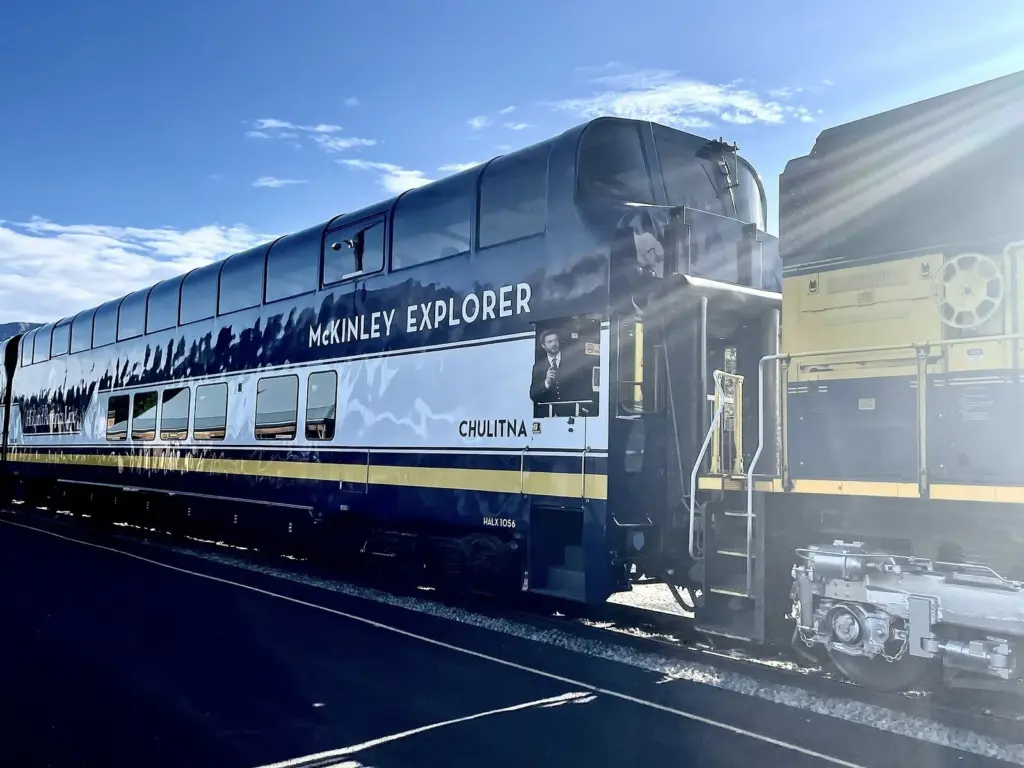
If you’re adding Denali, the land season is shorter than the cruise season. The park’s buses, the Alaska Railroad’s summer trains and the lodges run from about mid-May to mid-September, so the first and last cruise weeks can’t always carry a land tour. Denali itself hides in cloud much of the summer, so no month guarantees the mountain. For 2027, the Park Service expects full bus service on the park road for the first time since the Pretty Rocks landslide forced buses to turn back at mile 43.
What to Pack, Whatever the Month
Every month needs the same core: a waterproof shell, warm layers, a hat and gloves for glacier days, and shoes that can take wet boardwalks. May and September add a warmer layer; June and July add a sleep mask and bug spray for inland tours. Our Alaska cruise packing list has the full rundown, and our note on Alaska cruise mosquitoes covers when and where they bite.
If you’re still deciding whether Alaska is the right trip at all, our Alaska cruise guide covers the other big decisions, from route to budget. And if you want the season’s dates in one place, see our Alaska cruise season overview.
Best Time to Cruise Alaska FAQ
What is the best month to cruise Alaska?
June, for most people. It has the longest days (over 18 hours in Juneau at the solstice), lower rainfall than July or August, warming weather and the start of the bubble-net feeding season for humpback whales. July is warmer and busier; May is cheaper and drier; August is best for bears and salmon.
What is the cheapest time to cruise Alaska?
The shoulder months: the first sailings in late April and May, and the last ones in September. Holland America describes May and September as having fewer crowds and lower fares. September is usually the cheapest, but it’s also the wettest month, with about 9 inches of rain in Juneau.
When is the best time to cruise Alaska to see whales?
June through August. Humpbacks are in Alaska from spring to fall, and the state wildlife agency says June and July are the best months to see bubble-net feeding. Juneau operators run whale-watching trips from late April to early November and call June to August the peak.
Can you see the northern lights on an Alaska cruise?
Occasionally, and only late in the season. Summer nights are too light, so your only real chance is a September sailing with clear skies and a strong display. The cruise ports sit well south of the auroral oval that makes Fairbanks a reliable aurora destination, so treat any sighting as a bonus.
Is September too late for an Alaska cruise?
Not too late, but a trade-off. Whales are still feeding, coho salmon are running, fares are the lowest of the main season and the ports are quiet. In return you get the most rain of any cruise month, shorter days and cooler weather, with average highs around 56°F in Juneau.
How cold is it on an Alaska cruise in summer?
Mild rather than cold. Average highs in the main ports run from the mid-50s °F in May and September to the low to mid-60s in July and August, with lows in the 40s and 50s. On deck near a glacier it feels much colder, so bring a warm layer, hat and gloves in any month.
When is the best time to cruise Alaska with kids?
Late June to mid-August, when school is out and the weather is warmest. It’s also the busiest and most expensive time, so book early. If you can go in the first half of June or the last two weeks of August, you’ll get most of the summer with fewer crowds.
Is May a good time to cruise Alaska?
Yes, especially for value. May is the driest month in Juneau, Skagway and Anchorage, the mountains still carry snow, the ports are quiet and fares are lower than in summer. It’s cooler, with highs in the upper 50s, and bears and salmon runs are still weeks away, so it’s better for scenery than for wildlife.
Related Alaska Cruise Guides
Sources and How We Checked
We checked the prices, rules, schedules and ship deployments in this guide against the sources below on September 24, 2026, and we log each one in our research database with the date it was checked. Cruise lines change ships, fares and fees every season, so confirm anything that affects your booking with the line or the agency concerned. Alaska Cruise Guide (AlaskaCruise.org) is an independent publication. It is not affiliated with any cruise line, port, tour operator or tourism office, and no one paid to be included.
- Alaska Department of Fish and Game: Humpback whales
- Alaska Department of Fish and Game: Anan Wildlife Observatory
- Alaska Department of Fish and Game: Ketchikan salmon viewing, Salmon viewing
- Alaska Department of Fish and Game: Humpback whales
- Alaska Public Media: Tracy Arm 2026 itineraries
- Alaska State Parks: Chilkat Bald Eagle Preserve
- alaskawhalewatch.net: Humpback whales
- Carnival Cruise Line news: Carnival Cruise Line
- City and Borough of Juneau: Juneau passenger cap
- Cruise Industry News: Victoria Ogden Point
- Explore Fairbanks: Fairbanks northern lights
- Holland America Line: Alaska cruise season
- Holland America Line: Holland America Line
- Icy Strait Point: Icy Strait Point
- KRBD Ketchikan: Ketchikan 2026 season
- KTOO Public Media: Juneau 2026 season, Juneau passenger cap
- mscpressarea.com: MSC Cruises
- National Park Service: Denali Park Road
- NOAA National Centers for Environmental Information: Alaska weather
- NOAA National Centers for Environmental Information: Juneau weather
- NOAA National Centers for Environmental Information: Ketchikan weather
- NOAA National Centers for Environmental Information: Skagway weather
- NOAA National Centers for Environmental Information: Seward weather
- NOAA National Centers for Environmental Information: Anchorage weather
- Norwegian Cruise Line: Norwegian Cruise Line
- The Butchart Gardens: Butchart Gardens
- The Maritime Executive: Juneau cruise limits
- U.S. Naval Observatory: Ketchikan daylight, Juneau daylight, Skagway daylight, Seward daylight, Anchorage daylight
- White Pass & Yukon Route: White Pass & Yukon Route
Photo Credits
- Humpbacks bubble-net feeding, Lynn Canal: photo by Evadb; Edit by jjron., via Wikimedia Commons (Public domain)
- Humpbacks bubble-net feeding, Tongass waters: photo by Forest Service Alaska Region, USDA, via Wikimedia Commons (Public domain)
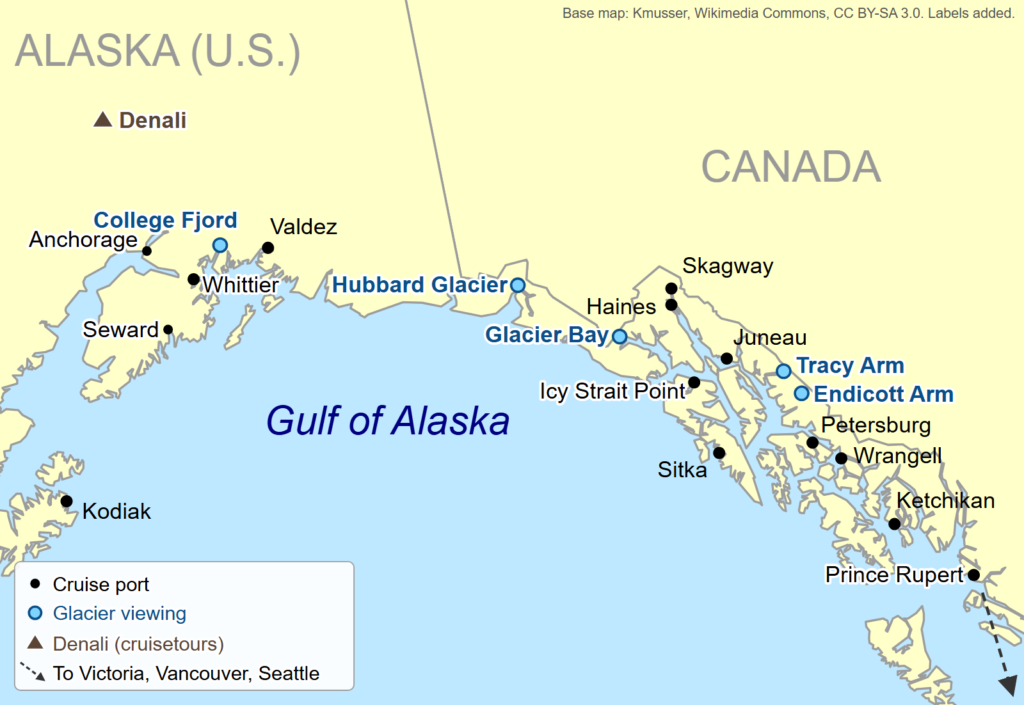
- Alaska cruise region map: map by Kmusser, via Wikimedia Commons (CC BY-SA 3.0); ferry routes removed; cruise ports, glacier-viewing areas and Denali added by Alaska Cruise Guide
- Creek Street, Ketchikan, in the rain: photo by Diego Delso, via Wikimedia Commons (CC BY-SA 4.0)
- Black bear at Anan Wildlife Observatory: photo by Paul Robbins, Jr., United States Forest Service, via Wikimedia Commons (Public domain)
- Glacier Bay from the bow: photo by National Park Service, Alaska Region, via Wikimedia Commons (Public domain)
- McKinley Explorer at Denali: photo by Richard N Horne, via Wikimedia Commons (CC BY-SA 4.0)