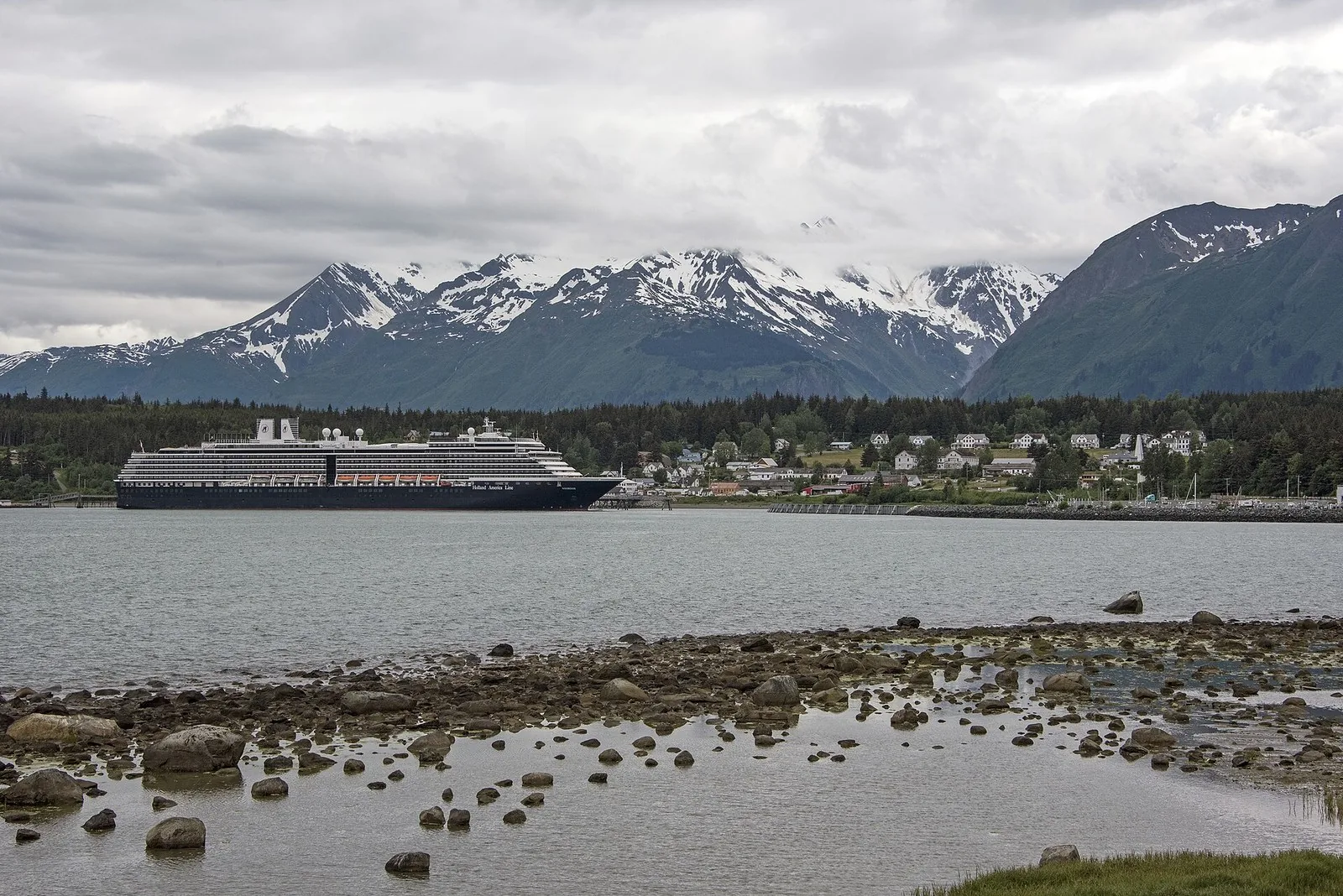
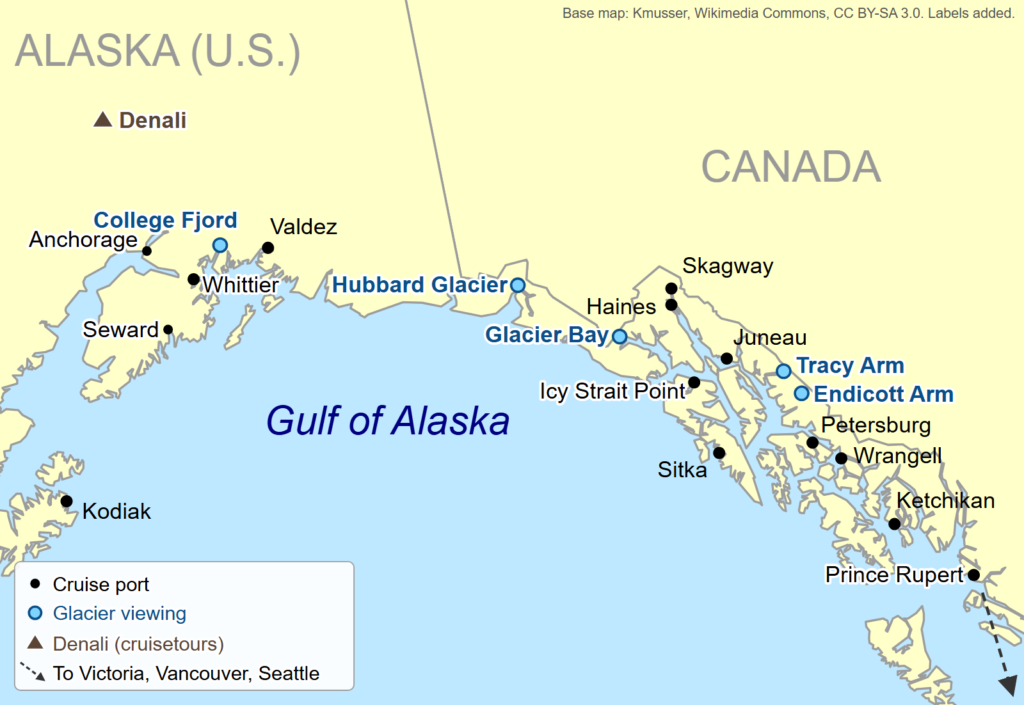
The main Alaska cruise ports are Juneau, Ketchikan, Skagway, Sitka and Icy Strait Point, with Victoria, British Columbia, added on most Seattle round trips and Seward and Whittier serving as the gateways for Anchorage. Beyond those, smaller ships reach Haines, Wrangell, Petersburg, Valdez, Kodiak, Prince Rupert and, on expedition voyages, Dutch Harbor in the Aleutians. Nearly all the big-ship ports have docks rather than tenders, but “docked” can mean a berth on Main Street or a pier several miles out of town.
This hub is for first-time cruisers comparing itineraries and anyone planning a port day. The caveat that matters most: berth assignments change by ship and by day. The same Ketchikan call can put you downtown or at Ward Cove, 7 miles north, and Skagway’s busiest dock has been closed to pedestrians since 2022. Last updated October 8, 2026. Every price, fee and schedule below is dated, and the sources are listed at the end.
Alaska cruise ports at a glance
Where your ship ties up, how far it is to town and how you get there, as of the 2026 season. Shuttle prices are the latest reported and can change.
| Port | Docked or tendered | Distance to town | Getting there (2026) |
|---|---|---|---|
| Juneau | Docked: AJ, Franklin, Cruise Terminal and Alaska Steamship docks | Downtown for most; the AJ Dock is about a mile south | Walk; a shuttle from the AJ Dock was reported at $5 for an all-day pass |
| Ketchikan | Docked: downtown Berths 1-4, or Ward Cove | Downtown at the berths; Ward Cove is about 7 miles north | Walk downtown; free Ward Cove shuttle, about 20-30 minutes |
| Skagway | Docked: Railroad, Broadway and Ore docks | Short, but the Railroad Dock is closed to pedestrians | Walk from Broadway Dock; shuttles from the Railroad Dock |
| Sitka | Docked at the Sitka Sound Cruise Terminal; some ships tender | About 5 miles from downtown | Free shuttle with a reservation; tenders land near Crescent Harbor |
| Icy Strait Point | Docked at two piers | Hoonah is a short ride away | Walk around the complex; Hoonah shuttle about $10 round trip |
| Victoria, BC | Docked at Ogden Point | About 5-7 minutes by road to downtown | Shuttle reported at about US$10 one way, US$13 unlimited |
| Haines | Docked at the Port Chilkoot Dock | Less than half a mile | Walk, or the shuttle when a ship is in port |
| Wrangell | Docked at the City Dock | Downtown on Front Street | Walk |
| Petersburg | Small ships only | In the harbor | Walk |
| Valdez | Docked at the Kelsey Dock | About a 5-10 minute walk | Walk |
| Kodiak | Docked: Pier II, or Pier III for some larger ships | Pier II near downtown; Pier III about 1.5 miles out | Walk from Pier II; shuttle from Pier III |
| Prince Rupert, BC | Docked at the Northland Cruise Terminal | In the Cow Bay district, 5-10 minutes on foot | Walk |
| Seward | Docked at the new Alaska Railroad terminal | Outside the small downtown | Rail, bus and transfers to Anchorage |
| Whittier | Docked | About 60 miles from Anchorage | Rail or road through a one-lane tunnel |
What’s changed for 2027
- Seward has a new cruise terminal. The Alaska Railroad’s $137 million terminal had its first official day of operation on May 28, 2026, after its planned May 14 opening slipped. It has a 748-foot double-berth pier and connects directly to the railroad for transfers to Anchorage.
- Juneau’s limits are still voluntary. Under agreements between the city and the cruise industry, Juneau has taken no more than five large ships a day since 2024, and from 2026 a cap of 16,000 lower berths a day (12,000 on Saturdays). In late summer 2026, the Assembly voted 5-4 to postpone writing the ship limit into city law.
- Juneau’s new dock is not open. Huna Totem’s Áak’w Landing got its tidelands lease in April 2026, but construction isn’t due to start until summer 2027, with 2028 the target for opening, and the project may be downsized. A separate West Douglas port proposal is only that, a proposal.
- Ketchikan’s Ward Cove keeps growing. Its two-berth terminal expected about 130 calls in 2026 and added a visitor hub with a second Great Alaskan Lumberjack Show venue, a zipline park and dining.
- Skagway is working on its rockslide. The mountainside above the Railroad Dock remains unstable, and an engineering assessment concluded it will eventually collapse. Mitigation work between cruise seasons has been planned, so dock assignments and walking routes may shift.
How many ports does an Alaska cruise visit?
A typical 7-day Alaska cruise visits three or four ports, spends one day scenic cruising near a glacier, and has one or two days at sea. Which ports you get depends mostly on where you start.
| Itinerary type | Typical ports | 2027 example |
|---|---|---|
| 7-day round trip from Seattle | Juneau, Skagway and Ketchikan or Sitka, plus Victoria | Royal Caribbean’s Quantum of the Seas: Sitka, Juneau, Skagway |
| Round trip from Vancouver | Three or four of Juneau, Skagway, Ketchikan, Sitka and Icy Strait Point | Royal Caribbean’s Serenade of the Seas: Sitka, Icy Strait Point, Ketchikan |
| Holland America’s new 8-day Vancouver round trip | Adds a Canadian port | Skagway, Ketchikan, Prince Rupert and Juneau, with Glacier Bay |
| 7-day one-way, Vancouver to Whittier or Seward | Three Inside Passage ports, then the Gulf of Alaska | Holland America Glacier Discovery: Ketchikan, Juneau, Skagway |
| Longer one-ways and expedition voyages | Five or more ports, including smaller towns | Viking: Ketchikan, Sitka, Juneau, Skagway, Icy Strait Point and Valdez |
If you want the smaller ports, you usually need either a longer cruise or a smaller ship. Holland America’s 14-day Great Alaska Explorer reaches Kodiak and Valdez; the expedition lines go to Wrangell, Petersburg and beyond. For help matching a route to the ports you care about, compare itineraries before comparing prices.
Docked or tendered: what it means for your day
A ship is docked when it ties up at a pier and you walk down a gangway. It’s tendered when it anchors offshore and small boats (often the ship’s lifeboats) ferry passengers to land. Tendering adds time at both ends of the day: lines to board the tender, the ride itself, and a return line before all-aboard.
Alaska is kind to cruisers here. The big-ship ports are almost all docked calls. The main exception is Sitka, where most large ships use the Sitka Sound Cruise Terminal, about 5 miles out, but some anchor and tender passengers ashore near Crescent Harbor on busy days. Smaller expedition ships tender more often, into tiny communities with no pier big enough. For the full list and what tendering days are like, see our guide to Alaska tender ports.
How far is town from the ship?
“Docked” doesn’t always mean “walkable.” Here’s the reality in the main ports:
- Walk straight into town: Juneau (except the AJ Dock), downtown Ketchikan, Skagway’s Broadway Dock, Haines, Wrangell, Valdez, Prince Rupert and Kodiak’s Pier II.
- Take a shuttle: Ketchikan’s Ward Cove, Sitka’s cruise terminal, Skagway’s Railroad Dock, Victoria’s Ogden Point if you’re heading downtown, and Juneau’s AJ Dock if you’d rather not walk a mile.
- Plan a transfer: Seward and Whittier, which are embarkation ports rather than day stops for most passengers.
Our page on Alaska cruise ports walking distance measures each walk and flags the hills, the stairs and the crossings.
Every Alaska cruise port, ranked
This ranking is for a first-time cruiser on a big ship, weighing what there is to do, how easy the port is, and how much it adds to an Alaska trip. Your own ranking will depend on what you want: wildlife, history, hiking or a quiet walk.
1. Juneau
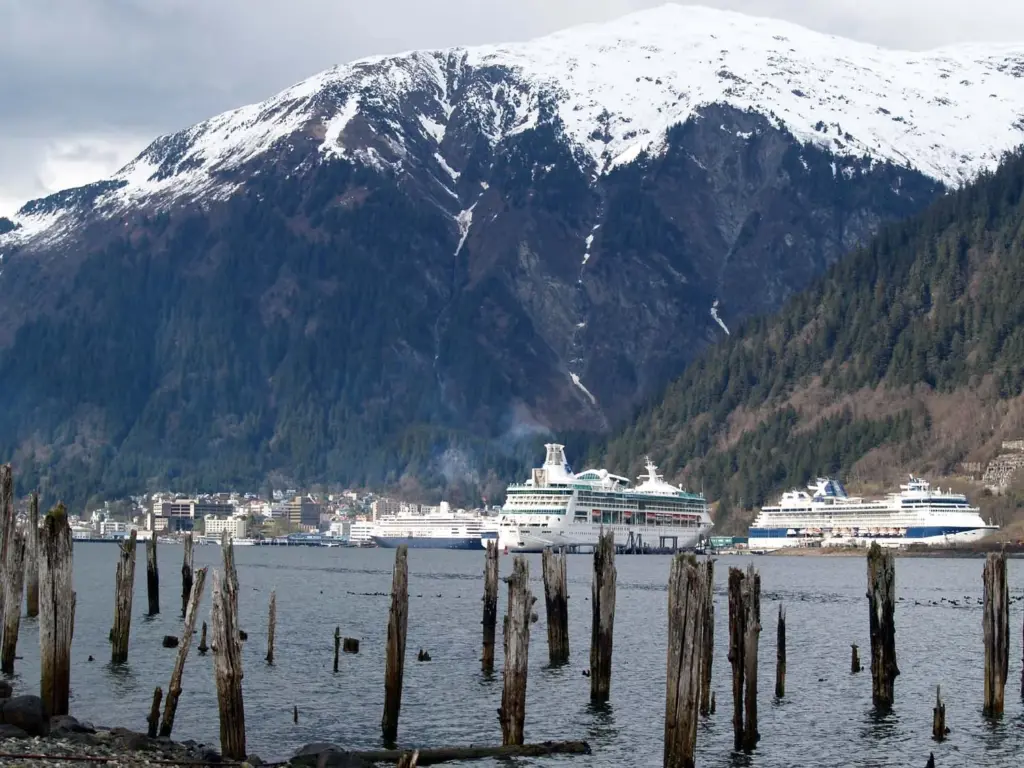
Alaska’s capital is the most rewarding port on almost any itinerary. Ships dock at four big-ship berths along the downtown waterfront: the Alaska Steamship Dock is closest to the center, about five minutes on foot, while the AJ Dock is roughly a mile south, where a shuttle was reported at $5 for an all-day pass. The Goldbelt Tram up Mount Roberts starts at 490 South Franklin Street, within walking distance of the docks, though weather can stop it. Mendenhall Glacier is a short drive away, and its visitor center was open daily from 9 a.m. to 6 p.m. in summer 2026. Juneau is also the best whale-watching port on most itineraries.
The honest negative is crowding. Juneau takes up to five large ships a day under its voluntary agreement, and on those days the waterfront, the tram and the Mendenhall trails are busy. Time needed: a full day, and a late-night call if your itinerary offers one. Top three: Mendenhall Glacier, whale watching, the Goldbelt Tram. For the full port guide, see our guide to things to do in Juneau.
2. Skagway
Skagway is the Klondike Gold Rush town at the top of Lynn Canal, and it earns its place with history you can walk through and one of the great train rides in North America. White Pass operates its three deep-water cruise docks: the Railroad Dock, the Broadway Dock and the Ore Dock. The Railroad Dock sits below an active rockslide zone and has been closed to pedestrians since summer 2022, so passengers there ride shuttles or small boats. The upside of the Railroad and Broadway docks is that excursion passengers can board the White Pass & Yukon Route train beside their ship.
Skagway is also the driest major port, which matters on a Southeast Alaska itinerary. One thing has changed: Klondike Gold Rush National Historical Park no longer offers ranger-led walking tours, though a self-guided tour of the historic buildings remains. Time needed: a full day if you ride the train and walk Broadway. Top three: the White Pass & Yukon Route railway (bring a passport for trips that cross into Canada), Broadway’s gold rush buildings, and a hike or the Chilkoot Trail. Our guide to things to do in Skagway has the details.
3. Ketchikan
Ketchikan is often the first Alaska port, and it makes a strong first impression: Creek Street’s boardwalk, totem poles and a waterfront packed with floatplanes. Most downtown calls use city Berths 1-4, a short walk from Creek Street, and a free downtown shuttle bus runs a loop of about 20 minutes while large ships are in port. But many big ships now dock at Ward Cove, on the site of the former pulp mill about 7 miles north; in 2026 a free shuttle ran from Ward Cove to downtown’s Berth 4 every 15 to 20 minutes, a ride of 20 to 30 minutes.
Ketchikan is also the wettest of the major ports, so pack for rain. From July through October, salmon run up Ketchikan Creek right in town. Time needed: half a day covers downtown; add three hours for a floatplane or bear trip. Top three: Creek Street and the salmon, the Totem Heritage Center or Saxman totem park, and a Misty Fjords floatplane flight if the budget allows. See our guide to things to do in Ketchikan.
4. Sitka
Sitka mixes Tlingit and Russian history more richly than any other port. Sitka National Historical Park preserves the site of the 1804 battle between the Tlingit (Kiks.ádi) and the Russians and is known for its coastal totem trail. Most large ships dock at the privately run Sitka Sound Cruise Terminal, about 5 miles from downtown, with a free shuttle that requires a reservation (there’s a standby option when it’s full). On busy days, some ships anchor and tender passengers ashore near Crescent Harbor instead.
Sitka has also had the most public debate about cruise numbers: in May 2025, voters rejected a proposed cap of 4,500 visitors a day by about 73% to 27%. Time needed: a full day, with the shuttle ride at each end. Top three: the national historical park’s totem trail, the Alaska Raptor Center, and Fortress of the Bear, a sanctuary for orphaned bear cubs.
5. Icy Strait Point
Icy Strait Point is a port built for cruise visitors, and it’s owned by Huna Totem Corporation, the Alaska Native village corporation for nearby Hoonah. It’s built around a century-old salmon cannery at 108 Cannery Road, with two cruise piers, Wilderness Landing and Ocean Landing, joined by a half-mile trail. The big draw is the ZipRider, billed as the world’s largest, plus whale-watching and bear-search trips (the operator says bear sightings aren’t guaranteed). A shuttle to Hoonah itself costs about $10 round trip.
Top three: a whale-watching trip in Icy Strait, the ZipRider, and a walk or shuttle into Hoonah to see a working Tlingit community. It’s quieter and more nature-focused than the big three towns, which is exactly its appeal.
6. Haines
Haines is the underrated port of Lynn Canal, just across the water from Skagway. Ships use the Port Chilkoot Dock, directly in front of historic Fort William H. Seward and less than half a mile from downtown, and a shuttle runs into town when a ship is in port. The dock takes only one large cruise ship at a time, possibly with a small ship too, so Haines never feels overrun. The Chilkat Bald Eagle Preserve, created by the state in 1982, covers 48,000 acres along the Haines Highway, and the Haines-Skagway Fast Ferry says it crosses between the two towns in about 45 minutes in summer.
Top three: Fort William H. Seward, eagle viewing along the Chilkat River, and a quiet walk through town. For the full list, see our guide to things to do in Haines on an Alaska cruise.
7. Victoria, British Columbia
Victoria appears on most Seattle round trips because U.S. law requires foreign-flagged ships sailing round trip from a U.S. port to call at a foreign one. Ships dock at Ogden Point, about 5 to 7 minutes by road from downtown, with a shuttle reported at about US$10 one way or US$13 for unlimited same-day rides. The catch is timing: many calls are in the evening, and a secondary tally put about 55% of 2026 calls after 6 p.m.
That matters for the city’s best-known attraction. The Butchart Gardens is about 22 km (13.5 miles) from Ogden Point, and in summer 2026 its gates closed at 5 p.m. on Mondays and Tuesdays, and at 10 p.m. Wednesday through Sunday. Adult admission was C$44.25. Top three: the Inner Harbour and downtown, the Butchart Gardens if your call’s timing works, and the waterfront walk from Ogden Point.
8. Seward, Whittier and Anchorage
These are gateway ports rather than day stops: one-way Gulf of Alaska cruises start or end here, and passengers transfer to Anchorage, its airport or a land tour. Seward’s new Alaska Railroad terminal has a 748-foot double-berth pier and connects directly to the railroad. Whittier, about 60 miles from Anchorage, is reached through the Anton Anderson Memorial Tunnel, the longest combined vehicle and railroad tunnel in North America, which road and rail traffic take turns using. Princess markets its Whittier departures as “Anchorage (Whittier)” for that reason.
Few big-ship itineraries call at Anchorage itself, though Holland America’s 28-day Legendary Alaska Arctic Circle Solstice voyage in 2027 overnights there.
9. Valdez
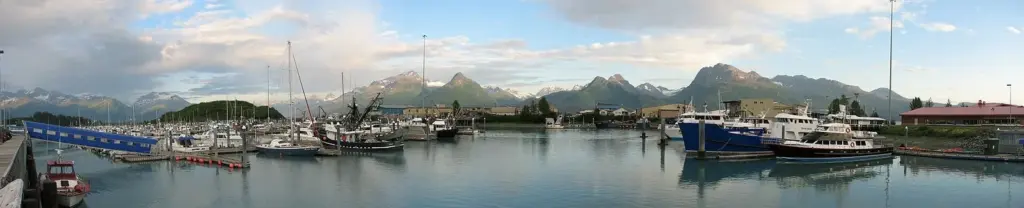
Valdez sits at the head of a fjord in Prince William Sound, surrounded by mountains, and it’s a port for smaller and mid-size ships rather than the megaships. Cruise ships use the Kelsey Dock, a 600-foot wooden wharf run by the city, about a 5- to 10-minute walk from downtown. The city’s 2026 schedule listed ships such as HX’s Roald Amundsen, Silversea’s Silver Moon and Silver Whisper, and Viking Venus and Viking Orion, carrying roughly 382 to 930 passengers each. Viking’s 2027 Vancouver-to-Seward cruise and Holland America’s 14-day Great Alaska Explorer both call there.
Top three: a glacier and wildlife cruise in Prince William Sound, the scenery of the fjord itself, and the town’s history as the southern end of the Trans-Alaska Pipeline. See our guide to things to do in Valdez on an Alaska cruise.
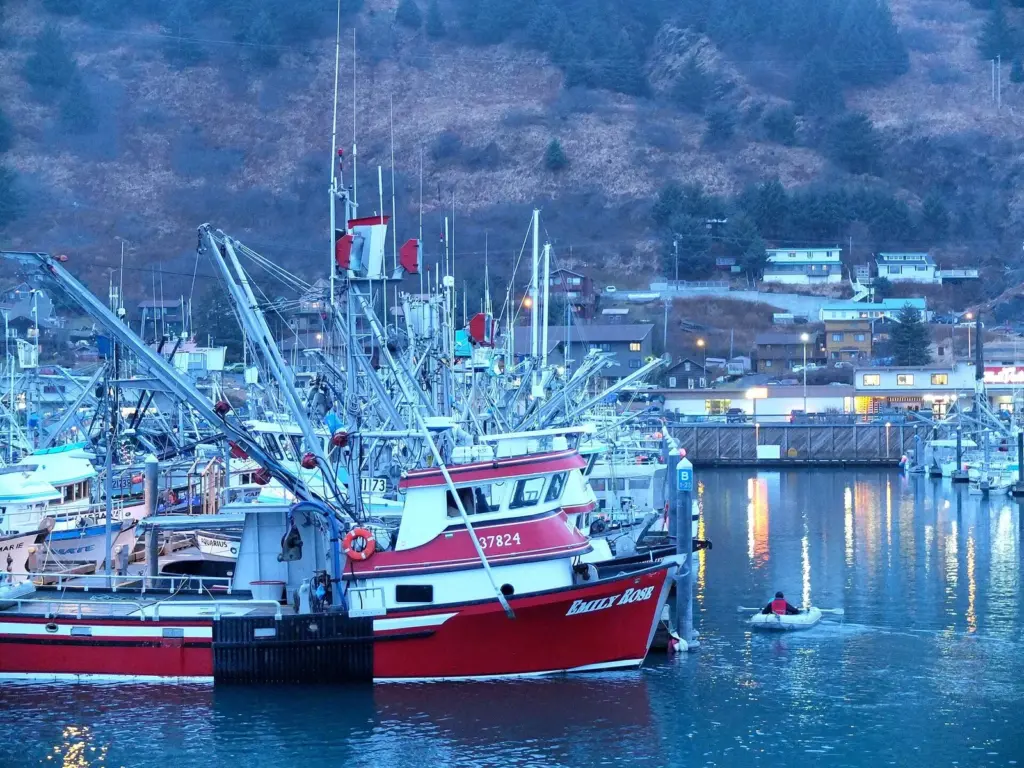
10. Kodiak
Kodiak is a working fishing town on Alaska’s largest island, and it feels far from the Inside Passage circuit. Port guides say ships use Pier II near downtown, a 5- to 15-minute walk from the museums and shops, while some larger ships use Pier III, an industrial cargo pier about 1.5 miles out that isn’t safe to walk from, with a free shuttle in 2026. Holland America’s 14-day Great Alaska Explorer calls here.
Top three: the fishing harbor, the town’s Russian-era history, and a bear-viewing flight if you’re willing to pay for one of the most famous wildlife experiences in Alaska. See our guide to things to do in Kodiak on an Alaska cruise.
11. Wrangell
Wrangell is a small, unpolished Southeast Alaska town where cruise passengers walk off the ship at the City Dock on Front Street, straight into downtown. It sees far fewer ships than the big three. The big reason to go is its access to the Anan Wildlife Observatory, one of the best places in Southeast Alaska to watch bears fishing for salmon in summer, though it’s a boat or floatplane trip and needs booking well ahead.
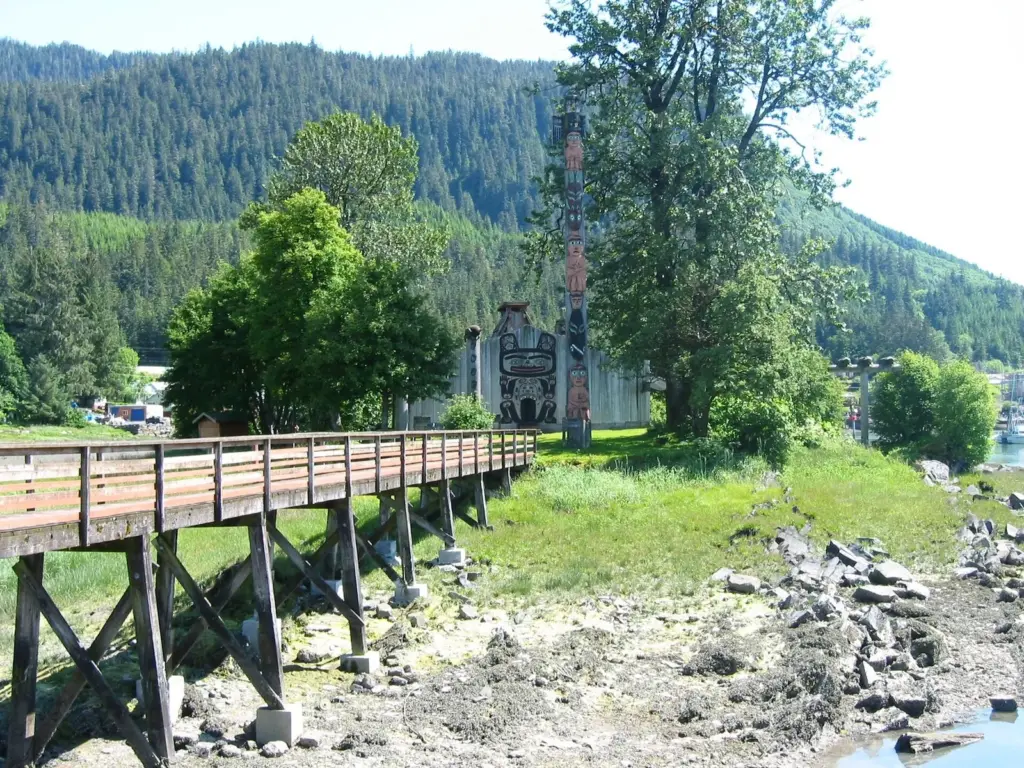
Top three: the Chief Shakes Tribal House on Shakes Island, bear viewing at Anan, and the town’s rock carvings at Petroglyph Beach. See our guide to things to do in Wrangell on an Alaska cruise.
12. Petersburg
Petersburg is the Southeast Alaska port that big ships can’t reach. It has no deep-water cruise port, and the 21-mile Wrangell Narrows that leads to it is too narrow and shallow for the largest ships, according to local sources. Small-ship lines such as American Cruise Lines and Lindblad-National Geographic call there instead, and the town keeps its fishing-village character as a result. Its Norwegian heritage gives it the nickname “Little Norway.”
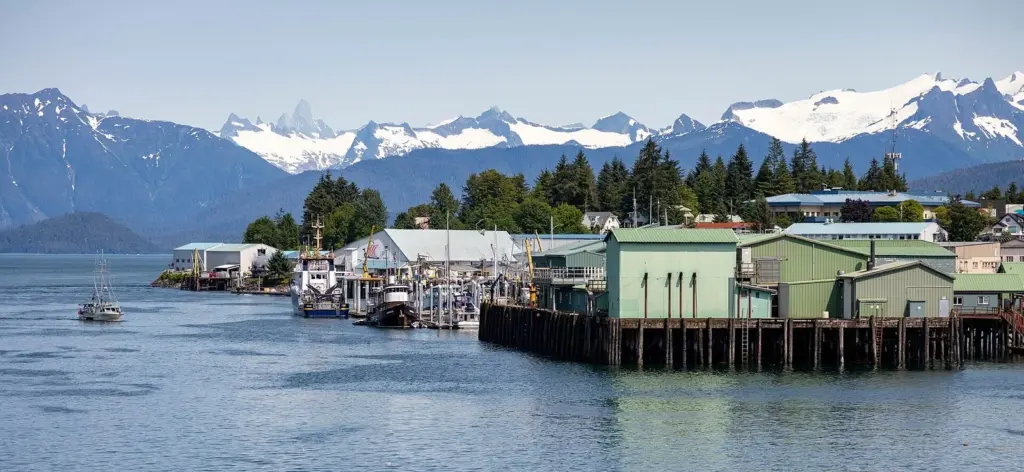
Top three: the working harbor, the town’s Norwegian heritage, and whale watching in Frederick Sound. See our guide to things to do in Petersburg on an Alaska cruise.
13. Prince Rupert, British Columbia
Prince Rupert is a Canadian stop on some Vancouver and Seattle itineraries, including Holland America’s new 8-day Vancouver round trip in 2027. Ships use the Northland Cruise Terminal, which the port authority describes as a 330-meter berth built in 2004 with a ramp that adjusts to the tide, in the Cow Bay district, a 5- to 10-minute walk from downtown. It’s a quiet, low-key call, good for a waterfront walk and a seafood lunch.
14. Dutch Harbor and the Bering Sea
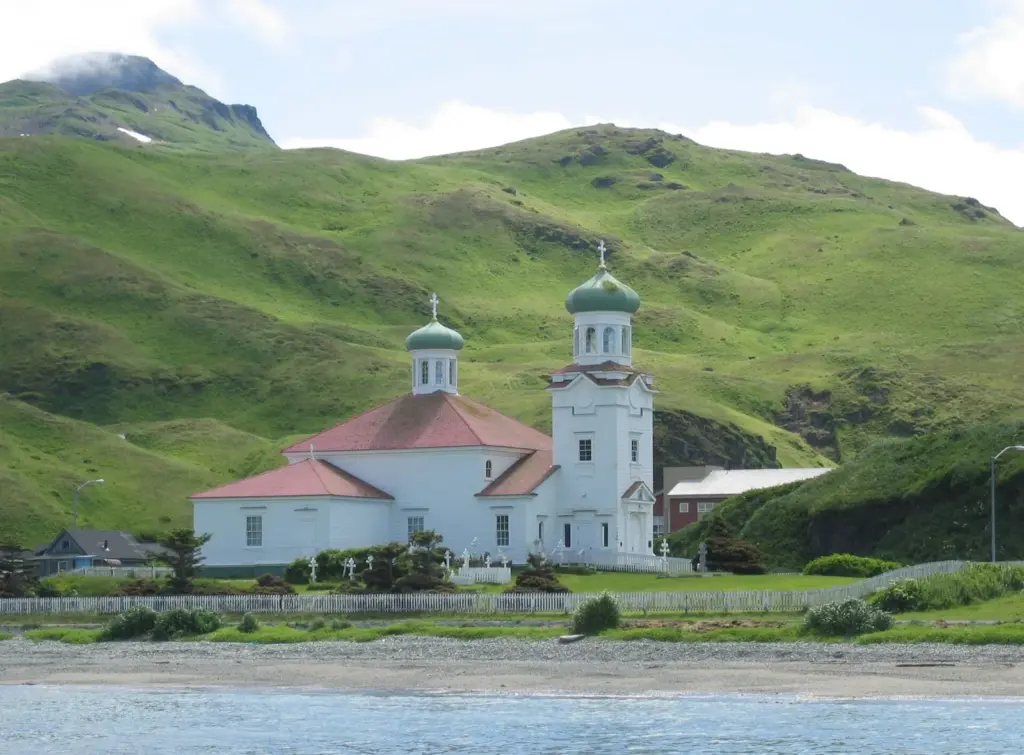
Dutch Harbor, on Unalaska Island in the Aleutians, is for expedition cruisers. The City of Unalaska publishes a tentative cruise ship schedule each year, and in 2026 departures included UnCruise’s 10-night Aleutian Islands voyage from Dutch Harbor on August 4 aboard Safari Explorer. Port guides say ships generally tie up at the City Dock at the Unalaska Marine Center. The Russian Orthodox Church of the Holy Ascension and the island’s World War II history are the highlights. A few big-ship voyages go even farther: Holland America’s 28-day 2027 Arctic Circle voyage sails into the Bering Sea and across the Arctic Circle. For more, see our guide to a Dutch Harbor cruise.
Which ports does each cruise line visit?
Every big line sails the Inside Passage, but they don’t all stop in the same places. These examples come from the lines’ published 2027 itineraries and releases as of September 2026; ports change by ship and date.
| Line | Ports named on 2027 Alaska itineraries | Worth knowing |
|---|---|---|
| Holland America | Juneau, Ketchikan, Skagway, Sitka, Icy Strait Point, Victoria, Prince Rupert; Kodiak and Valdez on its 14-day cruise | One of the widest spreads of ports among the big lines |
| Princess | Juneau, Ketchikan, Skagway and others, with late-night Juneau stays on northbound Voyage of the Glaciers sailings | Five homeports, including Anchorage (Whittier) |
| Royal Caribbean | Sitka, Juneau and Skagway from Seattle; Sitka, Icy Strait Point and Ketchikan from Vancouver; Skagway and Ketchikan on one-ways | Ward Cove in Ketchikan is common |
| Celebrity | Features Icy Strait Point among its ports | Sails from Vancouver, Seattle and Seward |
| Disney | Ports such as Skagway, Juneau and Ketchikan from Vancouver | Both ships in Alaska in 2027, as reported |
| Viking | Ketchikan, Sitka, Juneau, Skagway, Icy Strait Point, Valdez | An 11-day one-way to Seward |
| Virgin Voyages | Ketchikan, Sitka and Prince Rupert, as reported for 2027 | Mostly Seattle round trips |
| Small-ship lines | Petersburg, Wrangell, Haines and smaller communities | Where big ships can’t go |
Which Alaska cruise ports are the best?
For most first-timers, the best Alaska cruise ports are Juneau, Skagway and Ketchikan, the classic trio that appears on almost every Inside Passage itinerary, followed by Sitka and Icy Strait Point. If you can choose between itineraries, look for a sailing with at least one of the less-visited ports (Sitka, Haines or Icy Strait Point) alongside the big three. Our ranking of the best Alaska cruise ports goes deeper on which port suits which traveler.
| If you want | Best ports |
|---|---|
| Glaciers from land | Juneau (Mendenhall), Seward (Exit Glacier) |
| Whales | Juneau, Icy Strait Point |
| Bears | Wrangell (Anan), Ketchikan (floatplane trips), Kodiak |
| Alaska Native culture | Ketchikan (totems), Sitka, Icy Strait Point and Hoonah |
| Gold rush history | Skagway |
| Russian history | Sitka, Kodiak, Unalaska |
| A quiet, uncrowded town | Haines, Wrangell, Petersburg |
| Dry weather odds | Skagway |
What to book ahead in each port, and what to do on your own
Some port experiences sell out or need a guide and a boat; others are easy to do independently for a fraction of the price. Here’s the split for the main ports, with 2026 prices where operators or attractions published them.
| Port | Book ahead | Easy on your own |
|---|---|---|
| Juneau | Whale watching; helicopter glacier tours (Temsco’s Mendenhall glacier walk was $409 and its dog-sledding tour $699 per person in 2026) | The Goldbelt Tram, downtown, and Mendenhall Glacier by shuttle or bus |
| Ketchikan | Misty Fjords floatplanes (Taquan Air listed rates from $329 in 2026); bear viewing | Creek Street, salmon in Ketchikan Creek, the Totem Heritage Center ($6 adults in 2026) |
| Skagway | The White Pass & Yukon Route train, especially on multi-ship days | Broadway’s historic buildings and the national historical park’s self-guided tour |
| Sitka | Wildlife boat trips | The totem trail in Sitka National Historical Park; Fortress of the Bear (reported at $15 for adults) |
| Icy Strait Point | The ZipRider (reported at roughly $109-$159 through cruise lines or the port, about $199 walk-up) and whale trips | The cannery complex, the trail between the piers, and Hoonah by shuttle |
| Victoria | A Butchart Gardens transfer if your call is long enough (adult admission C$44.25 in summer 2026) | The Inner Harbour and downtown by shuttle or on foot |
| Haines | Eagle and wildlife tours | Fort William H. Seward and downtown, a short walk from the dock |
Verdict: book anything that involves a floatplane, a helicopter, a boat or a train, because those fill up and depend on the weather. Do the towns, the totems and the walking on your own. It’s the best way to keep a port day from feeling like a conveyor belt.
How long do you get in each port?
Alaska port days commonly run seven to ten hours, often from early morning to mid or late afternoon, but the exceptions matter. A few itineraries build in long stays: Princess gives all northbound Voyage of the Glaciers sailings a late night in Juneau, and Holland America’s new 8-day Vancouver round trip leaves Juneau late too. Those evenings are the best chance to see Juneau after the day crowds thin out.
Victoria is the big timing trap. Because it’s often the last stop on a Seattle round trip, many calls there are short evening visits. The harbor authority’s 2026 schedule showed Norwegian Bliss due at Ogden Point from 7:30 p.m. to 11:59 p.m. on September 25, for example, while Holland America’s Nieuw Amsterdam opened the season on April 10 with a daytime call from 10 a.m. to 10 p.m. Check your own call time before you plan anything that closes at 5 p.m.
Your daily program lists arrival, departure and all-aboard times for every port, and they can change during the cruise for weather or scheduling reasons. Build your plans around all-aboard, never around the published departure time.
Crowds: how to handle the busiest port days
Alaska’s ports are small towns receiving very large ships. Ketchikan’s 2026 schedule totaled about 1.6 million potential passengers across 725 ship stops, according to reported port figures, and Juneau’s voluntary limits exist because five-ship days strain the town. A few ways to cope:
- Check the port schedule. If three or more big ships share your port day, book popular excursions (whale watching, the Goldbelt Tram, Mendenhall shuttles, the White Pass train) before the cruise.
- Go early or late. The first hour after ships arrive and the last hour before all-aboard are the busiest on the main streets. Head straight for the farthest sight and work back toward the ship.
- Walk a few blocks. Crowds cluster within a few hundred yards of the docks. In Juneau, Ketchikan and Skagway, a ten-minute walk gets you to quieter streets.
- Pick the quieter ports. Haines, Sitka and Icy Strait Point feel very different from Juneau on a five-ship day. If an itinerary includes one of them, that’s a point in its favor.
Small-ship and expedition ports
Small expedition ships carry anywhere from a couple of dozen to a few hundred guests, and they reach places the big ships can’t: Petersburg through the Wrangell Narrows, remote Tlingit and Haida villages, bays with no pier at all where passengers go ashore by skiff. Regent Seven Seas was reported adding Klawock, on Prince of Wales Island, as a new port in 2026, and HX (Hurtigruten Expeditions) added Klawock and Valdez to its Alaska program. UnCruise runs voyages of 7 to 15 nights on ships of 22 to 86 guests, starting or ending in Juneau, Sitka or Ketchikan.
If the list of ports matters more to you than the ship’s amenities, a small ship is the way to see the Alaska that the big itineraries skip. The trade-offs are price, fewer onboard facilities, and, on the smallest vessels, more motion in open water.
All-aboard math for Alaska ports
Every port day ends with a deadline. All-aboard is usually 30 minutes to an hour before the ship sails, and your daily program gives the exact time. Ships don’t wait for independent travelers who miss it, so work backward from all-aboard, not from the departure time.
Here’s the calculation for a Ward Cove day in Ketchikan, using the 2026 shuttle figures:
| Step | Time to allow |
|---|---|
| Wait for the Ward Cove shuttle (every 15-20 minutes) | Up to 20 minutes |
| Ride from downtown Berth 4 to Ward Cove | 20-30 minutes |
| Walk from the shuttle stop to the gangway and security | 10 minutes |
| Safety buffer for crowds, rain or a full shuttle | 45-60 minutes |
| Leave downtown this long before all-aboard | About 1 hour 35 minutes to 2 hours |
Apply the same logic to Sitka’s reservation-only shuttle, Skagway’s Railroad Dock shuttles and Victoria’s Ogden Point. On a ship’s shore excursion, the line waits for late tours or gets you to the next port; on an independent tour, you’re on your own. That’s the single best argument for booking the riskiest trips, like floatplanes and helicopter tours, through the ship.
Port weather and what to do on a rainy day
Rain is part of the deal in Southeast Alaska, and it varies more by port than people expect. NOAA’s 1991-2020 normals put September rainfall at 14.3 inches in Ketchikan and 9.15 inches in Juneau, while Skagway, in the drier northern end of Lynn Canal, averages just 3.9 inches that month. Summer highs in all three average in the low to mid 60s °F.
- Ketchikan in the rain: the Totem Heritage Center and Creek Street’s boardwalk work in any weather, and rain is simply the local climate here.
- Juneau in the rain: Mendenhall Glacier still delivers in low cloud; the tram may not, because weather can stop it.
- Skagway in the rain: the historic buildings and the park’s visitor center, in the restored railroad depot, keep you dry between showers.
- Sitka in the rain: the Alaska Raptor Center and the totem trail under the rainforest canopy.
Low cloud is the bigger risk than rain for flightseeing and the White Pass train’s views. If your port has a flight booked, keep a backup plan and a rain jacket in your day bag.
Shopping in port: what to know
The blocks nearest the docks in Juneau, Ketchikan and Skagway are lined with jewelry and souvenir stores, many of them chains that also operate in Caribbean cruise ports. Port “shopping talks” and free-charm promotions steer passengers toward them. There’s nothing wrong with buying there, but it isn’t Alaska.
For locally made work, walk a few blocks farther and look for galleries run by local artists and Alaska Native organizations. The state’s Silver Hand label marks work by Alaska Native artists, and a “Made in Alaska” emblem marks products made in the state. If a totem, carving or piece of jewelry is sold as Native-made, ask who made it and where. Smoked salmon, local art prints and books from local presses are good souvenirs that actually come from the place.
How to compare two itineraries by their ports
When two sailings cost about the same, the ports are often the best tiebreaker. A simple way to compare them:
- Count the “big three.” Juneau, Skagway and Ketchikan are the core. Most itineraries include two or all three; one with only one of them is thinner.
- Look for a quieter fourth port. Sitka, Icy Strait Point or Haines adds variety and fewer crowds. A sailing that swaps one of the big three for Sitka isn’t a downgrade.
- Check the Victoria time. On Seattle round trips, a daytime Victoria call is worth more than a late-evening one.
- Check the port hours. A late night in Juneau or a full day in Skagway beats a short morning stop.
- Check the dock. Ward Cove versus downtown Ketchikan changes how the day feels, and your line can often tell you which berth is planned.
For example, a Seattle round trip with Juneau, Skagway, Ketchikan and a daytime Victoria call is a classic first-timer week. A Vancouver round trip with Sitka, Icy Strait Point and Ketchikan trades Juneau’s glacier and whales for quieter ports and more Alaska Native culture. Neither is wrong; they’re different trips.
Port-day checklist
- Check your ship’s berth and whether you need a shuttle
- Note the all-aboard time and set a phone alarm an hour before it
- Carry your ship card and photo ID (and a passport in Canadian ports)
- Pack a rain jacket, a warm layer and binoculars, whatever the morning looks like
- Book floatplanes, helicopters, whale watching and the White Pass train before the cruise
- Keep the ship’s port agent phone number from the daily program
- Head for the farthest sight first and work back toward the ship
What do ports charge cruise passengers?
Part of your cruise fare goes to Alaska. The state’s Commercial Passenger Vessel excise tax has been $34.50 per passenger since 2011, down from $46, and $5 of it goes to each of the first seven Alaska ports your ship visits. Cities also charge their own fees, which change often and are sometimes challenged in court, and they’re built into your fare rather than paid at the gangway. Sitka is a special case, because its main cruise dock is privately owned.
Port schedules and webcams
Want to know how many ships will share your port day? Juneau, Ketchikan, Skagway, Sitka, Victoria and the smaller ports publish ship schedules, usually as tentative calendars before the season. Our guide to the Alaska cruise port schedule shows where to find each one and how to read it. Several ports and harbors also stream live cameras, which are a good way to check the weather the morning of a call; our page on Alaska cruise port webcams lists them.
For help choosing a route that includes the ports you care about, see our guide to choosing an Alaska cruise itinerary.
Alaska cruise ports FAQ
What are the main Alaska cruise ports of call?
The big-ship ports are Juneau, Ketchikan, Skagway, Sitka and Icy Strait Point, and most 7-day Inside Passage cruises visit three or four of them. Seattle round trips add Victoria, British Columbia. Smaller ships also reach Haines, Wrangell, Petersburg, Valdez, Kodiak and Prince Rupert, and expedition voyages go as far as Dutch Harbor.
Which Alaska cruise ports use tenders?
Very few big-ship calls in Alaska are tendered. The main exception is Sitka, where most large ships dock at the Sitka Sound Cruise Terminal about 5 miles from town, but some anchor and tender passengers to Crescent Harbor on busy days. Small expedition ships tender more often, into communities without a large pier.
Can you walk from the cruise ship to town in Alaska?
In many ports, yes: most Juneau docks, downtown Ketchikan, Skagway’s Broadway Dock, Haines, Wrangell, Valdez and Prince Rupert are all walkable. You’ll need a shuttle from Ketchikan’s Ward Cove, Sitka’s terminal, Skagway’s Railroad Dock and Juneau’s AJ Dock if you’d rather not walk about a mile.
What are the Alaska cruise departure ports?
Most Alaska cruises depart from Seattle or Vancouver. One-way Gulf of Alaska cruises start or end in Seward or Whittier, the ports for Anchorage, and a few longer voyages leave from San Francisco or Los Angeles. Seattle has two cruise terminals, Pier 66 and Pier 91; Vancouver uses Canada Place.
Is there a cruise port in Anchorage?
Anchorage itself sees very few cruise calls. Big ships use Seward, about 125 miles south, or Whittier, about 60 miles away, and passengers transfer by train, bus or car. Lines often market these departures under Anchorage’s name. A few special voyages, such as Holland America’s 2027 Arctic Circle cruise, do overnight in Anchorage.
How many cruise ships can be in Juneau in one day?
Under a voluntary agreement between the city and the cruise industry, Juneau has accepted no more than five large ships a day since 2024, and from 2026 no more than 16,000 lower berths a day, or 12,000 on Saturdays. The city’s Assembly voted in late summer 2026 to postpone writing the ship limit into law.
Which Alaska cruise ports require a passport?
The Canadian ports, Victoria and Prince Rupert, are foreign stops, so bring a passport or another document your cruise line accepts for re-entering the United States. Some excursions also cross the border: White Pass & Yukon Route trains to Fraser, Bennett or Carcross in Canada require a passport, while the White Pass Summit round trip doesn’t.
What is the best Alaska cruise port?
Juneau is the best all-around port for most first-timers, thanks to Mendenhall Glacier, whale watching and the Goldbelt Tram all within easy reach. Skagway is the best for history and the White Pass train, and Sitka for Alaska Native and Russian history with fewer crowds than the big three.
Related Alaska Cruise Guides
- Things to Do in Juneau on a Cruise: The Complete Juneau Cruise Port Guide
- Things to Do in Ketchikan on a Cruise: The Complete Ketchikan Port Guide
- Things to Do in Skagway on a Cruise: The Complete Skagway Port Guide
- Alaska Cruise Itineraries: Every Route, Port Combination and Length Compared
Sources and How We Checked
We checked the prices, rules, schedules and ship deployments in this guide against the sources below on September 24, 2026, and we log each one in our research database with the date it was checked. Cruise lines change ships, fares and fees every season, so confirm anything that affects your booking with the line or the agency concerned. Alaska Cruise Guide (AlaskaCruise.org) is an independent publication. It is not affiliated with any cruise line, port, tour operator or tourism office, and no one paid to be included.
- 19 CFR 4.80a (Legal Information Institute): PVSA
- Alaska Business: Seward cruise terminal
- Alaska Department of Commerce: Alaska head tax
- Alaska Department of Fish and Game: Ketchikan salmon viewing
- Alaska DOT&PF: Whittier tunnel
- Alaska Public Media: Ketchikan 2026 season
- Alaska Public Media: Skagway Railroad Dock rockslide
- Alaska Public Media: Seward cruise terminal
- Alaska Public Media: Sitka passenger cap
- Alaska Public Media: Ketchikan Ward Cove
- Alaska Railroad terminal (alaskarails.org): Seward cruise terminal
- Alaska State Parks: Chilkat Bald Eagle Preserve
- alaskacruisehub.com: Icy Strait Point
- alaskaitinerary.com: Ketchikan bear viewing
- alaskaraptor.org: Alaska Raptor Center
- artchangeinc.org: Sitka passenger fees
- bucketlistguides.com: Kodiak port
- Celebrity Cruises: Celebrity Cruises
- City and Borough of Juneau: Juneau five-ship limit
- Cruise Industry News: Victoria Ogden Point
- cruisecritic.com: HX (Hurtigruten Expeditions)
- cruisehive.com: Juneau cruise docks
- cruisemapper.com: Icy Strait Point
- cruiseports.org: Ketchikan docks
- disneytouristblog.com: Disney Cruise Line
- fortressofthebear.org: Fortress of the Bear
- Goldbelt Tram: Mount Roberts Tramway
- Greater Victoria Harbour Authority: Victoria Ogden Point
- hainesskagwayfastferry.com: Haines Skagway Fast Ferry
- Holland America Line: Holland America Line
- hunatotem.com: Icy Strait Point
- Icy Strait Point: Icy Strait Point
- Juneau Empire: Juneau West Douglas port
- Juneau Empire: Juneau cruise limits
- Juneau Independent: Mendenhall Glacier
- ketchikan.gov: Totem Heritage Center
- ketchikanattractions.com: Ketchikan Ward Cove
- khns.org: Skagway Railroad Dock rockslide
- KTOO Public Media: Juneau Aak'w Landing dock
- KTOO Public Media: Juneau Aak'w Landing dock
- lonelyplanet.com: Saxman Native Village
- National Park Service: Klondike Gold Rush NHP
- National Park Service: Klondike Gold Rush NHP
- National Park Service: Sitka National Historical Park
- NOAA National Centers for Environmental Information: Juneau weather
- NOAA National Centers for Environmental Information: Ketchikan weather
- NOAA National Centers for Environmental Information: Skagway weather
- petersburgak.gov: Petersburg port
- PR Newswire (line press release): Royal Caribbean
- Princess Cruises: Anchorage gateway, Princess Cruises
- rssc.com: Regent Seven Seas
- rupertport.com: Prince Rupert port
- Seward Chamber of Commerce: Seward cruise terminal
- Sitka Sound Cruise Terminal: Sitka Sound Cruise Terminal
- Sitka Sound Cruise Terminal: Sitka Sound Cruise Terminal
- taquanair.com: Taquan Air
- Temsco Helicopters: Glacier dog sledding
- Temsco Helicopters: Temsco Helicopters
- The Butchart Gardens: Butchart Gardens
- The Butchart Gardens: Butchart Gardens
- The Maritime Executive: Juneau cruise limits
- U.S. Customs and Border Protection: passport rules
- unalaska.gov: Dutch Harbor port
- UnCruise Adventures: UnCruise Adventures
- valdezak.gov: Valdez port
- victoriashoreday.com: Victoria Ogden Point
- victoriashoreday.com: Victoria Ogden Point
- vikingcruises.com: Viking
- virginvoyages.com: Virgin Voyages
- visithaines.com: Haines port
- visitktn.com: Ketchikan transport
- Ward Cove: Ketchikan Ward Cove
- White Pass & Yukon Route: Skagway docks
- White Pass & Yukon Route: White Pass & Yukon Route
- wrangell.com: Wrangell port
- ziprider.com: Icy Strait Point
Photo Credits
- Haines harbor and cruise ship (2019): photo by Gillfoto from Juneau, Alaska, United States, via Wikimedia Commons (CC BY-SA 4.0)
- Alaska cruise region map: map by Kmusser, via Wikimedia Commons (CC BY-SA 3.0); ferry routes removed; cruise ports, glacier-viewing areas and Denali added by Alaska Cruise Guide
- Cruise ships in Juneau: photo by Gillfoto, via Wikimedia Commons (CC BY-SA 3.0)
- Valdez harbor (2007): photo by Srvora at English Wikipedia, via Wikimedia Commons (CC BY-SA 3.0)
- Kodiak harbor (2014): photo by Joseph from Cabin On The Road, USA, via Wikimedia Commons (CC BY-SA 2.0)
- Shakes Island, Wrangell (2006): photo by James Crippen, via Wikimedia Commons (CC BY 2.5)
- Petersburg harbor (2023): photo by David Brossard, via Wikimedia Commons (CC BY-SA 2.0)
- Church of the Holy Ascension, Unalaska (2004): photo by Brendan Minish (Flickr user bminish) from Castlebar, Ireland, via Wikimedia Commons (CC BY 2.0)