The best things to do in Ketchikan on a cruise are a walk along Creek Street, the totem poles at the Totem Heritage Center, Saxman and Totem Bight, and a floatplane flight over Misty Fjords National Monument. From mid-July to early September, add a bear-viewing trip if the budget stretches to it, and if you have children, the Great Alaskan Lumberjack Show. Ketchikan is the first Alaska port on most northbound cruises and the last on many southbound ones, and it’s the one where Alaska Native culture is easiest to see up close.
This guide is for cruise passengers with a day, or often just half a day, in Ketchikan. It covers which dock you’ll use (downtown or Ward Cove), what’s walkable, every major sight and tour with 2026 prices, how to decide between a floatplane and a boat to Misty Fjords, bear-viewing options, and sample port days with the all-aboard arithmetic. One caveat: Ketchikan is the wettest of the big cruise ports, with more than 11 inches of rain in an average August and more than 14 in September, so plan for rain and treat sunshine as a bonus. Last updated September 30, 2026. Every price, fee and schedule below is dated, and the sources are listed at the end.
Ketchikan Cruise Port at a Glance
The essentials for your day, as of September 2026.
| Question | Answer (as of September 2026) |
|---|---|
| Docked or tendered? | Docked on most calls, either downtown or at Ward Cove; tendering is rare and happens on the busiest days |
| Which docks? | Downtown city Berths 1 to 4, on the waterfront; or the two-berth Ward Cove terminal on the site of the old pulp mill, about 7 miles north of downtown |
| Distance to town | Downtown berths: a few minutes’ walk to Creek Street and the shops. Ward Cove: a complimentary shuttle to downtown Berth 4, reported to run every 15 to 20 minutes, about 20 to 30 minutes each way |
| Walkable from the downtown berths | Creek Street, Dolly’s House, the salmon ladder and Married Man’s Trail, the Southeast Alaska Discovery Center, the Tongass Historical Museum, the downtown Lumberjack Show and the Deer Mountain trailhead |
| Needs transport | Saxman Native Village, Totem Bight State Historical Park, floatplane docks for some operators, bear-viewing trips and fishing harbors |
| Getting around | A free downtown shuttle loop runs while large ships are in port (May to September, reported); local buses about $2; taxis reported at about $3.70 to start plus $3.50 a mile |
| Passenger fee | Ketchikan’s wharfage fee was reported at $13 per passenger from April 2025, collected in your cruise fare |
| Weather | Average highs 56.9°F in May to 64.7°F in August; rain from 7.02 inches in June to 14.30 in September |
| Daylight | 17 hours 27 minutes on June 21, 2027; 12 hours 44 minutes on September 15 |
What’s Changed for 2027
- Ward Cove keeps growing. The two-berth terminal north of town expected about 130 ship calls in 2026, and it added a visitor hub that season with a second Great Alaskan Lumberjack Show venue, axe throwing, open-fire dining, a zipline park and a brewery, distillery and winery. If your ship docks there, you can spend part of the day without going downtown at all.
- More passengers than ever. Ketchikan expected a record of more than 1.6 million cruise passengers in 2026 from 58 ships, about 100,000 more than 2025. The first ship was due April 12, and the largest scheduled carries more than 4,000 passengers.
- Fees are under review. The Forest Service’s 2026 proposal to raise day fees in Southeast Alaska covered the Southeast Alaska Discovery Center in Ketchikan as well as Mendenhall Glacier in Juneau.
- Bear viewing stays permit-limited. Anan Wildlife Observatory, the best-known bear site reached from Ketchikan, runs a strictly enforced pass system from July 5 to August 25 that limits it to 60 visitors a day.
The Best Things to Do in Ketchikan: Our Top 14
Ranked for a first-time visitor with one day in port. The first six are the heart of Ketchikan; the rest suit particular interests or a longer call.
1. Creek Street
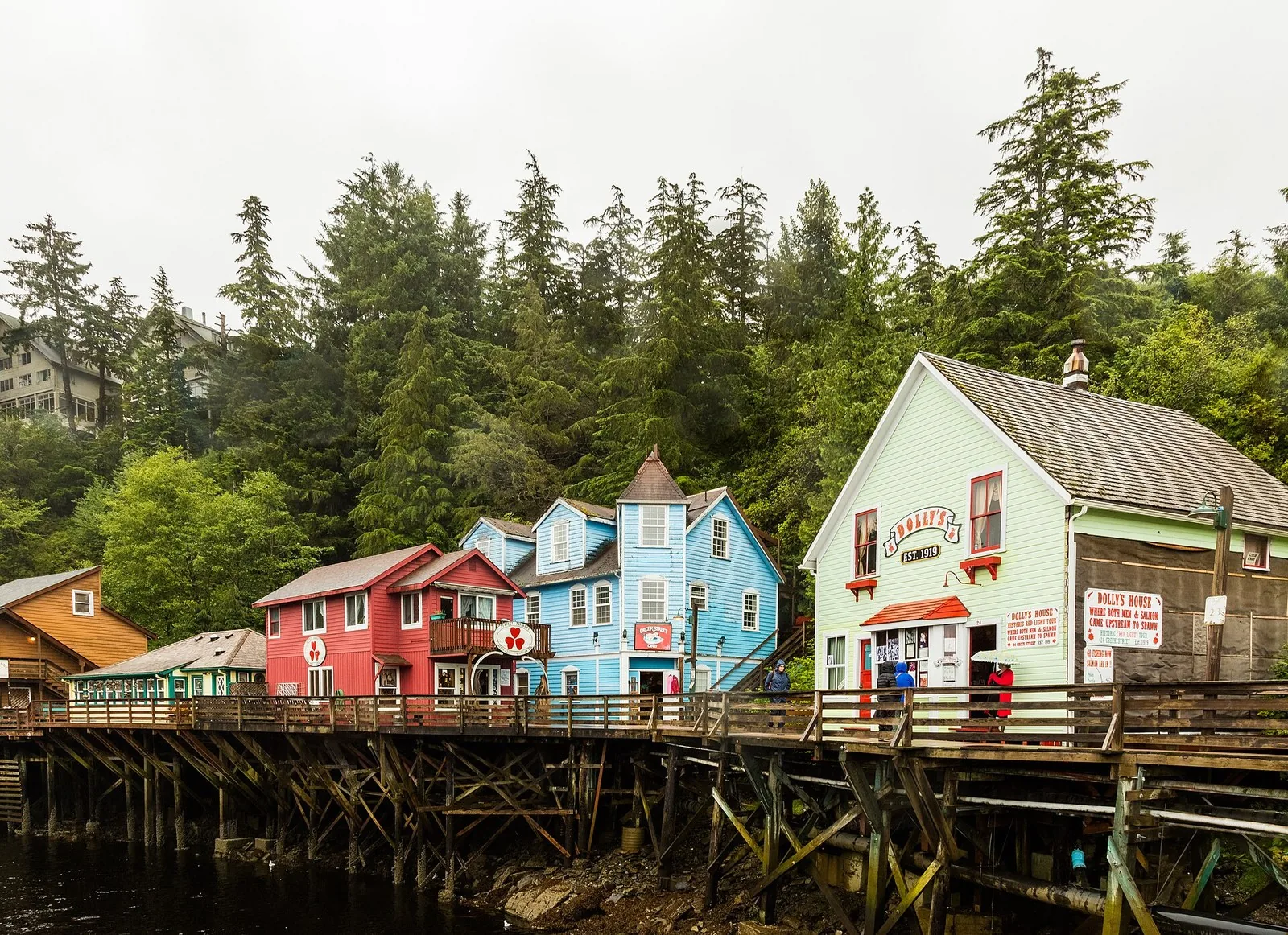
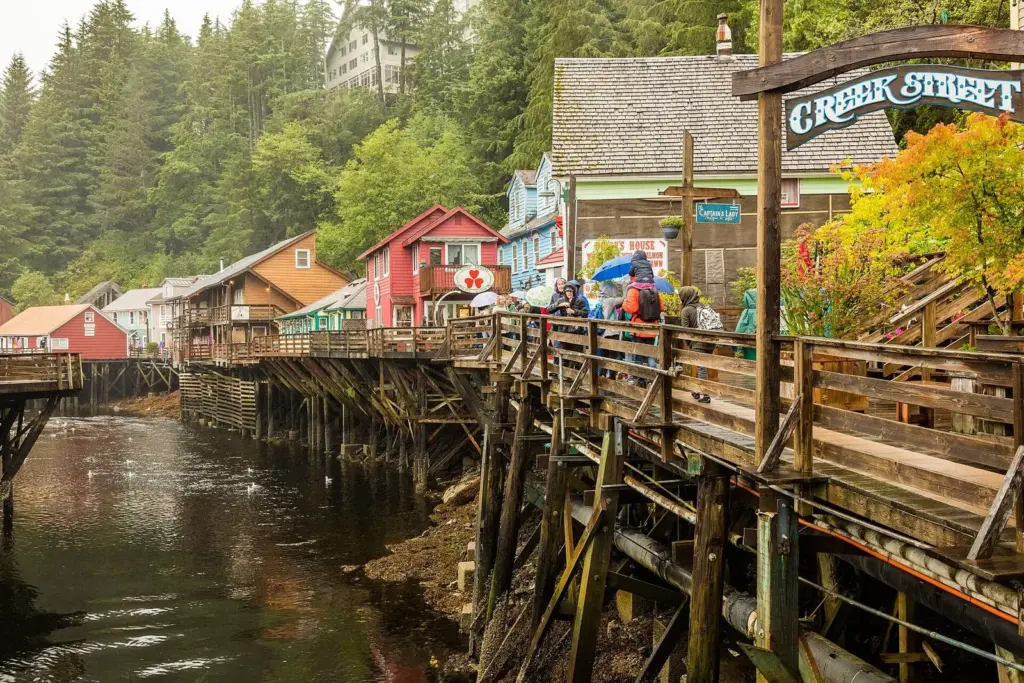
Creek Street is Ketchikan’s most photographed place: a wooden boardwalk on pilings over Ketchikan Creek, lined with brightly painted houses that were once the town’s red-light district and are now shops, galleries and a small museum. Dolly’s House, the preserved home of one of the street’s best-known madams, tells that story with more humor than you might expect.
From July through October, Ketchikan Creek fills with salmon: king salmon, steelhead, pinks and chums, with the best viewing where the creek meets Water and Bayview streets. The salmon ladder beside the creek lets you watch fish jump their way upstream, and the old Married Man’s Trail, a boardwalk path that climbs from Creek Street into the woods, was supposedly how customers slipped away unseen. Our guide to Creek Street Ketchikan covers the buildings and their history.
Creek Street is short, a few minutes end to end, but it rewards a slow walk. Look down between the planks and you’ll see the creek running beneath the houses; look up and you’ll see the hillside staircases that lead to the neighborhoods above. The best photographs are from the bridge at the lower end, looking up the creek toward the colorful fronts, and from the salmon ladder, where the fish jump in late summer. Harbor seals sometimes follow the salmon in from Tongass Narrows, and bald eagles wait on the rooftops.
Verdict: Free, walkable and genuinely atmospheric, even in rain. Go early before the tour groups arrive, or late in the afternoon.
2. Misty Fjords by Floatplane
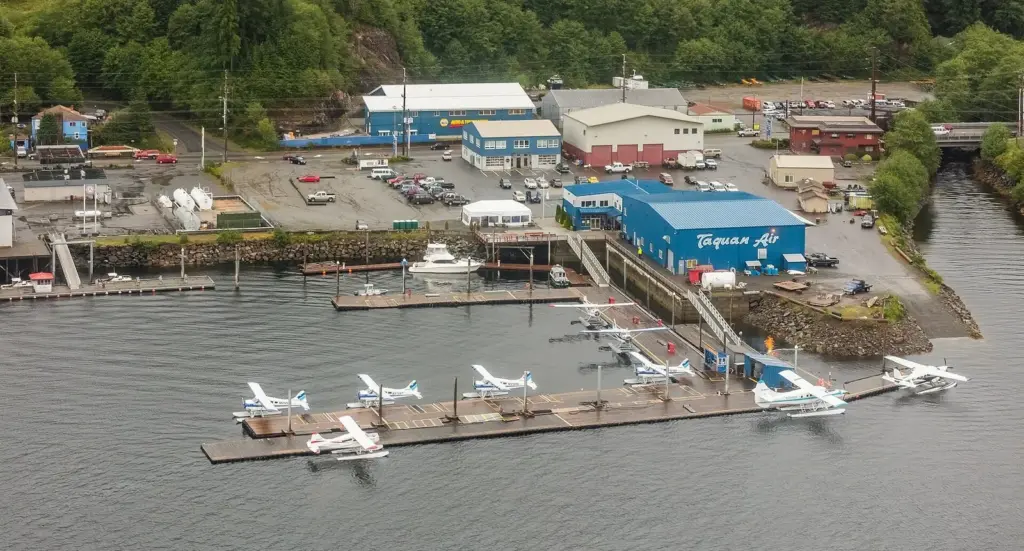
Misty Fjords National Monument is the big excursion in Ketchikan: more than two million acres of granite cliffs, waterfalls and fjords east of town that can be reached only by air or water. Most visitors see it from a floatplane, the small aircraft that are Alaska’s taxis, taking off from the water right beside downtown.
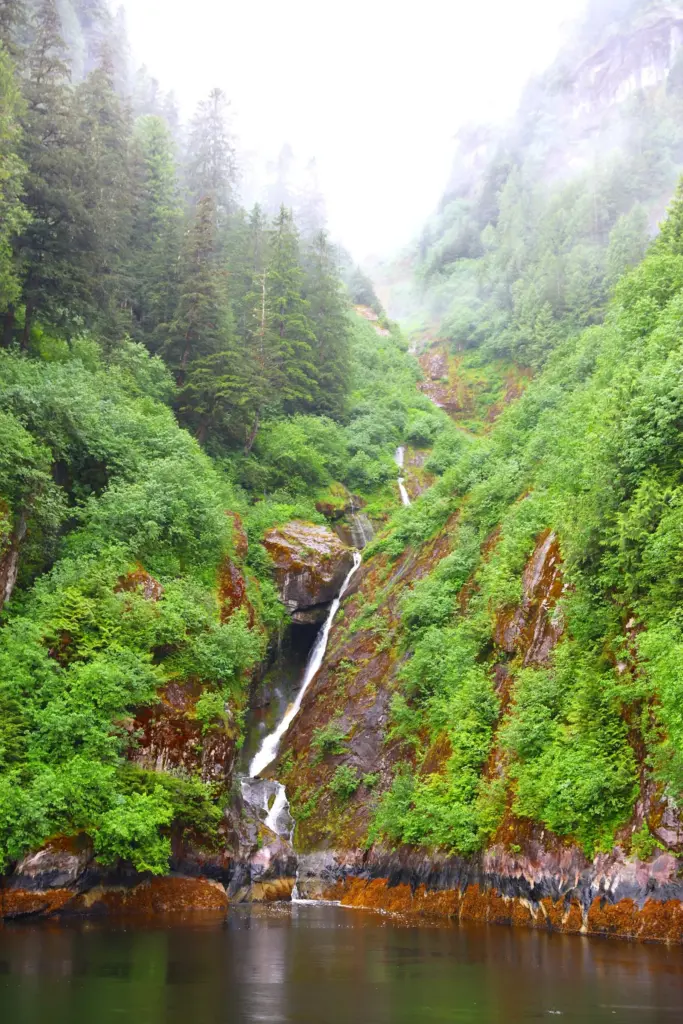
Taquan Air’s Misty Fjords Flightseeing is a typical option: rates start at $329 per person for a tour of about 1 hour 45 minutes including check-in, with roughly an hour in the air. Guests weighing 250 pounds or more may pay a $168 surcharge, and transport to the floatplane dock isn’t included. Taquan describes the flight as including a landing on an alpine lake or remote fjord. The catch is the weather: floatplanes need visibility, and Ketchikan’s rain and low cloud cancel flights more often than in drier ports. Our Misty Fjords guide covers the operators and routes.
What you see from the air is hard to match anywhere on the route: sheer granite walls dropping into dark water, waterfalls spilling off the cliffs, lakes tucked into hanging valleys and, on some flights, mountain goats on the ledges. The planes are small, typically carrying a handful of passengers, and every seat has a window. Bring a camera you can hold steady, wear layers for the dock, and don’t worry about the landing, which on the water is smoother than most people expect.
Verdict: The best excursion in Ketchikan when the clouds are high enough. Book a morning flight and keep a backup plan.
3. The Totem Heritage Center
The Totem Heritage Center, run by the city, preserves original 19th-century totem poles retrieved from abandoned Tlingit and Haida village sites, some of them more than 150 years old. Seeing weathered original poles indoors, with the stories behind them explained, is a very different experience from seeing the bright replicas outdoors, and it’s the best introduction to the art form before you visit Saxman or Totem Bight.
Admission is reported at $6 for adults and $5 for seniors 65 and over, with children under 17 free; in 2026 it was open daily from 8 a.m. to 5 p.m. from late April to late September. It’s a short walk or a stop on the free downtown shuttle. Our guide to Ketchikan totem poles compares all the sites.
Take your time with the poles. Each one tells a story, of a clan, an event or a person, through the crest figures carved into it, and the center’s displays explain how to read them. Seeing the original, weathered carvings first makes the brightly painted replicas at Saxman and Totem Bight far more meaningful, because you’ll recognize the figures and the style. The Deer Mountain Hatchery sits next door, so the two make an easy pair.
Verdict: The best hour you can spend in Ketchikan for $6. Go first, then see the outdoor parks.
4. Saxman Native Village
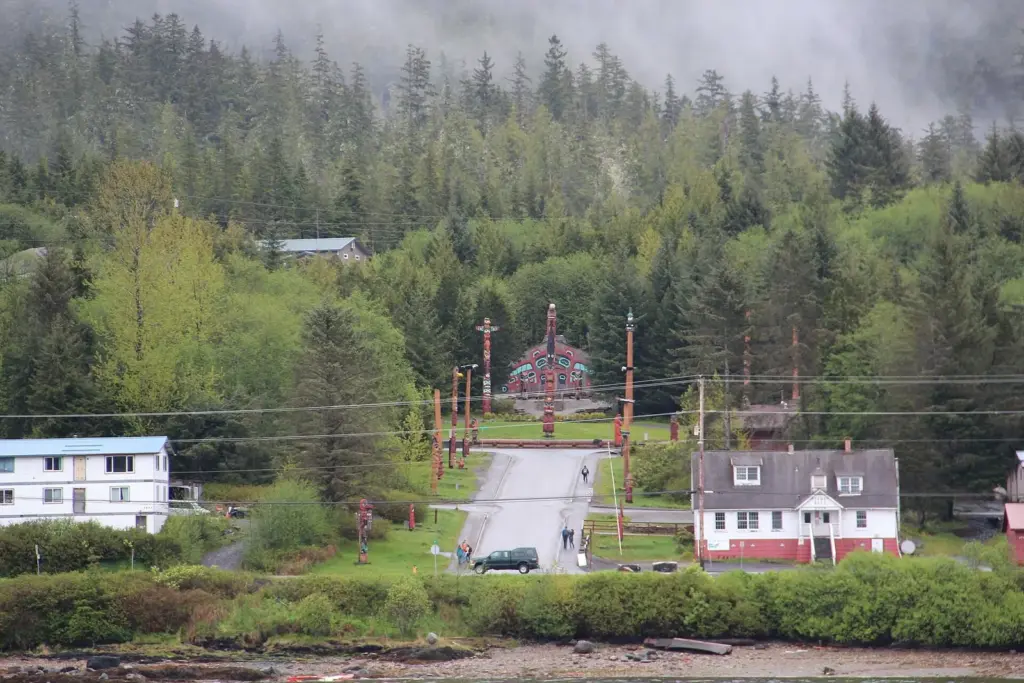
Saxman is a Tlingit village just south of Ketchikan with one of the largest collections of standing totem poles anywhere, a clan house and a carving center where you may see carvers at work. You can visit the totem park on your own, with basic admission reported at about $5, or join an Alaska Native-led village tour, reported at about $32 extra by appointment, which adds the clan house and, on some days, dance performances. Many cruise lines also sell Saxman tours with transport.
Verdict: The most meaningful cultural visit in Ketchikan. A Native-led tour is worth the extra cost if you have the time.
5. Totem Bight State Historical Park
Totem Bight, north of town along the North Tongass Highway, sets a clan house and a collection of totem poles in the rainforest beside the water, reached by a short, easy trail. Entry is reported at $5 per person from May 1 to September 30. It’s a peaceful counterpoint to downtown and pairs well with a Ward Cove call, since it’s on the same side of town.
The park stands on the site of a traditional fish camp, and many of its poles are carefully carved copies of older poles from abandoned village sites, made in a Depression-era program to preserve the art before the originals decayed. The walk from the parking area is an easy loop through spruce and hemlock to the clan house and the poles on the point, with views over the water. Allow about an hour on site, plus 20 minutes or so each way by road from downtown.
Verdict: The most beautiful setting for totems in Ketchikan. Take a taxi or a bus if you’re docked downtown.
6. The Great Alaskan Lumberjack Show
The Great Alaskan Lumberjack Show is loud, cheerful, family-friendly entertainment: two teams competing at log rolling, sawing, axe throwing and a race up a tall pole, with plenty of audience participation. It runs in a covered arena downtown and, since 2026, at a second venue at Ward Cove. Tickets are reported at about $45. It’s not an Alaskan wilderness experience, but it’s a genuinely good show, and the covered seating makes it a rain-proof choice. Our Great Alaskan Lumberjack Show guide has the schedule details.
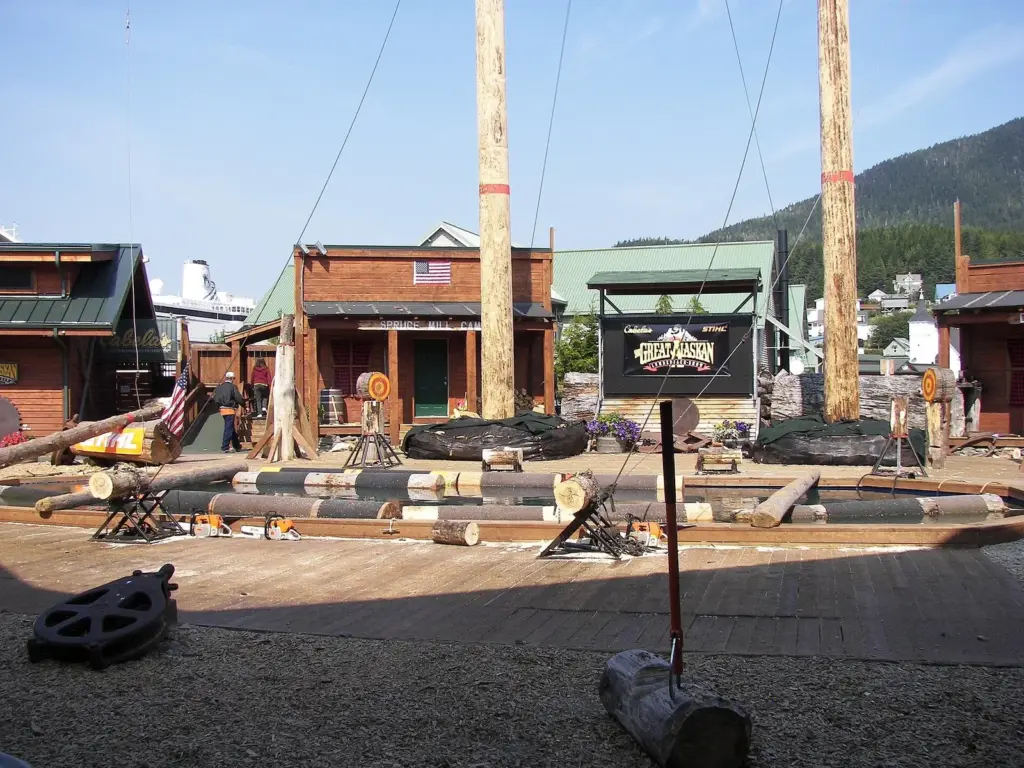
Verdict: The best family choice in Ketchikan. Skip it if you’re traveling without kids and have only half a day.
7. Bear Viewing
From mid-July to early September, when the salmon run, black bears (and at some sites brown bears) gather at streams in the wilderness around Ketchikan. Floatplane and boat operators fly visitors to viewing platforms at Neets Bay and Traitor’s Cove, trips that local guides price at about $400 to $500 per person, and to Anan Wildlife Observatory near Wrangell, from about $750. Neets Bay is roughly 25 minutes by air from town.
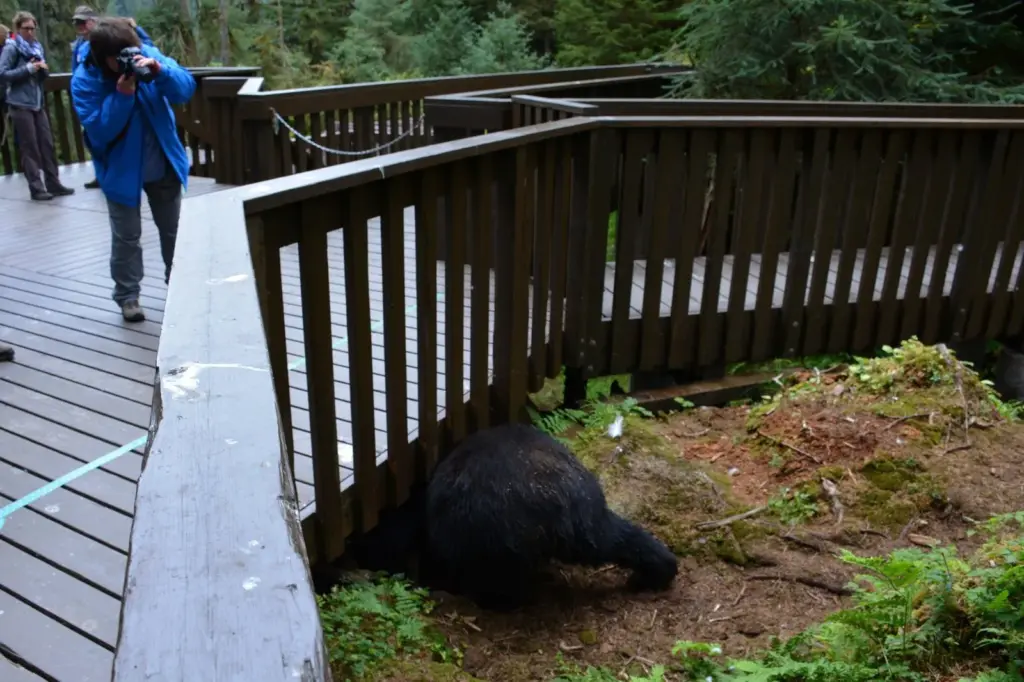
Anan is the most famous site, where a big pink salmon run in July and August draws black bears that are very likely to be seen and brown bears that are seen less often. A strictly enforced pass system from July 5 to August 25 limits it to 60 visitors a day, so trips sell out. Outside the salmon season, bear tours make little sense. Our Ketchikan bear viewing guide compares the sites and operators.
What to expect: a short floatplane or boat trip, a guided walk to a viewing platform or path beside a salmon stream, and time to watch bears fish, sometimes at close range. Sightings are never guaranteed, even in peak season, and the trips run in rain. Wear waterproof layers, bring binoculars and a camera with some zoom, and follow the guides’ rules about noise and food, which exist to keep both you and the bears safe.
Verdict: Worth it in late July and August if bears are your priority. Book as soon as you know your date.
8. Fishing Charters
Ketchikan calls itself the salmon capital of the world, and half-day charters leave its harbors all summer for salmon and halibut. Nonresidents need an Alaska sport fishing license, plus a king salmon stamp to keep kings; charters can usually sell both, and processors can freeze and ship your catch. Our Ketchikan fishing charters guide covers seasons and operators.
Verdict: The right day for anglers. Everyone else should see the salmon from the Creek Street boardwalk.
9. The Southeast Alaska Discovery Center
The Forest Service’s Southeast Alaska Discovery Center, a short walk from the downtown berths, explains the Tongass National Forest, the largest national forest in the United States, and the Alaska Native cultures of the region, with exhibits that make a good rainy-hour stop. Its day fee was part of the Forest Service’s 2026 fee proposal, so check the current price.
Verdict: A good first stop to understand what you’re about to see.
10. Ziplines and Rainforest Adventures
Zipline courses in the rainforest outside town, and the zipline park at the Ward Cove hub, suit teenagers and adrenaline fans. Rainforest UTV tours on old logging roads are another option for a group. Our Ketchikan zipline guide compares the courses.
Verdict: Fun, but choose Misty Fjords or the totems first if you only have one tour.
11. Hiking
Ketchikan’s trails start close to town. The Deer Mountain Trail climbs steeply from the edge of downtown through the rainforest to views over Tongass Narrows, a serious hike for fit walkers with a long port day. The Rainbird Trail is shorter and gentler, with forest and water views, and Married Man’s Trail is a short, easy boardwalk from Creek Street. Our Ketchikan hiking guide rates them for a cruise day.
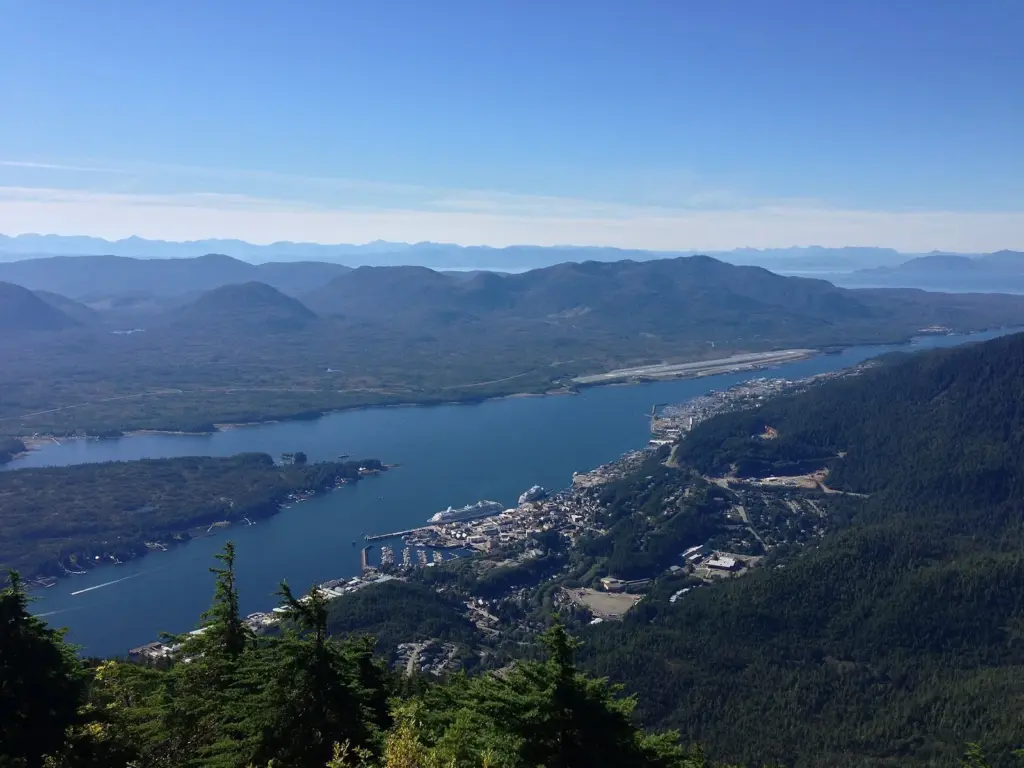
A few cruise-day rules apply to every trail. Carry water and a rain shell, tell someone on the ship where you’re going, and turn around with plenty of time, since descents on wet roots and boardwalks take longer than you expect. Black bears live in the forest around town, so make noise on quieter trails and give any bear a wide berth.
Verdict: The best free views in Ketchikan for strong walkers. Watch the time on the descent.
12. Sea Kayaking
Guided sea-kayaking tours paddle the sheltered coves around Ketchikan, often with bald eagles overhead and seals nearby. Most use stable double kayaks and take novices, and they run in rain, canceling mainly for wind.
Verdict: The best active option in Ketchikan and a good alternative when floatplanes are grounded.
13. Salmon Viewing and the Hatchery
Beyond the Creek Street salmon ladder, the Deer Mountain Hatchery near the Totem Heritage Center raises king and coho salmon, and in season you can see fish of every size. It’s short, cheap and a hit with children.
Verdict: A pleasant half hour, best combined with the Totem Heritage Center next door.
14. Eating Seafood Downtown
Ketchikan’s restaurants are close to the berths, according to 2026 dining guides. Annabelle’s Famous Keg and Chowder House on Front Street is known for chowder, the Alaska Fish House at Salmon Landing serves fish and chips and fish tacos, Alaskan Surf & Seafood runs a summer outlet on the cruise dock, Bar Harbor Restaurant is about a mile north on Tongass Avenue, and the Pioneer Cafe is a local breakfast favorite. Our guide to the best restaurants in Ketchikan goes further.
Verdict: Chowder on a rainy day is the most Ketchikan lunch there is.
Things to Do in Ketchikan on Your Own
Ketchikan is one of the easiest Alaska ports to explore without a ship tour. From the downtown berths you can walk to Creek Street, the salmon ladder, Dolly’s House, the Discovery Center, the Totem Heritage Center (or ride the free shuttle), the Lumberjack Show and the Deer Mountain trailhead. Saxman and Totem Bight are a short bus or taxi ride away, and several floatplane operators sell seats directly and have docks right on the waterfront.
A good do-it-yourself day: Creek Street and the salmon ladder first thing; the Totem Heritage Center when it opens; a floatplane over Misty Fjords if the cloud is high, or the Lumberjack Show if it isn’t; chowder for lunch; and Saxman or Totem Bight by taxi in the afternoon. Our guide to Ketchikan excursions on your own covers booking operators directly, and our list of free things to do in Ketchikan covers the no-cost options, from Creek Street to the trails. For a fuller menu of tours, see our Ketchikan excursions guide.
Downtown or Ward Cove? Ketchikan’s Cruise Docks
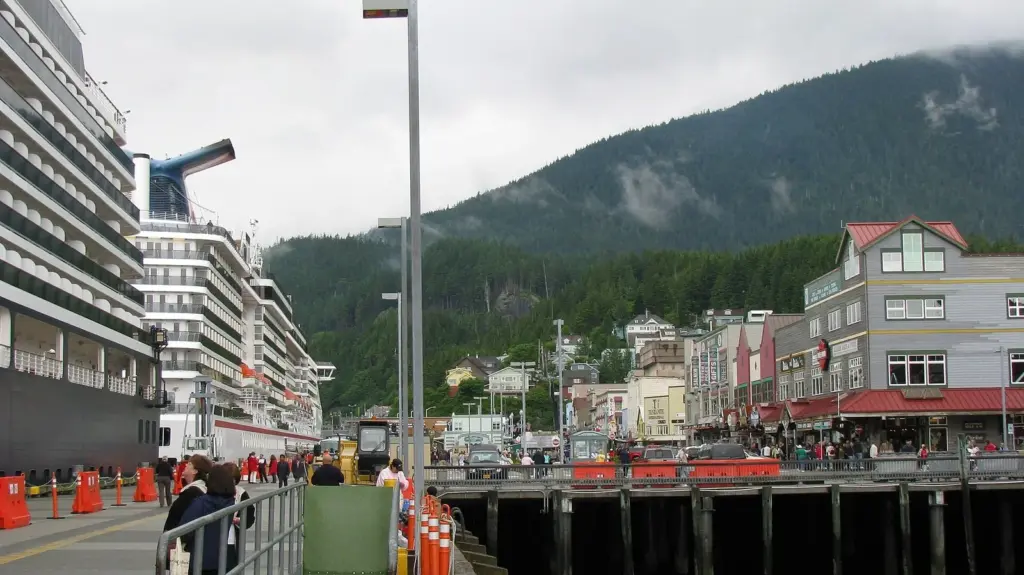
Where your ship docks shapes the whole day. Most calls use the city’s downtown Berths 1 to 4, right on the waterfront and within a short walk of Creek Street and the shops. A growing number, often from the largest ships, use Ward Cove, a two-berth terminal built on the site of Ketchikan’s former pulp mill, which closed in 1997. Ward Cove is about 7 miles north of downtown, and in 2026 a complimentary shuttle ran to downtown Berth 4 every 15 to 20 minutes, a ride of about 20 to 30 minutes, according to 2026 port guides. More than 400,000 passengers from eight cruise lines were expected there in 2026.
At Ward Cove, add the shuttle time to every downtown plan, both ways, and remember that the shuttle line can be long when a big ship empties at once. The upside is the Ward Cove hub itself, with the second Lumberjack Show venue, dining and a zipline park, and the short hop to Totem Bight, which lies in the same direction. Your line assigns the dock, so check your daily schedule. Our guides to the Ketchikan cruise port and Ward Cove Ketchikan cover both in detail, and our Alaska cruise ports overview covers every stop on your route.
Sample Ketchikan Port Days, With the All-Aboard Maths
Ketchikan calls are often short, sometimes six hours or less, so planning matters. The rule for anything you book yourself: tour time, plus travel both ways, plus a buffer of 45 to 60 minutes before all-aboard. These are examples; use your ship’s actual times.
A Downtown Day: In Port 7 a.m. to 3 p.m., All-Aboard 2:30 p.m.
| Time | Plan |
|---|---|
| 7:15 a.m. | Off the ship; Creek Street and the salmon ladder while it’s quiet |
| 8:00 to 9:00 a.m. | Totem Heritage Center (on the free shuttle loop) |
| 9:30 to 11:15 a.m. | Misty Fjords by floatplane, about 1 hour 45 minutes including check-in |
| 11:30 a.m. to 12:30 p.m. | Chowder for lunch |
| 12:30 to 1:30 p.m. | The Discovery Center or Dolly’s House |
| 1:30 p.m. | Back aboard with an hour’s buffer |
A Ward Cove Day: In Port 8 a.m. to 5 p.m., All-Aboard 4:30 p.m.
| Time | Plan |
|---|---|
| 8:30 a.m. | Taxi or tour to Totem Bight, on the same side of town |
| 10:00 a.m. | Shuttle to downtown (about 20 to 30 minutes) |
| 10:30 a.m. to 1:00 p.m. | Creek Street, the Totem Heritage Center and lunch |
| 1:00 to 2:30 p.m. | The Lumberjack Show or Saxman by taxi |
| 3:00 p.m. | Shuttle back to Ward Cove, leaving time for the line |
A Short Call: In Port 7 a.m. to 1 p.m.
Six hours is enough for one big thing plus Creek Street. Choose either a Misty Fjords flight or a ship-sold Saxman tour, and walk Creek Street before or after. Don’t try to fit in bears on a short call: the trips take most of a day. And if you’re at Ward Cove on a short call, subtract an hour for the shuttle both ways and keep it simple.
A Rainy Day
When the cloud is down, floatplanes may not fly. Switch to the things that work in rain: the Totem Heritage Center, the Discovery Center, Dolly’s House, the covered Lumberjack Show and a long lunch. Creek Street and the salmon ladder are fine in rain with a good jacket, and Saxman’s totems look powerful in the mist.
Misty Fjords: Floatplane or Boat?
| Floatplane | Boat tour | |
|---|---|---|
| Time needed | About 1 hour 45 minutes including check-in (Taquan) | Most of a port day |
| Price | From $329 per person (Taquan, 2026) | Varies by operator |
| What you see | The scale of the monument from above, with a water landing | The cliffs and waterfalls up close from sea level |
| Weather risk | High: needs visibility | Lower: runs in most rain |
| Best for | Short calls and clear mornings | Long calls and people uneasy about small planes |
Verdict: Fly if your call is short and the cloud is high; take the boat if you have a long day and want certainty.
Ketchikan Excursions Compared: Price and Time
| Activity | Price (2026) | Time needed |
|---|---|---|
| Creek Street, salmon ladder and Married Man’s Trail | Free | 1 hour |
| Totem Heritage Center | $6 adults (reported) | 1 hour |
| Saxman totem park | About $5; Native-led tour about $32 extra (reported) | 1 to 2 hours plus transport |
| Totem Bight State Historical Park | $5 (reported) | 1 to 1.5 hours plus transport |
| Great Alaskan Lumberjack Show | About $45 (reported) | About 1 hour |
| Misty Fjords floatplane (Taquan) | From $329 | About 1 hour 45 minutes |
| Bear viewing, Neets Bay or Traitor’s Cove | About $400 to $500 (reported) | Half a day |
| Bear viewing, Anan | From about $750 (reported) | Most of a day |
Getting Around Ketchikan
Ketchikan is a long, narrow town squeezed between the mountains and Tongass Narrows, strung along one main road, Tongass Avenue, that becomes the North and South Tongass highways. Downtown is compact and walkable from the city berths; everything else is along that road.
- On foot: the best way to see downtown, Creek Street and the waterfront. Most of it is flat; the neighborhoods above are reached by staircases.
- Free downtown shuttle: a loop of about 20 minutes that runs while large ships are in port, from May through September, according to Visit Ketchikan and other guides, stopping at the berths and sights including the Totem Heritage Center and the Tongass Historical Museum.
- Ward Cove shuttle: complimentary between Ward Cove and downtown Berth 4, reported every 15 to 20 minutes in 2026.
- Local buses: about $2, and the cheapest way to Saxman or Totem Bight, though slower than a taxi.
- Taxis: reported at about $3.70 to start plus $3.50 a mile; agree on a return pickup if you’re going to Totem Bight or Saxman.
- Tour transport: most tours, including many floatplane and bear trips, meet you at or near the berths.
Ketchikan on a Budget
You can have a full Ketchikan day for less than the price of a floatplane seat. Walk Creek Street, the salmon ladder and Married Man’s Trail for free. Ride the free shuttle to the Totem Heritage Center ($6 reported) and the hatchery next door. Take the $2 bus to Saxman or Totem Bight ($5 each reported), or hike the Rainbird Trail. Eat chowder or fish and chips rather than a crab feast. If you’re going to splurge on one thing, make it Misty Fjords on a clear day, since it’s the one experience you can’t replicate cheaply. Our list of free things to do in Ketchikan has more ideas.
Ketchikan for Seniors and Travelers With Limited Mobility
Ketchikan is one of the easier Alaska ports for limited mobility if your ship is at a downtown berth. The waterfront is flat, the free shuttle covers the main sights, and the Totem Heritage Center, the Discovery Center and the covered Lumberjack Show are all accessible choices. Creek Street’s boardwalk is mostly level, though some shop entrances have steps, and Married Man’s Trail and the neighborhoods above are all stairs. Floatplanes require stepping from a dock onto a float and into a small cabin, so ask the operator about boarding before you book. At Ward Cove, the shuttle ride adds time but little effort.
Ten Tips for Your Day in Ketchikan
- Check your dock. Downtown or Ward Cove changes the whole plan.
- Wear rain gear, whatever the sky looks like at breakfast. Ketchikan’s weather turns quickly.
- Book Misty Fjords for the morning. A weather hold then still leaves time to fly later.
- Visit the Totem Heritage Center before the outdoor totem parks. The originals make the replicas make sense.
- Walk Creek Street early or late. Midday, it’s shoulder to shoulder.
- Use the free shuttle. It saves your legs for the trails.
- Book bears as soon as you know your date. The best sites are permit-limited or small-group.
- Carry small bills. They’re handy for tips to guides and drivers.
- Watch the all-aboard time closely on a short call. Ketchikan calls are often six hours or less.
- Keep a 45- to 60-minute buffer. Especially from Ward Cove, where the shuttle line can be long.
What Not to Do in Ketchikan
- Don’t book bears in May or June. The bears follow the salmon, which arrive in July.
- Don’t try to see everything on a short call. One big tour and Creek Street is plenty.
- Don’t spend your day in the jewelry stores. The free gifts are the only bargains.
- Don’t assume Totem Bight is walkable. It’s miles north of downtown.
- Don’t lean over the creek rails to touch the salmon, and never feed the eagles or ravens.
- Don’t leave rain gear on the ship. You’ll regret it by lunchtime.
The Best Photo Spots in Ketchikan
- The Creek Street bridge: the classic view up the creek past the painted houses.
- The salmon ladder: leaping fish from July on.
- Saxman’s totem park: the carved poles and clan house, especially powerful in mist.
- Totem Bight’s point: the clan house and poles against the water.
- From a floatplane: Misty Fjords’ cliffs and waterfalls, and Ketchikan itself on the way out.
- From the ship: the town strung along Tongass Narrows as you sail in, with floatplanes landing alongside.
Wildlife You Can See Without a Tour
Ketchikan’s wildlife comes to town. Bald eagles are common around the waterfront, especially in late summer when the salmon run, and ravens are everywhere. From July, salmon fill Ketchikan Creek and the ladder, and harbor seals and sea lions sometimes hunt at the creek mouth. Floatplanes landing on Tongass Narrows beside your ship aren’t wildlife, but they’re one of the most Alaskan sights of the day. For bears, which need a floatplane or boat trip, see the bear-viewing section above.
Things to Do in Ketchikan in the Rain
Rain is the norm in Ketchikan, not bad luck. The town averages 7.02 inches in June, 7.33 in July, 11.30 in August and 14.30 in September, the wettest of the big cruise ports. Locals barely notice, and neither should you if you’re dressed for it: a waterproof jacket with a hood and shoes that can take puddles are essential. The rain-proof choices are the Totem Heritage Center, the Southeast Alaska Discovery Center, Dolly’s House, the covered Lumberjack Show, a Native-led Saxman tour, kayaking and a long seafood lunch. The weather-sensitive ones are floatplanes and the Deer Mountain Trail.
Things to Do in Ketchikan by Month
| Month | Weather (Ketchikan normals) | What’s good |
|---|---|---|
| May | 56.9°F high, 8.68 in of rain | Quiet streets and the first ships; no salmon yet |
| June | 61.3°F high, 7.02 in of rain | The driest month and the longest days; best odds for floatplanes |
| July | 64.5°F high, 7.33 in of rain | Salmon in Ketchikan Creek; bear season opens at Anan on July 5 |
| August | 64.7°F high, 11.30 in of rain | Peak salmon and bears; the warmest month, but wetter |
| September | 58.9°F high, 14.30 in of rain | Quieter and wettest; salmon still in the creek |
Things to do in Ketchikan in June center on the long, relatively dry days, which make it the best month for Misty Fjords flights. In July and August the salmon and bears take over, and in September you trade rain for thinner crowds. October has few big-ship calls, and many businesses start closing for the season.
Ketchikan With Kids
Ketchikan is a good port for families. The Great Alaskan Lumberjack Show is the obvious hit, and the salmon ladder, the hatchery and the fish-filled creek fascinate children in July and August. The totem parks work well with a Native-led tour that tells the stories behind the carvings. Short trails such as Rainbird and Married Man’s give kids a taste of the rainforest without a long climb. Our guide to things to do in Ketchikan with kids adds age-by-age suggestions.
Totems, Native Art and Buying Responsibly
Ketchikan sits on the traditional lands of the Tlingit, and its totem collections also honor Haida and Tsimshian art. Seeing the poles is only part of the experience; the stories they carry are the rest, which is why a Native-led tour at Saxman, or the explanations at the Totem Heritage Center, add so much. For the wider story of the region’s peoples, see our guide to Alaska Native culture.
If you want to buy art, look for the Silver Hand emblem, which identifies authentic work by Alaska Native artists under a state program, and buy from artists, carving centers and Native-owned shops where you can. The waterfront jewelry stores advertise heavily on board with free gifts; browse if you like, but they’re the same stores you’ll find in every cruise port.
A Short History of Ketchikan
Ketchikan takes its name from the Tlingit name for the creek that runs through town, and Tlingit people fished the salmon runs here long before the first cannery opened in the late 19th century. Salmon canning made Ketchikan, and by the 1930s it was calling itself the salmon capital of the world. Logging and a pulp mill at Ward Cove sustained the town for decades until the mill closed in 1997; the cruise terminal now stands on the old mill site. Creek Street, meanwhile, was the town’s red-light district for half a century, which is why its museum is a former brothel. Today tourism is the engine, and more than 1.6 million cruise passengers were expected in 2026.
For the bigger picture of what to book across your whole cruise, see our guide to Alaska cruise excursions, which compares floatplane, helicopter and boat tours port by port. And if your route includes a glacier day, our Alaska glacier cruise guide explains what you’ll see.
Things to Do in Ketchikan FAQ
What is Ketchikan best known for?
Totem poles, salmon and rain. Ketchikan has one of the world’s great collections of totem poles at the Totem Heritage Center, Saxman and Totem Bight; it calls itself the salmon capital of the world; and it’s the wettest of the big cruise ports. Creek Street and floatplane flights over Misty Fjords are its other signature sights.
What can you do in Ketchikan without an excursion?
Quite a lot. From the downtown berths, walk Creek Street and the salmon ladder, visit the Totem Heritage Center ($6 reported), Dolly’s House and the Southeast Alaska Discovery Center, and hike the Rainbird or Deer Mountain trails. A free downtown shuttle runs while large ships are in port, and Saxman and Totem Bight are a short taxi or bus ride away.
Is Misty Fjords worth it?
Yes, if the weather cooperates. A floatplane flight, from $329 with Taquan Air in 2026, shows you granite cliffs and waterfalls you can’t reach any other way, often with a water landing. In low cloud, flights may be canceled or see little, so book the morning and have a rain plan.
Can you walk from the cruise ship to Creek Street?
From the downtown berths, yes: it’s a few minutes on foot. If your ship docks at Ward Cove, about 7 miles north, take the complimentary shuttle to downtown Berth 4, reported to run every 15 to 20 minutes in 2026, and allow 20 to 30 minutes each way.
Where can you see bears near Ketchikan?
At Neets Bay, Traitor’s Cove and Anan Wildlife Observatory, reached by floatplane or boat from mid-July to early September. Local guides price Neets Bay and Traitor’s Cove trips at about $400 to $500 and Anan from about $750. Anan limits visitors to 60 a day from July 5 to August 25.
What is there to do in Ketchikan in the rain?
The Totem Heritage Center, the Southeast Alaska Discovery Center, Dolly’s House, the covered Great Alaskan Lumberjack Show, kayaking and a long chowder lunch all work in rain. Creek Street is fine with a good jacket. Floatplanes and the Deer Mountain Trail are the activities most affected by bad weather.
How long do you need in Ketchikan?
Four to six hours covers Creek Street, one totem site and either a Misty Fjords flight or the Lumberjack Show. A full day lets you add Saxman or Totem Bight and a longer tour. Bear viewing takes half a day or more, so it’s only practical on longer calls.
What is Ketchikan like in August?
The warmest month by average high (64.7°F) and one of the wettest, with 11.30 inches of rain on average. It’s the peak of the salmon runs, so the creek is full of fish and bear-viewing trips are at their best. Book bear and floatplane trips early.
Related Alaska Cruise Guides
Sources and How We Checked
We checked the prices, rules, schedules and ship deployments in this guide against the sources below on September 24, 2026, and we log each one in our research database with the date it was checked. Cruise lines change ships, fares and fees every season, so confirm anything that affects your booking with the line or the agency concerned. Alaska Cruise Guide (AlaskaCruise.org) is an independent publication. It is not affiliated with any cruise line, port, tour operator or tourism office, and no one paid to be included.
- Alaska Department of Fish and Game: Anan Wildlife Observatory
- Alaska Department of Fish and Game: Ketchikan salmon viewing
- Alaska Public Media: Ketchikan Ward Cove
- Alaska State Parks: Totem Bight State Historical Park
- alaskacruisehub.com: Ketchikan restaurants
- alaskaitinerary.com: Ketchikan bear viewing
- cruiseports.org: Ketchikan docks
- Juneau Independent: Mendenhall Glacier
- ketchikan.gov: Totem Heritage Center
- ketchikanattractions.com: Ketchikan Ward Cove
- ketchikanattractions.com: Great Alaskan Lumberjack Show
- KRBD Ketchikan: Ketchikan 2026 season
- lonelyplanet.com: Saxman Native Village
- mustreadalaska.com: Ketchikan passenger fees
- NOAA National Centers for Environmental Information: Ketchikan weather
- taquanair.com: Taquan Air
- U.S. Forest Service: Misty Fjords
- U.S. Naval Observatory: Ketchikan daylight
- visitktn.com: Ketchikan transport
- Ward Cove: Ketchikan Ward Cove
- Ward Cove: Ketchikan Ward Cove
Photo Credits
- Creek Street, Ketchikan: photo by Diego Delso, via Wikimedia Commons (CC BY-SA 4.0)
- Ketchikan waterfront and cruise ships: photo by Barek, via Wikimedia Commons (Public domain)
- Misty Fjords National Monument: photo by Enrico Blasutto, via Wikimedia Commons (CC BY-SA 4.0)
- Saxman totem park: photo by Thomson200, via Wikimedia Commons (CC0)
- Great Alaskan Lumberjack Show: photo by Wknight94, via Wikimedia Commons (CC BY-SA 3.0)
- Black bear at Anan Wildlife Observatory: photo by Paul Robbins, Jr., United States Forest Service, via Wikimedia Commons (Public domain)
- Ketchikan from Deer Mountain: photo by NorthBySouthBaranof, via Wikimedia Commons (CC BY-SA 3.0)
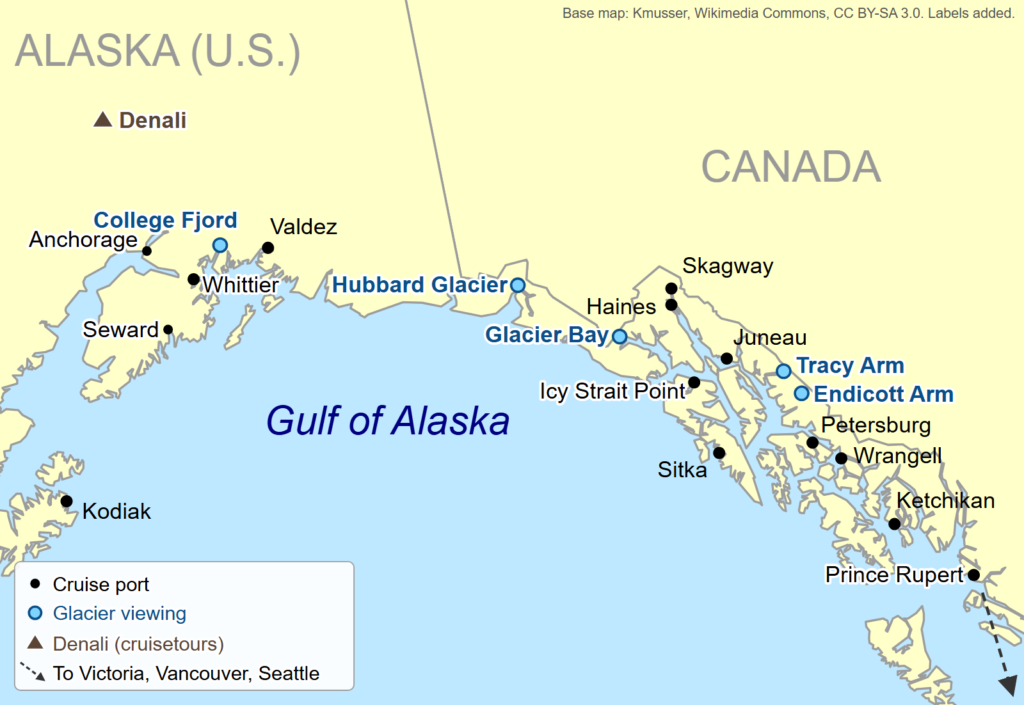
- Alaska cruise region map: map by Kmusser, via Wikimedia Commons (CC BY-SA 3.0); ferry routes removed; cruise ports, glacier-viewing areas and Denali added by Alaska Cruise Guide
- Floatplanes in Ketchikan: photo by Diego Delso, via Wikimedia Commons (CC BY-SA 4.0)
- Creek Street in the rain: photo by Diego Delso, via Wikimedia Commons (CC BY-SA 4.0)