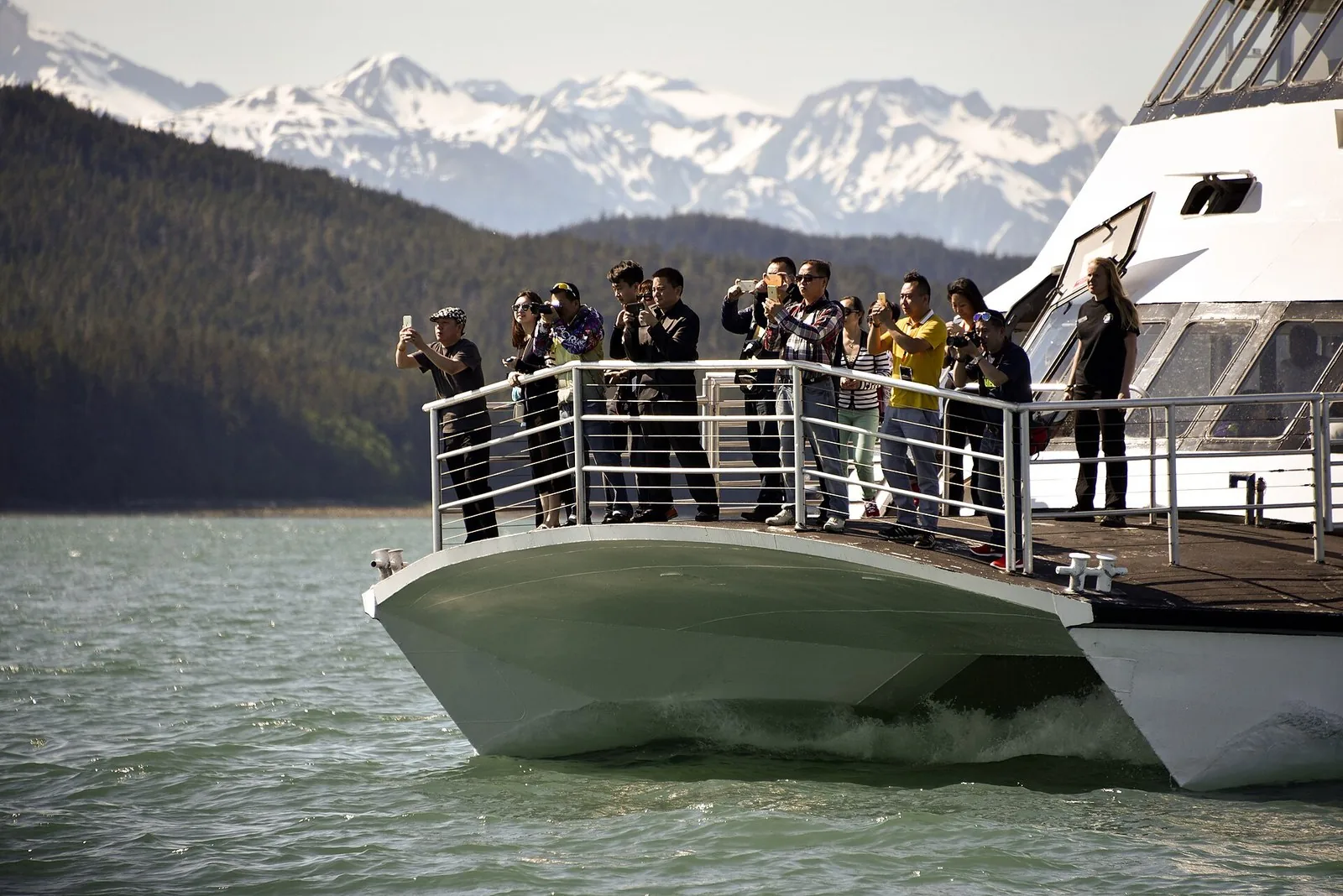
The right Alaska cruise packing list is built on layers, not bulk. Pack a waterproof rain jacket, a warm fleece or light insulated jacket, two or three base layers, waterproof walking shoes, a warm hat and gloves for glacier day, binoculars, and a small day bag, and you’ll handle almost anything a summer cruise throws at you. What you don’t need is a winter parka, a suitcase full of cotton, or anything that plugs into a surge protector.
This checklist is for first-time Alaska cruisers packing for a 7-night sailing between May and September, with extras for cruisetours, kids and shore excursions. The caveat that matters: weather changes more by port and by month than most people expect, so a September trip to Ketchikan needs far more rain gear than a June trip to Skagway. Last updated October 6, 2026. Every price, fee and schedule below is dated, and the sources are listed at the end.
The 10 things Alaska cruisers most often wish they’d packed
Start here. If you pack nothing else carefully, get these right.
| Item | Why you’ll want it | Tip |
|---|---|---|
| Waterproof rain jacket with a hood | Southeast Alaska is a rainforest; Ketchikan averages 7 to 14 inches of rain a month in the cruise season | Breathable shell, big enough to fit over a fleece |
| Warm mid-layer | Summer highs in the ports run in the 50s and 60s °F | Fleece or a light puffy that packs small |
| Waterproof walking shoes | Wet boardwalks, gravel trails, slick decks | Break them in before the trip |
| Warm hat and gloves | Glacier days are cold on an open deck, even in July | Thin gloves that work with a phone screen |
| Binoculars | Whales, bears and mountain goats are usually far away | One pair per person, 8x or 10x |
| Small waterproof day bag | Ports and excursions mean carrying layers all day | A dry bag liner keeps a phone and camera safe |
| Sleep mask | Around the solstice, Juneau gets over 18 hours of daylight | Cabins with windows and balconies let the light in |
| Sunglasses and sunscreen | Long days plus glare off water and ice | Yes, even in Alaska |
| Passport | Needed for some excursions that cross into Canada | Keep it in your carry-on, never in checked bags |
| Motion-sickness remedy | Open-water stretches can be rougher than the Inside Passage | Ask your doctor before the trip |
What weather are you packing for?
Alaska’s cruise season runs from May through September, and it’s cooler and wetter than most first-timers expect. The table below uses NOAA’s 1991-2020 normals for four ports cruise ships call at. For month-by-month detail on weather, crowds and prices, see our guide to the best time to cruise Alaska.
| Month | Juneau high/low, rain | Ketchikan high/low, rain | Skagway high/low, rain | Seward high/low, rain |
|---|---|---|---|---|
| May | 58/40°F, 3.5 in | 57/43°F, 8.7 in | 58/43°F, 1.1 in | 53/39°F, 3.5 in |
| June | 62/47°F, 3.8 in | 61/49°F, 7.0 in | 63/49°F, 1.2 in | 59/46°F, 2.3 in |
| July | 64/50°F, 5.1 in | 65/53°F, 7.3 in | 65/52°F, 1.4 in | 62/50°F, 3.1 in |
| August | 63/49°F, 6.4 in | 65/53°F, 11.3 in | 63/51°F, 2.4 in | 62/50°F, 5.4 in |
| September | 56/44°F, 9.2 in | 59/48°F, 14.3 in | 57/46°F, 3.9 in | 56/43°F, 9.9 in |
Three patterns decide what goes in your suitcase:
- It’s never hot. Average summer highs top out in the low to mid 60s °F, and lows sit in the 40s and 50s. A warm afternoon in the 70s happens, but you can’t pack for it.
- Rain rises through the summer. September brings two to four times June’s rainfall in Juneau, Ketchikan and Seward. Ketchikan is the wettest major port; Skagway, in a rain shadow at the top of the Inside Passage, is far drier.
- The days are very long. Juneau gets about 18 hours 17 minutes of daylight at the June solstice and still about 12 hours 50 minutes in mid-September. Seward and Anchorage get even more in June.
Inside Passage or Gulf of Alaska: does the route change the list?
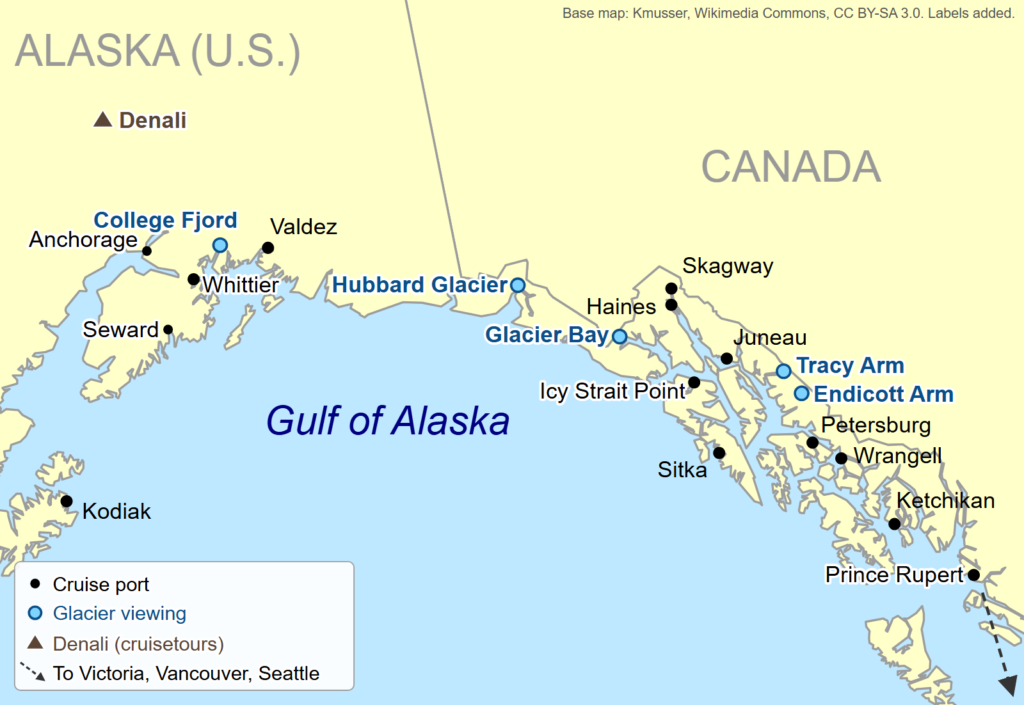
A little. The two main itinerary types expose you to different conditions, and it’s worth adjusting a few items.
Inside Passage round trips
Round trips from Seattle or Vancouver spend most of their time in the sheltered waters of the Inside Passage, with a glacier day and three or four ports in Southeast Alaska. That means a lot of rain gear and not much open ocean. Seattle round trips usually stop in Victoria, British Columbia, so your passport or other accepted document goes ashore with you there. Pack the standard list, with extra attention to waterproof shoes and a jacket that can handle Ketchikan in August.
One-way Gulf of Alaska cruises
One-way cruises between Vancouver and Seward or Whittier add a stretch across the open Gulf of Alaska, which can be rougher than the Inside Passage, and often a second glacier day. Pack a motion-sickness remedy you’ve tried before, and one more warm layer: Seward’s summer highs run a few degrees cooler than Juneau’s. Many one-way passengers also add days in Anchorage or a cruisetour, where the weather is drier (Anchorage averages under 2 inches of rain a month from May to July) and warmer inland. Pack for both climates in the same bag by leaning on layers.
How to layer for Alaska
Layering is the whole strategy. A cruise day in Alaska can start at 45°F in a rain shower, reach 62°F and sunny by lunch in port, and end on a windy deck near a glacier. One heavy coat can’t handle that. Three thin layers can.
| Layer | What it does | What to pack | Avoid |
|---|---|---|---|
| Base layer | Sits against your skin and moves moisture away | 2 to 3 long-sleeve tops in merino wool or synthetic; light leggings or long underwear for glacier day | Cotton, which stays wet and cold |
| Mid layer | Traps warmth | 1 fleece jacket or pullover, plus a light down or synthetic puffy that packs small | Bulky wool sweaters that take a day to dry |
| Outer layer | Blocks wind and rain | A waterproof, breathable jacket with a hood; waterproof pants if you’ll hike or kayak | Water-resistant jackets that soak through in a real downpour |
Wear the layers in combinations. Base layer alone for a warm afternoon in port. Base plus shell for a rainy walk around Ketchikan. All three for the hour in front of a glacier. A layer you can take off and stuff in a day bag is worth more than a jacket that’s perfect for one temperature.
Verdict: if your budget stretches to one good purchase, make it a genuinely waterproof rain jacket. It’s the item you’ll wear most, and cheap ones fail in the first real Southeast Alaska downpour. Our guide to choosing an Alaska cruise rain jacket covers what to look for.
How to stay dry: the rain system
Staying dry in Southeast Alaska is less about one perfect jacket and more about a system that covers you from head to toe. Here’s what works, from the top down.
- A hood with a stiff brim. It keeps rain off your face and glasses. A baseball cap under a soft hood does the same job.
- A shell with sealed seams. “Waterproof” matters more than “water-resistant.” A shell that wets through after an hour in a Ketchikan downpour will leave your fleece soaked for the rest of the day.
- Vents or pit zips. Walking uphill in a rain jacket gets warm fast. Vents let heat out without letting rain in.
- Rain pants for boats and trails. Most people can skip them for a walk around town, but on a whale-watching boat, a kayak or a rainforest trail, wet jeans are miserable for hours.
- Waterproof shoes. Wet feet end a port day faster than anything else. Waterproof trail shoes or light boots with good grip handle boardwalks, docks and trails.
- A dry place for electronics. A dry bag, a zip bag or a waterproof phone pouch costs little and saves a phone.
Umbrellas have their place, in town, on a calm day. On a ship’s deck, a boat or a windy trail, they’re more trouble than they’re worth. A hood goes everywhere.
The complete Alaska cruise packing list (printable)
This is the full checklist for one adult on a 7-night cruise, grouped by category. Quantities assume you’ll rewear layers and use the ship’s laundry or a sink once. To print it, use your browser’s Print option and choose “Save as PDF” for a copy on your phone.
1. Documents, money and essentials
- Passport, or another document your cruise line accepts (keep it in your carry-on)
- Cruise documents, boarding pass and luggage tags, printed or in the cruise line’s app
- Driver’s license and health insurance card
- Credit card plus some cash for tips on excursions and small purchases
- Travel insurance details, including the emergency phone number
- Printed list of medications and any excursion confirmations
A passport is the safest document to bring. U.S. Customs and Border Protection lists several documents that meet Western Hemisphere Travel Initiative rules, including a U.S. passport, a passport card and an Enhanced Driver’s License, but some excursions need a passport specifically: the White Pass & Yukon Route trains that cross into Canada, to Fraser, Bennett or Carcross, require one, while the White Pass Summit round trip doesn’t.
2. Outerwear and rain gear
- Waterproof, breathable rain jacket with a hood
- Fleece jacket or pullover
- Light down or synthetic insulated jacket that packs small
- Waterproof rain pants (for hiking, kayaking and wet excursions)
- Warm hat or beanie
- Gloves (thin touchscreen gloves, plus warmer ones for May, September and glacier days)
- Neck gaiter or scarf
- Baseball cap or brimmed hat for rain and sun
3. Layers and everyday clothing
- 2 to 3 long-sleeve base layers (merino or synthetic)
- 2 to 3 short-sleeve tops for inside the ship and warm afternoons
- 2 pairs of quick-drying pants or leggings
- 1 pair of jeans or casual pants for evenings (they’re heavy and slow to dry, so one pair is plenty)
- 1 set of long underwear for glacier day and cold excursions
- 7 pairs of underwear and 5 to 7 pairs of socks, including 2 to 3 pairs of warm wool socks
- Sleepwear
- Swimsuit for the hot tub, pool or spa
- Light sweater or cardigan for air-conditioned public rooms
4. Shoes
- Waterproof walking shoes or light hiking boots, broken in
- A second pair of comfortable shoes, in case the first pair gets soaked
- Dinner shoes (one pair covers casual and dressier nights)
- Flip-flops or slides for the pool, spa and cabin
Three pairs is the sweet spot: one waterproof pair for ports, one backup, one for dinner. Shoes are heavy, and people who pack five pairs wear two. For the details on waterproofing, traction and whether you need real hiking boots, see our guide to Alaska cruise shoes.
5. Dinner and formal night
- 2 to 3 smart-casual evening outfits (nice pants or a skirt and a good top; collared shirts for men)
- 1 dressier outfit for formal or “dressy” nights: a cocktail dress or smart separates, or a suit or blazer
- A warm layer for walking the deck after dinner
Dress codes are more relaxed than they used to be. Holland America calls its dressier evenings “Dressy” rather than “Formal” and says black tie has never been required. Royal Caribbean says a sailing can have one to three formal nights, at the ship’s discretion. Celebrity designates two “Evening Chic” nights on sailings of seven nights or longer. You can skip formal night entirely and eat at the buffet. Our page on Alaska cruise formal night explains what each line expects.
6. Glacier-day extras
- Warmest layers: base layer, fleece and puffy under your rain shell
- Warm hat, gloves and neck gaiter
- Disposable hand warmers (cheap and small)
- Insulated travel mug for coffee or cocoa on deck
- Wool socks and warm, closed shoes
Glacier day is the one day of the trip when you’ll want everything you packed at once. The air near a tidewater glacier is noticeably colder than in port, and you’ll be standing still on an open deck in the wind for an hour or more. The people who enjoy it are the ones dressed for a cold boat ride.
Glacier day, hour by hour: what to wear when
A glacier day asks different things of your wardrobe as it goes on. Here’s how to dress as the ship moves.
- Morning, entering the fjord or bay: base layer, fleece and rain shell. You’ll be in and out of the public rooms, so a layer you can unzip helps.
- The approach: add your hat and neck gaiter and head outside. The best scenery is often on the way in, not just at the face.
- At the ice: everything. Puffy under the shell, gloves on, hand warmers in pockets, warm socks. You’ll be standing still in the wind for an hour or more.
- After the turn: go inside, warm up with a hot drink, and swap wet gloves for dry ones before heading back out for the return.
7. Wildlife and optics
- Binoculars, ideally one pair per person
- Camera with a zoom lens, or a phone with a good telephoto setting
- Spare memory card and a lens cloth
- Waterproof phone pouch for boat excursions
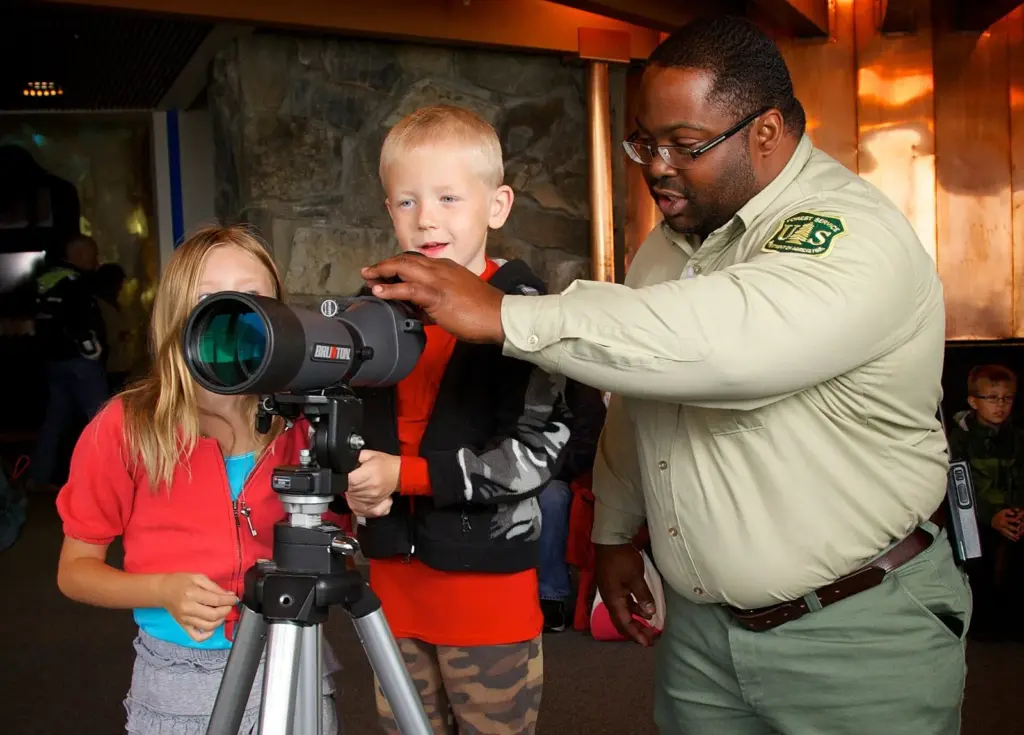
Binoculars are the most underrated item on this list. From a cruise ship or a whale-watching boat, most wildlife is far away: a spout, a dark shape on a beach, white dots on a cliff. A pair of 8×42 or 10×42 binoculars turns those into animals. For recommendations, see our guide to binoculars for an Alaska cruise, and for cameras, our guide to the best camera for an Alaska cruise.
8. Shore excursion gear
- Small waterproof backpack or day bag
- Reusable water bottle
- Insect repellent, especially for Denali and inland stops
- Compact first-aid basics: blister plasters, pain relievers
- Snacks for long excursions
- Dry bag or zip bags for electronics on boats and kayaks
9. Toiletries and health
- Prescription medications for the whole trip plus a few extra days, in your carry-on
- Motion-sickness remedies
- Sunscreen and SPF lip balm
- Moisturizer (wind and cold dry out skin)
- Sleep mask and earplugs
- Hand sanitizer
- Your usual toiletries (ships provide soap and shampoo, but quality varies)
10. Tech and power
- Phone and charger
- Power bank (in your carry-on for the flight)
- A multi-port USB charger (cabins usually have few outlets)
- Headphones
- E-reader or tablet for sea days
- A non-surge-protected travel adapter only if your line allows it (see below)
11. Carry-on and day-one bag
- Passport, cruise documents and wallet
- Medications and anything valuable or fragile
- A change of clothes and swimsuit (checked bags can take hours to reach your cabin)
- Your rain jacket and one warm layer
- Phone, charger and power bank
- Liquids in a quart bag if you’re flying
Treat embarkation day as a day without your suitcase. Checked luggage is delivered to cabins over the afternoon and sometimes the evening, so anything you’ll want before dinner belongs in your carry-on. Our page on the Alaska cruise carry on covers what fits and what doesn’t.
What to pack for each month
The core list doesn’t change much from May to September. What changes is how warm your warmest layer needs to be and how seriously you take the rain.
May
May is cool, with average highs in the 50s °F and lows around 40°F in Juneau and Seward. Snow still sits low on the mountains, and glacier days can be properly cold. Bring the warmer gloves, a real insulated jacket rather than just a fleece, and a warm hat you’ll actually wear. May is one of the drier months in most ports, so the rain gear matters a little less than the warmth. Our Alaska cruise packing list for May goes into the details.
June
June brings the longest days, with Juneau’s sunrise before 4 a.m. and sunset after 10 p.m. at the solstice, and some of the driest weather of the season: Skagway averages just 1.2 inches of rain and Juneau 3.8. Pack a sleep mask, sunglasses and sunscreen along with the usual layers. Nights and glacier days still call for a hat and gloves.
July
July is the warmest month, with average highs around 64 to 65°F in the Southeast ports and the occasional day in the 70s. It’s also when rain starts to climb: Juneau averages 5.1 inches. Pack a short-sleeve layer or two for warm afternoons in port, but don’t leave the fleece at home. Our Alaska cruise packing list for summer covers June, July and August together.
August
August is still warm, but wet. Juneau averages 6.4 inches of rain and Ketchikan 11.3, so your rain jacket and waterproof shoes do most of the work this month. Add rain pants if you’ll hike or spend a day on an open boat. Daylight is shorter but still generous, at about 15 hours in mid-August.
September
September is the wettest cruise month nearly everywhere: Ketchikan averages 14.3 inches, Seward 9.9 and Juneau 9.2. Highs fall back to the mid to high 50s °F. Pack everything for rain (jacket, pants, waterproof shoes, a pack cover or dry bag) and the warm layers you’d take in May. The payoff is quieter ships and lower fares. Our Alaska cruise packing list for September has the full version.
What to pack for each port
Your itinerary matters as much as the month. The same week can bring a soaking in Ketchikan and a dry, sunny day in Skagway. Here’s how the main ports change what you carry ashore.
| Port | What to expect | Pack in your day bag |
|---|---|---|
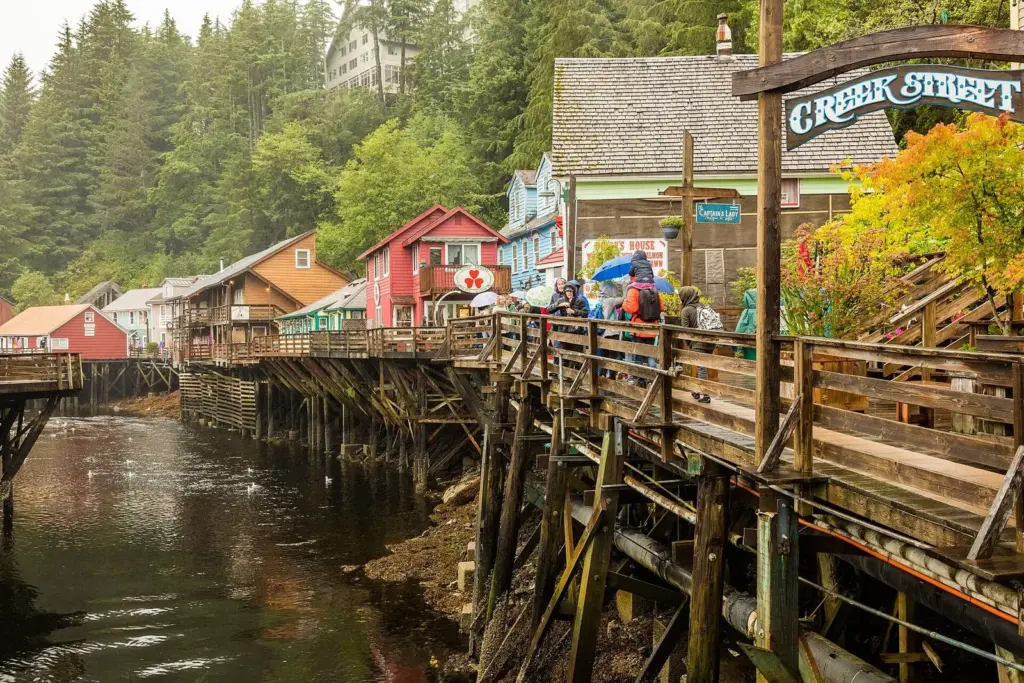
| Ketchikan | The wettest major port, with 7 to 14 inches of rain a month in the cruise season; rainforest walks and boat trips | Rain jacket, rain pants for excursions, waterproof shoes |
| Juneau | Glacier visits and whale watching; 3.5 to 9.2 inches of rain a month from May to September | Rain jacket, fleece, binoculars, gloves for boats |
| Skagway | The driest major port, with 1 to 4 inches a month; train rides and hiking | Passport for trains into Canada, sunglasses, a light layer, hiking shoes |
| Sitka and Icy Strait Point | Outer-coast weather, wildlife trips and walking | Rain jacket, binoculars, waterproof shoes |
| Victoria, British Columbia | A Canadian stop on most Seattle round trips, often in the evening | Passport or other accepted document, a warm layer for an evening walk |
| Seward and Whittier | Gulf of Alaska ports for Anchorage; Seward’s summer highs run from the low 50s to low 60s °F | Warm layers for boat tours, rain gear, snacks for the transfer |
Two port tips save grief. First, the weather on the mountain is not the weather on the dock: if you ride the Goldbelt Tram up Mount Roberts in Juneau, take a warmer layer, and know that weather can stop the tram. Second, pack for the excursion rather than the town. A dry, sunny Skagway walk needs a T-shirt; the same day on a White Pass train platform or a stretch of the Chilkoot Trail needs a jacket.
What to wear on an Alaska cruise, day by day
Here’s how the list above turns into outfits. For a longer guide to what to wear on an Alaska cruise, including photos of real combinations, see our dedicated page, and for mix-and-match ideas, our Alaska cruise outfits guide.
| Day type | What to wear | In your day bag |
|---|---|---|
| Sea day | Comfortable pants, a long-sleeve top, a light sweater for public rooms | Fleece and shell for deck walks |
| Rainy port day | Base layer, quick-dry pants, rain jacket, waterproof shoes, cap | Fleece, gloves, phone pouch |
| Sunny port day | T-shirt or base layer, light jacket, sunglasses | Rain jacket anyway; weather changes fast |
| Glacier day | Base layer, fleece, puffy and rain shell, hat, gloves, neck gaiter, warm socks | Hand warmers, binoculars, thermos |
| Whale watching or boat tour | All three layers plus waterproof pants | Dry bag for phone and camera |
| Evening | Smart casual, or dressier on formal night | A warm layer for the deck afterward |
Packing for shore excursions
Shore excursions are where packing mistakes show up. Here’s what each common activity needs beyond your usual layers.
- Whale watching: all your layers, waterproof pants, a hat that won’t blow off, binoculars and a dry bag. Boats are windy and spray is common.
- Glacier helicopter and dog-sledding tours: warm layers and sunglasses; the glare off snow is intense. Operators set weight limits and surcharges, so check them when you book.
- Train rides: a passport if your White Pass & Yukon Route trip crosses into Canada, and a layer for the open platforms between cars.
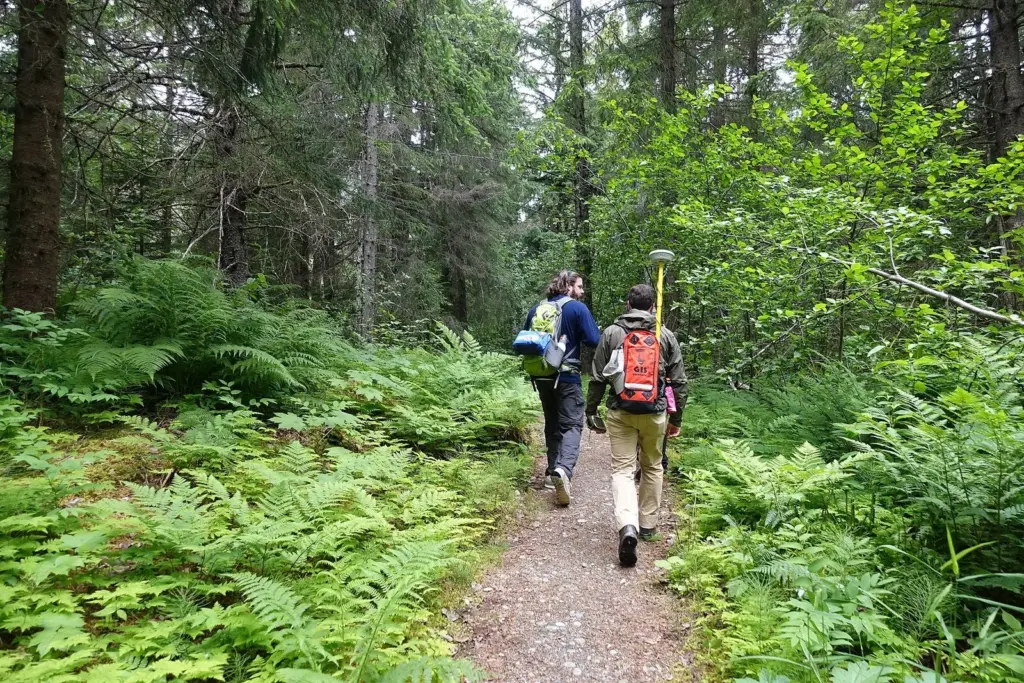
- Hiking: broken-in waterproof shoes, rain pants, water, snacks and insect repellent. Trails around the ports are often wet and rooty.
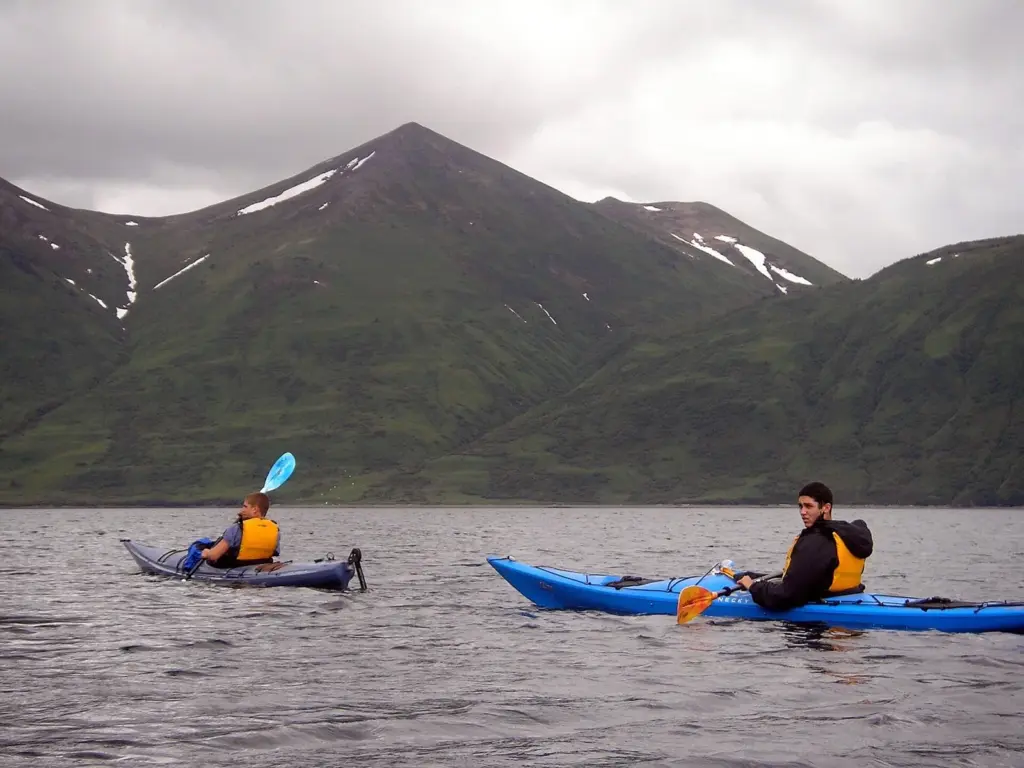
- Kayaking: quick-dry layers (never cotton), a warm hat, and a dry bag. Operators usually provide spray skirts and life jackets.
- Fishing: warm, waterproof layers and gloves you don’t mind getting dirty; charters usually provide rain gear and boots, but ask.
What to carry in your port-day bag
Your day bag does more work than your suitcase. You’ll carry it for eight hours in port, on and off boats and buses, through rain and sun. Keep it small, waterproof and consistent: pack it the same way every morning and you won’t leave anything behind.
- Ship card (your room key and ID for reboarding) and photo ID
- Rain jacket, even if the sky is clear when you leave
- A warm layer: fleece or a light puffy
- Hat and thin gloves
- Binoculars
- Phone in a waterproof pouch, plus a small power bank
- Water bottle and a snack
- Sunglasses and sunscreen
- Some cash for tips and small purchases
- The ship’s all-aboard time, written down or saved as a phone alarm
That last item is the one that matters most. Ships leave on time, and a missed all-aboard is expensive. Set an alarm an hour before, and don’t let a late excursion or a long line in a shop decide it for you.
What not to pack for an Alaska cruise
Just as important as what to bring. Some items are banned outright; others are simply dead weight.
| Leave it home | Why |
|---|---|
| Clothes irons and garment steamers | Prohibited on major lines, including Royal Caribbean |
| Surge-protected power strips | Holland America prohibits power strips and extension cords with surge protectors; Royal Caribbean prohibits power strips and multi-plug outlets entirely |
| Candles and incense | Prohibited on Holland America, along with strike-anywhere matches |
| A heavy winter parka | Too hot for port days and too bulky; layers do the job better |
| Lots of cotton | Cotton stays wet and cold; one or two cotton tees for inside the ship are plenty |
| More than three pairs of shoes | Heavy, bulky, and you’ll wear two |
| A big umbrella as your only rain gear | Useless on a windy deck and awkward on boats; a hooded jacket works everywhere |
| Expensive jewelry | Nowhere to wear it, and one more thing to worry about |
Rules vary by line. Princess, for example, allows multi-plug adaptors and power strips or extension cords without surge protectors, subject to inspection by the ship’s electrical team. Check your own line’s list before you pack anything electrical. For more items that waste suitcase space, see what not to pack for an Alaska cruise.
Buy, borrow or skip: where to spend your money
You don’t need a new wardrobe for an Alaska cruise. Most people already own half of this list. Here’s where spending money makes a difference and where it doesn’t.
| Item | Buy, borrow or skip? | Why |
|---|---|---|
| Waterproof rain jacket | Buy a good one | You’ll wear it every day, and cheap ones fail |
| Waterproof walking shoes | Buy early and break them in | Blisters on day two ruin the week |
| Binoculars | Borrow, or buy midrange | A decent pair beats an expensive pair left at home |
| Rain pants | Buy inexpensive ones | You’ll wear them on boats and trails only |
| Light insulated jacket | Borrow if you don’t own one | Useful on glacier day and cold boat trips |
| Merino base layers | Buy one or two | Warm, quick-drying, and they stay fresh through a day’s wear |
| Heavy winter parka | Skip | Too warm and too bulky |
| Tall rubber boots | Skip, unless your excursion calls for them | Operators often provide them for fishing or tidepooling |
| New camera gear | Skip, or rent | A phone with a telephoto lens handles most scenes |
Flying to your cruise: luggage rules
Most Alaska cruisers fly to Seattle, Vancouver, Anchorage or Juneau, so airline rules shape the packing as much as the cruise does.
- Liquids: the TSA’s 3-1-1 rule limits carry-on liquids, gels, creams and aerosols to 3.4 ounces (100 ml) per item, all in one quart-sized bag. Pack sunscreen and toiletries in checked luggage or buy them on arrival.
- Power banks: the TSA says portable chargers and power banks with lithium-ion batteries must go in carry-on bags, and spare lithium batteries are prohibited in checked luggage.
- Bag weight: most airlines charge extra for checked bags over 50 lb. Rain gear and layers are light, which is one more reason to skip the parka.
- Carry-on essentials: passport, medications and one set of warm clothes, in case your checked bag is delayed.
One suitcase or two?
For a 7-night Alaska cruise, one checked suitcase per person plus a carry-on is plenty, even with layers and rain gear. Layers are light and compress well; it’s shoes and heavy jeans that fill a bag. If you’re adding a cruisetour, one bag per person becomes more important, because land tours can limit what travels with you.
- Soft-sided bags store more easily. Cabins are small, and a soft suitcase can usually be emptied and slid under the bed.
- Carry-on only is possible if you plan a mid-week laundry run and wear your bulkiest layers on the plane.
- Leave a little space. Souvenirs, smoked salmon and a wet jacket all take room on the way home.
- Label everything. Use the cruise line’s luggage tags for the ship and your own ID tag inside each bag.
Packing for an Alaska cruisetour
If your trip adds a land tour to Denali or the Yukon, packing gets more complicated, because you’ll move between hotels, trains and motorcoaches. For how these trips work, see our guide to choosing an Alaska cruise and land tour.
- Luggage limits can be tighter on land. Holland America says guests spending time in Denali are allowed one full-size piece of luggage during that stay, and on its Yukon cruisetours, the flights between Dawson City and Fairbanks or Whitehorse allow two checked bags with a combined weight of 50 lb plus one carry-on of no more than 13 lb.
- Your bags travel separately. Princess says all its cruisetours include luggage handling between locations, so pack an overnight bag with a day or two of essentials.
- Interior Alaska is different. Denali and Fairbanks can be warmer and drier than the coast, and mosquitoes are a real nuisance. Add insect repellent and consider a head net for hikes.
- Pack once, for both. Plan your layers to cover a glacier deck and a Denali bus day, and you won’t need separate wardrobes.
Our Alaska cruisetour packing list covers the land portion in detail, including what to keep in your overnight bag.
Packing lists for kids and men
Kids need the same layering system in smaller sizes, plus a few extras: a spare set of clothes in the day bag, their own binoculars (cheap ones are fine), a waterproof jacket that actually fits, and something to do on long sea days. Our Alaska cruise packing list for kids has age-by-age suggestions.
For men, the list is the same, with a sport coat or blazer standing in for a suit on dressier nights. Our Alaska cruise packing list for men covers the shorter version for people who hate packing.
A few more packing tips
- Use packing cubes. Separate base layers, mid layers and evening clothes, so you can find what you need in a small cabin.
- Pack a laundry plan. Many ships have self-service laundry or a paid laundry service, so you can pack for four or five days and wash once.
- Bring a magnetic hook or two. Cabin walls are usually metal, and hooks give you somewhere to hang wet jackets.
- Leave room for souvenirs. A collapsible duffel takes up almost no space on the way out.
- Put an AirTag or tracker in checked bags. It helps if a bag goes astray between airline and ship.
For more advice on life aboard, from Wi-Fi to seasickness, see our Alaska cruise tips.
Small items that make a big difference
These rarely make the cruise lines’ lists, but experienced cruisers pack them every time.
- A lanyard or card holder for your ship card, which you’ll show every time you leave and reboard.
- Zip bags in several sizes for wet swimsuits, a damp phone, snacks and receipts.
- A few clothespins or clips to hang damp layers in the bathroom overnight.
- A reusable shopping bag for port purchases and a wet jacket on the walk back.
- A small notebook for wildlife sightings, glacier names and the ranger’s facts; it’s a better souvenir than most of what’s for sale on the dock.
- Lip balm with SPF and a travel-size moisturizer, because wind and cold dry out skin fast on deck.
- Earplugs for noisy cabins near the anchor, elevators or late-night venues.
Laundry: how to pack less
The easiest way to shrink your suitcase is to plan one wash. Many ships have self-service launderettes or a paid laundry service, and base layers and quick-dry pants dry overnight on a hanger in the bathroom. Pack for four or five days, wash once mid-week, and you can fit a 7-night cruise in one medium suitcase with room to spare.
Plan the laundry for a sea day or a short port day, when the machines are quieter. Bring a few detergent pods in a zip bag in case the ship’s supply is limited, and don’t wash your only rain jacket the night before a Ketchikan call.
What to wear on the plane
Wear your bulkiest items on the flight: your walking shoes, your fleece or puffy, and your rain jacket over your arm or in the overhead bin. It frees up suitcase space and means you arrive dressed for the weather even if your bag doesn’t. If you’re flying into Anchorage or Juneau, you’ll step off the plane into Alaska weather; into Seattle or Vancouver, you’ll have a day to adjust.
The night before you fly: a final check
- Passport and cruise documents in your carry-on, not your checked bag
- Medications for the whole trip plus a few days, also in the carry-on
- Rain jacket and one warm layer in the carry-on, in case your suitcase is late
- Liquids in a quart bag if you’re carrying any on
- Power bank and spare batteries in the carry-on
- Binoculars packed and ready
- Glacier-day kit together: hat, gloves, neck gaiter, hand warmers
- Waterproof shoes worn or packed, broken in
- No irons, steamers or surge-protected power strips
- Cruise line app downloaded and logged in
Alaska cruise packing list FAQ
Is there a printable Alaska cruise packing list or PDF?
Yes: the checklist on this page prints cleanly. Use your browser’s Print option, choose “Save as PDF,” and you’ll have a copy on your phone. It’s organized by category (documents, outerwear, layers, shoes, dinner, glacier day, optics, excursions, toiletries, tech and carry-on) so you can tick items off as you pack.
What should I pack for an Alaska cruise in June?
Pack layers: base layers, a fleece, a light puffy and a waterproof jacket, plus a warm hat and gloves for glacier day. June is one of the driest cruise months, with long days (about 18 hours of daylight in Juneau at the solstice), so add a sleep mask, sunglasses and sunscreen.
What should I pack for an Alaska cruise in July?
July is the warmest month, with average highs around 64 to 65°F in the Southeast ports, but rain is climbing: Juneau averages 5.1 inches. Pack a waterproof jacket, a fleece, a couple of short-sleeve tops for warm afternoons, and a hat and gloves for glacier day. Add a sleep mask for the long evenings.
What should I pack for an Alaska cruise in August?
August is mild but wet: Juneau averages 6.4 inches of rain and Ketchikan 11.3. Prioritize a waterproof rain jacket, waterproof shoes and rain pants for excursions, then add a fleece and a light insulated layer. Highs average in the low to mid 60s °F, so a couple of short-sleeve tops are useful too.
Do I need a winter coat for an Alaska cruise?
No. Summer highs in the cruise ports average in the 50s and 60s °F, and a heavy parka is too hot for port days and too bulky for a cabin. A fleece or light puffy under a waterproof shell gives you the same warmth on a glacier deck and far more flexibility the rest of the week.
Should I bring rain boots for an Alaska cruise?
Usually not. Waterproof walking shoes or light hiking boots handle wet sidewalks, boardwalks and trails, and they’re far more comfortable for a full day on your feet. Tall rubber boots only earn their space for specific excursions such as tidepooling or fishing, and operators often provide them.
How many outfits do I need for a 7-day Alaska cruise?
Fewer than you think. Plan on 2 to 3 base layers, 2 pairs of daytime pants, 2 to 3 evening outfits and one dressier outfit, and rewear your layers. With a mid-week laundry run, a carry-on-sized wardrobe works. The warm layers and rain gear do the heavy lifting.
Do I really need binoculars on an Alaska cruise?
Yes. Whales, bears, mountain goats and eagles are usually too far away to see well without them, from a cruise ship and often from excursion boats too. One pair per person avoids passing them back and forth at the moment a whale surfaces. Compact 8x or 10x binoculars are the most versatile choice.
Related Alaska Cruise Guides
- Best Time to Cruise Alaska: Month-by-Month Guide to Weather, Wildlife & Prices
- Alaska Cruise and Land Tour Guide: Denali Cruisetours Compared
Sources and How We Checked
We checked the prices, rules, schedules and ship deployments in this guide against the sources below on September 24, 2026, and we log each one in our research database with the date it was checked. Cruise lines change ships, fares and fees every season, so confirm anything that affects your booking with the line or the agency concerned. Alaska Cruise Guide (AlaskaCruise.org) is an independent publication. It is not affiliated with any cruise line, port, tour operator or tourism office, and no one paid to be included.
- Celebrity Cruises: cruise dress code
- Goldbelt Tram: Mount Roberts Tramway
- Holland America Line: Holland America cruisetours
- Holland America Line: cruise dress code
- Holland America Line: prohibited items
- Holland America Line: Holland America cruisetours
- Holland America Line: Alaska cruise season
- NOAA National Centers for Environmental Information: Alaska weather
- NOAA National Centers for Environmental Information: Juneau weather
- NOAA National Centers for Environmental Information: Ketchikan weather
- NOAA National Centers for Environmental Information: Skagway weather
- NOAA National Centers for Environmental Information: Seward weather
- NOAA National Centers for Environmental Information: Anchorage weather
- Princess Cruises: Princess cruisetours
- Princess Cruises: prohibited items
- Royal Caribbean: cruise dress code
- Royal Caribbean: prohibited items
- Temsco Helicopters: Glacier dog sledding
- Transportation Security Administration: TSA rules
- Transportation Security Administration: TSA rules
- U.S. Customs and Border Protection: passport rules
- U.S. Naval Observatory: Juneau daylight, Anchorage daylight
- White Pass & Yukon Route: White Pass & Yukon Route
Photo Credits
- Whale-watching passengers, Juneau (2015): photo by Gillfoto, via Wikimedia Commons (CC BY-SA 4.0)
- Alaska cruise region map: map by Kmusser, via Wikimedia Commons (CC BY-SA 3.0); ferry routes removed; cruise ports, glacier-viewing areas and Denali added by Alaska Cruise Guide
- Creek Street in the rain, Ketchikan: photo by Diego Delso, via Wikimedia Commons (CC BY-SA 4.0)
- Chilkoot Trail hikers (NPS, 2017): photo by NPS, via Wikimedia Commons (Public domain)
- Mendenhall Glacier interpretive guide (USFS, 2013): photo by Forest Service Alaska Region, USDA, via Wikimedia Commons (Public domain)
- Juneau cruise dock (2009): photo by gillfoto, via Wikimedia Commons (CC BY-SA 4.0)
- Kayaking, Kodiak Archipelago (2008): photo by NancyHeise, via Wikimedia Commons (Public domain)