On an Alaska wildlife cruise, you will almost certainly see bald eagles and humpback whales, you will probably see sea otters, harbor seals and Steller sea lions, and with some luck and a pair of binoculars you’ll add orcas, porpoises, mountain goats and puffins. Bears are the exception: you might spot one on a distant shoreline from the ship, but a good bear sighting nearly always takes an excursion to a salmon stream. Where you sail, which month you go and how much time you spend on deck matter more than which ship you book.
This page is for first-time Alaska cruisers who want realistic expectations: what you’ll see from a standard 7-night cruise, what takes a small ship or a shore excursion, and when each animal is around. The one caveat that matters: these are wild animals in a very big place, and no cruise line, tour operator or article can promise a sighting. Last updated October 15, 2026. Every price, fee and schedule below is dated, and the sources are listed at the end.
Alaska wildlife at a glance: what you’ll realistically see
The odds below are our judgment for a typical 7-night Inside Passage cruise in June, July or August with a couple of hours a day on deck, based on where each species lives and where cruise ships go. They are not statistics, and they shift with route and weather.
| Species | From the ship | Best places | Best months | To see more |
|---|---|---|---|---|
| Bald eagles | Near-certain | Every Southeast port | May to September | Look at the tops of shoreline spruce |
| Humpback whales | Very likely | Inside Passage, Icy Strait, Lynn Canal, Glacier Bay | June to August | Whale-watching tour from Juneau or Icy Strait Point |
| Harbor seals | Likely near glaciers | Glacier Bay, Hubbard Glacier, fjords | May to September | Binoculars on the floating ice |
| Sea otters | Likely in the right spots | Sitka, Glacier Bay, Icy Strait, Prince William Sound | All season | Sitka boat tours, Kenai Fjords day cruises |
| Steller sea lions | Likely | Buoys and rocky haul-outs, Kenai Fjords | All season | Kenai Fjords or Juneau boat tours |
| Dall’s porpoises | Possible | Open channels | All season | Watch the bow wave |
| Orcas | A lucky bonus | Inside Passage, Kenai Fjords, Prince William Sound | May to September | Time on deck; naturalist announcements |
| Mountain goats | Possible with binoculars | Fjord walls, Glacier Bay | June to August | Scan cliffs for white dots |
| Puffins | Unlikely from a big ship | South Marble Island, Kenai Fjords | June to August | Kenai Fjords day cruise from Seward |
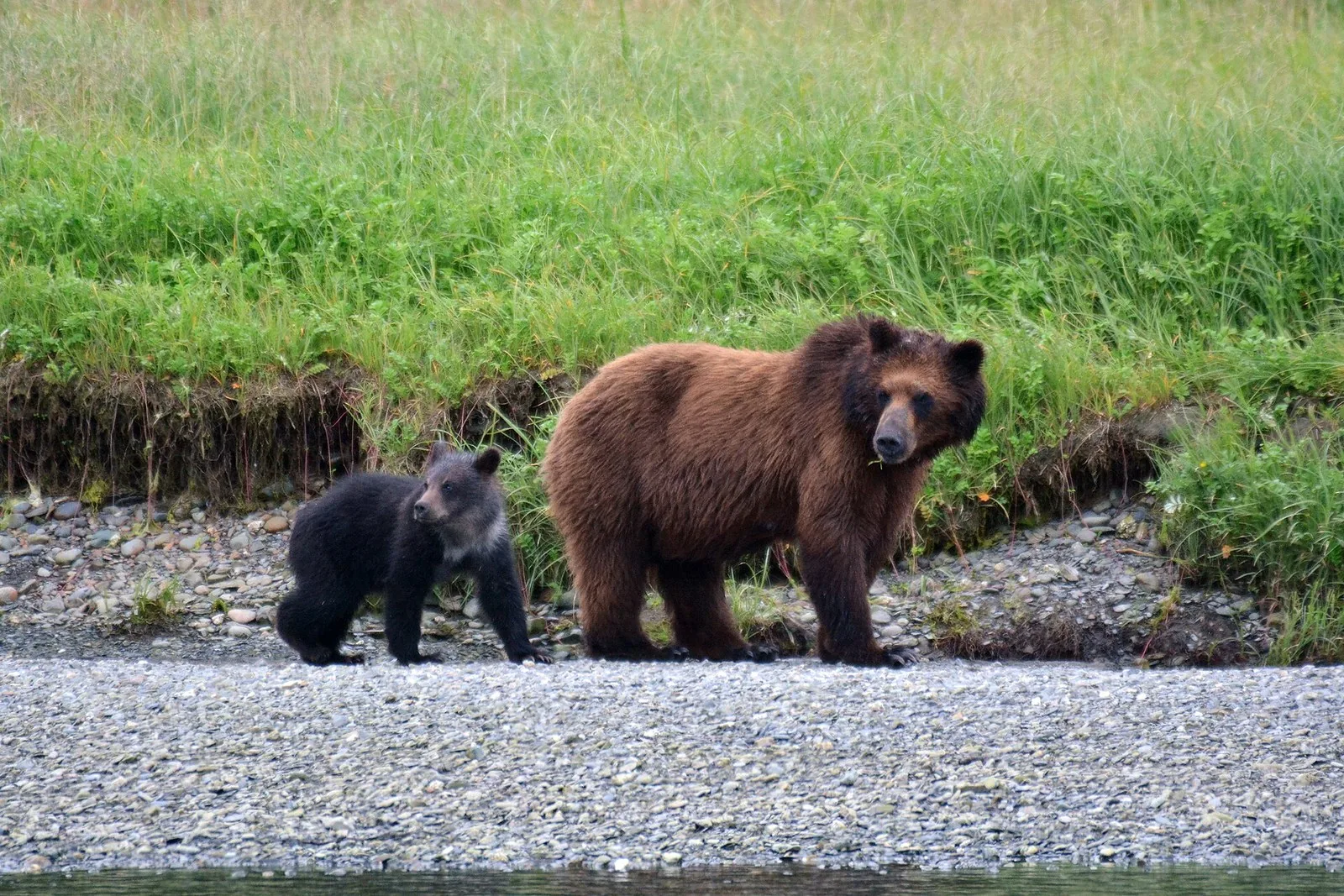
| Brown and black bears | Rare from the ship | Salmon streams near Ketchikan, Wrangell, Juneau, Icy Strait | July to early September | A bear-viewing excursion |
| Moose and caribou | Not from the ship | Denali, the Kenai Peninsula | June to September | A cruisetour with a Denali bus tour |
Verdict: Whales and eagles come to you. Bears, puffins and moose you go to, and that means choosing the right excursion or adding land days.
What’s changed for 2027
- Denali’s road reopens past Mile 43. Buses stopped at East Fork, Mile 43, for all of 2026 while the Pretty Rocks Bridge was built. The National Park Service announced the bridge complete on September 3, 2026, and expects full bus service to Eielson, Wonder Lake and Kantishna for the 2027 season. For cruisetour passengers, that means more tundra, and more chances at grizzlies, caribou, Dall sheep and moose.
- Tracy Arm is uncertain. After the August 10, 2025 landslide-tsunami above South Sawyer Glacier, Carnival, Holland America and Royal Caribbean used Endicott Arm and Dawes Glacier in 2026. Harbor seals and mountain goats live in both fjords, so the wildlife hardly changes, but check which one your 2027 itinerary actually visits.
- Glacier Bay keeps adjusting its whale rules. The park adds temporary slow-speed “whale waters” when humpbacks concentrate, with 2026 updates taking effect on July 17 and August 6, according to park notices.
- Prince William Sound routes may change. Alaska’s geological survey rated the Barry Arm landslide near Whittier at Level 1 on September 4, 2026 and advises mariners to leave the area if they notice unusual rockfall or waves, and some tour operators have rerouted around it.
What you’ll see on an Alaska wildlife cruise, species by species
Here are the animals worth knowing, roughly in order of how likely you are to see them. Each gets its own full guide on this site; this section covers what a cruise passenger needs to know.
1. Humpback whales
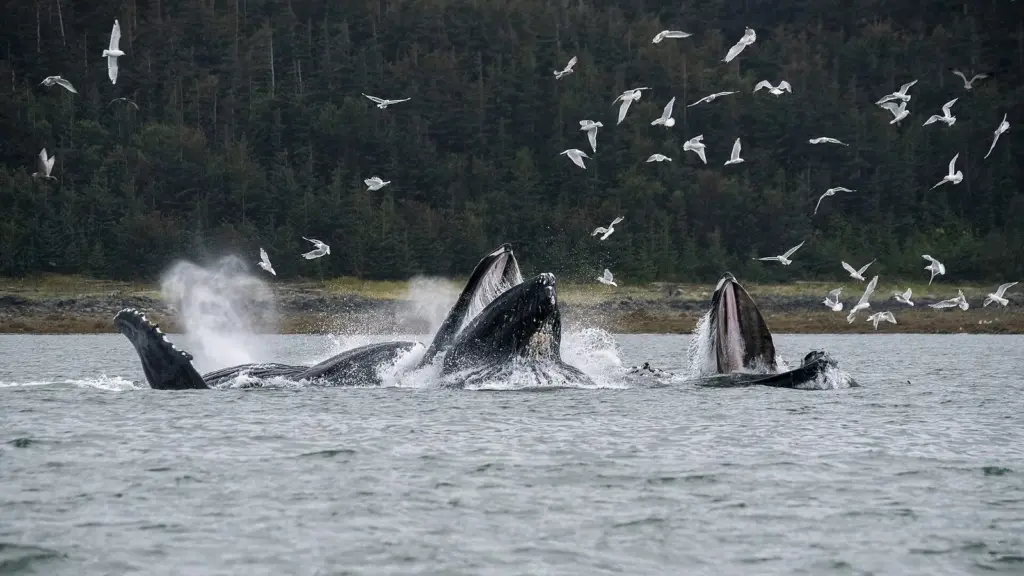
Humpbacks are the reason most people book a whale tour, and they rarely disappoint. The Alaska Department of Fish and Game says the highest concentration in the state, more than 500 whales, is in the Inside Passage, and that June and July are the best months to see them bubble-net feeding. In that behavior, a group of whales circles beneath a school of fish blowing a curtain of bubbles, then lunges up through the middle with mouths open. It is the single best wildlife sight in Alaska, and Icy Strait, Lynn Canal, Frederick Sound and Chatham Strait are all known feeding grounds.
Adult humpbacks average about 49 feet and 35 tons. Most spend the winter near Hawaii, Mexico or Japan and migrate up to 3,000 miles each way to feed in Alaska, where Juneau operators describe a season from late April into October, peaking June through August. From a big ship, you’ll mostly see blows, backs and tail flukes at a distance; the close-up lunges belong to whale-watching boats. Our guide to humpback whales in Alaska covers identification and behavior in depth, and our whale watching Alaska cruise guide compares the tours port by port.
One correction worth making: many pages still call all humpbacks endangered. Since NOAA’s 2016 revision, the Hawaii population, which supplies most of Southeast Alaska’s whales, no longer warrants listing, while the Mexico population is threatened and the Western North Pacific population endangered. The 100-yard approach rule applies to all of them.
2. Bald eagles
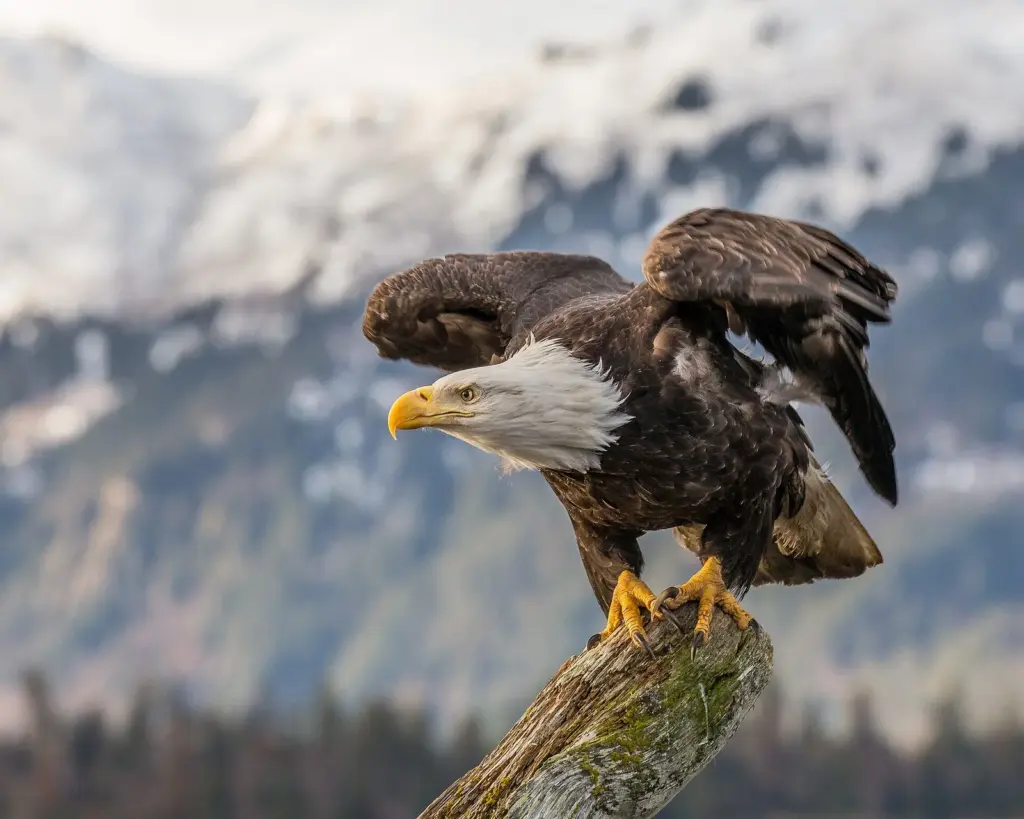
You’ll see bald eagles within an hour of reaching the first Alaska port, and after a day you’ll stop pointing them out. They perch on the tops of shoreline spruce, on pilings and on light poles in town, and they gather wherever fish are being cleaned. Bald eagles in Alaska are common enough that the challenge is a good photo, not a sighting.
The famous gathering is outside the cruise season. The State of Alaska created the 48,000-acre Chilkat Bald Eagle Preserve near Haines in 1982, and its largest gatherings, often cited at more than 3,000 birds drawn by a late chum salmon run, happen from October into the early winter, well after the ships have gone. Even in summer, about 400 eagles are commonly cited as year-round residents of the valley, which is still plenty. For a guaranteed close look, the Alaska Raptor Center in Sitka rehabilitates injured eagles and lets visitors watch them practice flying; 2026 admission was $17 for adults and $8 for children 12 and under.
3. Sea otters
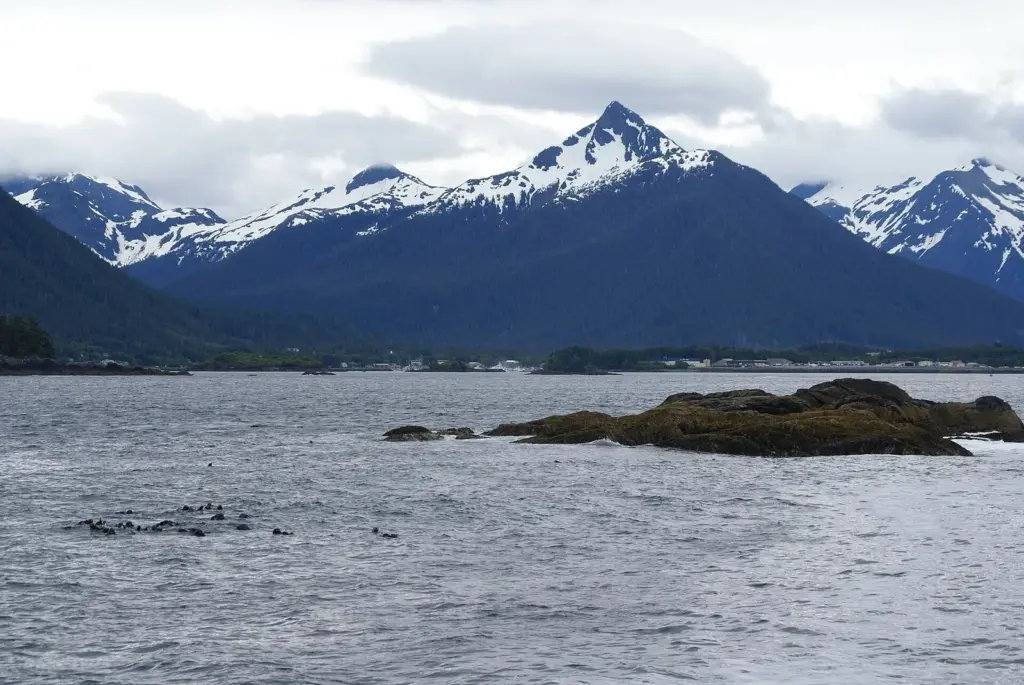
Sea otters float on their backs in kelp beds and quiet bays, often in rafts of a dozen or more, and they’re one of the most satisfying animals to watch through binoculars. Their comeback is one of Alaska’s great wildlife stories. The fur trade wiped them out of Southeast Alaska, and between 1965 and 1969 state biologists moved 412 otters back into the region, most from Amchitka Island in the Aleutians. Recent surveys put Southeast Alaska’s population at roughly 25,000, nearly double the count of the early 2000s.
Sitka Sound, Glacier Bay, Icy Strait and the waters around Kenai Fjords and Prince William Sound are all good bets. From a big ship they can be hard to pick out, since an otter is a small dark head in a large gray sea; from a small boat, they’re easy. Our sea otters Alaska guide covers where cruise passengers see them most reliably.
4. Harbor seals
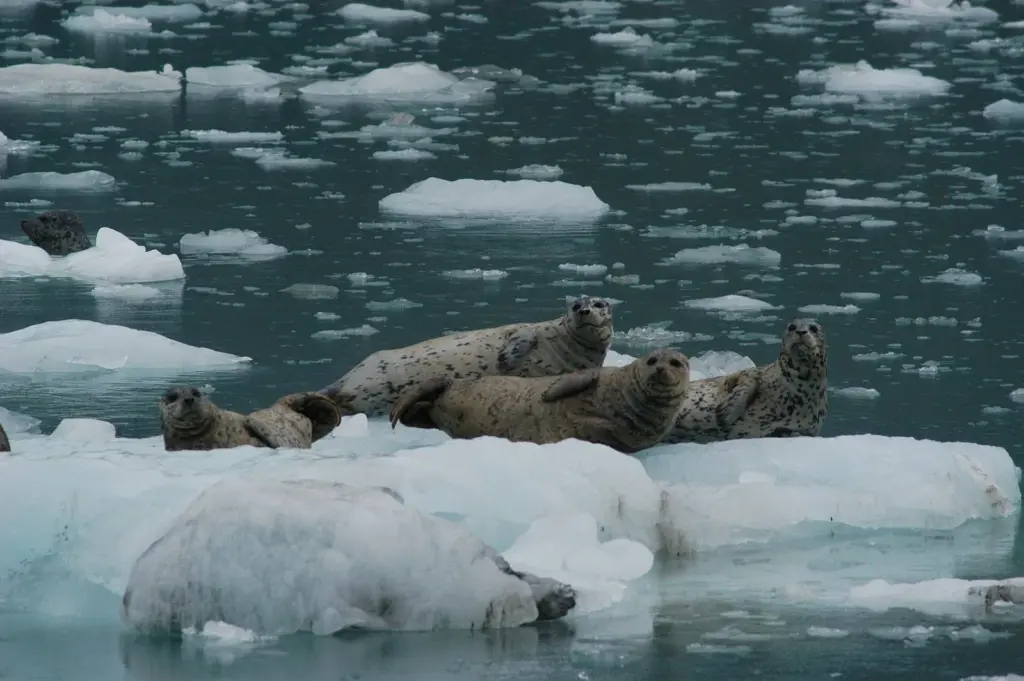
Harbor seals are the gray, spotted seals you’ll see resting on floating ice near tidewater glaciers, especially in Glacier Bay, near Hubbard Glacier and in the fjords south of Juneau. The ice keeps them out of reach of orcas, and females use it to rest and nurse pups early in the summer. From a big ship at a glacier face, look at the scattered chunks of ice closest to the ship: the dark lumps that move are seals.
They’re also shy. Seals slide off the ice when boats get too close, which is one reason ships and tour boats keep their distance from haul-outs. You’ll also see them in harbors and river mouths, bobbing with just their heads above water.
5. Steller sea lions
Steller sea lions are the big, loud, tawny animals you’ll smell before you see: bulls can top a ton, and they pile onto rocky haul-outs, navigation buoys and channel markers. Many cruise passengers see their first ones sprawled on a buoy as the ship passes. For a close look, a Kenai Fjords day cruise from Seward or a Juneau whale-watching trip usually passes a haul-out.
Their status is often misstated. According to NOAA Fisheries, the Western population, west of Cape Suckling at 144 degrees west longitude, is endangered, while the Eastern population, which includes Southeast Alaska, recovered and was delisted in 2013. NOAA recommends viewing them from at least 100 yards on the water and for no more than 30 minutes. Our sea lions Alaska guide explains where the big haul-outs are.
6. Orcas
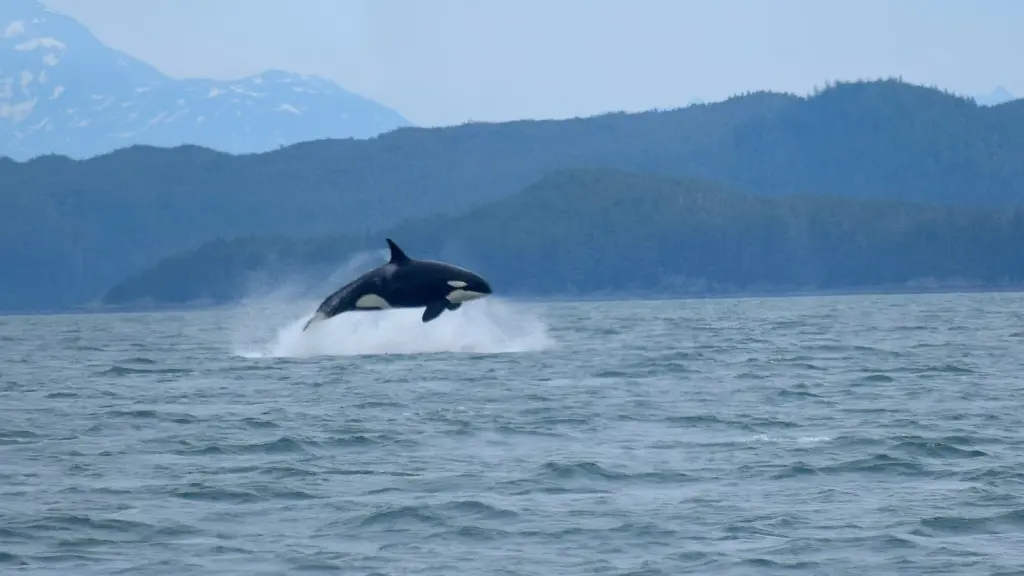
Orcas, or killer whales, are the sighting that makes the whole ship run to the rail. Alaska has both fish-eating resident pods and mammal-hunting transient orcas, and both travel widely, so they turn up unpredictably: one ship sees a pod in the Inside Passage while the next ship through sees nothing all week. Kenai Fjords and Prince William Sound day cruises see them fairly often, and naturalists on big ships announce them when they’re spotted.
Other whales turn up too. Minke whales, small and quick, surface briefly and rarely show their tails, and fin whales, the second-largest animals on Earth, are occasionally seen in the Gulf of Alaska. Gray whales migrate along Alaska’s outer coast in spring, mostly before the main cruise season. If a naturalist announces a whale that isn’t a humpback, go look.
Treat an orca sighting as a bonus rather than an expectation. The best way to improve your odds is simply time on deck, especially in the morning and evening, and keeping the ship’s TV channel or app on for announcements. Our orcas in Alaska guide covers the pods, their behavior and where tours find them.
7. Dall’s porpoises and Pacific white-sided dolphins
Dall’s porpoises look like tiny orcas, black with white patches, and they move so fast that they throw up a “rooster tail” of spray. They sometimes ride a ship’s bow wave, which is your best chance for a close look from a big ship. Harbor porpoises are smaller, shyer and harder to spot. Pacific white-sided dolphins do reach Alaska waters, but they’re an occasional sighting, not a regular one, and our dolphins in Alaska guide explains when and where they turn up.
8. Brown and black bears
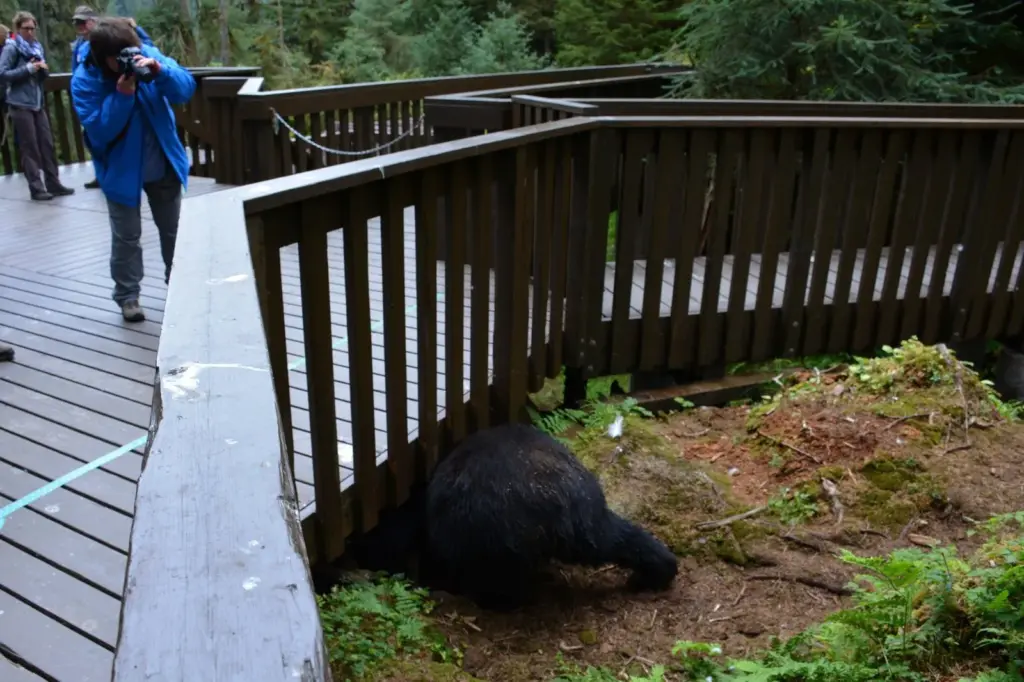
Bears are the animal first-timers most want to see and least often see from the ship. You might spot a bear on a beach at low tide as the ship passes, but it will be a brown dot unless you’re carrying good binoculars. A real bear sighting takes an excursion to a place where bears gather to fish for salmon, usually from July into early September. A bear viewing Alaska cruise excursion is expensive, but it’s the one that delivers.
The options, in rough order of price:
- Anan Wildlife Observatory, near Wrangell. About 30 miles southeast of Wrangell and reachable only by floatplane or boat, Anan draws black bears, which are very likely to be seen, and brown bears, which are seen less often, to a large pink salmon run in July and August. From July 5 to August 25 a pass system limits visitors to 60 a day, and a half-mile trail leads to a covered platform staffed by rangers.
- Ketchikan floatplane trips. Local guides put floatplane or boat trips to Neets Bay or Traitor’s Cove at about $400 to $500 per person, and Anan trips from about $750, with mid-July to early September as the best season.
- Pack Creek, Admiralty Island. A managed brown bear viewing area reached by floatplane from Juneau.
- Icy Strait Point. Its bear tour lasts 5.5 hours, and the operator says sightings are not guaranteed.
- Fortress of the Bear, Sitka. A rescue center for orphaned bears, with eight resident bears in three enclosures. Not wild, but guaranteed.
9. Puffins and other seabirds
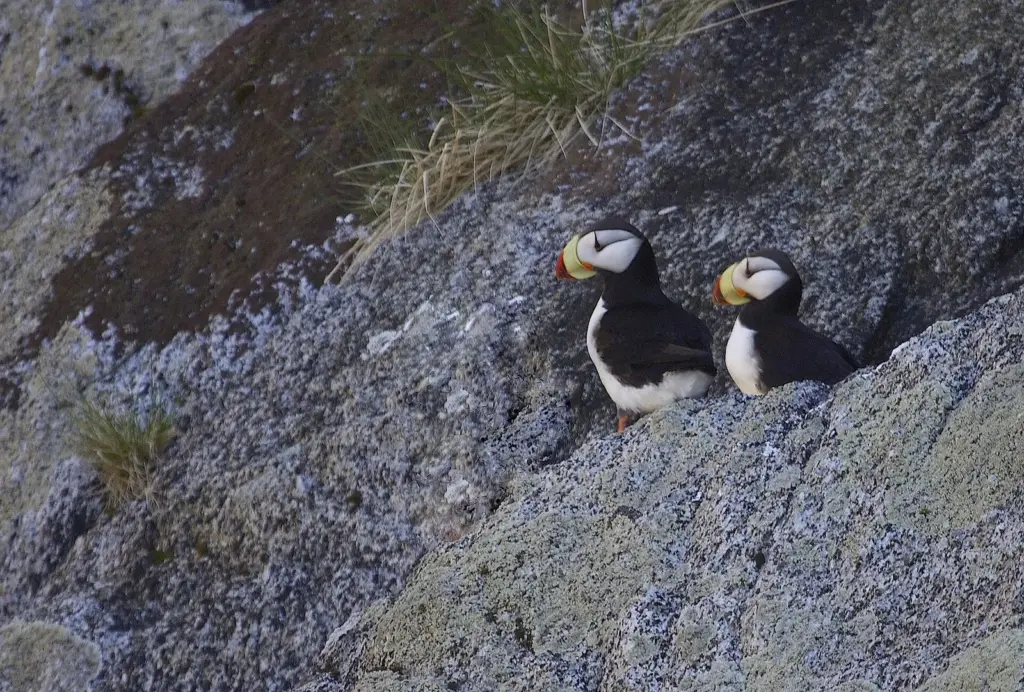
Puffins are hard to see from a big ship: they’re small, fast and far away. Two species nest in Alaska’s coastal parks, the horned puffin and the tufted puffin, and the National Park Service says both nest in Kenai Fjords National Park and on the Chiswell Islands beside it. In Glacier Bay, South Marble Island is the classic puffin site; vessels, including kayaks, must stay more than 50 yards from its southern half and more than 100 yards from nesting colonies, and nobody may land.
If puffins are on your list, the reliable route is a full-day Kenai Fjords boat tour from Seward before or after a Gulf of Alaska cruise. Along the way you’ll see murres, kittiwakes, cormorants and, on the right day, marbled murrelets. Glacier Bay alone records 247 bird species. Our puffins Alaska guide covers the best months and tours.
10. Mountain goats
Mountain goats are the white dots on the green cliffs of Endicott Arm, Tracy Arm and Glacier Bay. Without binoculars, most passengers never realize they’re looking at animals. With binoculars, you’ll see nannies and kids moving across ledges that look impossible. Scan the steepest rock faces above the tree line, especially on sunny afternoons when the goats are out of the shade. Our mountain goats Alaska guide lists the fjords where cruise naturalists most often point them out.
11. Moose, caribou and Denali’s land mammals
You won’t see moose or caribou from a ship. They live inland, and the classic place to see them is Denali National Park on a cruisetour. The 2026 Tundra Wilderness Tour, which ran from May 20 to mid-September and turned around near Mile 43, cost $144.75 for adults including the $15 entrance fee. With the park road expected to reopen fully in 2027, longer bus trips should return, which means more time in the country where grizzlies, caribou, Dall sheep, wolves and moose live.
Moose also turn up along the road and rail corridors between Seward, Whittier and Anchorage, and around Anchorage itself. Our guide to where to see moose in Alaska covers the reliable spots for cruisers with a day on land. The Alaska Wildlife Conservation Center, south of Anchorage near Portage, is a sanctuary where you can see moose, bears, musk oxen and wood bison up close, and Holland America’s Denali cruisetours include a visit.
12. Salmon
Salmon are the engine behind almost everything else on this list. Bears, eagles, sea lions and orcas all follow them, and a salmon stream in late July is one of the easiest wildlife sights in Alaska to reach on foot from the ship. In Ketchikan, king, pink and chum salmon and steelhead can be seen in Ketchikan Creek at Water and Bayview streets from July through October. In Juneau, chum salmon crowd Sheep Creek, across from the hatchery on Thane Road, in July and August. Local fishing guidance puts the Juneau pink and chum peak in the last weeks of July and the first weeks of August. The Alaska salmon run guide on this site explains the five species and their timing.
Where to see Alaska wildlife on a cruise route
Wildlife isn’t spread evenly along a cruise route. Some stretches are consistently good, and a few ports are much better than others for particular animals. Port-specific tours belong to each port’s guide; this table shows the pattern.
| Place | What’s there | How cruisers see it |
|---|---|---|
| Inside Passage channels | Humpbacks, porpoises, eagles, sea lions on buoys | From the deck, all day |
| Icy Strait and Point Adolphus | Humpbacks, sea otters, sea lions | Icy Strait Point’s 2.5-hour whale tour with a naturalist |
| Juneau and Lynn Canal | Humpbacks, sea lions, eagles, bears at Pack Creek | Whale-watching tours; floatplane to Admiralty Island |
| Ketchikan | Salmon, eagles, black bears | Ketchikan Creek on foot; floatplane bear trips |
| Wrangell | Black and brown bears | Anan Wildlife Observatory by boat or floatplane |
| Sitka | Sea otters, eagles, whales | Boat tours; Alaska Raptor Center; Fortress of the Bear |
| Glacier Bay | Harbor seals, humpbacks, mountain goats, puffins, brown bears | From the ship, with park rangers aboard |
| Hubbard Glacier and the fjords | Harbor seals on ice, mountain goats | From the ship |
| Kenai Fjords, from Seward | Puffins, sea lions, orcas, humpbacks, sea otters | Full-day boat tours |
| Prince William Sound, from Whittier | Sea otters, seals, seabirds, glaciers | Day cruises such as the 26 Glacier Cruise |
| Denali | Grizzlies, caribou, moose, Dall sheep, wolves | Park bus tours on a cruisetour |
Glacier Bay deserves a special mention. The park records 46 mammal species, 12 of them marine, and no more than two cruise ships a day may enter, with National Park Service rangers boarding to narrate. Holland America brings rangers aboard for its Glacier Bay visits and adds onboard wildlife experts in Alaska. Our Glacier Bay National Park guide explains which lines go in.
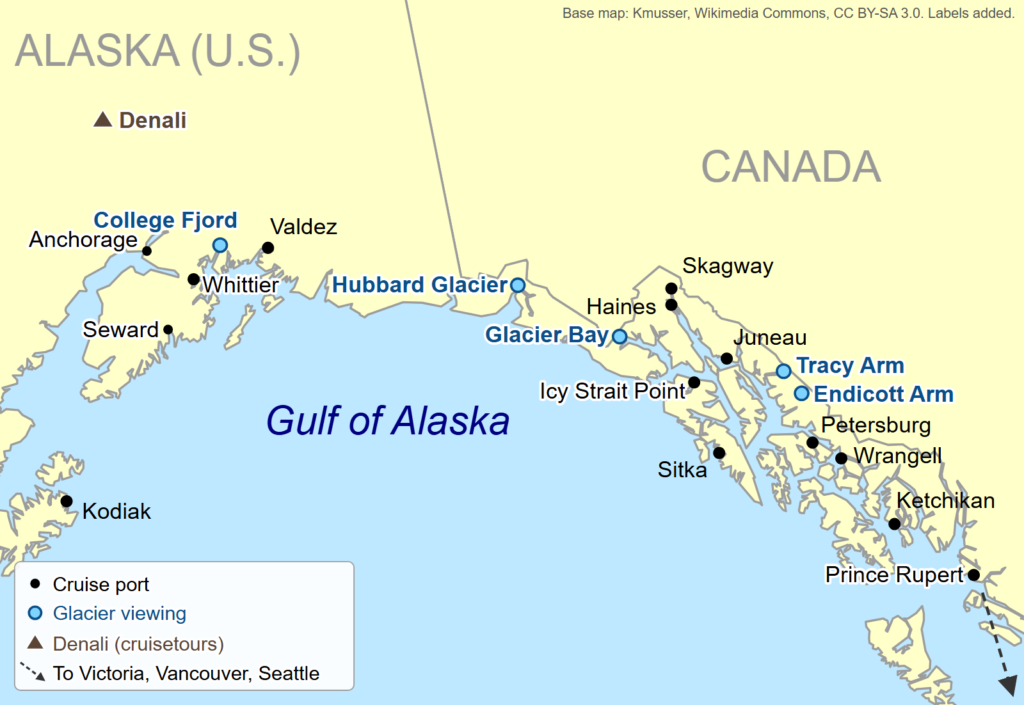
A typical Inside Passage week, wildlife-wise
Itineraries vary by line and year, but a classic 7-night round trip from Seattle or Vancouver follows a pattern, and the wildlife follows it too. Here is roughly what each kind of day tends to offer.
The first sea day. Heading north along the outside of Vancouver Island or up the channels of British Columbia, the ship moves fast and the water is open. It’s a good day to find your deck, test your binoculars and watch for blows at a distance. Dall’s porpoises sometimes cross the bow, and humpbacks and the occasional orca turn up in the channels.
Ketchikan. Eagles on every piling, salmon in Ketchikan Creek from July, and the day’s best chance at bears if you’ve booked a floatplane trip to Neets Bay, Traitor’s Cove or Anan. On a July or August call, walk up Creek Street and look down: the fish are right there.
Juneau. The whale-watching capital of the cruise route. Tours head into the waters around Juneau and toward Lynn Canal, where humpbacks feed all summer, and sea lions haul out on buoys and rocks along the way. If you take one wildlife tour all week, this is the usual day for it.
Skagway or Haines. Mostly a land day, but scan the mountainsides for goats on the way up Lynn Canal, and look for eagles along the Chilkat and Taiya rivers. Haines’s big eagle gathering is a late-fall event, not a summer one.
The glacier day. Glacier Bay, Endicott Arm or Hubbard Glacier. This is your seals-on-ice day, with mountain goats on the cliffs of the fjords and, in Glacier Bay, humpbacks near the park entrance and brown bears sometimes visible on the beaches. Spend the whole scenic-cruising stretch outside; this is the day people most regret watching through a window.
Sitka or Icy Strait Point. Sitka means sea otters in the sound, the Alaska Raptor Center and Fortress of the Bear. Icy Strait Point means some of the most reliable humpback water in Alaska, near Point Adolphus, plus the bear-search tour for anyone still hoping.
The last sea day and Victoria. Heading south, the wildlife thins out as the ship leaves the Inside Passage. Stay on deck for the channels anyway; the last whale of the trip often turns up when most people are packing.
Seven mistakes that cost people sightings
- Staying inside during scenic cruising. The ship slows down in narrow channels and at glaciers, which is exactly where animals are easiest to see. Dress warmly and stay out.
- Sharing one pair of binoculars. By the time it’s your turn, the whale has dived. One pair each.
- Booking a bear tour too early in the season. Bears concentrate at salmon streams when the fish arrive, mostly from mid-July. A May or June bear tour can still work, but the odds drop.
- Expecting close-up bubble-net feeding from a big ship. You may see it at a distance. The close views are from whale-watching boats that sit quietly within the legal limits while the whales come to them.
- Trusting a guarantee. Wild animals don’t sign contracts. A “guaranteed” sighting usually means a partial refund, and the fine print matters.
- Skipping the naturalist or ranger talk. Knowing what to look for doubles what you find. A half hour in the theater on the first day pays off all week.
- Looking at the animal through a phone. Take a few photos, then watch. The best moments last seconds.
What to bring for wildlife watching
A few items make a real difference on deck and on tour boats. Pack them in your carry-on so they’re ready on day one.
- Binoculars, one pair per person, 8×42 or 10×42, waterproof if possible.
- A waterproof shell and warm layers. The wind on an open deck or a tour boat’s bow feels far colder than the air temperature, especially near glaciers.
- A hat and light gloves, even in July, for early mornings and glacier days.
- Polarized sunglasses, which cut glare off the water and make blows and fins easier to spot on bright days.
- A camera with a zoom lens, or at least a phone clip-on telephoto, plus a spare battery; cold drains batteries fast.
- A dry bag or zip bags for tour boats and floatplanes, where spray and rain are routine.
- A seasickness remedy if you’re booking small-boat tours; the open water on Kenai Fjords or Icy Strait trips can be lumpy even when the cruise ship barely moves.
When to see Alaska wildlife, month by month
Every month of the cruise season has good wildlife, but the mix shifts. Our full guide to the best time to cruise Alaska weighs wildlife against weather, prices and crowds; here is the wildlife side alone.
| Month | Highlights | Weaker |
|---|---|---|
| May | Humpbacks arriving, bears out of dens on beaches, snowy peaks, seabirds settling in | Salmon runs haven’t started; fewer bear-viewing options |
| June | Bubble-net feeding begins, seal pups on the ice, long daylight for deck time | Salmon streams still quiet in most ports |
| July | Peak whales, first big salmon runs, Anan’s permit season from July 5, puffins nesting | Busiest ports and tours |
| August | Best bear viewing, peak pink and chum salmon, whales still feeding | More rain in Southeast Alaska |
| September | Coho salmon, bears still fishing early in the month, fall color, some whales staying late | Anan’s permit season ends August 25; shorter days |
Verdict: For the widest mix of species, sail between late June and mid-August. If whales matter more than bears, June and July; if bears matter most, late July and August.
Big ship, small ship or day cruise: which Alaska wildlife cruise is best?
The choice of ship changes your odds more than most people expect, but not always in the direction they expect. A big ship has height and time on its side; a small ship has distance and flexibility; a day cruise has focus.
| Option | Strengths | Weaknesses | Best for |
|---|---|---|---|
| Big ship, 7-night Inside Passage | High decks for spotting, naturalists and Glacier Bay rangers on some lines, lower price | Fixed schedule, rarely stops for wildlife, animals seen at a distance | Whales, eagles, seals and a general overview |
| Small expedition ship | Stops for wildlife, skiffs and kayaks, naturalists at every meal | Several times the price per night | Close encounters and bears on shore |
| Day cruise or whale tour from port | Built around wildlife, gets close within legal limits | Extra cost, a few hours only | Close humpbacks, puffins, sea lions |
| Cruisetour with Denali | Adds land mammals: grizzlies, caribou, moose | Adds days and cost | The land half of Alaska’s wildlife |
Big ships
A big ship is a surprisingly good wildlife platform, because you’re 60 or more feet above the water and can see blows miles away. The weakness is the schedule: the ship rarely slows for whales, and it can’t turn into a cove for a bear. Choose a line with naturalists aboard, and be on deck when the ship passes through narrow channels, where animals come closest.
Small ships
On an expedition ship, the schedule bends for wildlife, and skiffs and kayaks get you to the shoreline where bears forage. If wildlife is the main reason you’re going, our guide to small ship Alaska cruises compares the lines, from UnCruise’s kayak-and-hike trips to Lindblad’s naturalist-heavy voyages.
Day cruises and tours
For the closest looks at humpbacks, sea lions and puffins, a dedicated wildlife boat beats any cruise ship. Kenai Fjords tours leave Seward’s small boat harbor daily in summer, with half-day trips staying in sheltered Resurrection Bay and full-day trips reaching the park’s tidewater glaciers. From Whittier, the 26 Glacier Cruise covers about 130 miles of Prince William Sound in 5.25 hours with a hot meal included.
Alaska wildlife cruises from Seattle
Round trips from Seattle or Vancouver spend their Alaska days in the Inside Passage, so humpbacks, eagles, seals and sea lions dominate, and bears and puffins depend on excursions. One-way Gulf of Alaska cruises that start or end in Seward or Whittier add the chance of a Kenai Fjords or Prince William Sound day cruise, and a Denali cruisetour adds the land animals. If a full species list matters to you, the one-way with land days wins.
The best wildlife excursions on an Alaska cruise
Excursions are where most cruisers get their closest wildlife encounters. Our guide to Alaska cruise excursions covers every type; these are the wildlife picks, with prices as last checked.
- Whale watching in Juneau. Harv and Marv’s Outback Experience Whale Watch cost $159 per passenger in 2026, lasting about four hours with about three on the water, on a catamaran of up to 49 guests, with a shuttle from the ship. Several other Juneau operators run similar trips.
- Whale watching at Icy Strait Point. The operator’s whale tour lasts 2.5 hours with an onboard naturalist, in waters around Point Adolphus where, local operators say, humpbacks feed from about May through September. Some Hoonah operators advertise sighting guarantees; read the fine print.
- Bear viewing from Ketchikan or Wrangell. Floatplane trips to Neets Bay, Traitor’s Cove or Anan, from about $400 to $750 by local guides’ figures, best from mid-July.
- Kenai Fjords from Seward. The best puffin, sea lion and orca odds in Alaska, if your cruise starts or ends in Seward.
- Sitka’s wildlife pair. The Alaska Raptor Center and Fortress of the Bear make an easy, affordable half day, with a sea otter boat tour if time allows.
A whale watching Alaska cruise excursion is the single best-value wildlife tour: it’s short, affordable by Alaska standards and nearly always finds whales in summer. If you book only one wildlife tour, make it that one.
Alaska wildlife cruise tips: how to see more from the deck
Most passengers see a fraction of the wildlife that passes their ship, because they’re inside at the wrong moment or looking at the wrong thing. A few habits change that.
Bring binoculars, one pair per person
This is the most important tip on the page. A pair of 8×42 or 10×42 binoculars turns white dots into mountain goats and brown dots into bears. Don’t plan to share one pair between two people; the animal will be gone by the time it’s your turn. Waterproof models are worth the extra money in Southeast Alaska.
Pick your deck and your hours
Early mornings and long evenings are the best times, when the decks are quiet and the water is often calm, which makes blows and fins easier to spot. The forward-facing decks give the widest view as the ship enters narrow channels and bays. On a balcony, you’ll see only one side, so go up top when naturalists announce something on the other side.
Learn what to look for
Scan for the signs, not the animal. A puff of mist on a calm sea is a whale’s blow. A cluster of diving gulls often marks feeding whales below. A splash with no boat nearby may be a breach or a porpoise. On the shoreline at low tide, a dark shape that moves is probably a bear. Once you’ve found one blow, keep watching the same spot: humpbacks usually surface several times before a deep dive.
Use the naturalists
Many ships carry naturalists who announce sightings over the public address system or the ship’s app. Keep your cabin TV on the bridge-camera or ship-information channel when you’re inside. On lines that bring Glacier Bay rangers aboard, the ranger’s talk is one of the best-value hours of the trip.
Photograph smart, then put the camera down
A phone can’t do much with a whale half a mile away. A camera with a zoom lens of 300mm or more helps, but the best advice is to watch first. Our Alaska wildlife photography guide covers settings, lenses and how to shoot from a moving ship.
Reading Alaska wildlife cruise reviews
When you read Alaska wildlife cruise reviews, take sightings with a grain of salt: one person’s week of orcas says little about your week. Look instead for patterns in tour reviews, such as how far the boat traveled to find whales, how the operator handled a no-show day, and whether the naturalist was knowledgeable. Be wary of any tour that guarantees a bear.
How close can you get? The wildlife viewing rules
Alaska’s viewing rules exist to protect animals that are feeding, nursing or resting, and they apply to tour boats and private boats alike. Knowing them also explains why a tour stops where it does.
- Humpback whales: federal rules make it illegal to approach within 100 yards of a humpback whale in waters within 200 nautical miles of Alaska, by land or sea. Vessels must not position themselves in a whale’s path and must keep a safe speed.
- Glacier Bay: inside park waters, vessels may not operate within a quarter nautical mile of a humpback, and the Lower Bay carries a 20-knot speed limit and mid-channel course rule from May 15 to September 30, per park notices.
- Steller sea lions: NOAA recommends at least 100 yards on the water and no more than 30 minutes of viewing, and entry is barred within buffer zones around designated rookeries.
- Seabird colonies: at Glacier Bay’s South Marble Island, vessels, including kayaks, must stay more than 50 yards from the southern half and more than 100 yards from nesting colonies.
- Bears: at Anan and other viewing areas, follow the guides and rangers, stay on platforms and trails, and never carry food.
A good tour operator follows these rules without being asked, and lets the whales come to the boat if they choose. If an operator chases whales or crowds a haul-out, that’s a reason to book someone else next time.
Alaska Wildlife Cruise FAQ
What wildlife will I see on an Alaska cruise?
On a typical Inside Passage cruise in summer, you’ll almost certainly see bald eagles and humpback whales, and probably sea otters, harbor seals and Steller sea lions. Orcas, porpoises, mountain goats and puffins are possible. Bears usually take a dedicated excursion, and moose and caribou need a Denali cruisetour.
What is the best month to see wildlife in Alaska?
July is the best all-around month, with peak whales, salmon runs starting and nesting seabirds. June is best for bubble-net feeding and seal pups, which the state wildlife department says peak in June and July. August is best for bears at salmon streams.
Will I see bears on an Alaska cruise?
Probably not from the ship itself, except as a distant shape on a beach. For a real sighting, book a bear-viewing excursion between July and early September: Anan near Wrangell, floatplane trips from Ketchikan, Pack Creek from Juneau or the Icy Strait Point bear tour, whose operator says sightings aren’t guaranteed.
Where is the best place to see whales on an Alaska cruise?
The Inside Passage holds Alaska’s highest concentration of humpbacks, more than 500 according to the state. Icy Strait near Point Adolphus, Lynn Canal north of Juneau, Frederick Sound and Glacier Bay are all dependable. For close-up views, a Juneau or Icy Strait Point whale-watching tour is the best bet.
Are small ships better for wildlife on an Alaska cruise?
For close encounters, yes. Small expedition ships can stop for whales, launch skiffs and kayaks, and reach shorelines where bears forage. Big ships are still good wildlife platforms because of their height, and far cheaper, so pairing a big ship with one or two wildlife excursions is a strong compromise.
Are humpback whales in Alaska endangered?
Not all of them. Since NOAA’s 2016 revision, the Hawaii population, which supplies most of Southeast Alaska’s humpbacks, no longer warrants listing, the Mexico population is threatened, and the Western North Pacific population is endangered. The federal rule against approaching within 100 yards applies to every humpback in Alaska waters.
Is a whale-watching tour worth it if I’ll see whales from the ship?
Usually, yes. From a big ship, humpbacks are mostly distant blows and flukes. A whale-watching boat gets as close as the 100-yard rule allows, turns off its engines and waits, which is how people see tail slaps, breaches and bubble-net feeding. Harv and Marv’s Juneau tour cost $159 for about four hours in 2026.
Do I need binoculars on an Alaska cruise?
Yes. Binoculars are the single most useful thing to pack for wildlife, since most animals seen from a ship are hundreds of yards away. Bring one pair per person, ideally 8×42 or 10×42 and waterproof. They turn distant dots into mountain goats, bears and seals.
Related Alaska Cruise Guides
- Best Time to Cruise Alaska: Month-by-Month Guide to Weather, Wildlife & Prices
- Alaska Cruise Excursions: The Best Shore Excursions by Port and Type
- Small Ship Alaska Cruises: Expedition, Luxury and Adventure Lines Compared
- Glacier Bay National Park: The Complete Guide for Cruise Visitors
Sources and How We Checked
We checked the prices, rules, schedules and ship deployments in this guide against the sources below on September 24, 2026, and we log each one in our research database with the date it was checked. Cruise lines change ships, fares and fees every season, so confirm anything that affects your booking with the line or the agency concerned. Alaska Cruise Guide (AlaskaCruise.org) is an independent publication. It is not affiliated with any cruise line, port, tour operator or tourism office, and no one paid to be included.
- Alaska Department of Fish and Game: Humpback whales
- Alaska Department of Fish and Game: Anan Wildlife Observatory
- Alaska Department of Fish and Game: Ketchikan salmon viewing, Salmon viewing
- Alaska Department of Fish and Game: Humpback whales
- Alaska Department of Fish and Game: Salmon run timing
- Alaska DGGS: Barry Arm landslide
- Alaska Public Media: Tracy Arm 2026 itineraries
- Alaska Railroad: 26 Glacier Cruise
- Alaska State Parks: Chilkat Bald Eagle Preserve
- alaskaitinerary.com: Ketchikan bear viewing
- alaskaraptor.org: Alaska Raptor Center
- alaskawhalewatch.net: Humpback whales
- fortressofthebear.org: Fortress of the Bear
- harvandmarvs-juneau-whale-watching.com: Harv & Marv's Outback Alaska
- Holland America Line: naturalists / rangers, Holland America Line
- Icy Strait Point: Icy Strait Point
- icystraitwhaleadventures.com: Icy Strait whale watching
- National Park Service: Denali Park Road
- National Park Service: Denali bus tours
- National Park Service: Glacier Bay cruise permits
- National Park Service: Glacier Bay wildlife
- National Park Service: Glacier Bay whale waters
- National Park Service: Glacier Bay whale waters
- National Park Service: Puffins
- National Park Service: Kenai Fjords boat tours
- National Park Service: Puffins
- NOAA Fisheries: Humpback whales
- NOAA Fisheries: Humpback whales
- NOAA Fisheries: Steller sea lions
- perc.org: Sea otters
- seagrant.uaf.edu: Sea otters
- U.S. Geological Survey: Tracy Arm landslide
- visithaines.com: Chilkat Bald Eagle Preserve
Photo Credits
- Brown bears at Pack Creek, Admiralty Island: photo by Forest Service Alaska Region, USDA, via Wikimedia Commons (Public domain)
- Humpbacks bubble-net feeding: photo by Forest Service Alaska Region, USDA, via Wikimedia Commons (Public domain)
- Bald eagle in Kachemak Bay: photo by Andy Morffew from Itchen Abbas, Hampshire, UK, via Wikimedia Commons (CC BY 2.0)
- Sea otters in Sitka Sound: photo by David Baron from Palo Alto, California, USA, via Wikimedia Commons (CC BY-SA 2.0)
- Harbor seals on ice, Glacier Bay: photo by NPS, via Wikimedia Commons (Public domain)
- Orca breaching in Alaska: photo by US Forest Service, via Wikimedia Commons (Public domain)
- Black bear at Anan Wildlife Observatory: photo by Paul Robbins, Jr., United States Forest Service, via Wikimedia Commons (Public domain)
- Horned puffins, Chiswell Islands: photo by Gregory "Slobirdr" Smith, via Wikimedia Commons (CC BY-SA 2.0)
- Alaska cruise region map: map by Kmusser, via Wikimedia Commons (CC BY-SA 3.0); ferry routes removed; cruise ports, glacier-viewing areas and Denali added by Alaska Cruise Guide