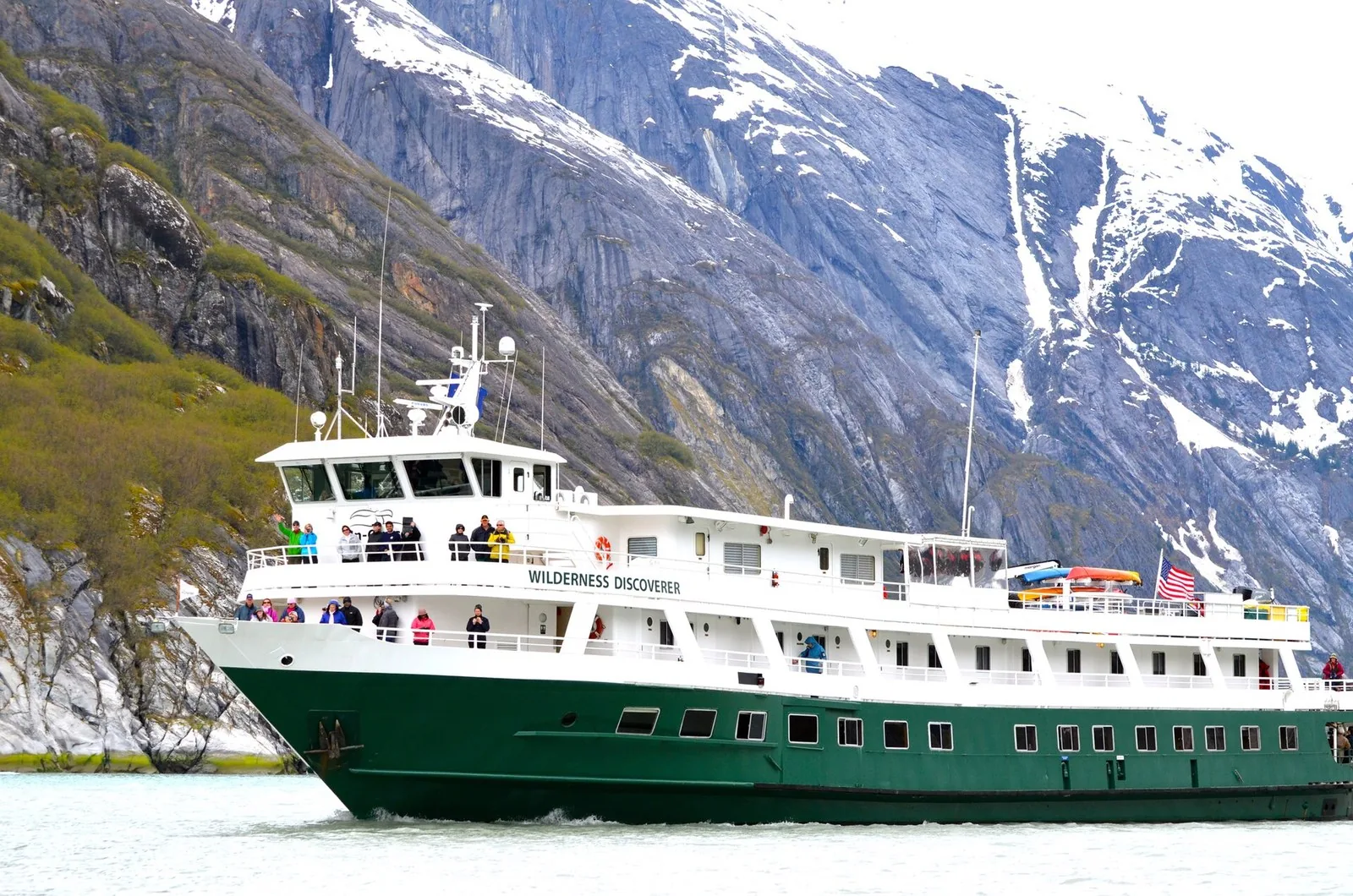
Small ship Alaska cruises carry anywhere from 22 to a few hundred guests instead of 2,000 to 4,000, and that one number changes nearly everything about the trip: where the ship can go, how close you get to whales and ice, whether you paddle a kayak off the back of the boat or ride a bus to a tour dock, and what you pay. Adventure lines such as UnCruise list week-long trips from about $4,900 per person (checked September 2026). National Geographic expedition voyages run past $10,000. The luxury lines sit on a different axis altogether, trading kayaks for suites and folding more of the extras into the fare.
This page is for first-time Alaska cruisers deciding between a small or luxury ship and the big resort ships, and for anyone who has done the big-ship version and wants something quieter the second time. The caveat that matters most is money: per night, a small ship costs several times what a big-ship inside cabin does, and on the true expedition boats you give up the theater, the casino and the kids’ club. Last updated October 14, 2026. Every price, fee and schedule below is dated, and the sources are listed at the end.
The short answer: which small ship fits you
| If you want | Look at | Why |
|---|---|---|
| Kayaking, hiking and wildlife straight from the ship | UnCruise Adventures | Ships of 22 to 86 guests, many itineraries with Glacier Bay, weeks from $4,900 (September 2026) |
| Naturalists, photographers and the National Geographic name | Lindblad Expeditions-National Geographic | 100-guest sister ships; the priciest option, about $10,200 for a July 2027 week on one agency listing |
| Small-ship scale with U.S.-only paperwork | American Cruise Lines | U.S.-flagged ships of 90 to 180 guests; the line says a photo ID covers its U.S.-only routes |
| Luxury plus Glacier Bay | Seabourn | One of only six lines on the park’s cruise-ship concession list |
| The fare that covers the most | Regent Seven Seas Cruises | The line includes shore excursions in its fares |
| Upscale on a firmer budget | Viking | 11 days from Vancouver to Seward from $6,499 for 2027 |
| Doing it yourself, cheapest of all | The state ferry | Public ferries link the Inside Passage towns; you plan every night and every meal |
Verdict: For most people who choose small on purpose, UnCruise is the place to start. The ships really are small, several itineraries spend two days in Glacier Bay, and the fares are roughly half of Lindblad’s. Choose a luxury line only if the suite, the food and the service matter more to you than getting into a kayak.
What’s changed for 2027
The small-ship market moves faster than the big-ship one, because a single company closing or a single dock opening changes the whole menu. Here is what’s different heading into the 2027 season:
- Alaskan Dream Cruises has closed. The Sitka-based line’s website now carries a farewell notice saying it has ceased business operations and “will no longer be operating future sailings” (checked September 24, 2026). Older guides and forum threads still recommend it. They’re out of date.
- American Cruise Lines is building its own docks. The line holds tidelands leases in Wrangell and Petersburg for floating docks sized for its roughly 170-passenger ships, and local press reported that the Wrangell dock was targeted for the 2027 season.
- More luxury brands are arriving. The Ritz-Carlton Yacht Collection sailed its first Alaska season in 2026, alongside MSC and Virgin Voyages on the big-ship side, and Explora Journeys is due to arrive in 2027.
- Tracy Arm is a question mark. On August 10, 2025, a landslide above South Sawyer Glacier fell into Tracy Arm and set off a tsunami. For 2026, Carnival, Holland America and Royal Caribbean switched to nearby Endicott Arm and Dawes Glacier, trade reports said Windstar did the same, and the U.S. Geological Survey expects more rockfall from the scar. Treat “Tracy Arm” on any 2027 itinerary as provisional.
- Seward’s new terminal is open. The Alaska Railroad’s $137 million terminal had its first official day of operation on May 28, 2026, after a pile-removal delay pushed several early-season calls, Windstar’s Star Seeker among them, to Whittier. Luxury one-ways ending at Seward should run normally in 2027, but confirm your final port.
- Juneau’s limits still apply. Juneau asks for no more than five large ships a day and 16,000 lower berths (12,000 on Saturdays) under voluntary agreements with the cruise industry. A 76-guest ship barely registers against that cap, which is one reason small ships feel calmer, though on a busy day you still share downtown Juneau with the big-ship crowds.
What counts as a small ship in Alaska?
There’s no legal definition, and the marketing stretches the term until it tears. A 76-guest expedition boat and a ship carrying several hundred guests both get sold as small-ship Alaska cruises, yet they are different trips with different days, different dress codes and very different prices. It helps to think in tiers.
| Tier | Guests | Lines | What the days look like |
|---|---|---|---|
| Adventure and expedition | About 22 to 100 | UnCruise, Lindblad-National Geographic | Kayaks, skiffs and hikes from the ship; some days have no town at all |
| U.S. coastal small ships | About 90 to 180 | American Cruise Lines | Port to port, including small towns the big ships can’t reach |
| Luxury and upscale mid-size | Several hundred (about 380 to 930 on Valdez’s 2026 schedule) | Seabourn, Silversea, Regent, Viking, Oceania, Windstar, Azamara, Ritz-Carlton, Ponant, HX | Suites, fuller fares, mostly the standard ports plus a few smaller ones |
| For comparison: big resort ships | About 2,000 to 4,000-plus | Princess, Holland America, Royal Caribbean, Norwegian and others | Theaters, pools and kids’ clubs; excursions sold by the ship |
The first tier is what most people picture when they say small ship. At 100 guests or fewer, a ship can nose into a cove, drop a skiff and put you on a beach with no dock and no gift shop. At several hundred guests it can’t do most of that, but it can still use docks the megaships can’t. Valdez’s 600-foot municipal wharf, for example, handled a 2026 schedule of HX, Silversea, Viking, Azamara and Ritz-Carlton ships carrying roughly 382 to 930 passengers, according to the city.
Verdict: If kayaks and beach landings are the reason you’re reading this, stay at or under about 100 guests. If you mostly want quieter decks, better food and no line at the buffet, the luxury tier will do, and it’s easier on older knees.
Why small ship Alaska cruises feel different
The honest summary: a small ship doesn’t show you a different Alaska so much as a closer one. The glaciers and the whales are the same animals and the same ice the big ships see. What changes is distance, time and how many people are standing between you and the rail. For a line-by-line version of this argument, our small ship vs big ship Alaska cruise comparison sets the two side by side on cabins, costs and days. Here’s what actually changes.
The schedule bends for wildlife
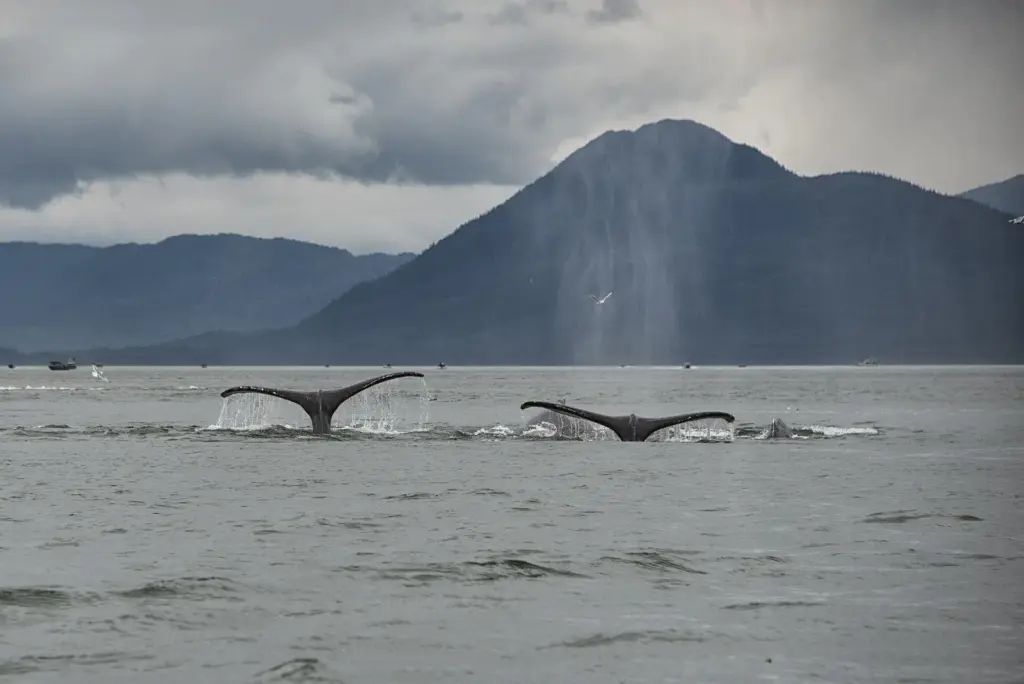
A big ship runs on a timetable built around port slots, pilot boardings and thousands of pre-sold shore excursions. An expedition ship has more slack in the day. When humpbacks are feeding along a shoreline or a brown bear is turning over rocks at low tide, the expedition leader can slow the ship and let everyone watch. Nothing is guaranteed, and good naturalists say so up front, but the odds of a long, close look go up sharply when nobody is waiting for you at the next dock. If wildlife is the whole point of your trip, our Alaska wildlife cruise guide covers which animals you can realistically expect and where they turn up.
Kayaks and skiffs launch from the ship
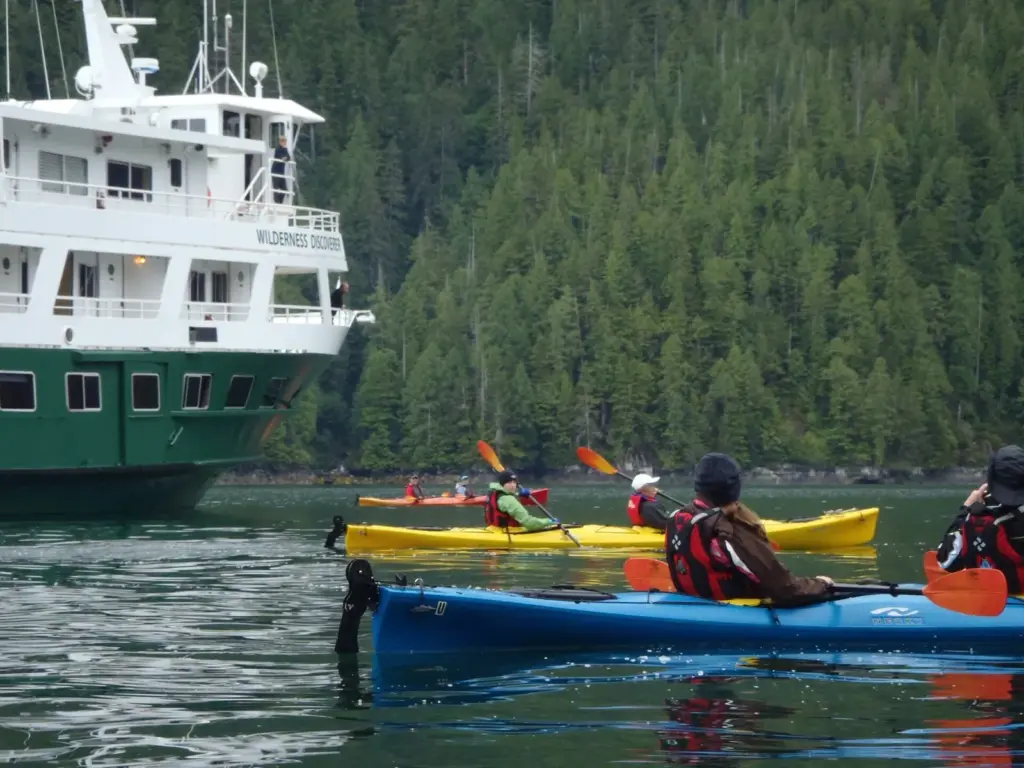
On a big ship, kayaking means buying an excursion, walking off at a port and riding a van to an outfitter. On an adventure ship, the kayaks live on board. UnCruise’s Alaska program is built around kayaking, hiking, bushwhacking and paddleboarding from the ship itself, according to the line’s Alaska page. You walk down to a launch platform, pull on a spray skirt and paddle off into a cove that may have no other boat in it. Expedition lines use inflatable skiffs, often called Zodiacs, to run guests along ice faces and cliffs, and to put them ashore on beaches for guided walks.
Towns and coves the big ships can’t reach
Some of Southeast Alaska is simply off limits to a 1,000-foot ship. Petersburg, the Norwegian-rooted fishing town at the north end of the Wrangell Narrows, has no deep-water port for large cruise ships, and the 21-mile Narrows are too narrow and shallow for the biggest vessels, so the town’s cruise visitors arrive on small-ship lines such as American Cruise Lines and Lindblad-National Geographic, according to the city and local guides. The same logic applies to dozens of unnamed coves, bays and inlets where an expedition ship can anchor for the night and nobody else is in sight.
Fewer people everywhere
On a 76-guest ship, the whole passenger list fits in one skiff rotation and one dining room. There’s no line for the gangway, no numbered tender tickets and no elbowing for a gap at the bow when a glacier appears. That matters more in Alaska than on a warm-water cruise, because so much of the trip happens on deck, looking at something that won’t wait.
Experts, not just entertainers
Expedition ships carry naturalists and guides whose job is to explain what you’re seeing: why the ice is blue, which whale is which, how the Tlingit used a particular stretch of coast. The big ships have good onboard naturalists too, and Holland America brings National Park Service rangers aboard in Glacier Bay, but on a small ship the expert is at your dinner table and in your skiff, not on a stage in front of 800 people.
More time at the ice
A big ship’s day in Glacier Bay is a single long scenic-cruising day. UnCruise lists a week-long, round-trip-Juneau itinerary called the Glacier Bay Adventure Cruise with 2 Days in Glacier Bay, and several of its other voyages include the park. Two days means kayaking and shore walks inside the park, not just watching from a deck.
The trade-offs nobody puts in the brochure
Small ships aren’t better for everyone, and the brochures skip the parts that send some people home unhappy. Read this list before you pay a deposit.
- The price per night is steep. A week on UnCruise from $4,900 works out to about $700 per person per night, before flights to Juneau. Lindblad runs higher still. That’s several times what a big-ship inside cabin costs, even after the big ship’s extras are added.
- Cabins are small, and some are basic. Expedition ships put their space into public lounges, decks and gear. Expect compact cabins, and on older vessels, smaller bathrooms than a hotel’s.
- You feel the water. Most small-ship routes stay in the sheltered channels of the Inside Passage, but a small hull feels swells that a 160,000-ton ship ignores. If you’re prone to seasickness, bring your usual remedy and look for itineraries without open-ocean legs.
- Bad weather has fewer backups. When wind or fog cancels a kayak outing or a skiff tour, there’s no casino, no big theater and no shopping arcade to fill the afternoon. There will be a lecture and a good book.
- You’ll be social whether you planned to or not. Open seating and the same 70 faces all week suit most people. They don’t suit everyone.
- Medical help is further away. A remote anchorage is hours from a hospital. Smaller ships carry smaller medical setups, so ask what’s on board if you have a condition that worries you.
- Kids’ programs are thin or absent. Some adventure lines welcome older kids with family departures, but nobody runs a daycare in a Zodiac.
Verdict: If two or more of those points made you wince, a big ship with a good balcony and a few carefully chosen excursions will probably make you happier, and it will cost less.
Small ship Alaska cruise lines compared
The line-up below covers every small-ship and upscale line with an Alaska program we could confirm for 2026 or 2027, ordered roughly from wildest to most polished. The prices are the lowest fares the lines or agencies showed when we checked; they move constantly, so treat them as a sense of scale rather than a quote. If you’re still deciding between small and big altogether, our ranking of the best cruise line for Alaska covers the big-ship lines too.
| Line | Guests per ship | Typical length | Starts or ends | Glacier Bay |
|---|---|---|---|---|
| UnCruise Adventures | 22 to 86 | 7 to 15 nights | Juneau, Sitka, Ketchikan; Seattle on one route | Many itineraries (tour-vessel access) |
| Lindblad-National Geographic | 100 | About a week | Southeast Alaska ports | Check the itinerary |
| American Cruise Lines | 90 to 180 | 9 to 19 days | Juneau, Ketchikan, Tacoma | Reported permit; check the sailing |
| Seabourn | Several hundred | 7 to 15 days (2026) | Vancouver, Juneau | Holds a cruise concession |
| Silversea | Several hundred | 7 nights (2026) | Vancouver, Seward | Not on the concession list |
| Regent Seven Seas | Several hundred | 7 days (2026) | Vancouver, Whittier or Seward | Not on the concession list |
| Viking | Mid-size | 11 days (2027) | Vancouver, Seward | Holds a concession; the 2027 route lists Hubbard Glacier instead |
| Oceania | Mid-size | 10 days (2026 sample) | Seattle, Vancouver | Not on the concession list |
| Windstar | Small luxury | About a week | Vancouver, Seward or Whittier | Not on the concession list |
1. UnCruise Adventures
UnCruise is the adventure line: small, casual and physical. Its Alaska ships carry 22 to 86 guests (the Safari Quest at 22, Safari Explorer at 36, Wilderness Discoverer at 76 and Wilderness Legacy at 86), and its voyages of 7 to 15 nights start or end in Juneau, Sitka or Ketchikan, with many including Glacier Bay. On an UnCruise Alaska trip, the days are organized around getting off the ship and into the landscape, and a typical guest is more likely to own hiking boots than a tuxedo.
Fares on the line’s Alaska page in September 2026 ran from $4,900 per person for the 7-night, round-trip-Juneau Glacier Bay Adventure Cruise with 2 Days in Glacier Bay; from $5,300 for Wild, Woolly and Wow with Glacier Bay on the Wilderness Legacy; from $6,300 for Northern Passages with Glacier Bay and Sitka, a one-way from Juneau to Sitka; and from $7,300 for a 12-night one-way from Seattle to Juneau that adds the San Juan Islands and the Inside Passage. The longest option, Alaska’s National Parks by Land and Sea, runs 15 nights from Fairbanks to Juneau from $13,700. The line even goes far west: Unalaska’s 2026 port schedule showed a 10-night Aleutian Islands voyage from Dutch Harbor aboard the Safari Explorer.
Verdict: The best first choice for most small-ship travelers. It’s the most affordable real expedition product in Alaska, and the smallest ships in its fleet feel more like a private charter than a cruise.
2. Lindblad Expeditions-National Geographic
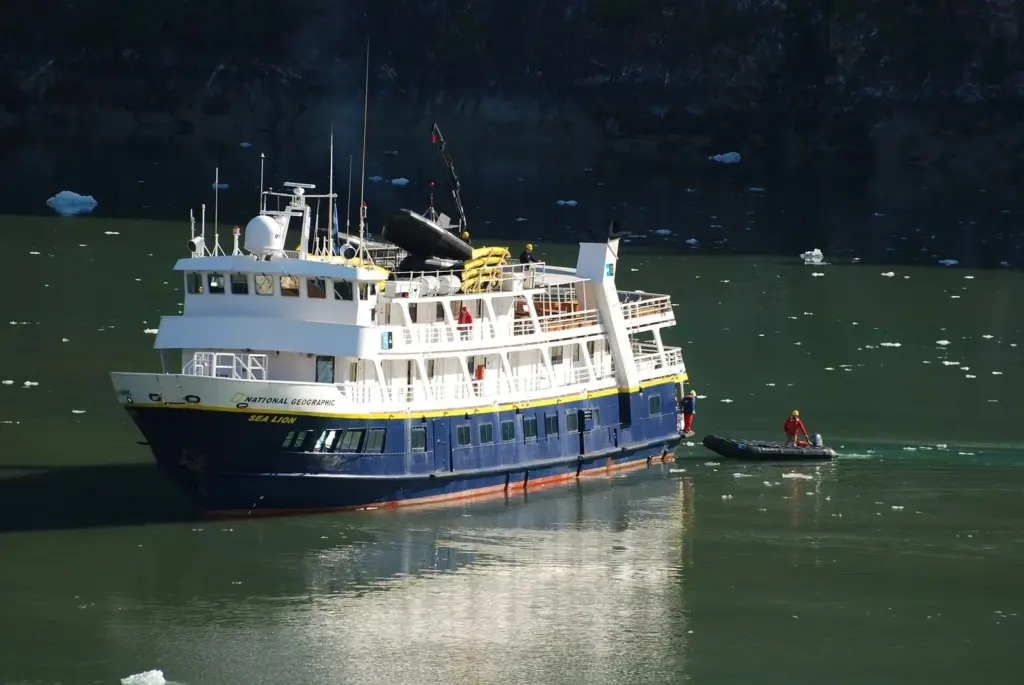
Lindblad is the expedition line with the famous partner. A National Geographic Alaska cruise with Lindblad runs on the sister ships National Geographic Venture and National Geographic Quest, 100 guests each, which Lindblad describes as shallow-draft ships built to reach narrow waterways. The staff mix naturalists, undersea specialists and photography instructors, and the line’s Southeast Alaska trips have typically run between Juneau and Sitka or Ketchikan.
It is also the most expensive way to see Alaska by sea. One travel agency listed a July 4, 2027 Venture departure of the week-long Alaska’s Inside Passage trip from $10,200 per person, with a 15% deposit and the balance due 120 days before sailing. That’s about $1,457 per person per night. Petersburg’s own visitor materials list Lindblad among the small-ship lines that call there, one of the towns big ships can’t reach.
Verdict: Worth the premium if you care about expert interpretation and photography coaching. If you mainly want kayaks and bears, UnCruise gets you most of the way for about half the price.
3. American Cruise Lines
American Cruise Lines sits between the expedition ships and the luxury lines. Its fleet of 90- to 180-passenger ships is entirely U.S.-flagged, and the line says that guests on itineraries that stay within the United States need only a photo ID, not a passport. American Cruise Lines Alaska departures leave from Juneau, Ketchikan and Tacoma, Washington, and the line advertises seven Alaska itineraries ranging from 9 to 19 days, with 2027 and 2028 sailings on sale.
The feel is a comfortable, American-style coastal cruise rather than an expedition. The appeal is scale, not adventure: small towns, short walks from the gangway, and far fewer people than a big ship. It was reported to have obtained a Glacier Bay permit, but since the park’s cruise-ship concession list names only six other lines, ask whether your specific sailing actually enters the park. The line’s floating docks in Wrangell and Petersburg are a sign it plans to stay.
Verdict: A good fit for travelers who want small-ship scale and simple paperwork, and who aren’t interested in kayaks or wet landings. Bring a passport anyway if any excursion crosses into Canada.
4. Seabourn
Seabourn is the luxury line with a key to Glacier Bay. It is one of only six cruise lines on the National Park Service’s cruise-ship concession list, alongside Princess, Holland America, Norwegian, Cunard and Viking. Seabourn Encore made its Alaska debut in 2026, according to the line, which announced 27 departures of 7 to 15 days from Vancouver or Juneau between May and September. A Seabourn Alaska cruise feels like a small luxury hotel that happens to move, with suites, an easygoing dress code by day and a dressier one at night.
Concessions don’t guarantee entry on every sailing: the park allows at most two cruise ships a day, so only some departures on permitted lines go in. Seabourn hasn’t been confirmed for Glacier Bay on every 2027 date, so read the day-by-day itinerary before you pay.
Verdict: The first luxury line to check if Glacier Bay is non-negotiable.
5. Silversea
Silversea positioned two ships in Alaska in 2026 and plans the same for 2027, according to the line. Per Silversea’s schedule, Silver Moon and Silver Whisper sailed 7-night Vancouver-Seward itineraries in 2026, and both appeared on Valdez’s 2026 port schedule. A Silversea Alaska cruise is an all-suite, butler-style trip in the classic European luxury mold.
Silversea isn’t on the Glacier Bay concession list, so expect Hubbard Glacier, a fjord or another scenic-cruising day instead. That isn’t a disaster, since Hubbard is North America’s largest tidewater glacier, but it’s a difference worth knowing before you compare itineraries.
Verdict: Strong for travelers who value service and a one-way route through the Gulf of Alaska, less so for anyone set on Glacier Bay.
6. Regent Seven Seas Cruises
Regent sells the most inclusive fare in the luxury tier. Its fares include shore excursions, according to the line, which in Alaska is a bigger deal than it sounds, because a floatplane or helicopter tour can cost hundreds of dollars per person. In 2026, Seven Seas Explorer sailed 7-day voyages between Whittier or Seward and Vancouver, and the line added Klawock, on Prince of Wales Island, as a new port, according to Regent.
A Regent Alaska cruise costs more up front, but the gap narrows once you add up what you’d pay separately on another line. Check which tours are included and which carry a surcharge, because the top-tier helicopter and floatplane tours sometimes do.
Verdict: The pick for travelers who want to book once and not see another bill. Do the excursion math before deciding it’s too expensive.
7. Viking
Viking is the upscale mid-size option with the clearest pricing. Its 2027 Alaska and the Inside Passage cruise is an 11-day one-way from Vancouver to Seward: scenic sailing through the Inside Passage, then Ketchikan, Sitka, Juneau, Skagway, Icy Strait Point, scenic sailing at Hubbard Glacier, Valdez and finally Seward. Viking listed it from $6,499 per person when we checked on September 24, 2026, and its pages ask for payment in full by November 19, 2026 or 120 days before departure, whichever comes first.
Viking holds one of the six Glacier Bay concessions, but this 2027 itinerary lists Hubbard Glacier, not Glacier Bay. Booking listings show Viking Orion on 2027 departures. At roughly $650 per person per night, it is the cheapest way into the upscale tier we could verify.
Verdict: The value choice among the polished lines, especially for Valdez, one of the prettiest small ports in Alaska.
8. Oceania Cruises
Oceania brings its food-first style north on longer, port-heavy voyages. The line listed a 10-day Seattle-to-Vancouver voyage departing August 26, 2026, and Seattle port guides place Oceania at Pier 66, the Bell Street Cruise Terminal. An Oceania Alaska cruise is a good fit for travelers who care about the restaurants as much as the scenery and want more than a week at sea.
Verdict: A comfortable middle ground, but not a small-ship experience in the kayak-and-skiff sense.
9. Windstar Cruises
Windstar has sailed Alaska with its Star Seeker. In 2026, two of its Seward cruises, on June 2 and June 24, were moved to Whittier because of the Seward dock delay, and trade reports said Windstar swapped Tracy Arm for Endicott Arm for the season. A Windstar Alaska cruise is a relaxed, upscale trip rather than an expedition, with a dress code looser than the classic luxury lines.
Verdict: Worth a look if Seabourn and Silversea feel too formal. Confirm the 2027 dates and ports, which were still being finalized when we checked.
10. The Ritz-Carlton Yacht Collection
The Ritz-Carlton Yacht Collection entered the Alaska market in 2026, and its Luminara appeared on Valdez’s 2026 port schedule. It’s the newest luxury name in the region, with a yacht-style ship and the hotel brand’s service culture.
Verdict: One season of track record isn’t much. If you like the brand, go; if you want a proven Alaska operation, pick Seabourn or Silversea.
11. Azamara
Azamara returned to Alaska in 2026 with 10- to 13-day sailings beginning in May, according to the line, and the Azamara Pursuit appeared on Valdez’s schedule. Azamara markets itself on destination immersion: longer port stays and later evenings ashore.
Verdict: A reasonable mid-size choice for travelers who want longer itineraries than a week, without luxury-tier prices.
12. Ponant and HX
Two European expedition brands also turn up in Alaska. Ponant lists summer expedition cruises in Alaska and British Columbia, and HX (formerly Hurtigruten Expeditions) had its Roald Amundsen on Valdez’s 2026 port schedule. Both bring the polar-expedition style to Alaska: lectures, landings and a more international passenger mix.
Verdict: Interesting if you’ve sailed with them in Antarctica or Norway. Confirm the season and route, because their Alaska programs vary from year to year.
What happened to Alaskan Dream Cruises?
For years, Alaskan Dream Cruises was the Alaska Native-owned, Sitka-based small-ship line that many guides recommended alongside UnCruise. As of September 24, 2026, its website carries a farewell notice saying the company has ceased business operations and will not operate future sailings. If you had a booking, contact the company or your travel agent and your card issuer about refunds. If you were drawn to it for its Alaska-owned, small-town focus, UnCruise and American Cruise Lines are the closest alternatives.
Luxury Alaska cruises: what the extra money buys
Luxury Alaska cruises are a different animal from expedition trips. You aren’t paying for access to places big ships can’t go, since most luxury ships use the same Juneau, Ketchikan and Skagway docks as the big ships, often on the same days. You’re paying for space, service, food and a fare that covers more of the extras.
Those extras add up fast on the big ships, and luxury pricing makes more sense once you count them. In 2026, Princess and Holland America charged $18 per person per day in standard cabins for crew gratuities, Royal Caribbean $18.50 and Celebrity $19.50, and Princess added a 20% service charge on drinks and other extras. A couple on a 7-night Holland America cruise pays $252 in gratuities alone. Drink packages on mainstream lines typically run about $60 to $90 per person per day before service charges. Add two or three shore excursions each, and a cheap big-ship fare can double.
The luxury lines fold some or all of that into the fare, though what’s included differs by line and sometimes by fare type. Regent’s fares include shore excursions, which none of the big lines match. Explora Journeys joins the Alaska luxury field in 2027, and the Ritz-Carlton Yacht Collection is only in its second season, so the luxury tier is getting more crowded, not less.
Verdict: Luxury in Alaska buys comfort, not access. If you want both, book an expedition ship; if you want the ports and the scenery in a suite with dinner included, a luxury line is the right call.
Expedition, adventure or luxury: pick the style first
Before you compare fares, decide which kind of trip you want. The words overlap in marketing, but an Alaska expedition cruise, a luxury cruise and a coastal small-ship cruise feel very different day to day.
| Style | Pace | Dress | What fills the day | Best for |
|---|---|---|---|---|
| Adventure (UnCruise) | Active, weather-led | Fleece and rain gear | Kayaks, hikes, skiff tours, few towns | Fit travelers who want the wilderness |
| Expedition (Lindblad, Ponant, HX) | Active with lectures | Casual | Zodiac tours, landings, naturalist talks | Learners and photographers |
| Coastal (American Cruise Lines) | Relaxed | Casual to smart casual | Small ports, short walks, onboard talks | Travelers who want small without roughing it |
| Luxury (Seabourn, Silversea, Regent, Ritz-Carlton, Windstar) | Leisurely | Smart casual, dressier evenings | Standard ports, scenic cruising, fine dining | Comfort-first couples |
| Upscale mid-size (Viking, Oceania, Azamara) | Leisurely | Smart casual | Longer routes, more ports | Value-minded travelers wanting polish |
The question that sorts most people is simple: do you want to be out in the landscape, or looking at it from a comfortable deck? Neither answer is wrong, but choosing the wrong style is the most common reason people come home from a small-ship trip disappointed.
Where small ships go that big ships can’t
The standard big-ship routes are laid out in our Alaska cruise itinerary guide. Small ships mostly work the same Inside Passage, but they fill the gaps between the big-ship stops with places a 4,000-guest ship can’t reach or wouldn’t bother with.
Petersburg and the Wrangell Narrows
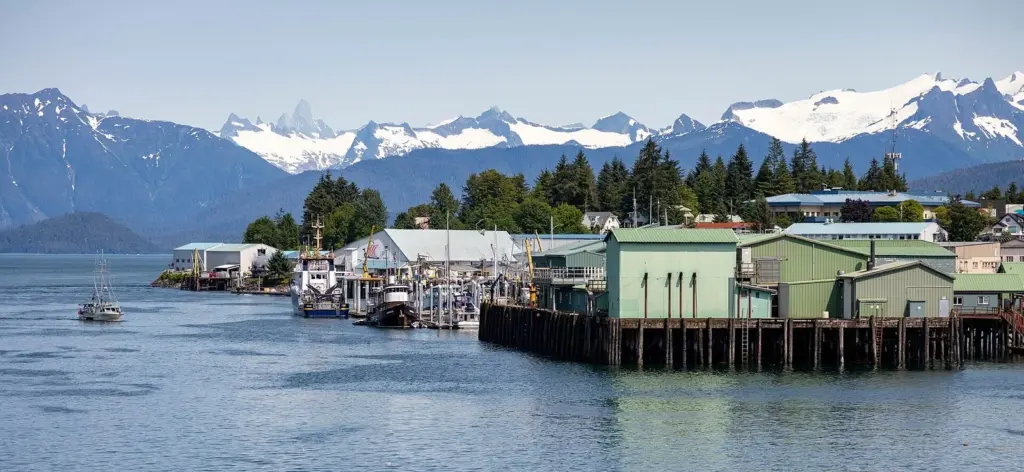
Petersburg is the classic small-ship town. The 21-mile Wrangell Narrows between Frederick Sound and Sumner Strait are too narrow and shallow for the biggest ships, and the town has no deep-water port for them, the city says, so its visitors come on small ships. The result is a working fishing town with canneries on pilings, not a cruise-port strip of jewelry stores. Frederick Sound, just north of town, is also good humpback water in summer.
Wrangell
Wrangell, at the mouth of the Stikine River, sees few large ships. American Cruise Lines holds a tidelands lease there for a floating dock for its roughly 170-passenger ships, and local press reported it was targeted for 2027. A small-ship stop here usually means Shakes Island and its tribal house, the Stikine River and a town that feels far from the cruise circuit.
Glacier Bay, under a different permit
Glacier Bay National Park manages big cruise ships and smaller vessels separately. Its concession page lists Cruise Ship Services, held by Princess, Holland America, Norwegian, Seabourn, Cunard and Viking, and a separate Tour Vessel Services category for smaller overnight boats. The park allows no more than two cruise ships and three tour vessels a day. That’s how UnCruise can sell a week with two days in the park even though it isn’t one of the six large-ship lines. It also means a small ship can spend its time in the bay’s upper inlets with kayaks and skiffs rather than a single scenic pass.
Tracy Arm, Endicott Arm and the skiff advantage
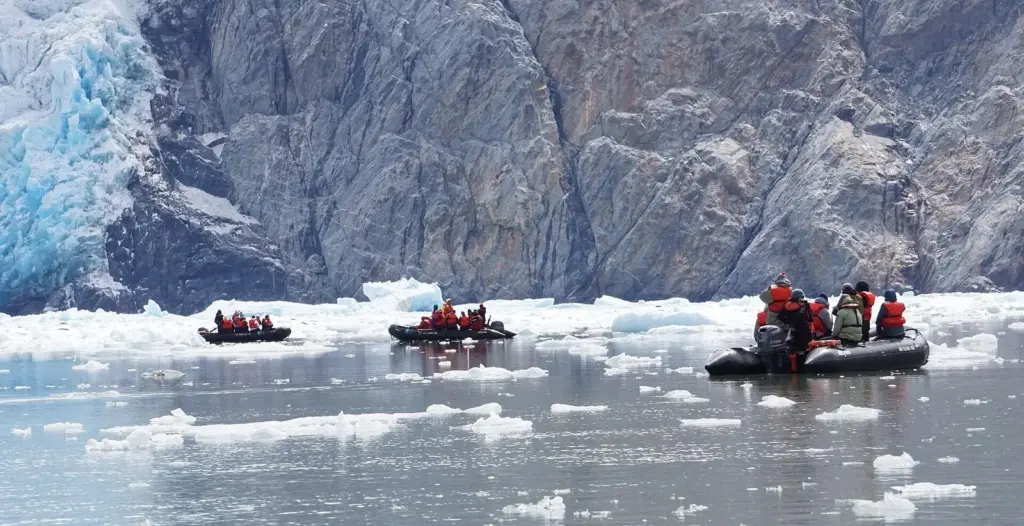
Tracy Arm was long the showpiece fjord for small ships, because they could get far closer to the Sawyer glaciers than the big ships, and their skiffs could go closer still. The August 10, 2025 landslide-tsunami above South Sawyer Glacier changed that. USGS expects continued rockfall from the exposed scar, and in 2026 many lines used Endicott Arm and Dawes Glacier instead. Endicott Arm lies in the same Tracy Arm-Fords Terror Wilderness, so the scenery is similar. For 2027, treat any Tracy Arm listing as provisional and ask the line what happens if it’s swapped.
Haines and the smaller docks
Haines’s Port Chilkoot dock, directly in front of historic Fort William H. Seward, takes only one large cruise ship at a time, possibly with a small ship alongside, according to Visit Haines. Small ships fit in around the big-ship schedule, and some itineraries use Haines as a quieter alternative to busy Skagway just up Lynn Canal.
Sitka as a start or finish
Sitka is on the outer coast, so big ships visit it less often than Juneau or Ketchikan. Small ships use it as a starting or ending port, as UnCruise’s Juneau-to-Sitka Northern Passages route does, which gives you time for Sitka National Historical Park and the site of the 1804 battle between the Tlingit and the Russians before or after the cruise.
The far west: Kodiak and the Aleutians
A few expedition voyages go far beyond the Inside Passage. Unalaska’s 2026 schedule listed UnCruise’s 10-night Aleutian Islands trip from Dutch Harbor in August, and the city says ships there generally tie up at the City Dock at the Unalaska Marine Center. These are rare, remote itineraries with open-ocean legs, best for experienced travelers who don’t get seasick.
Small ship Alaska cruises from Seattle, Vancouver and Alaska ports
Where the ship starts shapes the trip as much as which line you pick. Big ships mostly leave from Seattle or Vancouver; small ships mostly don’t.
Starting inside Alaska
Most true expedition voyages start and end in Alaska: Juneau, Sitka or Ketchikan. That skips two days of sailing up from Washington or British Columbia and puts all of your time in Southeast Alaska. The catch is the flight. You’ll fly into a small airport, so book early, and plan to arrive the day before, because summer fog and weather delays in Southeast Alaska are common.
Small ship Alaska cruises from Seattle
Your choices from the Seattle area are limited but real. UnCruise’s 12-night one-way from Seattle to Juneau, which runs through the San Juan Islands and the Inside Passage, started at $7,300 per person in September 2026. American Cruise Lines sails from Tacoma, about 30 miles south of Seattle. Oceania listed an August 26, 2026 Seattle-to-Vancouver voyage. Foreign-flagged ships leaving a U.S. port must call at a foreign port, which is why the Seattle voyages on most luxury lines stop in Canada; American Cruise Lines, being U.S.-flagged, doesn’t have to.
Small ship Alaska cruises from Vancouver
Vancouver is the luxury-line hub. Seabourn’s 2026 program ran from Vancouver or Juneau, Silversea sailed Vancouver-Seward, Regent linked Vancouver with Whittier or Seward, and Viking’s 2027 route runs Vancouver to Seward. You’ll need a passport to board in Canada.
Ending in Seward or Whittier
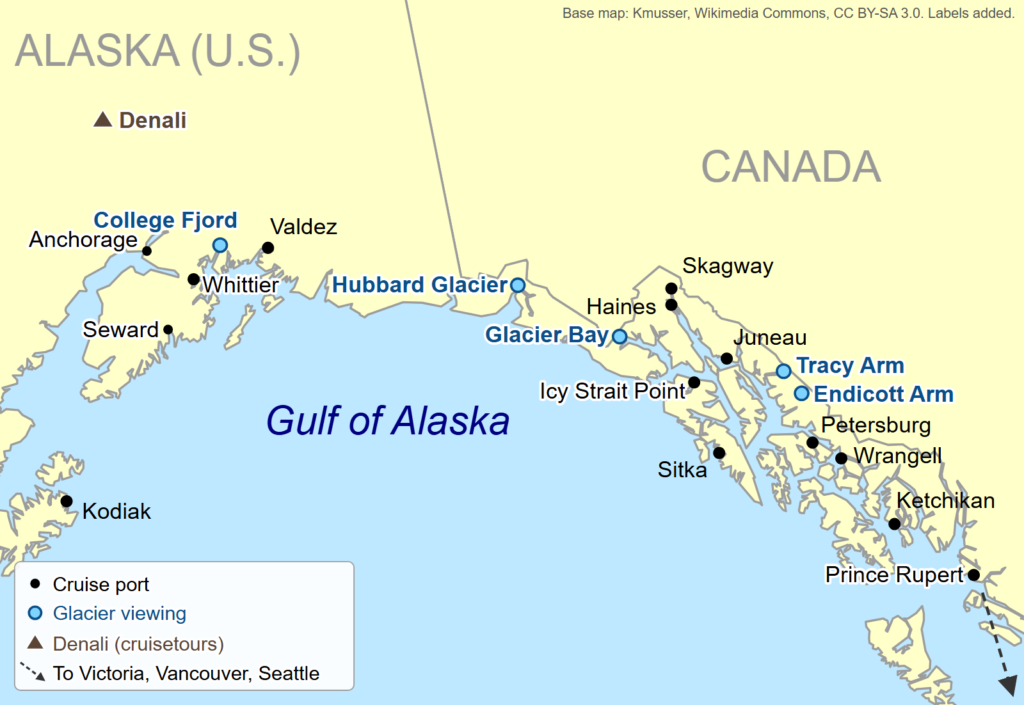
Seward and Whittier are the cruise ports for Anchorage, about 125 and 60 miles from the city by road. Seward’s new Alaska Railroad terminal, with its 748-foot double-berth pier and direct rail connection to Anchorage, opened on May 28, 2026. Luxury one-ways often end at one or the other, so check which before you book flights, and leave time to get to the Anchorage airport.
What small ship Alaska cruises cost
Small ships are expensive, but the gap with big ships is smaller than it first looks once you price the whole trip. Here are the lowest fares we could confirm, converted to a per-night figure so the trips compare fairly.
| Trip | Nights | Lowest fare seen | Per person per night |
|---|---|---|---|
| UnCruise Glacier Bay Adventure, round trip Juneau | 7 | $4,900 | About $700 |
| UnCruise Wild, Woolly and Wow, round trip Juneau | 7 | $5,300 | About $757 |
| UnCruise Northern Passages, Juneau to Sitka | 7 | $6,300 | $900 |
| UnCruise Seattle to Juneau | 12 | $7,300 | About $608 |
| UnCruise Alaska’s National Parks by Land and Sea | 15 | $13,700 | About $913 |
| Viking Alaska and the Inside Passage, Vancouver to Seward (2027) | 10 | $6,499 | About $650 |
| Lindblad Alaska’s Inside Passage (agency listing, July 4, 2027) | 7 | $10,200 | About $1,457 |
| For comparison: a 7-night big-ship fare one blogger paid in 2025 | 7 | About $1,500 | About $214 |
UnCruise fares were checked on the line’s site on September 24, 2026; the Viking fare the same day. The Lindblad figure comes from an agency listing, not the line, and the big-ship comparison is one Royal Caribbean Blog writer’s 2025 booking, which grew to nearly $2,400 per person once gratuities, drinks and excursions were added. That’s the honest comparison: roughly $2,400 all-in for a big-ship week against $4,900 and up for the cheapest expedition week, before flights.
What’s included, and what isn’t
Ask every line exactly what the fare covers, because it differs more among small ships than among big ones. On adventure ships, guided kayaking, hiking and skiff outings from the ship are the product, not an add-on. On luxury lines, drinks, gratuities and Wi-Fi may be included, and Regent includes shore excursions. On all of them, check flights, the pre-cruise hotel night, transfers, travel insurance and any flightseeing, which is almost never included. For cruisetours with land time, compare UnCruise’s 15-night land-and-sea program with the big lines’ Denali packages on a per-night basis.
Verdict: The cheapest way into a real small-ship Alaska trip is UnCruise’s Seattle-to-Juneau route at about $608 a night; the cheapest verified upscale option is Viking at about $650. Anything under $500 a night that calls itself a small-ship Alaska cruise deserves a careful look at the ship’s size.
Passports, U.S.-flagged ships and the Canada question
Most Alaska cruises visit Canada at some point, so most cruisers need a passport. Small ships change that equation in one specific case. American Cruise Lines says its entirely U.S.-flagged fleet lets guests on itineraries that stay within the United States sail with a photo ID. Excursions are the catch: the White Pass and Yukon Route railway’s trips from Skagway to Fraser, Bennett or Carcross cross into Canada and require a passport, while the White Pass Summit round trip does not.
For any cruise that starts in Vancouver, you need a passport or another accepted travel document. Cruise lines and U.S. Customs and Border Protection recommend a passport book even on closed-loop cruises from Seattle, because if you have to leave the ship in Canada or fly home early, you’ll need it to board an international flight.
Verdict: Bring a passport book. The U.S.-only option is a convenience, not a reason to skip getting one.
What a day on an expedition ship looks like
No two days are the same, because wildlife and weather set the plan, but a typical expedition day in Southeast Alaska runs something like this.
Early morning. The ship repositions overnight or at first light into a new cove. Coffee is out early, and someone is usually on the bow with binoculars. If whales are nearby, the expedition leader may announce them over the speakers before breakfast.
Morning. After breakfast, the day’s choices go up on a board: a long hike with a guide, a shorter shoreline walk, a kayak outing, or a skiff tour along the shore. You sign up for one, pull on rubber boots and rain gear, and head for the launch platform.
Midday. Everyone comes back for lunch while the ship moves again, perhaps toward a glacier or a known humpback feeding area.
Afternoon. A second outing, or time on deck as the ship works its way along a shoreline where bears forage at low tide. If orcas show up, plans change.
Evening. A naturalist’s recap of the day, a preview of tomorrow, dinner, and in June and July, daylight until nearly midnight. The ship anchors somewhere quiet for the night.
That rhythm is the reason people rebook. It’s also the reason some people don’t: there are no evening shows, and the day starts early.
Who should skip the small ship
Small ships are wonderful for the right traveler and a costly mistake for the wrong one. A big ship is the better choice for:
- Families with young children. Kids’ clubs, pools and pizza at midnight are big-ship strengths. Some adventure lines run family departures for older kids, but they’re a minority.
- Travelers on a tight budget. At $600 to $1,500 per person per night, small ships are out of reach for many, and a well-chosen big-ship cruise with two good excursions delivers most of Alaska for far less.
- People with limited mobility. Stepping from a platform into a skiff, and from a skiff onto a wet beach, takes balance. Luxury and coastal ships use docks more often, but check before you book.
- Anyone who wants nightlife. The expedition ship’s evening entertainment is a slideshow about sea otters. It’s a good slideshow.
- The seasickness-prone on open-water routes. Stick to sheltered Inside Passage itineraries, or choose a bigger ship.
Adults-only trips, private yachts and the state ferry
Adults-only cruises
Most expedition and luxury ships attract few children, but an adults only Alaska cruise guarantees it. Virgin Voyages, which sails only for adults, entered Alaska in 2026 on a big ship, so “adults-only” and “small ship” don’t always go together. On the luxury lines, kids are allowed but rarely seen outside the summer school break.
Private yachts
An Alaska yacht charter takes the small-ship idea to its limit: your group, your crew and your route, usually for a handful of guests. It costs more than even Lindblad per person unless you fill every cabin, but for a family or a group of friends, it can be the most flexible way to see the Inside Passage.
The state ferry
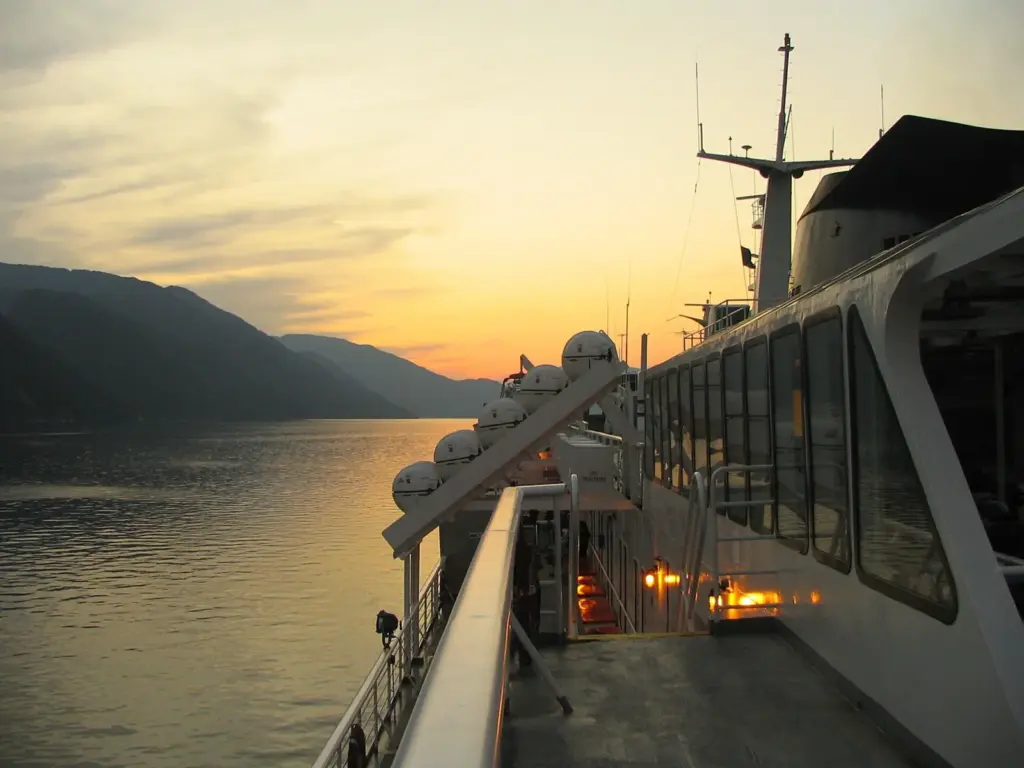
For do-it-yourself travelers, the Alaska Marine Highway is the budget alternative. The state ferry system carries passengers, cars and bikes between Inside Passage towns, with cabins on some routes and deck space on others, and you plan every stop yourself. It’s slower and less predictable than a cruise, and you’ll need to book lodging in each town, but it lets you spend days, not hours, in places like Petersburg, Wrangell and Sitka.
How to choose and book a small ship Alaska cruise
Once you’ve picked a style, these questions sort the options quickly. Ask them of the line or your travel agent before you pay a deposit.
- How many guests, and how many kayaks and skiffs? A 100-guest ship with 20 kayaks is a different trip from one with 8.
- Does this sailing enter Glacier Bay, and for how long? A permitted line doesn’t mean every sailing goes in.
- Tracy Arm or Endicott Arm? After 2025, ask what the ship will do if Tracy Arm is closed or unsafe.
- What’s included? Kayaking, skiff tours, drinks, gratuities, Wi-Fi, transfers and the pre-cruise hotel all vary.
- Where does it start and end? A one-way from Juneau to Sitka means two different flights; price them first.
- What’s the payment schedule? Lindblad asks 15% down and the balance 120 days out, per one agency listing; Viking’s 2027 Alaska pages ask for full payment by November 19, 2026 or 120 days before departure.
- What happens in bad weather? Good lines have a plan B that isn’t just a movie in the lounge.
Reading small ship Alaska cruise reviews
When you read small ship Alaska cruise reviews, look past the food comments to the things that decide a trip: the guide-to-guest ratio, how often kayak and skiff outings actually ran, the state of the cabins on older ships, and how the crew handled weather days. A single five-star or one-star review tells you little; a pattern across a season tells you a lot. Reviews from before 2025 won’t reflect the Tracy Arm changes or the Alaskan Dream closure.
When to book for 2027 and 2028
Book early. A 76-guest ship has perhaps 40 cabins, and the popular June and July departures on the smallest ships sell out well ahead. American Cruise Lines already has 2027 and 2028 sailings on sale. Early booking also gives you time to find flights into Juneau or Sitka, which cost more and fill faster than flights to Seattle or Vancouver.
Getting to the ship
Plan to arrive the day before any small-ship departure, especially in Juneau, Sitka or Ketchikan, where weather can delay flights. Small ships rarely wait for late passengers, and there’s no next port with a big airport to catch up at. Travel insurance that covers missed departures is worth the cost.
If the comparison on this page has convinced you that a big ship suits you better, the best Alaska cruise lines ranking is the next place to go.
Small Ship Alaska Cruises FAQ
What is the best small ship cruise line for Alaska?
For most travelers, UnCruise Adventures is the best small-ship line for Alaska. Its ships carry 22 to 86 guests, many itineraries include Glacier Bay, and week-long trips started at $4,900 per person in September 2026. Lindblad-National Geographic is the premium choice for naturalist depth, and Seabourn is the luxury pick with Glacier Bay access.
How much does a small ship Alaska cruise cost?
Expect roughly $600 to $1,500 per person per night. UnCruise listed a 7-night Juneau round trip from $4,900 in September 2026, Viking’s 11-day 2027 Vancouver-to-Seward cruise started at $6,499, and one agency listed a July 2027 Lindblad week from $10,200. Flights to Alaska ports are extra.
Do small ships go to Glacier Bay?
Many do. Glacier Bay National Park lets smaller overnight vessels in under a tour-vessel category separate from the six large-ship cruise concessions. UnCruise lists several Glacier Bay itineraries, including one with two days in the park. Luxury lines need a cruise-ship concession: Seabourn and Viking have one, Silversea and Regent do not.
Are small ship Alaska cruises worth it?
They’re worth it if you want to kayak, hike and watch wildlife up close without crowds, and can afford several times the big-ship price per night. They’re not worth it if you want entertainment, kids’ programs or the lowest fare. Most small-ship travelers say the access and the quiet justify the cost.
Do I need a passport for a small ship Alaska cruise?
Usually, yes. Any cruise from Vancouver needs one, and CBP and the cruise lines recommend a passport book on every Alaska cruise. American Cruise Lines says a photo ID covers its U.S.-only itineraries, but any excursion into Canada, such as the White Pass railway to Fraser or Carcross, requires a passport.
Are small ships rougher in Alaska?
A small ship moves more than a big one in the same water, but most small-ship routes stay in the sheltered channels of the Inside Passage, where the water is usually calm. Open-ocean legs, such as the Gulf of Alaska or the Aleutians, can be rough. If you’re prone to seasickness, pick an Inside Passage route.
Are there small ship Alaska cruises from Seattle?
Yes, a few. UnCruise runs a 12-night one-way from Seattle to Juneau through the San Juan Islands, from $7,300 per person in September 2026. American Cruise Lines departs from Tacoma, south of Seattle, and Oceania has sailed Seattle-to-Vancouver voyages. Most expedition ships start in Juneau, Sitka or Ketchikan instead.
Related Alaska Cruise Guides
- Best Cruise Line for Alaska (2027): Every Alaska Cruise Line Compared and Ranked
- Alaska Cruise Itineraries: Every Route, Port Combination and Length Compared
Sources and How We Checked
We checked the prices, rules, schedules and ship deployments in this guide against the sources below on September 24, 2026, and we log each one in our research database with the date it was checked. Cruise lines change ships, fares and fees every season, so confirm anything that affects your booking with the line or the agency concerned. Alaska Cruise Guide (AlaskaCruise.org) is an independent publication. It is not affiliated with any cruise line, port, tour operator or tourism office, and no one paid to be included.
- Alaska Business: Seward cruise terminal
- Alaska Public Media: Tracy Arm 2026 itineraries
- Alaska Public Media: Windstar Cruises, Seward cruise terminal
- Alaska Railroad terminal (alaskarails.org): Seward cruise terminal
- alaska.org: Seward transfers
- alaskacruises.com: Viking
- alaskandreamcruises.com: Alaskan Dream Cruises
- americancruiselines.com: American Cruise Lines
- americancruiselines.com: American Cruise Lines
- azamara.com: Azamara
- Celebrity Cruises: gratuities – Celebrity
- City and Borough of Juneau: Juneau five-ship limit
- City and Borough of Juneau: Juneau passenger cap
- cruiseind.com: American Cruise Lines
- deeparrival.com: Seattle cruise terminals
- expeditions.com: Lindblad-National Geographic
- Holland America Line: gratuities – Holland America
- Holland America Line: Holland America Line
- luxurytraveladvisor.com: Seabourn
- National Park Service: Glacier Bay cruise permits
- National Park Service: Sitka National Historical Park
- National Park Service: Hubbard Glacier
- oceaniacruises.com: Oceania Cruises
- patravel.froschvacations.com: Lindblad-National Geographic
- petersburgak.gov: Petersburg port
- petersburgpilot.com: Wrangell and Petersburg docks
- Princess Cruises: gratuities – Princess
- Princess Cruises: Anchorage gateway
- Royal Caribbean: gratuities – Royal Caribbean
- royalcaribbeanblog.com: typical fares
- rssc.com: Regent Seven Seas
- Seward Chamber of Commerce: Seward cruise terminal
- silversea.com: Silversea
- The Maritime Executive: new cruise lines Alaska
- thepointsguy.com: drink packages
- travelweekly.com: Tracy Arm 2026 itineraries
- U.S. Customs and Border Protection: passport rules
- U.S. Forest Service: Endicott Arm
- U.S. Geological Survey: Tracy Arm landslide
- unalaska.gov: Dutch Harbor port
- UnCruise Adventures: UnCruise Adventures
- us.ponant.com: Ponant
- valdezak.gov: Valdez port
- vikingcruises.com: Viking
- vikingcruises.com: Viking
- visithaines.com: Haines port
- White Pass & Yukon Route: White Pass & Yukon Route
Photo Credits
- UnCruise's Wilderness Discoverer in Alaska: photo by Attributed to Un-Cruise Adventures, via Wikimedia Commons (CC BY-SA 3.0)
- Humpback whale tails in Southeast Alaska: photo by Gillfoto, via Wikimedia Commons (CC BY-SA 4.0)
- Kayakers beside the Wilderness Discoverer: photo by Attributed to Un-Cruise Adventures, via Wikimedia Commons (CC BY-SA 3.0)
- National Geographic Sea Lion in Tracy Arm: photo by Curtis & Renee, via Wikimedia Commons (CC BY-SA 2.0)
- Petersburg waterfront: photo by David Brossard, via Wikimedia Commons (CC BY-SA 2.0)
- Zodiacs at South Sawyer Glacier, Tracy Arm: photo by Dankarl, via Wikimedia Commons (CC BY-SA 4.0)
- Alaska cruise region map: map by Kmusser, via Wikimedia Commons (CC BY-SA 3.0); ferry routes removed; cruise ports, glacier-viewing areas and Denali added by Alaska Cruise Guide
- Alaska Marine Highway ferry Columbia: photo by Photo (c)2006 Derek Ramsey (Ram-Man), via Wikimedia Commons (GFDL 1.2)