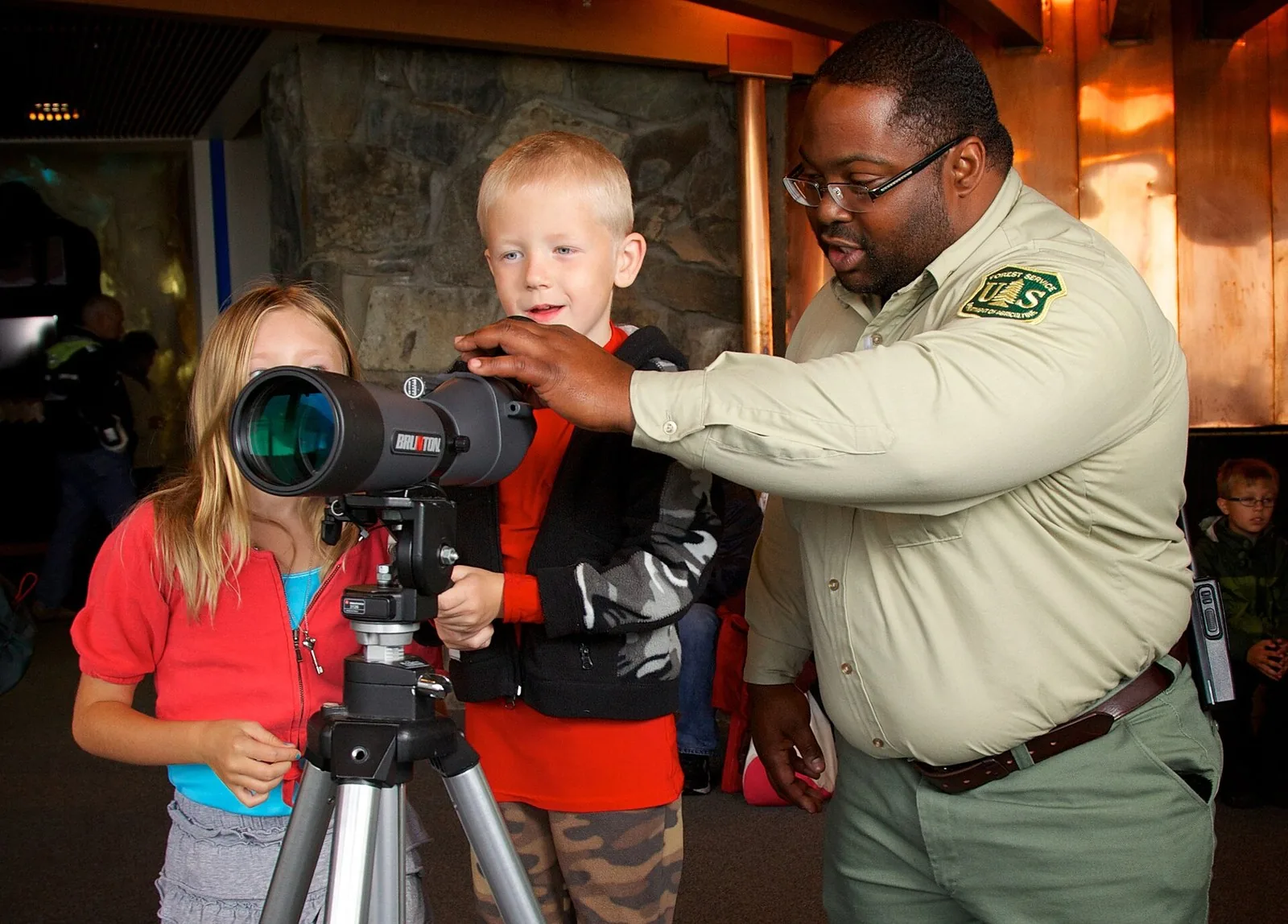
An Alaska cruise with kids works best when the children are old enough to remember it, roughly 6 and up, and when you pick the ship for the kids’ club and the itinerary for the excursions. Alaska is not a beach-and-waterslide cruise. The payoff is whales, glaciers, eagles and gold-rush towns, and most of the best experiences happen on deck or ashore. Families with babies and toddlers can absolutely go, but they’ll get more from the scenery than the shore tours, which often have minimum ages or weights.
This page is for parents and grandparents planning a first Alaska cruise with children of any age: which lines have the best kids’ programs, what ages the clubs take, which excursions suit which ages, what it all costs for a family, and how to handle the cold, the long daylight and the schoolwork. The one caveat that matters: kids’ club ages, shore-tour limits and prices change, so confirm them for your sailing before you promise anyone a helicopter. Last updated October 17, 2026. Every price, fee and schedule below is dated, and the sources are listed at the end.
Alaska cruise with kids: the short answer by age
| Age | Best fit | What they’ll love | Watch out for |
|---|---|---|---|
| Babies (6 months to 2) | A big ship with a nursery or family play times; a balcony cabin for naps | Honestly, not much; this trip is for you | Minimum sailing ages, excursions that need lap-free seats, the long daylight at bedtime |
| Toddlers (2 to 4) | Disney, Carnival, Royal Caribbean or Princess, with clubs from age 3 on most lines | Boats, trains, bald eagles, the tram in Juneau | Toilet-training rules for kids’ clubs; strollers on tender boats and gravel trails |
| Kids (5 to 9) | Any big family line; the club and the scenery both work | Whale watching, the White Pass train, the lumberjack show, gold panning | Long scenic-cruising days indoors; cold decks |
| Tweens (10 to 12) | Royal Caribbean, Norwegian, Disney or Princess | Ziplines, dog sledding, kayaking, Junior Ranger badges | Weight minimums on ziplines; excursion prices at adult rates |
| Teens (13 to 17) | Royal Caribbean, Norwegian or Carnival for teen clubs; a small ship for active teens | Helicopters, glacier walks, kayaking, independence in port | Boredom on older-skewing lines; Wi-Fi costs |
Verdict: For most families, the sweet spot is a 7-night Inside Passage round trip on a big family line in July, with one big excursion per port and a Glacier Bay or Endicott Arm day spent on deck. If your kids are 10 or older and love the outdoors, a small expedition ship is the most memorable version of the trip, at a much higher price.
What’s changed for 2027
- Disney doubles up. Disney’s summer 2027 schedule sends both Disney Wonder and Disney Magic to Alaska from Vancouver, with 7-night sailings on both ships and 6- and 8-night options on Disney Magic, according to the line.
- MSC returns with Monday departures. MSC Poesia, new to Alaska in 2026, is scheduled to return in 2027 with 7-night Seattle round trips every Monday from April 26, after a renovation, per MSC.
- Carnival adds California. Carnival Legend and Carnival Spirit homeport in Seattle in 2027, and Carnival Luminosa sails 10-day Alaska cruises from San Francisco from May 3, 2027, a handy option for West Coast families who’d rather not fly.
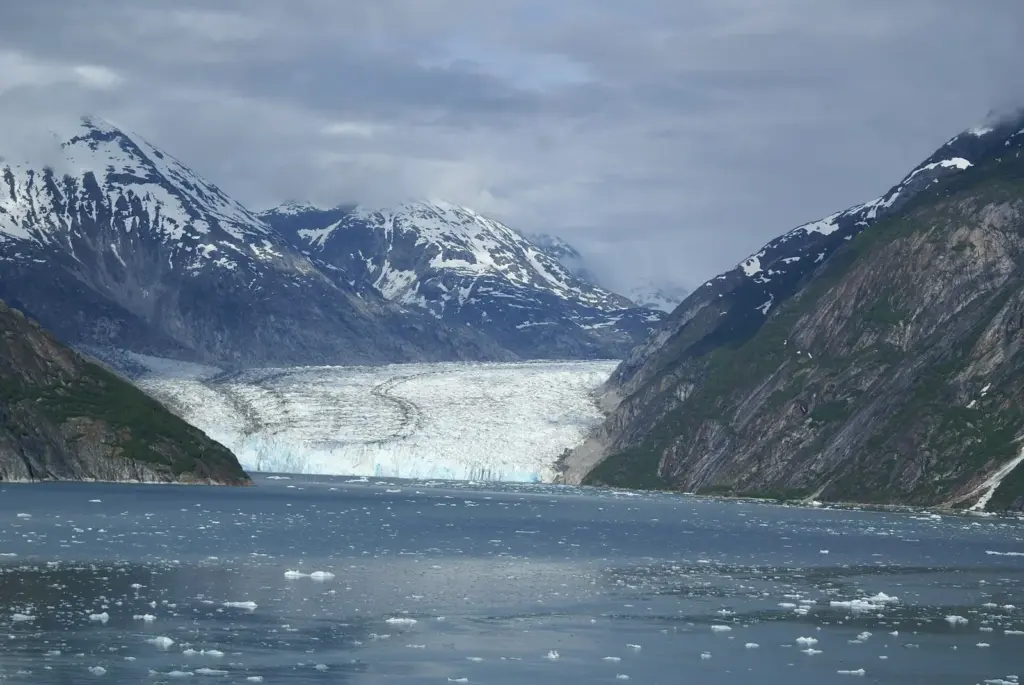
- Tracy Arm is uncertain. After the August 10, 2025 landslide-tsunami in Tracy Arm, several lines used nearby Endicott Arm and Dawes Glacier in 2026. The scenery is similar; just don’t promise the kids a specific fjord.
- Skagway’s ranger walks are gone. Klondike Gold Rush National Historical Park no longer offers ranger-led walking tours, but its free, ticketed ranger tour of Jeff Smith’s Parlor runs daily at 1 p.m. for up to 14 people, and families can use the park’s self-guided tour on the NPS app.
- Mendenhall’s fee may rise. In May 2026 the Forest Service proposed raising the Mendenhall Glacier day fee from $5 to $15 per person, with visitors under 16 still free.
Is an Alaska cruise good for kids?
Yes, with the right expectations. A kid friendly Alaska cruise trades pool days for wildlife and big scenery, and children who like animals, trains, boats and anything with “gold” in the name tend to love it. You unpack once, the ship brings the glaciers to you, and there’s a kids’ club on board for the hours when a 7-year-old has had enough of looking at mountains.
The honest downsides are real, too:
- It’s cold on deck. Juneau’s average July high is 64°F, and glacier days are far colder near the ice. Kids need hats, gloves and waterproof layers, even in midsummer.
- It rains. Juneau’s normals show 5.14 inches of rain in July and 6.41 in August, on 16 to 22 days a month with measurable rain. Plan indoor backups.
- Pool time is limited. Outdoor pools and slides get little use on chilly days, so a waterslide shouldn’t be the reason you pick a ship.
- Excursions are expensive and some have age limits. Floatplanes, helicopters and ziplines cost adult prices for kids over 2 on many tours, and some exclude younger children entirely.
- Scenic days are long. A glacier day can mean eight hours of mountains. That’s thrilling for adults and a very long day for a 4-year-old.
Verdict: Alaska is a better cruise for kids than its reputation as a “retiree cruise” suggests, and a worse one for kids who only want waterslides. Go for the animals and the adventures, and let the ship handle the rest.
What’s the best age for an Alaska cruise?
There’s no wrong age, but there are easier ones. The most common advice from parents, and ours, is that 6 or 7 and up is ideal: old enough to remember it, to spot whales through binoculars, to meet most excursion minimums and to join a kids’ club without drama.
With a baby. An Alaska cruise with baby in tow is really a scenic cruise for the parents. Most lines set a minimum sailing age of about 6 months for most itineraries, and some kids’ programs welcome babies only with a parent. Princess, for example, invites children from 6 months to 2 years into its youth centers during family play times. A balcony gives you glacier views during naps.
With a toddler. An Alaska cruise with toddler energy needs structure. Kids’ clubs on most lines start at 3 and often require children to be toilet trained, so under-3s stay with you. Pick excursions that toddlers enjoy without being strapped in for hours: the tram, a short train ride, the lumberjack show, a salmon stream.
With teens. An Alaska cruise with teens can be the best version of the trip, because they can do everything: helicopter glacier landings, kayaking, ziplining and long hikes. Choose a ship with a real teen club, give them some independence in port, and budget for adult excursion prices.
Alaska cruise lines for kids: the kids’ clubs compared
The single biggest factor in a family cruise is the kids’ club. Here’s how the lines that sail Alaska handle it, as the lines describe their programs. Always check your ship, because offerings vary by vessel and by sailing.
| Line | Kids’ club ages | Teens | Youngest | Alaska 2027 homeports |
|---|---|---|---|---|
| Disney | Oceaneer Club, 3 to 12 | Separate teen spaces | Nursery on board | Vancouver |
| Royal Caribbean | Adventure Ocean, 3 to 17 by age group | Included in Adventure Ocean | From 3 in the club | Seattle, Vancouver, Seward |
| Norwegian | Splash Academy, 3 to 12 | Entourage, 13 to 17 | From 3 in the club | Seattle, Vancouver, Whittier |
| Carnival | Youth programs from 6 months to 17 | Included | 6 months | Seattle, San Francisco |
| Princess | Camp Discovery: Treehouse 3 to 7, Lodge 8 to 12 | Check your ship | 6 months to 2 in family play times | Seattle, Vancouver, Whittier, San Francisco, Los Angeles |
| Holland America | Kids Club, 3 to 17: 3 to 6, 7 to 11, 12 to 17 | Included | From 3 | Seattle, Vancouver, Whittier |
| Celebrity | Camp at Sea, 3 to 12: 3 to 5, 6 to 9, 10 to 12 | Teen program, 13 to 17 | From 3 | Check your sailing |
| MSC | Age-grouped kids’ clubs | Check your ship | Check your ship | Seattle |
Here’s what each line is like for families in Alaska, roughly from most kid-focused to least. Our ranking of the best cruise line for Alaska weighs the same lines for every kind of traveler; a separate guide will cover the best Alaska cruise for families in more depth.
1. Disney Cruise Line
Disney is the most kid-centered choice, with characters, family shows and the Oceaneer Club for ages 3 to 12. For 2027, both Disney Wonder and Disney Magic sail from Vancouver, per the line, mostly on 7-night trips with Skagway, Juneau and Ketchikan. The trade-offs: Disney is usually the most expensive family line per person, and it isn’t one of the six lines permitted into Glacier Bay, so your glacier day will be elsewhere. Disney’s recommended gratuity was about $16 per guest per night in 2026, among the lowest.
Verdict: The best pick for families with 3- to 8-year-olds who will value the characters as much as the whales.
2. Royal Caribbean
Royal Caribbean brings its big-ship toolkit to Alaska: Adventure Ocean for ages 3 to 17, split by age group, plus surf simulators, climbing walls and other activities on its larger ships. For 2027 it sends Anthem of the Seas on 7-night one-ways between Vancouver and Seward, Quantum of the Seas and Voyager of the Seas on Seattle round trips, and Serenade of the Seas on Vancouver round trips. Gratuities were $18.50 per person per day in standard cabins in 2026. Royal Caribbean’s 2027 Alaska release names no Glacier Bay itineraries.
Verdict: The pick for active kids and teens who need something to do on sea days.
3. Norwegian Cruise Line
Norwegian runs Splash Academy for ages 3 to 12 and Entourage for teens 13 to 17, both complimentary, according to the line. In 2027, Norwegian Encore, Bliss and Joy sail 7-day voyages from Seattle’s Pier 66, and Norwegian Jade sails between Vancouver and Whittier with scenic cruising at Hubbard Glacier or Glacier Bay. Norwegian’s service charge was $20 per guest per day in 2026, the highest of the big lines.
Verdict: A strong all-rounder with a genuine teen club and flexible dining that suits families.
4. Carnival Cruise Line
Carnival is the budget family choice, with youth programs covering 6 months to 17 years. Carnival Legend’s 2027 season starts April 20 with 22 seven-day Seattle round trips calling at Juneau, Ketchikan, Skagway and Victoria, with Tracy Arm listed, and Carnival Spirit adds 20 more plus a nine-day trip with Sitka. From May 3, 2027, Carnival Luminosa sails 10-day trips from San Francisco. Gratuities were $17 per person per day in 2026. Carnival can’t enter Glacier Bay, and its Tracy Arm listings are provisional after the 2025 landslide.
Verdict: The best value for families on a budget, especially with kids young enough for the club.
5. Princess Cruises
Princess is Alaska’s biggest line, with 187 departures on 17 itineraries from five homeports in 2027 and 85 Glacier Bay calls. Its Camp Discovery youth centers are the Treehouse for ages 3 to 7 and the Lodge for ages 8 to 12; children must be at least 3 and toilet trained to join on their own, and younger children can use the centers with a parent during family play times. Princess’s destination focus suits curious kids, and Glacier Bay brings park rangers and the Junior Ranger program aboard. Crew gratuities were $18 per person per day in standard cabins in 2026.
Verdict: The best pick for families who want Glacier Bay and a strong Alaska program, especially with kids 7 and up.
6. Holland America Line
Holland America skews older, but its Kids Club covers ages 3 to 17 in three groups (3 to 6, 7 to 11 and 12 to 17), according to the line, and it brings National Park Service rangers aboard in Glacier Bay. It sends six ships to Alaska in 2027, its 80th year in the state. On summer sailings you’ll find other families, but fewer than on the mass-market lines.
Verdict: Best for multigenerational trips where grandparents set the pace and the kids are happy with nature more than nightlife.
7. Celebrity Cruises
Celebrity’s Camp at Sea takes ages 3 to 12 in three groups, with a separate teen program for 13 to 17. Its Alaska itineraries feature Hubbard Glacier, Endicott Arm and Icy Strait Point, and it sells Denali cruisetours. Gratuities were $19.50 per person per day in standard cabins in 2026.
Verdict: A good choice for families who want a more polished ship and don’t need waterslides.
8. MSC Cruises
MSC entered Alaska in 2026 with MSC Poesia on Seattle round trips calling at Ketchikan, Icy Strait Point, Juneau and Victoria, and it plans to return in 2027. MSC runs kids’ clubs by age group; check the ship’s current program, and the rules on any family promotion, before booking. MSC charged about $17 per person per day in gratuities in 2026.
Verdict: Worth pricing for families from the Pacific Northwest, especially if a family promotion is running.
Kids’ club rules that catch families out
The details of kids’ club policy matter more than the name of the club. Before you book, check these five things for your ship.
- Toilet training. Most clubs take children from 3 only if they’re toilet trained. Princess states this explicitly for Camp Discovery.
- Sign-in and sign-out. Younger children must be signed in and out by a parent or authorized adult; Princess requires it for ages 3 to 7. Older kids may be allowed to sign themselves out with your permission.
- Age groups. A 6-year-old and a 10-year-old may end up in different rooms. Siblings who want to stay together may need to ask.
- Babies and nurseries. Some lines run a paid nursery; others, like Princess, offer family play times where parents stay with under-3s.
- Port days. Clubs may run shorter hours on port days, and some lines offer port-day childcare for a fee. Ask if you’re planning an adults-only excursion.
Choosing a family cabin
The cabin decides how well everyone sleeps, and Alaska’s long summer daylight makes that more important than usual. In Anchorage on June 21, 2027, the sun rises at 4:20 a.m. and sets at 11:43 p.m., and Southeast Alaska’s evenings stay light late too. A few principles:
- Inside cabins sleep best. No window means no midnight sun. For families with young children, an inside cabin can be the smart choice, and the cheapest.
- Balconies earn their keep in Alaska. On glacier days and in narrow channels, a balcony gives you a private viewing spot while a toddler naps. Check the balcony door lock, and never leave children alone on a balcony.
- Connecting cabins beat one big room. Two connecting cabins can cost less than a family suite and give parents a door to close. They sell out early.
- Third and fourth berths are cheaper. Kids in upper bunks or a sofa bed usually pay a lower fare than the first two guests, though they still pay taxes, fees and gratuities.
- Ask for a crib early. Cribs and pack-and-plays are limited. Request one when you book.
Bring blackout help anyway: a travel blackout blind or a few clips to close curtain gaps can save a bedtime.
Dining with kids on an Alaska cruise
Food is the easy part of a family cruise, and Alaska adds a bonus: salmon, halibut and crab show up on menus all week, and kids who try the fish often surprise their parents. A few habits make mealtimes smoother.
- Pick an early dinner time if the line offers fixed seatings. With daylight lasting past 10 p.m., kids won’t feel tired, and an early dinner keeps bedtime on track.
- Use the buffet on port days. Excursions often leave early and return mid-afternoon, and the buffet is the fastest way to feed a hungry crew before or after a tour.
- Ask for the kids’ menu in the main dining room; every big line has one, and the waiters will bring children’s plates first if you ask.
- Pack a snack bag for port days. Food in port is good but pricey, and tour boats and trains may sell only snacks. Most lines don’t allow food from ashore back on board, so eat it before you return.
- Hot chocolate is a strategy. On glacier days, a warm drink on deck buys you another half hour of looking at the ice.
Alaska cruise with kids shore excursions, port by port
Shore excursions are where the trip becomes an adventure, and where age and weight limits bite. Our guide to Alaska cruise excursions covers every type; here are the picks that work best for families, with dated prices and limits.
| Excursion | Port | Adult / child price (2026) | Age or weight limits | Best ages |
|---|---|---|---|---|
| Goldbelt Tram (Mount Roberts) | Juneau | $60 / $45 (ages 3-12), unlimited rides that day | None | All |
| Whale watching (Harv and Marv’s) | Juneau | $159 per passenger | Check with operator | 5+ |
| Helicopter dog sledding (Temsco) | Juneau | $699 per person | Ages 2 and up | 6+ |
| Helicopter glacier walk (Temsco) | Juneau | $409 per person | Ages 2 and up | 6+ |
| White Pass Summit train | Skagway | $155 / $77.50 (ages 3-12); under 3 free | None; no passport needed | All |
| ZipRider | Icy Strait Point | Check the operator | 75 to 275 pounds | 10+ |
| Alaska Raptor Center | Sitka | $17 / $8 (12 and under); 5 and under free | None | All |
| Denali Tundra Wilderness Tour | Denali (cruisetour) | $144.75 / $65 | Check operator | 7+ |
A separate guide covers Alaska cruise with kids shore excursions in more depth, with every operator’s limits. Here are the family highlights at each port.
Juneau
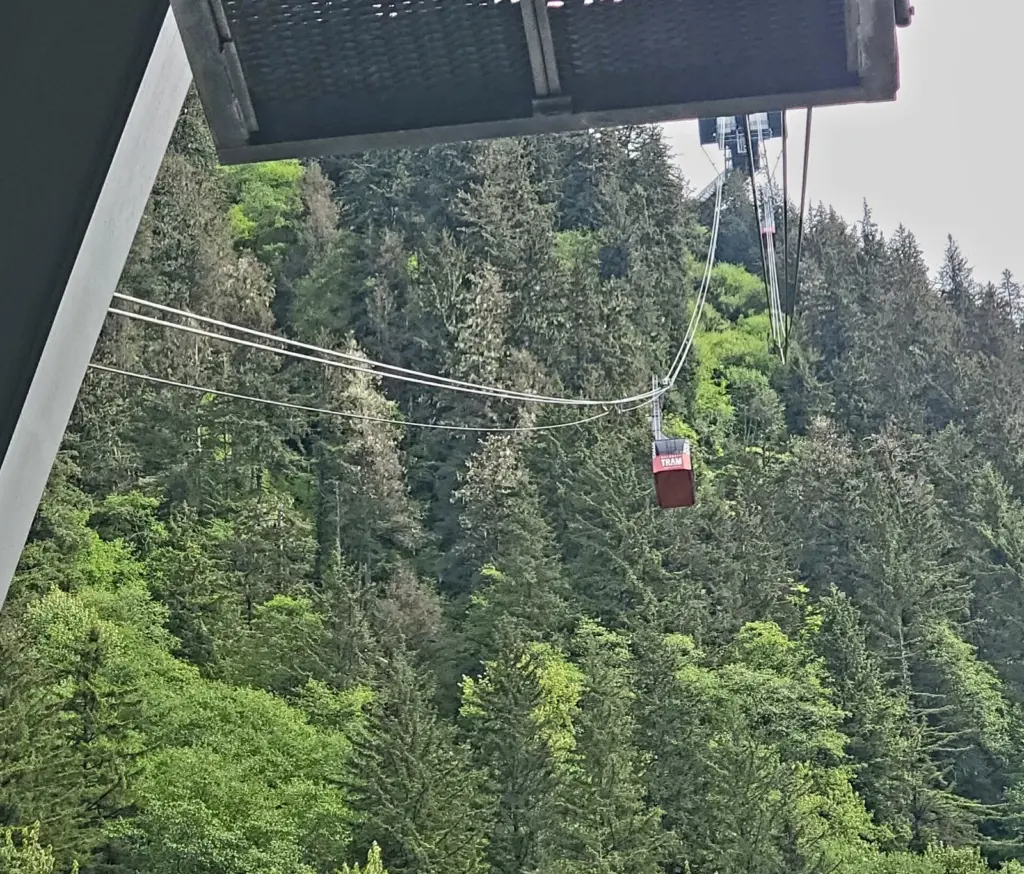
Juneau has the most family choices. The Goldbelt Tram, formerly the Mount Roberts Tramway, rises from the cruise docks to trails and views; adult day tickets are $60 and children 3 to 12 pay $45, with unlimited rides that day. Whale watching is the classic Juneau tour; Harv and Marv’s four-hour trip cost $159 per passenger in 2026, including a shuttle from the ship. The Mendenhall Glacier Visitor Center, open 9 a.m. to 6 p.m. daily in summer 2026, has easy trails, including the roughly 2-mile, mostly flat walk to Nugget Falls, and visitors under 16 enter free. The big splurges are Temsco’s helicopter tours, which take children from age 2: the glacier walk was $409 per person and the dog-sledding tour $699 in 2026.
Skagway
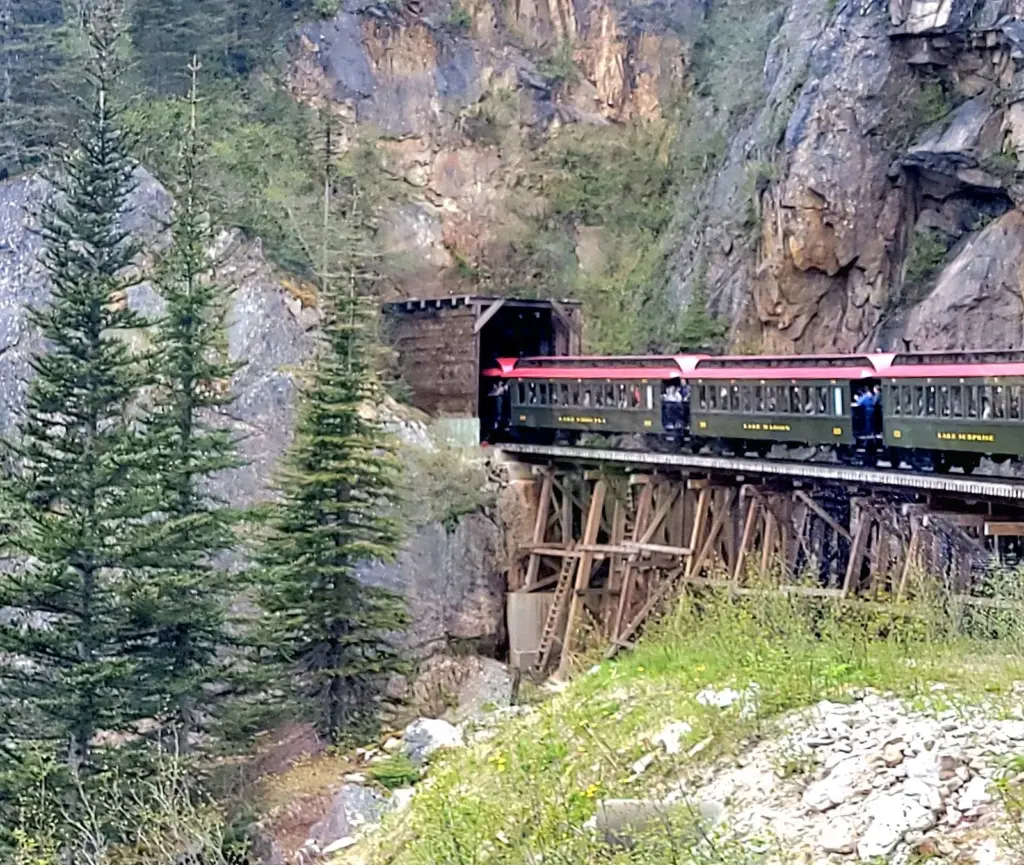
Skagway is gold-rush theater, and kids take to it. The White Pass and Yukon Route railway’s Summit Excursion is a 40-mile round trip of about 2.5 hours; in 2026, adults paid $155 and children 3 to 12 paid $77.50, and children under 3 ride free. It needs no passport, unlike the longer trips to Fraser, Bennett or Carcross, which cross into Canada. In town, the national historical park’s free ranger tour of Jeff Smith’s Parlor, the saloon of the con man Soapy Smith, runs daily at 1 p.m. for up to 14 people, with tickets from the visitor center.
Ketchikan
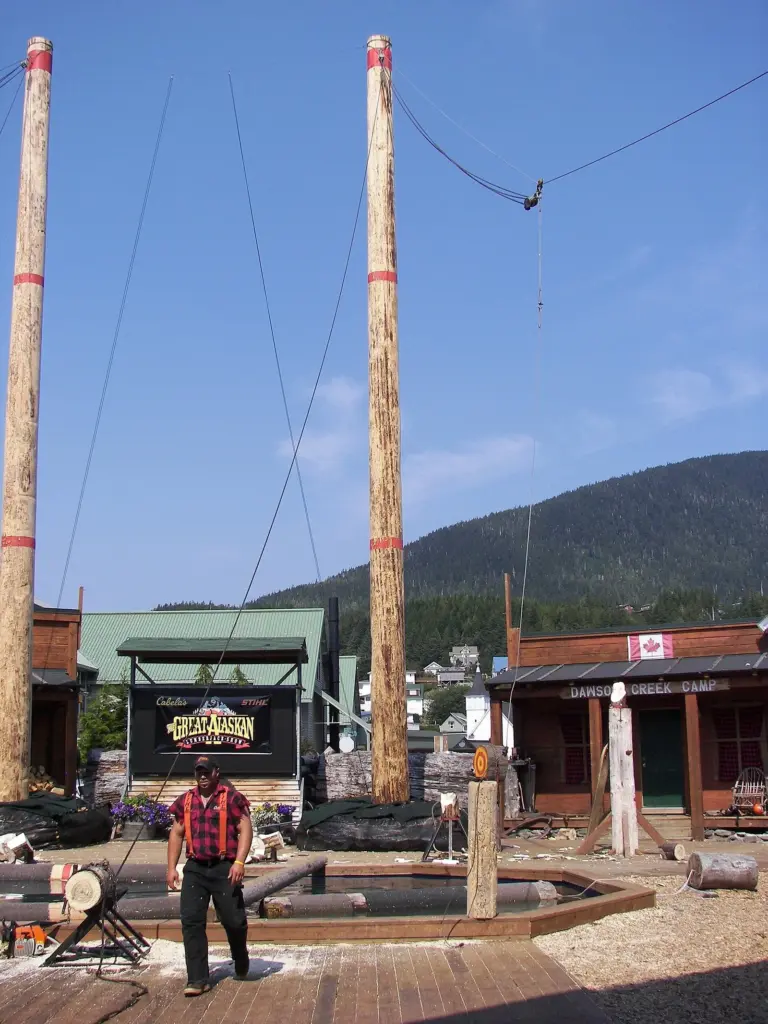
Ketchikan is compact and easy with children. The Great Alaskan Lumberjack Show, near the docks, is a crowd-pleaser for all ages. In July and later, salmon crowd Ketchikan Creek at Water and Bayview streets, a free and memorable sight. The Totem Heritage Center admits children under 17 free, with adult tickets at $6, according to its 2026 rates, and the city runs a free downtown shuttle past the museums on ship days.
Sitka and Icy Strait Point
Sitka’s Alaska Raptor Center charged $17 for adults and $8 for children 12 and under in 2026, with children 5 and under free, and kids can watch rehabilitated bald eagles practice flying. Fortress of the Bear, a rescue center for orphaned bears, is a guaranteed bear sighting. At Icy Strait Point, the ZipRider requires riders to weigh 75 to 275 pounds, which rules out most younger children, but the whale and bear tours take families.
Victoria and the end of the trip
On Seattle round trips that call at Victoria, the Butchart Gardens charged just $5 CAD for children 5 to 12 and $22.13 for youth 13 to 17 in summer 2026. Families ending in Seward or Whittier can add the Alaska Native Heritage Center in Anchorage, where youth 4 to 17 paid $20 and children under 4 entered free in 2026.
Strollers, tenders and getting ashore with little kids
Getting off the ship is simple at most Alaska ports, because the big ones have docks. But a few situations trip up families with young children and a stroller.
- Tender days. When a port is full or has no free berth, ships anchor and ferry passengers ashore in tender boats. In Juneau, a fifth large ship on a busy day typically anchors and tenders, according to local accounts. Tenders involve steps and a moving boat, so strollers must be folded and carried, and a baby carrier is far easier.
- Long piers and shuttles. At Sitka, the privately run Sitka Sound Cruise Terminal is about 5 miles from downtown, with a free shuttle during port hours. In Skagway, the Railroad Dock has been closed to pedestrians since 2022 because of a rockslide hazard, so passengers there ride a shuttle. Folding strollers make shuttle days easier.
- Boardwalks, gravel and hills. Skagway’s boardwalks and Ketchikan’s Creek Street are stroller-friendly; the trails at Mendenhall are mostly flat but partly gravel, and anything steeper calls for a carrier.
- Excursion vehicles. Buses and boats usually have room for a folded stroller, but floatplanes and helicopters don’t, and some tours need car seats that you must bring. Ask before booking.
Verdict: Bring a light umbrella stroller and a soft carrier, and leave the jogging stroller at home.
Rainy port days with kids
Rain is normal in Southeast Alaska, and Juneau averages rain on 16 to 22 days a month through the season. Whale watching and the White Pass train run in the rain, and the views are often moodier and better for it. But with small children, it helps to know one indoor option per port.
- Ketchikan: the Totem Heritage Center, where children under 17 enter free, and the Southeast Alaska Discovery Center, a federal visitor center near the docks with exhibits on the region’s forests, wildlife and Native cultures.
- Juneau: the Mendenhall Glacier Visitor Center, open 9 a.m. to 6 p.m. in summer 2026, has indoor exhibits and big windows facing the ice, and the Goldbelt Tram’s upper station gives you a warm place to wait out a shower.
- Sitka: the Alaska Raptor Center’s indoor flight training center, where rehabilitated eagles practice flying, is one of the best rainy-day stops in Alaska.
- Skagway: the national historical park’s visitor center and the free ranger tour of Jeff Smith’s Parlor keep kids dry and entertained, with gold-rush stories they’ll repeat for weeks.
- Anchorage: the Alaska Native Heritage Center has indoor exhibits and daily dance performances and Native Games demonstrations, free for children under 4.
Glacier Bay and the Junior Ranger program
If your ship goes into Glacier Bay National Park, the park comes to your kids. Rangers board each cruise ship to narrate, give presentations and staff an information desk, and the park’s own cruise page says they present Junior Ranger activities, encouraging parents to have youngsters join the scheduled junior ranger program in the ship’s youth center, with a teen program on some cruises. An Alaska junior ranger badge earned in Glacier Bay is one of the best souvenirs of the trip, and it’s free.
Only six lines are permitted into Glacier Bay: Princess, Holland America, Norwegian, Seabourn, Cunard and Viking, and not every sailing on those lines goes in. If a Junior Ranger badge matters to your family, check the itinerary. Many national park units run their own Junior Ranger programs, and the Park Service publishes booklets online, so check Klondike Gold Rush in Skagway and Sitka National Historical Park before you go.
Sea days and glacier days with kids
Scenic-cruising days are the heart of an Alaska cruise and the hardest days to plan for young children, because the best moments are outside and the day is long. A plan that works for most families:
- Find out when the ship reaches the glacier. The daily planner or the naturalist’s talk will give a rough time. That hour is the one to spend on deck together.
- Dress everyone for winter. Hats, gloves and waterproof layers make the difference between ten minutes and an hour outside.
- Pick a sheltered spot. The bow is dramatic but windy; a promenade deck or a sheltered corner lets kids watch longer.
- Give kids a job. Counting seals on the ice, listening for the crack of calving ice or spotting mountain goats keeps them engaged.
- Take breaks. Use the kids’ club or the cabin between the highlights, and come back out when the naturalist announces something.
On sea days away from the glaciers, the ship’s pools, games and kids’ programs carry the day. If the sun comes out, the outdoor pools fill quickly, so go early.
Wildlife and learning on board
Alaska turns a cruise into a science field trip without anyone calling it that. Naturalists on many lines give talks about whales, glaciers and the Tlingit, Haida and Tsimshian peoples of the Inside Passage, and in Glacier Bay the park rangers come aboard. Kids get more from every talk with a notebook: a wildlife checklist, a log of each port and a few questions to ask the naturalist. Ship libraries and shops often carry children’s books on Alaska wildlife, and a Junior Ranger booklet gives the week a goal. Encourage kids to draw what they see, since sketches of a whale fluke or a totem pole make a better souvenir than another fridge magnet.
What an Alaska cruise with kids costs
The fare is only the start. Our full guide to Alaska cruise cost breaks down every line item; here is how the family math works, and a separate guide will cover Alaska cruise cost for a family of 4 in detail.
Kids usually pay less for the cruise itself when they’re the third and fourth guests in a cabin, but many other charges are per person regardless of age. Daily gratuities apply to children on most lines. Alaska’s Commercial Passenger Vessel excise tax is $34.50 per passenger. And many excursions charge adult prices from age 2 or 3.
| Item (family of four, 7 nights, 2026 prices) | Example | Cost |
|---|---|---|
| Gratuities | 4 guests x $18 x 7 days (Princess or Holland America standard cabin) | $504 |
| Alaska passenger tax | 4 x $34.50, usually included in taxes and fees | $138 |
| White Pass Summit train | 2 adults at $155 + 2 kids at $77.50 | $465 |
| Goldbelt Tram | 2 adults at $60 + 2 kids at $45 | $210 |
| Whale watching | 4 x $159 (Harv and Marv’s per-passenger price) | $636 |
| Helicopter dog sledding | 4 x $699 (ages 2 and up) | $2,796 |
That last line is why the dog sled is the trip’s biggest budget decision. A family that does the train, the tram and a whale tour spends about $1,300 on those three, while adding dog sledding for four more than triples it. A common compromise is one splurge per trip, often split: a parent and the oldest child on the helicopter, the rest of the family on the tram.
Do kids cruise free to Alaska?
Sometimes. Several lines run “kids sail free” promotions, but free usually means the cruise fare only, for the third and fourth guests in a cabin, on selected sailings. Kids still pay taxes, fees, port charges and usually gratuities, and the promotions tend to apply to sailings outside the busiest summer weeks. Compare the total, not the headline.
Which route suits families: Seattle, Vancouver or a one-way?
For families, the departure port matters more than for most travelers, because it decides your flights, your paperwork and how many days the kids spend at sea.
| Route | Why families like it | Trade-offs |
|---|---|---|
| Seattle round trip | Closed-loop paperwork (children under 16 need only proof of citizenship), easy flights, driving distance for Northwest families | Two sea days getting to and from Alaska; the ship must call at a Canadian port such as Victoria |
| Vancouver round trip | Scenic Inside Passage start, shorter sailing to Alaska | Passports for everyone; an international flight or border crossing |
| One-way, Vancouver to Seward or Whittier | More glaciers and a natural add-on to Denali | Open-jaw flights, passports, and a transfer at the Alaska end |
| California round trip | No flights for West Coast families: Princess from San Francisco and Los Angeles, Carnival Luminosa’s 10-day trips from San Francisco from May 3, 2027 | More sea days; less time in Alaska per day of vacation |
Verdict: For a first family trip with younger kids, a Seattle round trip is the simplest. For teens who can handle longer travel days, a one-way plus a few days on land gives the fuller Alaska.
How families save money on an Alaska cruise
The fare, the excursions and the extras add up quickly for four people. These are the savings that work best in Alaska.
- Use the third and fourth berths. One cabin for four usually costs far less than two cabins, even with an upgrade to a bigger room.
- Mix free ports with paid ones. Ketchikan’s salmon stream, the Totem Heritage Center (free for children under 17), Skagway’s boardwalks and ranger tour, and Mendenhall’s trails (free for under-16s) make whole days that cost little or nothing.
- Choose one big splurge. A helicopter tour for four cost $1,636 to $2,796 in 2026. Many families send one parent with the oldest child and do a cheaper tour with the rest.
- Book independent tours carefully. They can cost less than the ship’s version, but check the return time against all-aboard, especially in Juneau and Skagway.
- Skip the drink packages for kids unless they’ll drink enough soda to justify it; water, milk and breakfast juices are included on most lines.
- Sail in the shoulder weeks of early June or late August if school calendars allow, when fares are usually lower than peak July.
- Watch for family promotions, but compare total prices with taxes, fees and gratuities included.
When to go with kids
Most families go in summer vacation, and that’s also Alaska’s best weather. Juneau’s average highs run from 62.4°F in June to 64.0°F in July and 62.9°F in August, and rainfall rises through the summer, from 3.82 inches in June to 6.41 in August and 9.15 in September.
- June: drier and cheaper than July, with long daylight and peak humpback feeding, but many school years run into mid-June.
- July: the warmest month and the most families on board, which matters for kids’ clubs. The busiest and priciest.
- August: salmon runs and bears, more rain, and some schools start mid-month.
- May and September: cheaper and quieter, but school is in session, it’s colder, and September is the wettest month in Juneau.
If your children’s school calendar allows it, the second half of June is the family sweet spot: better prices than July, drier than August and full kids’ clubs.
Taking kids out of school
If you sail in May or September, talk to teachers early. Many schools will give a packet of work, and an Alaska cruise gives kids easy projects: a wildlife log, a glacier science report, a journal of each port, or a Junior Ranger booklet. Ships’ Wi-Fi is far better than it was, since most big lines now use Starlink, but it’s still an extra cost and can drop out in steep fjords, so download what you need before sailing.
Seasickness, health and medical care
Most of an Inside Passage cruise is in sheltered water, and many families never feel much motion. The exceptions are open stretches: Seattle and Vancouver sailings cross exposed water at Queen Charlotte Sound and Hecate Strait and Dixon Entrance on the way to Ketchikan, and one-way cruises cross the open Gulf of Alaska. Those are the likeliest times for a queasy afternoon. A few steps help:
- Ask your pediatrician before the trip which seasickness remedies are safe for your child’s age and weight, and pack them, because the ship’s supply and choices may be limited.
- Book a midship cabin on a lower deck if anyone in the family is prone to motion sickness; it’s the steadiest spot on the ship.
- Use the fresh air. Looking at the horizon on deck helps more than lying in a cabin.
- Small tour boats move more than the ship. Whale-watching boats and floatplanes are the likeliest places for a child to feel sick, so give any remedy before boarding.
Ships carry a medical center with a doctor and nurses, but visits are charged, often at high rates, and travel insurance with medical coverage is worth having. Bring enough of any prescription medicine for the whole trip plus a few days, along with children’s pain relievers, a thermometer and bandages. Hand-washing before every meal is the best defense against the stomach bugs that occasionally sweep through ships.
Passports and documents for kids
Paperwork catches families more often than weather does. The rules depend on your route:
- Seattle round trips (closed loop): U.S. citizen children under 16 need only proof of citizenship, such as a birth certificate, according to CBP’s cruise guidance. Adults can use a birth certificate plus photo ID, but a passport is still the safer choice.
- One-ways and Vancouver departures: a one-way between Vancouver and Alaska isn’t a closed-loop cruise, so everyone, kids included, should carry a passport.
- Traveling without both parents: Canada’s border agency advises adults traveling with children to carry a signed consent letter from every parent or guardian not on the trip; without one, officers may ask more questions.
- Skagway train trips into Canada: the White Pass trips to Fraser, Bennett or Carcross require a passport; the Summit round trip does not.
Packing for kids
Our full Alaska cruise packing list covers the whole family; for children, these are the items parents most often wish they’d brought:
- A waterproof rain jacket and rain pants for each child; kids get wetter than adults.
- Warm hats and gloves for glacier days, even in July.
- A pair of kid-size binoculars; whale spotting turns into a game.
- Motion-sickness remedies suitable for their age, for small boats on whale tours.
- Waterproof shoes or boots for wet trails and beaches.
- A lightweight stroller or carrier. Tender boats and gravel trails don’t suit big strollers, and a carrier is easier for Mendenhall and Skagway’s boardwalks.
- Blackout help for the cabin, and a nightlight.
A sample family week on a 7-night cruise
Here’s how a family with kids of 6 and 10 might spend a typical Seattle or Vancouver round trip. A separate guide will lay out an Alaska cruise with kids itinerary for each type of trip; this is the pattern.
- Day 1, sailing day. Board early, register the kids for the club, and find the best indoor and outdoor viewing spots before the crowds.
- Day 2, at sea. Kids’ club in the morning, then a naturalist talk and a whale watch from the deck. Early bedtime with the blackout blind.
- Day 3, Ketchikan. The lumberjack show and salmon in Ketchikan Creek, then the Totem Heritage Center, free for kids. A low-cost, low-stress port.
- Day 4, Juneau. The day’s big excursion: whale watching, or a helicopter tour if the budget allows. The tram in the afternoon for the views.
- Day 5, Skagway. The White Pass Summit train in the morning, the Jeff Smith’s Parlor ranger tour at 1 p.m., and gold-rush boardwalks.
- Day 6, glacier day. Glacier Bay with the Junior Ranger program, or Endicott Arm or Hubbard Glacier. Hats and gloves on deck; kids’ club when the cold wins.
- Day 7, at sea or Victoria. Pool time if the sun is out, a final club session and packing.
Adding Denali with kids
A cruisetour adds the land half of Alaska, with moose, caribou and grizzlies, and it works well with children who can handle long travel days. Princess runs five wilderness lodges, including two near Denali, and Holland America’s Denali cruisetours include a visit to the Alaska Wildlife Conservation Center, a sanctuary where kids see bears, moose and musk oxen up close.
Inside the park, the bus tours are the main event, and children pay less. In 2026, the Tundra Wilderness Tour lasted 5 to 5.5 hours at $144.75 for adults and $65 for children, and the shorter Denali Natural History Tour lasted 4.5 to 5 hours to Primrose Ridge at Mile 17, with Alaska Native presentations, for $116.75 and $51. With the park road expected to reopen fully in 2027, longer trips should return, but for children under 8, the shorter tour is usually the better fit.
Small ships for adventurous families
For families with older kids who love the outdoors, a small expedition ship turns the trip into an adventure camp. UnCruise’s Alaska ships carry 22 to 86 guests, and the days center on kayaking, hiking and paddleboarding from the ship itself. The catch is price: UnCruise’s week-long Glacier Bay trips started at $4,900 per person in September 2026, and children often pay close to the adult fare. Many expedition lines also set minimum ages or recommend trips for older children, so ask before you book. There are no kids’ clubs, but for a 12-year-old who has just paddled past a glacier, nobody misses one.
Multigenerational Alaska cruises
Alaska is one of the most popular destinations for three-generation trips, because it works for grandparents and grandchildren at the same time: the scenery comes to the ship, and nobody has to hike to see a glacier. A multigenerational Alaska cruise works best with a few rules. Book cabins close together, or connecting. Choose one or two all-ages excursions, like the White Pass train or a whale-watching boat, and let the active members split off for the helicopters. Pick a line that suits the oldest and youngest at once: Princess and Holland America for Glacier Bay and a calmer pace, or Royal Caribbean and Norwegian if the teens need more to do. And schedule a daily family meal, since everyone will be on different timetables the rest of the day.
Alaska cruise with kids tips from parents who’ve done it
These are the lessons parents most often pass on, and the ones that matter most in Alaska specifically.
- Make wildlife a game. A checklist of animals, with a prize for the first whale spout, keeps kids on deck and looking.
- Front-load the big excursion. Book the most expensive tour early in the trip, so a weather cancellation leaves time for a rebooking.
- Don’t overbook. One excursion per port is plenty for young children; a lazy port day in Ketchikan is a gift.
- Use the ship on glacier days. Watch the best hour from the deck, then warm up in the club or the cabin.
- Keep bedtime. With 18 hours of daylight, kids won’t feel tired. Stick to the routine and the blackout blind.
- Plan for rain. Pack rain gear for every excursion, and know one indoor option per port.
- Book early for the club-age crowd. The best family sailings in July fill first, especially connecting cabins.
Keeping kids safe on deck and ashore
Alaska adds a few safety points to the usual cruise rules. Cold water is dangerous even in summer, so life jackets on small boats matter, and good operators provide children’s sizes. On trails around Juneau, Ketchikan and Sitka, bears are real: keep children close and follow the guide. On deck, railings are high, but children should never climb on deck furniture or balcony chairs. At the muster drill, check where your children’s club will take them in an emergency. And in port, agree on a meeting point and make sure older kids carry the ship’s contact number and know the all-aboard time.
Alaska Cruise with Kids FAQ
What is the best Alaska cruise for kids?
For young children, Disney, which sends two ships to Alaska from Vancouver in 2027, is the most kid-focused. For active kids and teens, Royal Caribbean and Norwegian have the most onboard activities. For Glacier Bay and a destination focus, Princess is the best family pick. Carnival is the budget choice.
What age is best for an Alaska cruise?
Six or seven and up is ideal. Kids that age remember the trip, can use binoculars, meet most excursion minimums and join kids’ clubs easily. Babies and toddlers can go, since most lines accept infants from about 6 months, but the trip will be more about scenery than adventures.
Are Alaska cruises boring for kids?
Not if you plan them well. Whale watching, the White Pass train, the Juneau tram, the lumberjack show and gold-rush towns keep most kids engaged. Long glacier days and chilly decks can drag, so use the kids’ club for breaks and choose a ship with enough to do on sea days.
Do kids need a passport for an Alaska cruise?
On Seattle round trips, U.S. citizen children under 16 need only proof of citizenship, such as a birth certificate, according to CBP. For one-ways and Vancouver departures, bring passports for everyone. If one parent isn’t traveling, carry a signed consent letter for Canada.
How much does an Alaska cruise cost for a family of four?
Beyond the fare, budget roughly $500 for a week of gratuities at $18 per person per day, plus excursions. In 2026, the White Pass Summit train cost $465 for two adults and two children, the Juneau tram $210, and whale watching $636 for four at $159 each.
Can toddlers go to the kids’ club on an Alaska cruise?
Usually from age 3, and often only if toilet trained. Princess, for example, requires children to be 3 and toilet trained for Camp Discovery, while younger children can join family play times with a parent. Carnival’s youth programs start at 6 months. Check your ship’s rules before sailing.
Is there a Junior Ranger program on Alaska cruises?
Yes, in Glacier Bay. The National Park Service says rangers who board cruise ships present Junior Ranger activities, and parents are encouraged to have children join the program in the ship’s youth center. Only six lines enter the park, so check that your itinerary includes Glacier Bay.
Do kids cruise free to Alaska?
Sometimes, through “kids sail free” promotions for third and fourth guests on selected sailings. Even then, children usually still pay taxes, fees, port charges and daily gratuities, and many excursions charge adult prices from age 2 or 3. Compare the total trip cost rather than the headline fare.
Related Alaska Cruise Guides
- Best Cruise Line for Alaska (2027): Every Alaska Cruise Line Compared and Ranked
- Alaska Cruise Packing List: The Complete Checklist (Printable)
- Alaska Cruise Excursions: The Best Shore Excursions by Port and Type
- How Much Does an Alaska Cruise Cost? 2027 Prices, Budgets and Hidden Fees
Sources and How We Checked
We checked the prices, rules, schedules and ship deployments in this guide against the sources below on September 24, 2026, and we log each one in our research database with the date it was checked. Cruise lines change ships, fares and fees every season, so confirm anything that affects your booking with the line or the agency concerned. Alaska Cruise Guide (AlaskaCruise.org) is an independent publication. It is not affiliated with any cruise line, port, tour operator or tourism office, and no one paid to be included.
- Alaska Department of Commerce: Alaska head tax
- Alaska Department of Fish and Game: Ketchikan salmon viewing
- Alaska Native Heritage Center: Alaska Native Heritage Center
- Alaska Public Media: Skagway Railroad Dock rockslide
- Alaska Public Media: Tracy Arm 2026 itineraries
- alaskaraptor.org: Alaska Raptor Center
- alltrails.com: Mendenhall Glacier
- Carnival Cruise Line news: Carnival Cruise Line
- Celebrity Cruises: Celebrity Cruises
- Celebrity Cruises: gratuities – Celebrity
- Celebrity Cruises: Kids clubs
- City and Borough of Juneau: Juneau five-ship limit
- cruisecritic.com: Wi-Fi / Starlink
- cruisecritic.com: Disney Cruise Line
- disneycruise.disney.go.com: Kids clubs
- disneytouristblog.com: Disney Cruise Line
- fortressofthebear.org: Fortress of the Bear
- gocruisetravel.com: gratuities – Disney/MSC
- Goldbelt Tram: Mount Roberts Tramway
- Government of Canada: minors consent letter
- harvandmarvs-juneau-whale-watching.com: Harv & Marv's Outback Alaska
- help.carnival.com: Kids clubs
- help.carnival.com: gratuities – Carnival
- Holland America Line: Kids clubs
- Holland America Line: gratuities – Holland America
- Holland America Line: Holland America Line
- Icy Strait Point: Icy Strait Point
- Juneau Independent: Mendenhall Glacier
- Juneau Independent: Mendenhall Glacier
- ketchikan.gov: Totem Heritage Center
- mscpressarea.com: MSC Cruises
- mscpressarea.com: MSC Cruises
- National Park Service: Denali Park Road
- National Park Service: Denali bus tours
- National Park Service: Glacier Bay cruise permits
- National Park Service: Glacier Bay cruise visit
- National Park Service: Klondike Gold Rush NHP
- nauticalcharts.noaa.gov: rough water
- NOAA National Centers for Environmental Information: Juneau weather
- Norwegian Cruise Line: gratuities – Norwegian
- Norwegian Cruise Line: Kids clubs
- Norwegian Cruise Line: Norwegian Cruise Line
- PR Newswire (line press release): Royal Caribbean
- Princess Cruises: gratuities – Princess
- Princess Cruises: Princess lodges
- Princess Cruises: Princess Cruises, San Francisco / Los Angeles
- Princess Cruises: Kids clubs
- Royal Caribbean: Kids clubs
- Royal Caribbean: gratuities – Royal Caribbean
- Sitka Sound Cruise Terminal: Sitka Sound Cruise Terminal
- Temsco Helicopters: Glacier dog sledding
- Temsco Helicopters: Temsco Helicopters
- The Butchart Gardens: Butchart Gardens
- travelpulse.com: MSC Cruises
- U.S. Customs and Border Protection: passport rules
- U.S. Customs and Border Protection: passport rules
- U.S. Forest Service: Mendenhall Glacier
- U.S. Naval Observatory: Anchorage daylight
- UnCruise Adventures: UnCruise Adventures
- visitktn.com: Ketchikan transport
- White Pass & Yukon Route: White Pass & Yukon Route
- White Pass & Yukon Route: White Pass & Yukon Route
- White Pass & Yukon Route: White Pass & Yukon Route
Photo Credits
- Children at a spotting scope, Mendenhall Glacier: photo by Forest Service Alaska Region, USDA, via Wikimedia Commons (Public domain)
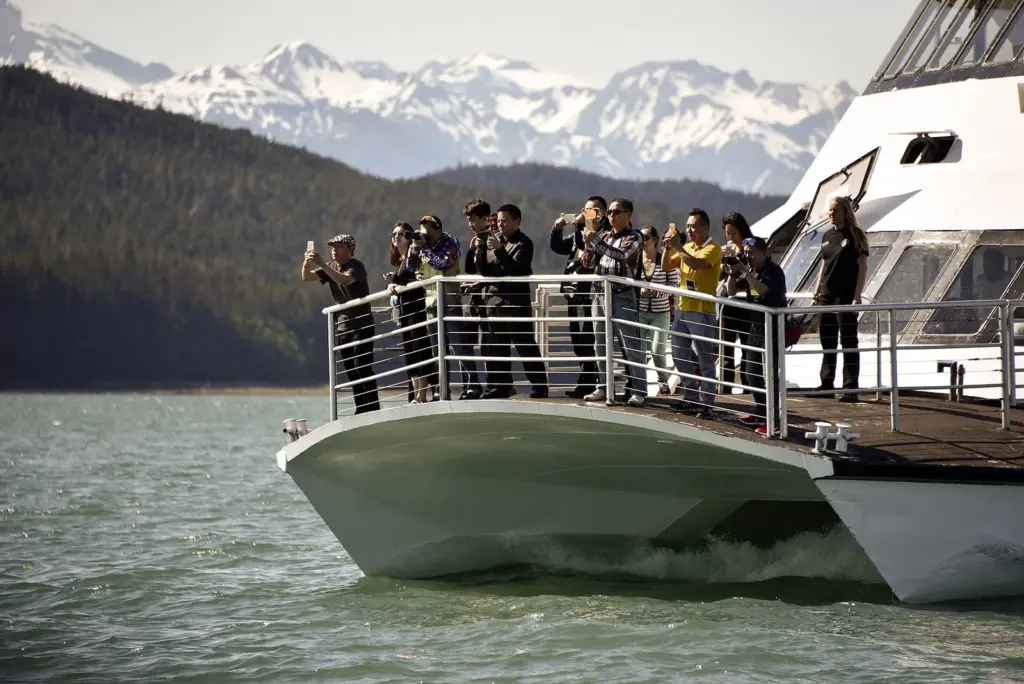
- Whale-watching boat near Juneau: photo by Gillfoto, via Wikimedia Commons (CC BY-SA 4.0)
- Goldbelt Tram, Juneau: photo by Cullen328, via Wikimedia Commons (CC BY-SA 4.0)
- White Pass and Yukon Route train: photo by Cullen328, via Wikimedia Commons (CC BY-SA 4.0)
- Great Alaskan Lumberjack Show, Ketchikan: photo by Wknight94, via Wikimedia Commons (CC BY-SA 3.0)
- Dawes Glacier, Endicott Arm: photo by Richard Martin, via Wikimedia Commons (CC BY 2.0)
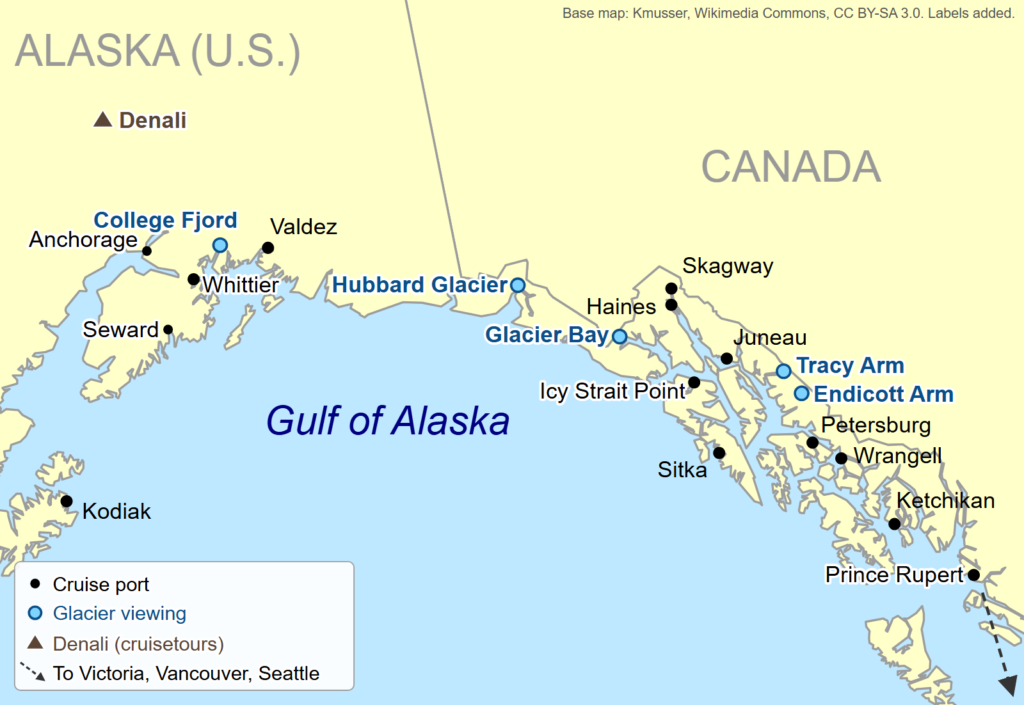
- Alaska cruise region map: map by Kmusser, via Wikimedia Commons (CC BY-SA 3.0); ferry routes removed; cruise ports, glacier-viewing areas and Denali added by Alaska Cruise Guide