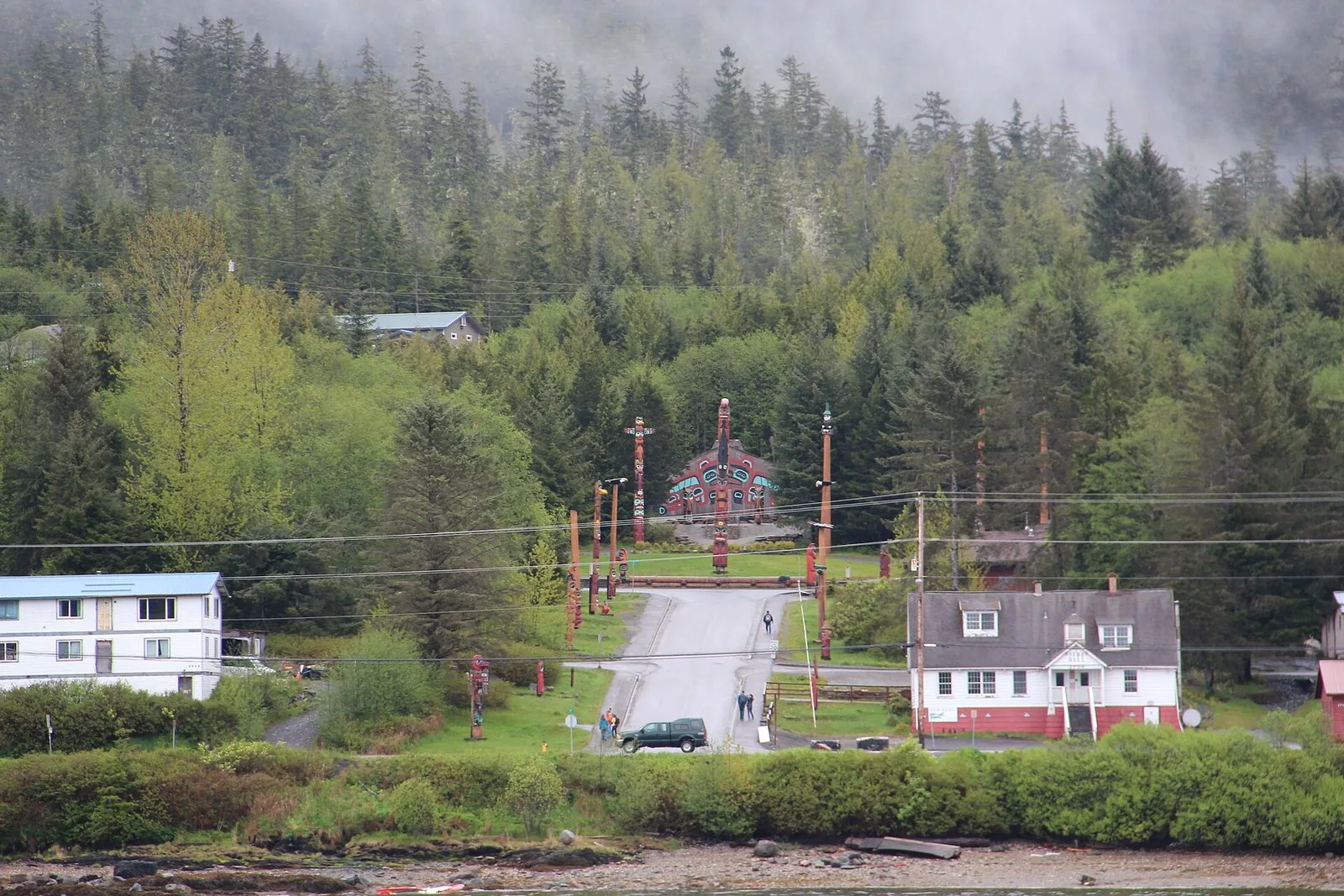
Alaska Native culture is not a museum exhibit on an Inside Passage cruise. Every port you visit sits in the homelands of the Tlingit, Haida and Tsimshian peoples, whose clans, languages, art and ceremonies are very much alive. The best places for a cruise passenger to experience that culture are Saxman and the Totem Heritage Center in Ketchikan, Sealaska Heritage Institute and its waterfront totem trail in Juneau, Sitka National Historical Park and the Sitka Tribe’s dance performances, and Icy Strait Point, which is owned by Hoonah’s Native corporation. For authentic art, look for the state’s Silver Hand seal.
This page is for cruisers who want more than a photo of a totem pole: who the peoples of Southeast Alaska are, what the poles and the art mean, where to go in each port, which tours are Native-owned or Native-led, and how to buy real Alaska Native art rather than an imported copy. The one caveat that matters: these are living communities with their own protocols, so the best visit is a respectful one. Last updated October 20, 2026. Every price, fee and schedule below is dated, and the sources are listed at the end.
Alaska Native culture at a glance, by port
| Port | Whose homeland | Where to go | Native-owned or Native-led |
|---|---|---|---|
| Ketchikan | Tlingit, with Haida and Tsimshian communities nearby | Saxman, Totem Bight, Totem Heritage Center | Saxman tours by Cape Fox Corporation |
| Juneau | Tlingit (Áak’w and T’aaku peoples) | Walter Soboleff Building, Kootéeyaa Deiyí totem trail, Goldbelt Tram | Sealaska Heritage Institute; Goldbelt, Inc. |
| Sitka | Tlingit (Sheet’ká Kwáan) | Sitka National Historical Park, Sheet’ká Kwáan Naa Kahídi Community House | Sitka Tribe of Alaska |
| Icy Strait Point and Hoonah | Huna Tlingit | Icy Strait Point, Hoonah’s carving shed and poles | Huna Totem Corporation |
| Glacier Bay | Huna and Yakutat Tlingit | Xúnaa Shuká Hít, the Huna Tribal House (from the ship: ranger talks) | Built with the Huna Tlingit |
| Wrangell | Tlingit (Shtax’héen Kwáan) | Shakes Island and its tribal house | Local tribal community |
| Anchorage | Dena’ina Athabascan; statewide center | Alaska Native Heritage Center | Native-led nonprofit |
Verdict: If you can do only one thing, make it Sitka: Sitka National Historical Park’s totem trail and a Naa Kahídi performance fit into a single port day and are both close to the downtown landing. In Juneau, give an hour to the Walter Soboleff Building; in Ketchikan, choose Saxman for people and performance or the Totem Heritage Center for the old poles.
What’s changed for 2027
- Juneau’s totem trail keeps growing. Sealaska Heritage Institute’s Kootéeyaa Deiyí, the Totem Pole Trail on the downtown waterfront, is planned to hold 30 poles, with the first group raised starting in 2023, according to SHI. Expect more poles each season.
- A Native corporation is building a Juneau cruise dock. Huna Totem Corporation, which owns Icy Strait Point, finalized a tidelands lease for its Áak’w Landing dock in Juneau in April 2026, aiming to start construction in summer 2027 and open for the 2028 season, according to local reporting. It is not open yet.
- New small ports on Prince of Wales Island. Regent and HX list Klawock, a Tlingit town with a well-known totem park, as a new port on some itineraries, according to the lines.
- The Alaska Native Heritage Center’s summer hours. In 2026 the Anchorage center was open daily 9 a.m. to 5 p.m. from May 10 to September 13, with adult admission at $30. Check the 2027 dates if you’re ending a cruise in Seward or Whittier.
Who are the peoples of Southeast Alaska?
Alaska is home to many distinct Native peoples, from the Iñupiat of the Arctic to the Athabascan peoples of the Interior and the Yup’ik, Unangax̂ and Alutiiq peoples of the southwest. On an Inside Passage cruise, you are traveling through the lands and waters of three of them: the Tlingit, the Haida and the Tsimshian.
The Tlingit
The Tlingit (Lingít) are the largest Native people of Southeast Alaska, and their homelands cover most of the Inside Passage, from the Ketchikan area north to Yakutat. Tlingit society is organized into two moieties, Raven (Yéil) and Eagle (Ch’áak’), according to Sealaska Heritage Institute’s teaching materials, and each moiety includes many clans, which own their crests, stories, songs and names. Traditionally, people married into the opposite moiety. Each area has its own kwáan, or community: the Sheet’ká Kwáan in Sitka, the Huna Tlingit of Hoonah and Glacier Bay, the Áak’w and T’aaku peoples around Juneau. Glacier Bay itself is the ancestral homeland of the Huna and Yakutat Tlingit, as the Park Service recognizes. Our guide to Tlingit culture goes further into clans, language and ceremony.
The Haida
The Haida are best known for their homeland on Haida Gwaii in British Columbia, but Haida people have lived for centuries on the southern part of Prince of Wales Island in Alaska, in communities such as Hydaburg and Kasaan. Like the Tlingit, Haida society is organized into Raven and Eagle moieties and clans. Haida carvers are among the most celebrated on the Northwest Coast, and Haida poles and art appear in collections across Southeast Alaska. Our Haida culture guide covers the Alaska Haida communities and their art.
The Tsimshian
Most Tsimshian people live in British Columbia, along the lower Skeena River and the coast near Prince Rupert, a port some Alaska cruises visit. In Alaska, the Tsimshian community is Metlakatla, on Annette Island south of Ketchikan. Annette Island became a reservation in 1891 and is the only reservation in Alaska, and Metlakatla is home to roughly 1,375 people, according to Sealaska Heritage Institute. The Tlingit, Haida and Tsimshian traded, intermarried and exchanged art styles for generations, which is why their art shares so much.
Alaska Native corporations
You’ll see the names of Native corporations everywhere in port. The 1971 Alaska Native Claims Settlement Act settled land claims by creating regional and village corporations owned by Alaska Native shareholders, instead of reservations (Annette Island is the exception). Sealaska is the regional corporation for Southeast Alaska; Goldbelt in Juneau, Cape Fox in Saxman and Huna Totem in Hoonah are among the local ones. When you ride the Goldbelt Tram, visit Icy Strait Point or tour Saxman, a Native corporation is your host.
Totem poles, explained
Totem poles are the most visible part of Northwest Coast culture and the most misunderstood. A few basics will change how you see every pole on the trip, and our guide to totem poles in Alaska goes deeper into how to read them.
- They’re not idols. Poles were never worshipped. They record and display clan crests, histories, stories and relationships, much as a family crest or a monument does.
- There are different kinds. Memorial poles honor a person who has died. House posts hold up and decorate clan houses. Frontal poles stand at the entrance to a house. Some poles tell a story or commemorate an event, and a few were carved to shame a person or group who had failed to meet an obligation.
- Top isn’t “best.” The phrase “low man on the totem pole” is a myth. The bottom figure is often the most detailed, because it’s at eye level, and position doesn’t signal rank.
- They’re carved from red cedar and painted with designs in the formline style. Traditionally, many were allowed to weather and return to the earth. That’s why the oldest surviving poles are kept indoors, in places such as Ketchikan’s Totem Heritage Center.
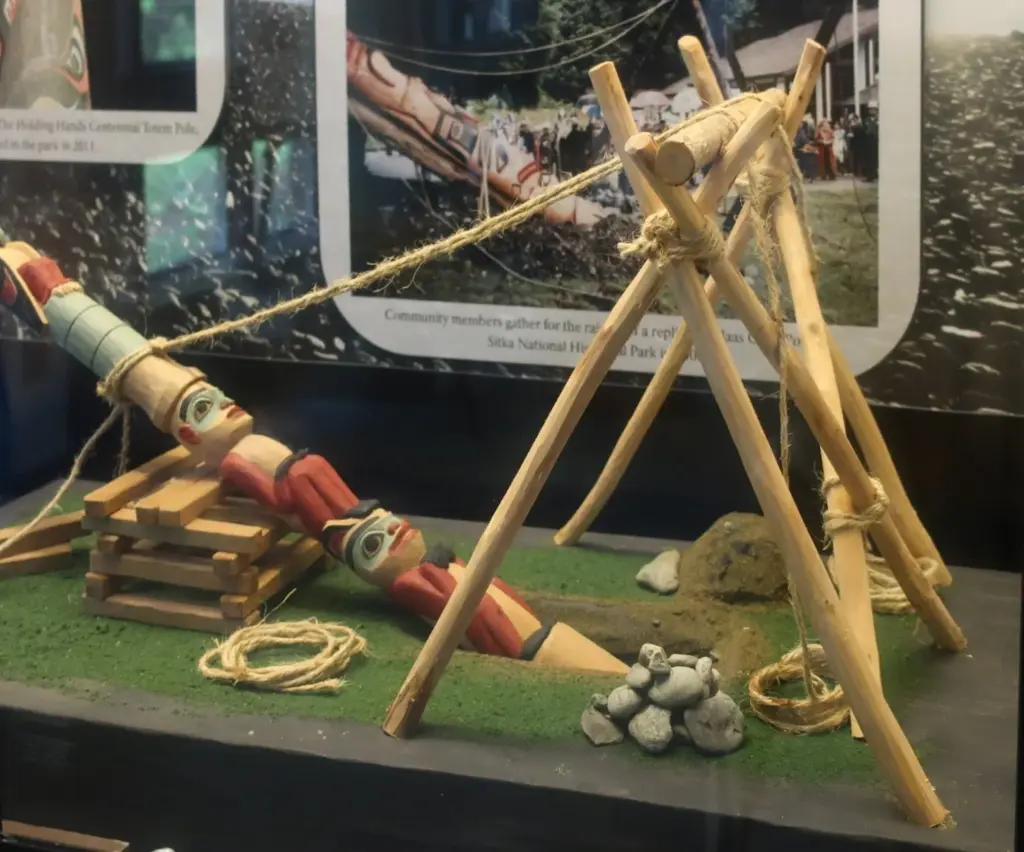
- Raising a pole is an event. A new pole is raised by the community with ceremony, feasting and speeches, and it belongs to a clan or a family, not to the carver alone.
Where to see totem poles: a quick comparison
| Site | Port | What’s there | Cost (2026) | Best for |
|---|---|---|---|---|
| Totem Heritage Center | Ketchikan | Original 19th-century poles, indoors | $6 adults; under 17 free | Seeing old poles up close |
| Saxman Native Village | Ketchikan | Totem park, Beaver Clan House, carving center, dance | Totem park reported at $5; tours extra | People and performance |
| Totem Bight State Historical Park | Ketchikan | Clan house and poles in a forest by the water | Reported at $5 | A quiet walk |
| Kootéeyaa Deiyí | Juneau | New poles along the downtown waterfront | Free | A walk from the docks |
| Sitka National Historical Park | Sitka | 18 poles on a coastal forest trail, visitor center | Free trail | The setting |
| Hoonah | Icy Strait Point | Poles in town and the carving shed | Free to walk | A working Tlingit village |
Where to experience Alaska Native culture, port by port
Here are the best places to experience Alaska Native culture on a cruise, from Ketchikan in the south to Anchorage at the end of a one-way trip. Each port’s own guide covers the logistics in more depth.
1. Saxman Native Village, Ketchikan
Saxman, about 2.5 miles south of downtown Ketchikan, is a Tlingit village whose Native corporation, Cape Fox Corporation, hosts visitors. Its tours run about two hours and include the Beaver Clan House, where the Cape Fox Dancers welcome guests with song and dance, the totem park and the Village Carving Center, where carvers pass their skills to apprentices. The totem park can also be seen on your own for a small fee, reported at $5. Tour times change daily with the ship schedule, so check at the village or with your cruise line. It’s the best stop in Ketchikan for meeting people as well as poles, and our guide to things to do in Ketchikan places it among the port’s highlights.
2. Totem Bight State Historical Park, Ketchikan
North of town, Totem Bight is a state historical park with a clan house and a collection of poles in a forest setting above the water. Local reports put the entry fee at $5 per person from May 1 to September 30, with the park open 7 a.m. to 6 p.m.; local buses from town were reported at about $2. It’s quieter than Saxman, with no performances, and a good choice for travelers who want to walk among the poles at their own pace.
3. Totem Heritage Center, Ketchikan
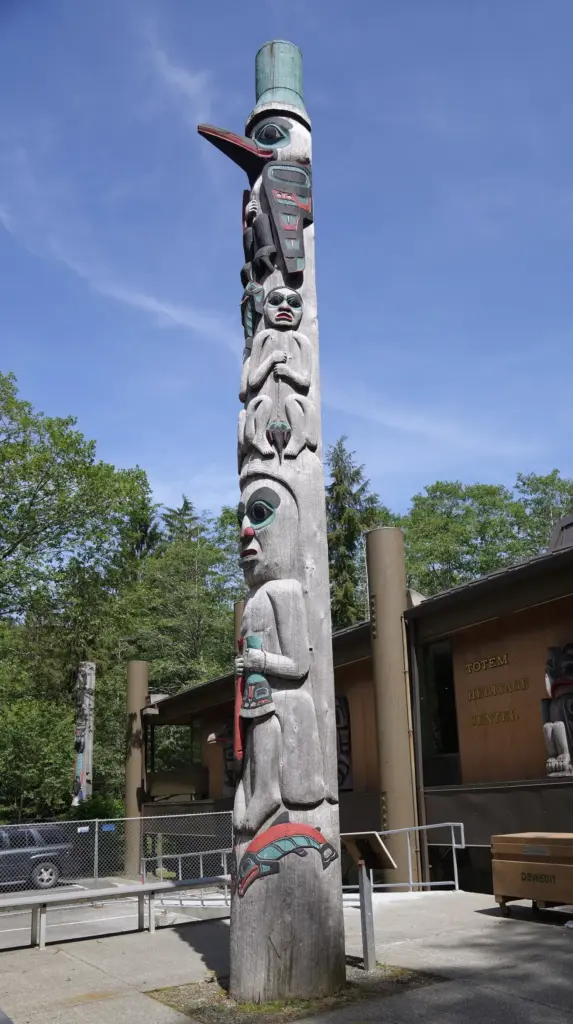
The Totem Heritage Center, run by the City of Ketchikan, keeps original 19th-century poles brought in from Tlingit and Haida village sites, protected indoors rather than left to weather away. In 2026 it charged $6 for adults and $5 for seniors, with children under 17 free, according to its rates, and it was open daily 8 a.m. to 5 p.m. from late April to late September. It’s a short walk or free shuttle ride from the docks, and it’s the best place in Alaska to see old poles up close.
4. Sealaska Heritage Institute, Juneau
Sealaska Heritage Institute is the Native-led cultural and educational institution for the Tlingit, Haida and Tsimshian of Southeast Alaska, and its Walter Soboleff Building, which opened in May 2015 in downtown Juneau, is a short walk from the cruise docks. Cultural exhibits and the Sealaska Heritage Store are on the first floor, at 105 South Seward Street. Nearby, the Sealaska Heritage Arts Campus has space where artists carve monumental pieces such as totem poles and canoes. Along the waterfront, Kootéeyaa Deiyí, SHI’s Totem Pole Trail, is planned to grow to 30 poles. For a cruise passenger, it’s the single best hour of culture in Juneau.
5. Goldbelt Tram, Juneau
The Goldbelt Tram, formerly the Mount Roberts Tramway, is owned by Goldbelt, Inc., Juneau’s Native corporation, and its base station sits on the downtown waterfront, within walking distance of the cruise docks. Adult day tickets were $60 in 2026. At the top, alongside the views, visitors can often see Tlingit cultural presentations, carving and art, depending on the day’s schedule.
6. Sitka National Historical Park
Sitka National Historical Park preserves the site of the 1804 battle between the Tlingit, led by the Kiks.ádi clan, and the Russians, and its coastal totem trail is one of the best walks in Alaska. The Park Service says the trail has 18 totem poles and starts at the visitor center on Metlakatla Street, a 15- to 25-minute walk from the downtown docks, and the visitor center has exhibits, a short park film and Tlingit and Haida art. Our guide to things to do in Sitka puts it at the top of the list.
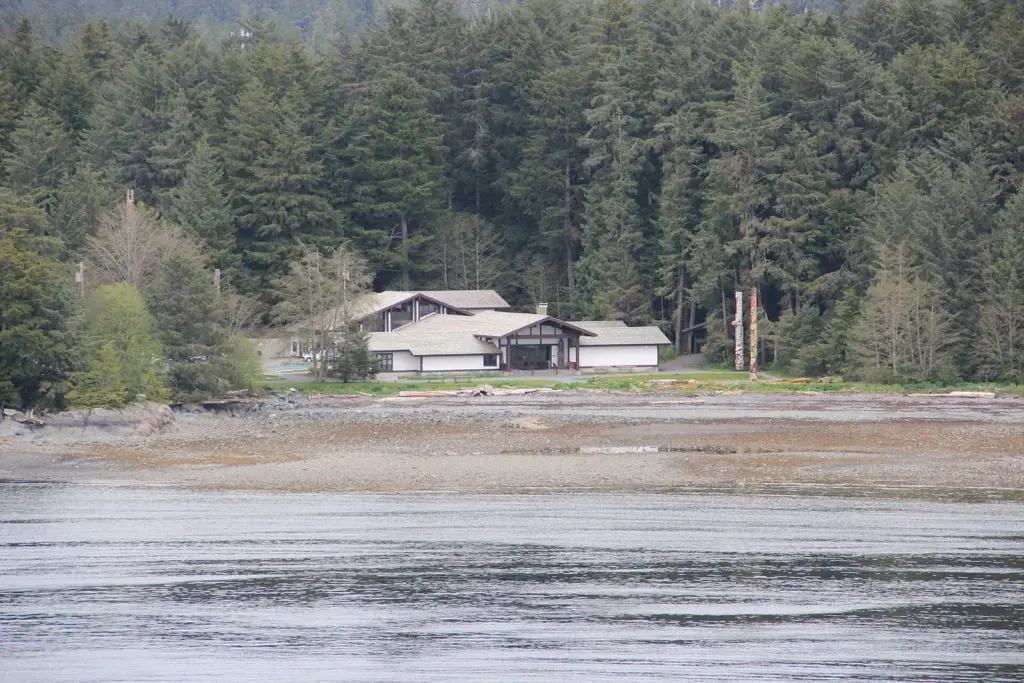
7. Sheet’ká Kwáan Naa Kahídi Community House, Sitka
The Sitka Tribe of Alaska’s Naa Kahídi Dancers share Tlingit song, dance, drumming and stories in the Sheet’ká Kwáan Naa Kahídi Community House, a modern rendition of a traditional Tlingit clan house on Katlian Street near downtown. According to the tribe, performances last about half an hour, are usually scheduled when cruise ships are in port, and tickets go on sale half an hour before each show. The tribe also runs guided tours. It’s one of the best cultural performances in Alaska, and it’s tribally owned.
8. Icy Strait Point and Hoonah
Icy Strait Point is owned by Huna Totem Corporation, the Alaska Native village corporation for Hoonah, which calls it Alaska’s first Indigenous-owned cruise destination; it opened to cruise ships in 2004. Hoonah, described as the largest Tlingit village in Southeast Alaska, is a short walk or shuttle away. The Huna Tlingit lived in what is now Glacier Bay until advancing glaciers forced them out, and they settled at Hoonah, according to the city’s history. In Hoonah, the carving shed where carvers made the house posts, screens and totems for the Huna Tribal House is worth a look.
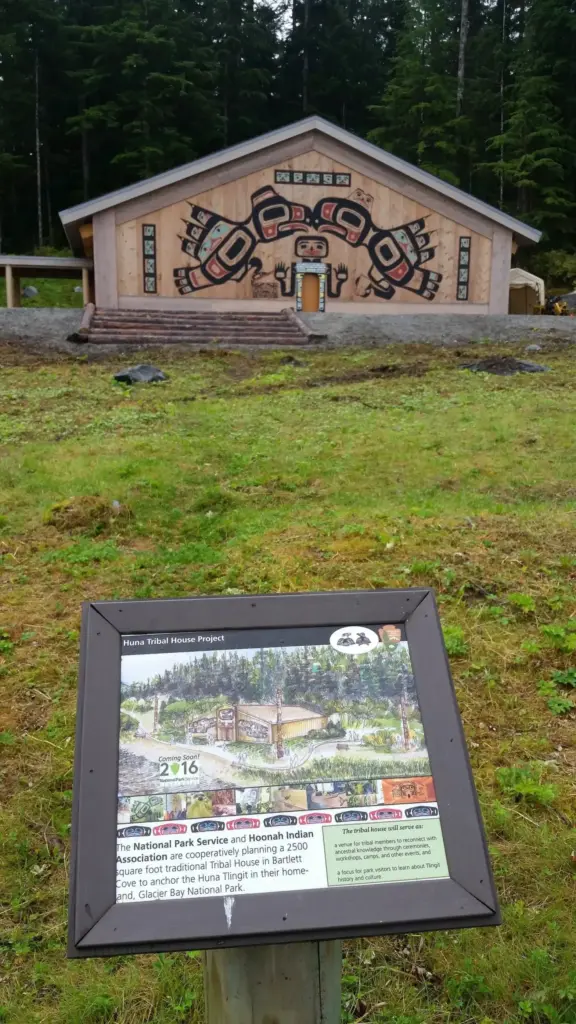
9. Xúnaa Shuká Hít, the Huna Tribal House, Glacier Bay
At Bartlett Cove in Glacier Bay National Park, Xúnaa Shuká Hít, the Huna Ancestors’ House, was dedicated on August 25, 2016 and memorializes the Huna clan houses that once stood along the shore. Cruise passengers don’t land at Bartlett Cove, but the park’s rangers aboard often speak about the Huna Tlingit homeland, and the tribal house is a powerful reason to visit Glacier Bay on a land trip or a small ship.
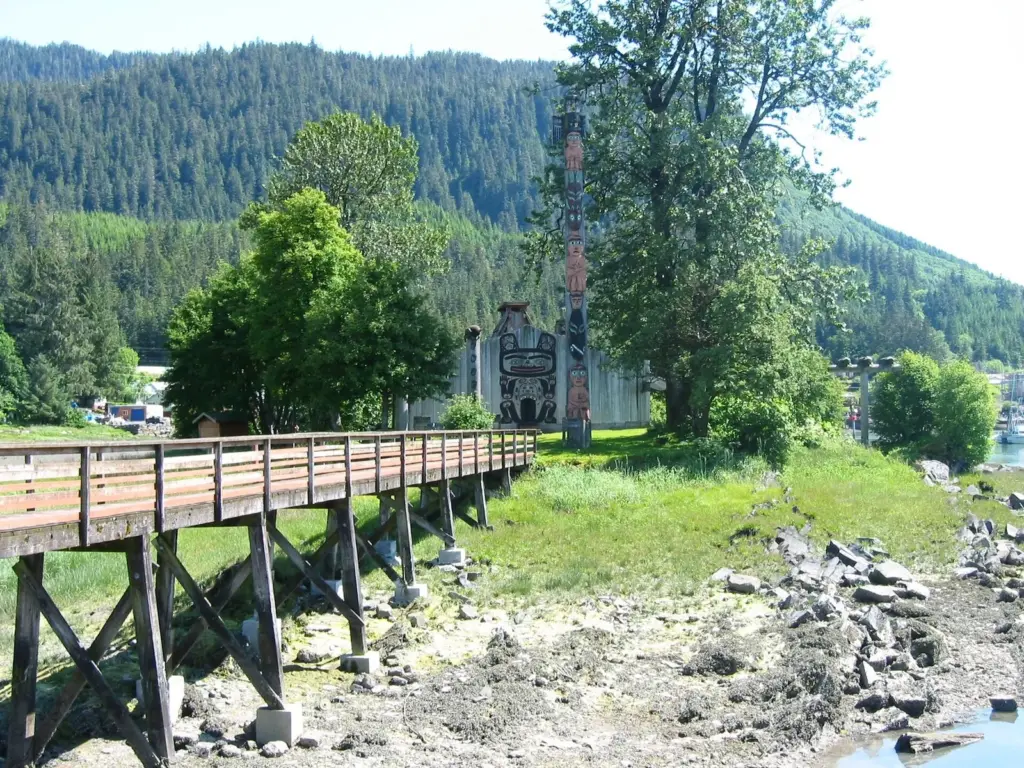
10. Shakes Island, Wrangell
In Wrangell, a boardwalk leads across the tide flats to Shakes Island, with its tribal house and totem poles in the middle of the harbor. It’s a quiet, easily walkable site in a town that sees mostly small ships, and a good example of a clan house restored and cared for by its community.
11. Klawock, Prince of Wales Island
Klawock, on the west coast of Prince of Wales Island, is a Tlingit town with a well-known totem park, and it’s new to a few cruise itineraries: Regent and HX list it as a port, according to the lines. If your small or luxury ship calls there, it’s one of the least-visited places in Southeast Alaska to see poles in their community setting.
12. Alaska Native Heritage Center, Anchorage
If your cruise starts or ends in Seward or Whittier, the Alaska Native Heritage Center in Anchorage introduces cultures from across the whole state, not just the Southeast. It has six life-sized Native dwelling sites, daily dance performances and Native Games demonstrations, and a free shuttle of about 15 minutes from downtown at West 4th Avenue and E Street. In 2026 it was open daily 9 a.m. to 5 p.m. from May 10 to September 13; adults paid $30, seniors $26, youth $20, and children under 4 and Indigenous tribal members entered free. A separate guide covers the Alaska Native Heritage Center in more depth.
A short history, from first contact to today
The cultures you’ll see on a cruise have survived enormous pressure, and knowing the outline of that history makes every visit more meaningful.
- Thousands of years on the coast. The Tlingit, Haida and Tsimshian built a wealthy, sophisticated society on salmon, cedar and the sea, with trade networks reaching far inland.
- Russian colonization. Russian fur traders arrived in the 18th century. In 1802 the Tlingit destroyed a Russian fort near Sitka, and in 1804 the Russians returned; the battle between the Kiks.ádi Tlingit and the Russians, preserved at Sitka National Historical Park, paved the way for Russian control of Sitka.
- The American purchase and its aftermath. After the United States bought Alaska in 1867, missionaries and government schools suppressed Native languages and ceremonies for generations, and many children were sent to boarding schools.
- Organizing for rights. The Alaska Native Brotherhood was founded in Sitka in 1912, and the Alaska Native Sisterhood soon after, to fight for citizenship and civil rights. In 1945, after powerful testimony by the Tlingit civil rights leader Elizabeth Peratrovich, the Alaska territorial legislature passed an anti-discrimination act, decades before the national Civil Rights Act.
- Land claims. The 1971 Alaska Native Claims Settlement Act created the Native corporations you’ll meet in port today.
- Revitalization. Today, carvers, weavers, dancers and language teachers are reviving and renewing traditions, and new poles, canoes and clan houses are being made again, often with the whole community involved.
Crests and the animals behind them
The figures on poles, blankets and jewelry aren’t random animals. They’re crests, and each belongs to a clan that has the right to display it, often because of an event in the clan’s history involving that being. A few you’ll see again and again:
- Raven. One of the two moieties, and the central figure in many stories: clever, greedy, funny and powerful. In a widely shared Tlingit story, Raven steals the sun, moon and stars from a box kept by a rich man and releases daylight into the world. Look for the straight, heavy beak.
- Eagle. The other moiety’s emblem, with a curved, hooked beak that distinguishes it from Raven.
- Killer whale. Recognizable by its tall dorsal fin, often carved rising from the figure’s back.
- Bear. Shown with large paws, often with its tongue out and teeth showing.
- Beaver. Look for two large front teeth and a crosshatched, paddle-shaped tail, often held in its paws.
- Frog. A wide mouth and no teeth; frogs appear on many poles and house screens.
- Wolf. Long snout, many teeth and upright ears; an important crest for several clans.
Stories behind specific crests often belong to particular clans, and not all are shared publicly. Guides and artists will tell you what they can; if a question goes unanswered, that’s an answer too.
Understanding Northwest Coast art
The art you’ll see in Southeast Alaska belongs to the wider Northwest Coast tradition shared by the Tlingit, Haida and Tsimshian. A few forms to recognize:
- Formline design. The flowing black and red lines, ovoids and U-shapes that outline the figures on poles, boxes, blankets and prints. Formline is a design system with rules, and trained eyes can tell a master’s work at a glance.
- Crests. Raven, Eagle, Wolf, Bear, Killer Whale, Frog and many others identify clans and their histories. A crest isn’t decoration; it belongs to a clan.
- Chilkat and Ravenstail weaving. Robes woven from mountain goat wool and cedar bark, among the most complex textiles in the world. A single Chilkat robe can take a year or more to weave.
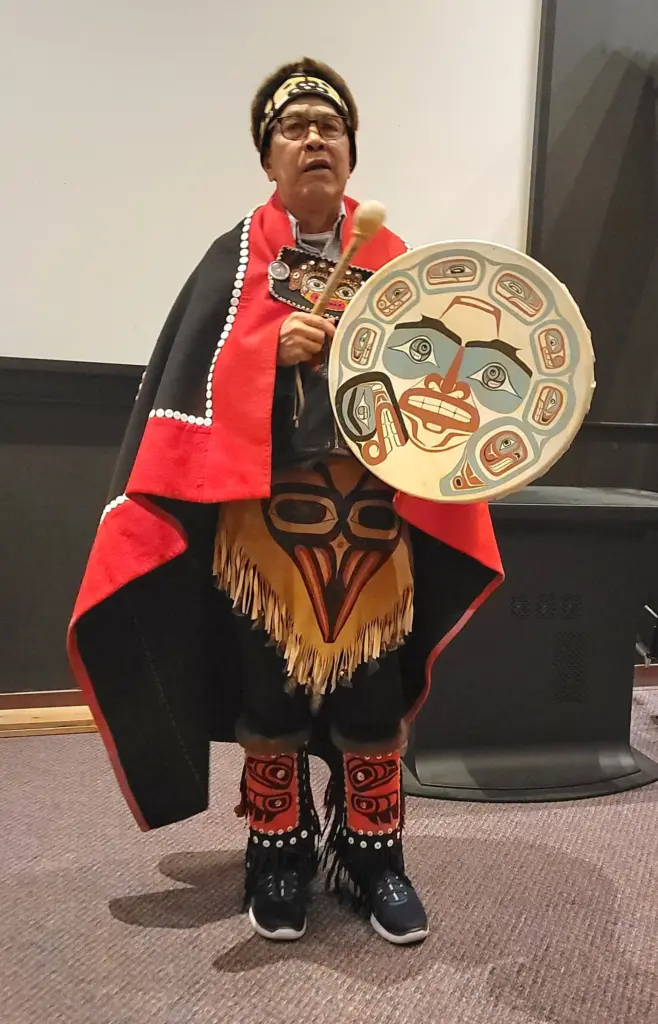
- Button robes. Wool blankets decorated with crests outlined in mother-of-pearl buttons, worn at ceremonies and performances.
- Bentwood boxes, masks, rattles and hats, carved and painted in formline.
- Spruce root and cedar bark baskets, woven so finely that some hold water.
- Engraved silver and copper jewelry, a newer tradition that became popular in the 19th century.
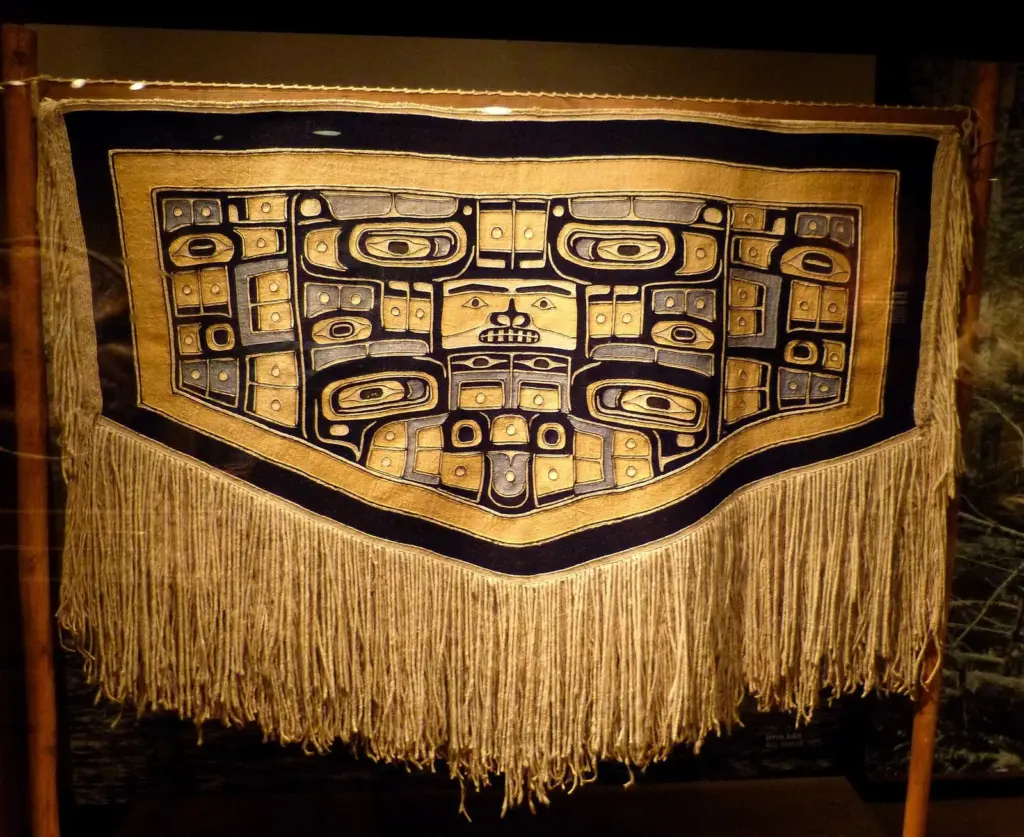
If your cruise calls at Victoria, the Royal BC Museum’s First Peoples galleries, a short walk from the Inner Harbour, hold one of the great Northwest Coast collections, and they make a fitting end to a culture-focused trip.
What to look for in a clan house
Clan houses were the center of traditional life, home to extended families and the setting for ceremonies. Several you can visit, such as the Beaver Clan House at Saxman, the tribal house on Shakes Island and the Huna Tribal House at Bartlett Cove, share a common design:
- House posts carved with the clan’s crests support the great roof beams.
- A house screen, a large carved or painted panel at the back of the house, marks the place of honor where the clan’s leaders sat and its treasures were kept.
- A central fire pit, often set below floor level, with tiered platforms rising around it for sitting and sleeping.
- A painted front facing the water, so arriving canoes saw the clan’s crests first.
Modern community houses, such as the Sheet’ká Kwáan Naa Kahídi Community House in Sitka, follow the same traditional form while serving today’s gatherings, performances and ceremonies.
How to buy authentic Alaska Native art
Port shops are full of “Native-style” art, and much of it is imported or mass-produced. Buying authentic Alaska Native art puts money in an artist’s hands and gets you something made with meaning. Here’s how to tell the difference.
Look for the Silver Hand
The Alaska State Council on the Arts’ Silver Hand program, which has run for decades and was active as of September 2026, certifies that a piece was made by hand in Alaska by an individual Alaska Native artist. To use the seal, artists must be at least 18, full-time Alaska residents and documented members of a federally recognized Alaska Native tribe, and only original work qualifies, not reproductions or manufactured items. Permits last two years and cost the artist $20. Not every Native artist uses the Silver Hand, but when you see it, you can trust it.
Know the law
Under the federal Indian Arts and Crafts Act of 1990, it’s illegal to offer, display or sell any art or craft product in a way that falsely suggests it’s Native-made, including Alaska Native-made, according to the Interior Department’s Indian Arts and Crafts Board. A first violation can bring an individual up to a $250,000 fine or 5 years in prison, and a business up to $1,000,000. If a shop’s claims seem vague, ask directly: “Who made this, and what is their tribe?”
Buy close to the source
- Native-owned shops and institutions, such as the Sealaska Heritage Store in Juneau, sell work by Native artists and put the money back into the community.
- Artists themselves, at cultural centers, carving sheds and events, are the best source of all. Ask about the piece; most artists are glad to explain the crest and the story.
- Price is a clue. A carved and painted bentwood box or a woven basket takes days or weeks. A “hand-carved” totem for $20 is almost certainly not.
- “Made in Alaska” isn’t the same as Native-made. A piece made in Alaska by a non-Native artist can be beautiful and honest, as long as it isn’t sold as Native art.
- Be careful with ivory and other animal materials. Some Alaska Native art uses walrus ivory, baleen or furs, which Alaska Native artists can legally use. Some U.S. states restrict ivory sales, so check your home state’s rules before buying.
Our guides to authentic Alaska Native art, Alaska cruise shopping and Alaska souvenirs go further into what to buy and where, from carvings and prints to smoked salmon and books by Alaska Native authors.
Languages you may hear
Each people has its own language: Lingít (Tlingit), Xaad Kíl (Haida) and Sm’algyax (Tsimshian). All three came close to disappearing in the 20th century, when children were punished for speaking them at school, and all three are now the focus of determined revival efforts, including a language department at Sealaska Heritage Institute. You’ll see Lingít place names on signs and totem trails, hear the languages in songs and introductions at performances, and notice that many people introduce themselves by their clan and house before their name. A simple “gunalchéesh” (thank you in Tlingit) or “háw’aa” (thank you in Haida) is always appreciated.
Visiting respectfully: etiquette for cruise passengers
Alaska Native communities welcome visitors, and a little knowledge goes a long way. A few guidelines:
- Ask before photographing people, especially at ceremonies, in regalia or at private events. Performances for visitors usually allow photos, but ask if unsure.
- Don’t touch the poles or the regalia. Poles are cultural property, and regalia often includes heirlooms.
- Use the peoples’ names. Say Tlingit, Haida or Tsimshian rather than a general term, and learn a greeting; in Tlingit, “gunalchéesh” means thank you.
- Listen to the stories as they’re told. Some stories belong to particular clans and are shared in a particular way. Don’t ask a performer to explain something they choose not to share.
- Remember it’s a living culture. The dancers you see are community members, students, elders and artists, not costumed actors. They’re sharing something that matters to them.
- Spend money where it counts. Tribally owned tours, Native corporation attractions and artists’ own work keep the benefit in the community.
Festivals and cultural events
If your cruise dates are flexible, a festival is the most memorable way to experience Alaska Native culture. Sealaska Heritage Institute’s Celebration, a gathering of Tlingit, Haida and Tsimshian dance groups in Juneau, is held every two years in June and fills the city with regalia, drumming and song; check SHI’s calendar for the next dates. Smaller community events, pole raisings and canoe launches happen throughout the summer, and cruise passengers are sometimes welcome to watch. Ask at the local visitor center or cultural institution when you arrive, and follow the hosts’ guidance on photography.
Culture on a small ship
Small ships reach communities the big ships can’t, and that often means more time in Native villages. Expedition and small luxury ships call at places such as Hoonah, Wrangell, Petersburg and Klawock, and some itineraries include visits arranged with the community. If culture is a priority, ask the line which communities the itinerary visits, whether a local host or Native guide leads the visit, and how the community benefits. The best small-ship visits are arranged with, and paid to, the community itself.
Good questions to ask on a cultural tour
Guides, carvers and dancers are usually glad to talk, and good questions turn a tour into a conversation. Try these:
- Who carved this pole, and which clan or family does it belong to?
- What is the story behind this crest, if it can be shared?
- How long did this piece take to make, and what materials were used?
- Is this tour owned or led by the community, and how does it benefit local people?
- Where can I buy work directly from local artists?
- What’s being done here to teach the language to young people?
- Is there anything visitors often do that I should avoid?
The last question may be the most useful of all. Local hosts have seen every kind of visitor, and they’ll tell you exactly how to be a good one.
Beyond the Inside Passage: other Native cultures on a longer trip
A one-way cruise or a cruisetour carries you out of Tlingit, Haida and Tsimshian country and into the homelands of other Alaska Native peoples, each with its own language, art and history.
- Anchorage sits in Dena’ina Athabascan homeland, and the Alaska Native Heritage Center there presents cultures from across the state, with dwelling sites, dance and Native Games.
- Denali, on a cruisetour, is in the Interior, home to Athabascan peoples. The park’s Denali Natural History Tour includes Alaska Native presentations; it cost $116.75 for adults in 2026.
- Kodiak, a call on some longer itineraries such as Holland America’s 14-day Great Alaska Explorer, is the homeland of the Alutiiq, or Sugpiaq, people, whose culture differs from the Tlingit in language, art and history.
Seeing two or three of these cultures on one trip is the best way to understand that “Alaska Native” covers many distinct peoples, not one.
A culture-focused day in each port
If culture is your main interest, here’s how to spend a port day in each of the big three.
Ketchikan. Start at the Totem Heritage Center to see the old poles, then take a tour to Saxman for the clan house, the Cape Fox Dancers and the carving center. If time allows, finish at Totem Bight for a quiet walk among poles above the water.
Juneau. Walk from the docks to the Walter Soboleff Building for the exhibits and the Sealaska Heritage Store, then follow the Kootéeyaa Deiyí poles along the waterfront. Ride the Goldbelt Tram in the afternoon for the views and any cultural program at the top.
Sitka. Catch a Naa Kahídi performance at the community house near downtown, then walk the coastal totem trail at Sitka National Historical Park. The two fit comfortably into a single port day.
Cultural sites for travelers with limited mobility
Several of the best cultural stops are easy for travelers who can’t walk far. The Totem Heritage Center in Ketchikan and the Walter Soboleff Building in Juneau are indoor exhibits a short distance from the docks, and the Sitka National Historical Park visitor center, with its exhibits and film, sits at the start of the totem trail, so you can see several poles without walking the whole loop. Performances at the Naa Kahídi community house and at Saxman are seated. Outdoor trails at Totem Bight and Sitka are longer and can be wet, so check conditions and allow time.
Books and ways to prepare before you sail
A little reading before the trip makes the poles, performances and museums far more meaningful. Good starting points:
- Tlingit oral literature edited by Nora Marks Dauenhauer, a Tlingit scholar and poet, and Richard Dauenhauer, including Haa Shuká, Our Ancestors, which records clan stories in Lingít and English.
- Ernestine Hayes’s memoir Blonde Indian: An Alaska Native Memoir, by a Tlingit writer who served as Alaska’s writer laureate, about growing up in and returning to Juneau.
- Sealaska Heritage Institute’s publications, exhibits and online resources, which include teaching materials on clans, moieties and Southeast Alaska communities.
- The National Park Service’s Sitka and Glacier Bay pages and the NPS app, which include Tlingit perspectives on the parks.
Alaska Native Culture FAQ
Which Alaska Native peoples will I meet on an Inside Passage cruise?
The Tlingit, whose homelands cover most of the Inside Passage from the Ketchikan area to Yakutat; the Haida, with Alaska communities on Prince of Wales Island such as Hydaburg and Kasaan; and the Tsimshian, whose Alaska community is Metlakatla on Annette Island, the only reservation in Alaska.
Where is the best place to see totem poles on an Alaska cruise?
Ketchikan has the most: Saxman’s totem park, Totem Bight State Historical Park and the Totem Heritage Center, which keeps original 19th-century poles indoors. Sitka National Historical Park’s coastal trail, with 18 poles, is the most beautiful setting, and Juneau’s Kootéeyaa Deiyí trail is growing along the waterfront.
What do totem poles mean?
Totem poles display clan crests, histories and stories, honor people who have died, or mark events. They were never worshipped. Position on the pole doesn’t signal rank, so “low man on the totem pole” is a myth; the bottom figure is often the most detailed.
How can I tell if Alaska Native art is authentic?
Look for the Silver Hand seal, which certifies that a piece was handmade in Alaska by an individual Alaska Native artist. Ask who made a piece and what their tribe is, buy from Native-owned shops or artists directly, and be wary of low prices. Federal law bars selling work falsely presented as Native-made.
Are there Native-owned tours on an Alaska cruise?
Yes. Icy Strait Point is owned by Huna Totem Corporation, Saxman’s tours are run by Cape Fox Corporation, the Goldbelt Tram is owned by Goldbelt, Inc., and the Sitka Tribe of Alaska runs the Naa Kahídi Dancers and tribal tours. Sealaska Heritage Institute runs the Walter Soboleff Building in Juneau.
Can I take photos at Native cultural performances?
Performances for visitors usually allow photos, but always ask, and follow any guidance from the hosts, who may ask you not to photograph certain songs or dances. Ask before photographing individuals, especially in regalia or at ceremonies, turn off the flash, and don’t touch totem poles or regalia.
Is the Alaska Native Heritage Center worth visiting?
Yes, if your cruise starts or ends near Anchorage. It covers cultures from across Alaska, with six life-sized dwelling sites, daily dance performances and Native Games demonstrations. In 2026 it opened daily from May 10 to September 13, with adult admission at $30 and a free shuttle from downtown.
Related Alaska Cruise Guides
- Things to Do in Ketchikan on a Cruise: The Complete Ketchikan Port Guide
- Things to Do in Sitka on a Cruise: The Complete Sitka Port Guide
- Icy Strait Point: The Complete Cruise Port Guide to Hoonah, Alaska
- Glacier Bay National Park: The Complete Guide for Cruise Visitors
Sources and How We Checked
We checked the prices, rules, schedules and ship deployments in this guide against the sources below on September 24, 2026, and we log each one in our research database with the date it was checked. Cruise lines change ships, fares and fees every season, so confirm anything that affects your booking with the line or the agency concerned. Alaska Cruise Guide (AlaskaCruise.org) is an independent publication. It is not affiliated with any cruise line, port, tour operator or tourism office, and no one paid to be included.
- Alaska Native Heritage Center: Alaska Native Heritage Center
- Alaska State Council on the Arts: Silver Hand program
- Alaska State Parks: Totem Bight State Historical Park
- cityofhoonah.org: Hoonah
- cityofhoonah.org: Hoonah
- cityofhoonah.org: Hoonah
- cruisecritic.com: HX (Hurtigruten Expeditions)
- doi.gov: Indian Arts and Crafts Act
- education.alaska.gov: Silver Hand program
- Goldbelt Tram: Mount Roberts Tramway
- Holland America Line: Saxman Native Village
- Holland America Line: Holland America Line
- hunatotem.com: Icy Strait Point
- hunatotem.com: Icy Strait Point
- ketchikan.gov: Totem Heritage Center
- KTOO Public Media: Juneau Aak'w Landing dock
- lonelyplanet.com: Saxman Native Village
- National Park Service: Denali bus tours
- National Park Service: Glacier Bay park facts
- National Park Service: Huna Tribal House
- National Park Service: Sitka National Historical Park
- National Park Service: Sitka National Historical Park
- rssc.com: Regent Seven Seas
- sealaskaheritage.org: Sealaska Heritage Institute
- sealaskaheritage.org: Sealaska Heritage Institute
- sealaskaheritage.org: Sealaska Heritage Institute
- sealaskaheritage.org: Tsimshian culture
- sealaskaheritage.org: Tlingit culture
- sitkatribe.org: Sitka Tribe of Alaska
- visitktn.com: Ketchikan transport
Photo Credits
- Saxman totem park, Ketchikan: photo by Thomson200, via Wikimedia Commons (CC0)
- Tlingit performer, Goldbelt Tram: photo by Cullen328, via Wikimedia Commons (CC BY-SA 4.0)
- Totem pole raising model, Sitka National Historical Park: photo by Hiart, via Wikimedia Commons (CC0)
- Totem pole, Totem Heritage Center: photo by Richard N Horne, via Wikimedia Commons (CC BY-SA 4.0)
- Sitka National Historical Park: photo by Thomson M, via Wikimedia Commons (CC BY 3.0)
- Huna Tribal House, Bartlett Cove: photo by Pi3.124, via Wikimedia Commons (CC BY-SA 4.0)
- Shakes Island, Wrangell: photo by James Crippen, via Wikimedia Commons (CC BY 2.5)
- Chilkat blanket, Royal BC Museum: photo by Wolfgang Sauber, via Wikimedia Commons (CC BY-SA 3.0)
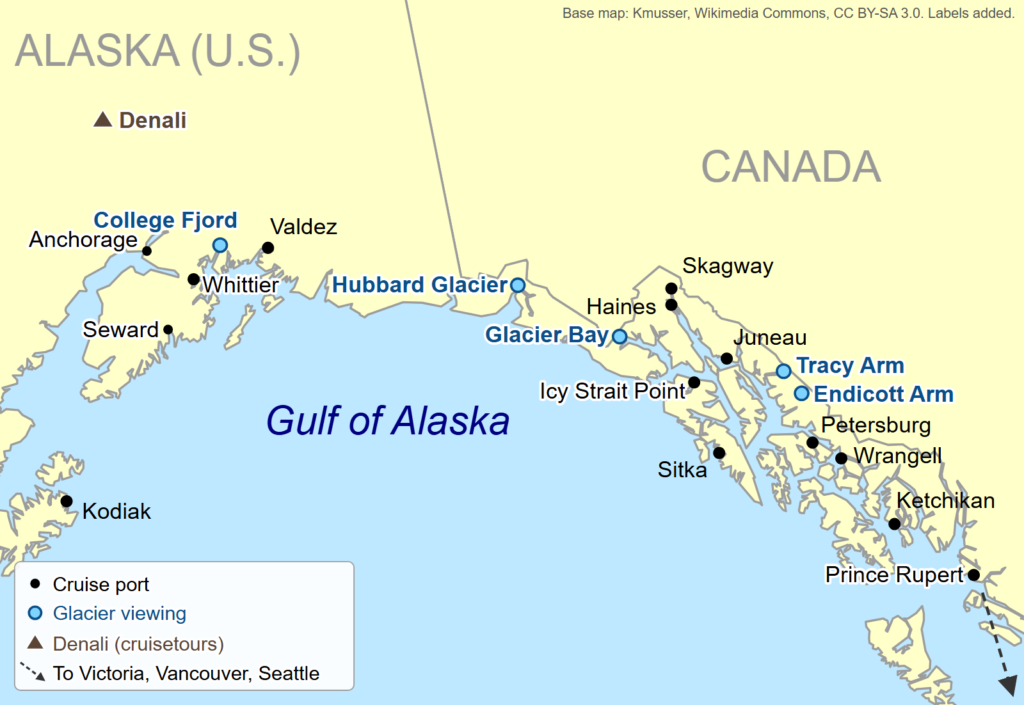
- Alaska cruise region map: map by Kmusser, via Wikimedia Commons (CC BY-SA 3.0); ferry routes removed; cruise ports, glacier-viewing areas and Denali added by Alaska Cruise Guide