The best Alaska cruise deals come from three things: sailing in May or September, booking during a promotion you can actually use, and repricing your booking if the fare drops before final payment. Headline “up to 40% off” offers and “free” extras are real, but they’re only a deal if the final price, with taxes, fees, gratuities and the extras you’d have bought anyway, comes out lower. Most of the time, a straightforward price cut beats a bundle of perks.
This page is for first-time Alaska cruisers trying to tell a genuine discount from marketing. The caveat that matters: cruise prices move constantly, so every offer below is a dated example of how deals work, not a promise of what you’ll find today. Last updated October 24, 2026. Every price, fee and schedule below is dated, and the sources are listed at the end.
A good deal starts with knowing the real Alaska cruise cost, from the fare to the extras. Once you know what a week should cost, spotting a bargain gets much easier.
Alaska Cruise Deals at a Glance
| Deal type | What it’s really worth | Watch out for |
|---|---|---|
| Shoulder-season fares (May, September) | Often the biggest saving of all | Cooler days in May, more rain in September |
| Wave season (January to March) | Solid, with the widest choice of cabins | Perks that replace, rather than add to, a price cut |
| Black Friday and Cyber Monday | Similar to wave season, for a few days | Countdown clocks on offers that return later |
| Price-drop repricing | Money back or credit on a booking you already hold | Final payment deadlines and excluded fare types |
| Free 3rd and 4th guests | Big for families sharing one cabin | Taxes, fees and gratuities still charged per person |
| “Free” drinks, Wi-Fi or tips | Only what you’d have spent anyway | Service charges on the “free” package |
| Last-minute fares | Can be excellent for flexible travelers | Expensive flights and poor cabin choice |
How Alaska Cruise Pricing Works
Cruise fares are quoted per person, based on two people sharing a cabin. A solo traveler usually pays a supplement, and a third or fourth person in the same cabin pays much less, sometimes nothing but taxes and fees. The fare covers your cabin, most meals and onboard entertainment. Travel Alaska, the state’s official tourism site, says a seven-night Alaska cruise averages anywhere from $500 to $5,000 per person, depending on the line and the stateroom.
Where your sailing falls in that range depends mostly on timing. Holland America’s own Alaska FAQ calls May and September the shoulder months, with fewer crowds and lower fares, and June and July the peak season. 2026 fare surveys put a seven-night inside cabin in the shoulder season from about $499 per person, while balconies in peak July ran near $2,500 per person. That’s roughly $70 to $360 per person per day before extras.
Fares are also dynamic. Lines raise prices as ships fill and cut them when a sailing is lagging, so the same cabin can cost very different amounts depending on the week you book. That’s why the price-drop policies later on this page matter so much.
Then there’s everything the fare doesn’t cover:
- Taxes, fees and port charges. One Seattle-focused guide puts them at about $150 to $250 per person on a typical seven-day Seattle round trip. They include Alaska’s state passenger tax of $34.50 per passenger. Our page on Alaska cruise taxes and fees breaks them down.
- Gratuities. Princess charges $18 per person per day in standard cabins (2026), and the big lines ranged from about $17 to $20. The details are on our Alaska cruise tipping page.
- Extras. Shore excursions, drinks, specialty dining and Wi-Fi add up fast, and Alaska’s excursions are some of the most expensive in cruising.
Verdict: compare total trip costs, not fares. A cheap fare with a costly flight and no included extras can end up more expensive than a pricier fare that bundles what you’d buy anyway.
What a Cheap Fare Really Costs: A Worked Example
Here’s why the advertised fare is only the start. Take the kind of low fare 2026 surveys found for a seven-night inside cabin in May, about $499 per person, and add what nearly everyone pays on top:
| Item (per person) | Cost | Where the number comes from |
|---|---|---|
| Cruise fare | $499 | 2026 shoulder-season inside cabin, from fare surveys |
| Taxes, fees and port charges | $150 to $250 | Typical seven-day Seattle round trip |
| Gratuities | $126 | $18 a day for seven days at Princess’s 2026 standard rate |
| Round-trip flight | $522 | U.S. average round-trip domestic fare, early 2026 |
| Two popular excursions | $234 to $269 | White Pass Summit Excursion ($155) plus a Mendenhall Glacier shuttle (about $79 to $114) |
| Total | About $1,530 to $1,670 | Before drinks, Wi-Fi, a hotel night or souvenirs |
That’s roughly three times the advertised fare, and it’s still a modest trip. It explains why a “deal” that knocks $100 off the fare matters less than one that covers your gratuities, or a sailing from a port you can reach without flying. It’s also why the cheapest fare on the page isn’t always the cheapest vacation.
The Alaska Cruise Deal Calendar
Alaska cruises are sold more than a year ahead, and the offers follow a predictable rhythm. The 2027 Alaska seasons were announced between July and October 2025, so 2028 releases should follow a similar pattern.
| When | What happens | What to do |
|---|---|---|
| 12 to 18 months out | New itineraries open; early booking offers appear | Book if you need a specific cabin, date or cruisetour |
| Late November | Black Friday and Cyber Monday sales | Compare against the fare you already hold |
| January to March | Wave season, the industry’s biggest booking period | The best all-round time to book the coming summer |
| Spring | Unsold summer cabins get repriced | Check your booking for price drops before final payment |
| Around final payment | Often about 90 days before sailing on mainstream lines | Your last chance to reprice or cancel with a refund on most fares |
| Inside 90 days | Last-minute offers on unsold cabins | Good for flexible travelers near a homeport |
The pattern for most people is simple: book in wave season or earlier, then watch the price until final payment. Our guide to the best time to book Alaska cruise travel goes deeper on the timing, and the page on last minute Alaska cruises covers the gamble of waiting.
Wave Season and Black Friday: What the Big Sales Really Offer
Wave season, roughly January to March, is the cruise industry’s busiest booking period, when lines run their biggest promotions: reduced deposits, onboard credit and upgrades. Black Friday and Cyber Monday sales in late November work the same levers for a few days, usually with a countdown clock and a lot of red text.
Almost every sale is built from five parts:
- A fare reduction, often shown as “up to” a percentage.
- A reduced deposit, such as the $99 deposits Princess was advertising on select Alaska voyages in late September 2026.
- Onboard credit to spend on the ship.
- Bundled extras, such as drinks, Wi-Fi or prepaid gratuities.
- Discounted extra guests, such as free third and fourth guests in the same cabin.
In late September 2026, for example, Princess was advertising up to 40% savings, up to $300 in instant savings, $99 deposits and free third and fourth guests on select Alaska voyages. Offers like that are genuine, but “up to” means the biggest discount applies to a handful of cabins on a handful of sailings. The only number that matters is the total price for your cabin, on your date.
How to get ready for a sale
The shoppers who do best on Black Friday or in wave season prepare a few weeks before. Shortlist two or three sailings, note the current total price for the cabin category you want, and check it again when the sale starts. That’s the only reliable way to tell a real cut from a relabeled price. Decide in advance which perk you’d actually use, so the sale’s biggest headline doesn’t choose for you. And if you already hold a booking, ask whether the new offer can be applied to it before final payment, rather than canceling and rebooking.
Verdict: the big sales are a fine time to book, but not a reason to panic. If you miss one, another usually follows within weeks. What you shouldn’t miss is the repricing window on a booking you already hold.
Perks vs Price Cuts: How to Value “Free” Extras
This is where most people lose money. A perk has a face value, set by the cruise line, and a real value, which is what you would have spent without it. Only the real value counts.
Take a couple on a seven-night cruise choosing between two offers on the same balcony cabin:
| Offer | Face value | Real value to a couple who drink little |
|---|---|---|
| A: $200 off per person | $400 | $400 |
| B: Prepaid gratuities (Princess standard rate, 2026) | $252 ($18 x 7 nights x 2) | $252 |
| C: Drinks package at $60 to $90 per person per day | $840 to $1,260 | About $350 if you’d have spent $25 each a day |
On paper, offer C is worth the most. In reality, for this couple, the plain $400 discount wins. The answer flips for a couple who would buy a drinks package anyway. Also check the fine print: bundled packages often still carry a service charge on their notional value, and most lines require every adult in the cabin to buy a drinks package if one does.
A few rules of thumb:
- Price cuts are real money. Onboard credit is nearly as good if you’ll spend it on excursions or gratuities.
- Prepaid gratuities are money you’d spend anyway. Value them at full face value.
- Drinks and Wi-Fi are worth what you’d use. Heavy users gain; light users don’t.
- Upgrades are worth the price difference only if you’d have paid it.
If you like the idea of one price covering everything, an all inclusive Alaska cruise on a line that bundles by default may suit you better than hunting for perks, and our page on the Alaska cruise drink package explains when a package pays off.
Shoulder-Season Fares: May and September
The single most reliable way to save on an Alaska cruise is to sail at the edges of the season. Industry guides commonly put May and late September sailings at 30% to 50% below peak July and August fares on the same ship, and Holland America itself describes the shoulder months as having fewer crowds and lower fares.
The trade-offs are real but manageable:
- May brings snow on the mountains, long days and fewer crowds, but cooler weather and some tours that haven’t reached full schedules yet.
- September is the wettest cruise month in most ports. Juneau’s airport averages 9.15 inches of rain in September, against 3.51 in May (NOAA 1991-2020 normals). Some land services wind down too: in 2026 the Alaska Railroad’s Coastal Classic ran from May 15 to September 13.
Verdict: for a first-time cruiser on a budget, a late-May sailing is the sweet spot: lower fares, long daylight and snow-capped scenery. Our page on the best time to cruise Alaska weighs each month in detail.
Repositioning, One-Way and Cruisetour Deals
Repositioning cruises move ships into and out of Alaska at the start and end of the season: up the West Coast in spring, and back south or across the Pacific in the fall. They’re often priced below regular Alaska sailings per night, but most spend little or no time in Alaska itself. Treat them as cheap sea days, not as an Alaska cruise.
One-way cruises between Vancouver and Seward or Whittier often have fares similar to round trips, but you pay for a one-way flight at each end. The Bureau of Transportation Statistics reported an average round-trip domestic fare of $522 in early 2026, and an open-jaw trip rarely comes in below that. Some lines sell an Alaska cruise with airfare included, which can simplify the math; compare it against booking flights yourself.
Cruisetours, which add three or more nights on land around Denali, are sold as packages. Discounts on the land portion are rarer than on the cruise, so price the cruise and the land trip separately before assuming the package is cheaper.
Which Alaska Itineraries Tend to Cost Less?
Where you sail from shapes the price as much as when. A few patterns hold up year after year:
- Seattle round trips have the most choice. Seattle had its busiest season ever in 2026, with 330 ship calls, 2.1 million revenue passengers and 16 homeported ships, and Norwegian alone has three ships leaving every Friday, Saturday and Sunday in 2027. With that many cabins to fill, sales are frequent, and you can often drive or take a short flight instead of paying for open-jaw tickets.
- Vancouver round trips are similar in style, but most U.S. travelers need a passport and a flight to Canada.
- One-way Gulf of Alaska cruises between Vancouver and Seward or Whittier add Hubbard Glacier or College Fjord and an easy link to Denali, but the flights cost more.
- Older, smaller ships on a line usually price below its newest ones on the same route. In Alaska, where the scenery is the show, an older ship can be the smarter buy.
The Best Deal for Each Kind of Traveler
| Traveler | Deal to look for | Why |
|---|---|---|
| Families | Free or reduced third and fourth guests | Two children in the parents’ cabin pay little beyond taxes, fees and gratuities |
| Couples | Price drops and balcony sales | A balcony is worth most in Alaska, where the scenery passes your window |
| Solo travelers | Reduced or waived single supplements | The supplement is the biggest cost to beat |
| Seniors and retirees | Shoulder-season sailings and senior rates | Flexible dates unlock the lowest fares of the year |
| Past cruisers | Loyalty and casino offers | Member-only rates can beat any public sale |
| Budget travelers | May inside cabins from a drivable homeport | Low fares and no flights keep the whole trip cheap |
Price-Drop Policies: Reprice Before You Pay
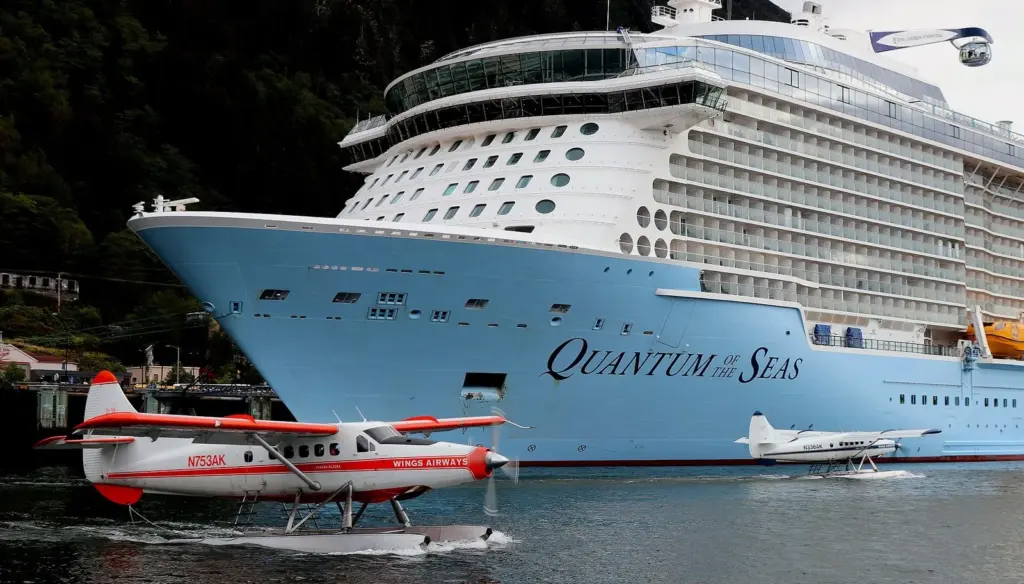
Here’s the deal most cruisers never use. If your fare drops after you book, most big lines will adjust it, as long as you ask before final payment. The rules differ by line:
| Line | What the policy says |
|---|---|
| Royal Caribbean | Request a price match any time before final payment or within 24 hours of booking; the fare is adjusted if the same category is cheaper, and a paid-in-full booking gets the difference refunded. Not available for all reservations. |
| Celebrity | Requests accepted before the final payment date or within 24 hours of booking; the repriced fare is applied, with a refund if you’ve paid in full. |
| Norwegian | Before final payment you can take a lower price or new promotion; after final payment, its terms offer an upgrade worth the difference or a future cruise credit. |
| Princess | Its “Better than Best Price Guarantee” gives 120% of the difference as onboard credit if you find a better fare before final payment. |
| Carnival and Holland America | Both publish price protection or best-price programs; check the terms for your fare type. |
How to make it work:
- Note your exact cabin category and fare type when you book.
- Check the price for the same category and sailing every week or two until final payment.
- If it drops, contact the line or your travel agent and ask for a reprice under its best-price policy.
- Compare what you’d lose: a new promotion may not include the perks attached to your original booking.
The catch: some fare types, such as non-refundable deposit fares, group bookings and certain promotions, may be excluded or treated differently. Read the policy for your fare before you rely on it. A good travel agent will often do the watching for you.
Casino, Loyalty and Group Offers
If you’ve cruised before, your past-guest program can be worth more than any public sale. Royal Caribbean’s Crown and Anchor Society, Princess’s Captain’s Circle, Norwegian’s Latitudes Rewards, Holland America’s Mariner Society and Celebrity’s Captain’s Club all send members offers such as reduced deposits, onboard credit and member-only fares. Check your inbox before you shop.
Casino players can do even better. Programs such as Royal Caribbean’s Club Royale send regular gamblers cruise offers that can include heavily discounted or free cabins. They’re genuine, but you’ll still pay taxes, fees and gratuities, and often a fare for a second guest, so read the certificate carefully.
Warehouse clubs and travel agencies add their own layer: shop cards, onboard credit or group amenities on top of the line’s fare. Our Costco Alaska cruise page covers how that works. Some lines also offer special rates for seniors, military members or residents of certain states and provinces; an Alaska cruise senior discount is worth checking if you qualify, but compare it against the best public fare, which is sometimes lower.
Travel Agent or Direct: Who Gets the Better Deal?
The cruise line sets the fare, so the base price is usually the same whether you book directly or through a travel agent. The difference is in the extras. Agencies often add their own onboard credit, group amenities or loyalty points, and a good agent will watch your fare for drops and handle the repricing, which is worth real money on an Alaska booking made a year ahead. Booking direct gives you one point of contact and access to the line’s own promotions, which agencies can usually match.
What matters more than the channel is the paperwork. Check who you’re paying, whose cancellation terms apply and whether the line’s price-drop policy still covers you. Large online sellers and warehouse clubs can be excellent, but their refund rules sometimes differ from the line’s.
Family Deals: Third and Fourth Guests
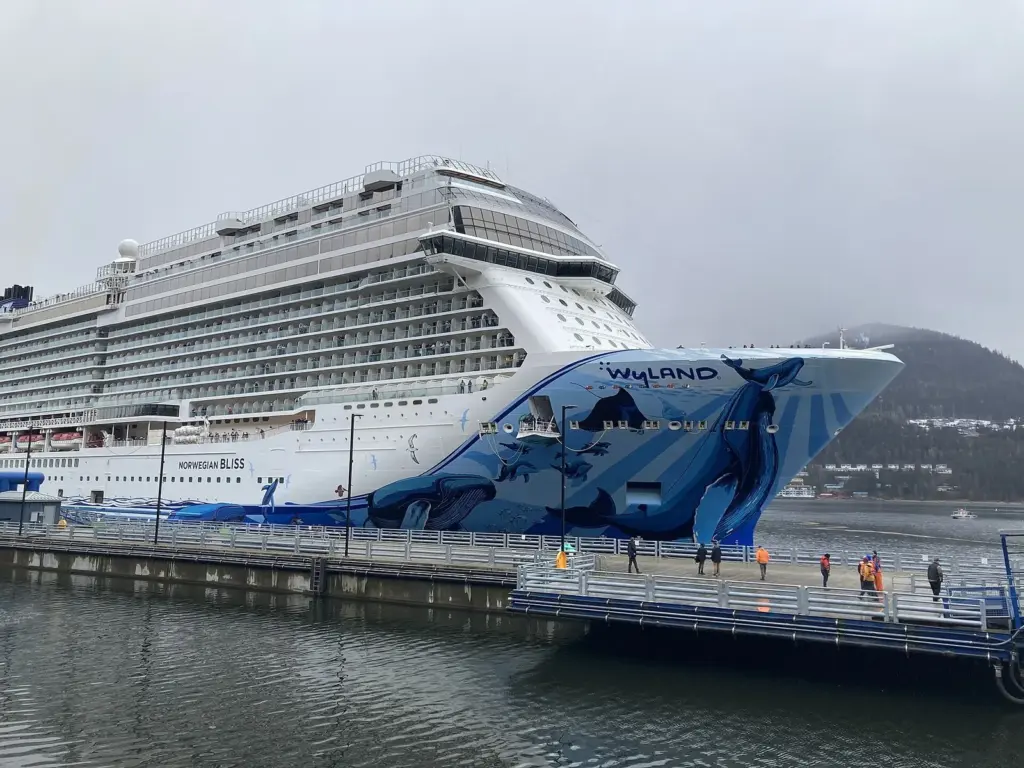
For families, the best Alaska cruise deals are often the “free 3rd and 4th guests” offers that lines such as Princess run on select sailings. When two kids share their parents’ cabin, the saving can run to thousands of dollars on a peak-season week. Three things to check:
- Taxes, fees and gratuities still apply to every guest, so “free” usually means a few hundred dollars per child.
- Cabin capacity is limited. Only some cabins sleep four, and they sell first.
- Space matters on a week-long cruise. Four people in an inside cabin is cozy. Sometimes two connecting cabins at a sale price are the better buy.
Solo travelers
Solo cruisers have the opposite problem: fares assume two people per cabin, so one person usually pays a single supplement that can approach the price of two. Watch for sales that reduce or waive the supplement on specific sailings, and for ships with cabins designed for one, such as the studio cabins on some of Norwegian’s newer ships. Shoulder-season sailings that aren’t selling well are where waived supplements most often appear.
Excursion Deals: Where Alaska Cruisers Overspend
In Alaska, the excursions can cost as much as the cruise. That makes them the biggest place to save, or to overspend. The same activity often costs less booked directly with the operator than through the ship. Some 2026 examples booked direct:
- White Pass Summit Excursion, Skagway: $155 per adult with the railway.
- Whale watching, Juneau: Harv and Marv’s four-hour tour was $159, including a shuttle from the ship and a Mendenhall Glacier viewing stop.
- Helicopter glacier landing, Juneau: Temsco’s guided glacier walk was $409.
- ZipRider, Icy Strait Point: guides reported roughly $109 to $159 through the cruise lines or the port’s own website, and about $199 as a walk-up.
The ship’s version buys you something real, though: a guarantee. Royal Caribbean, for example, says the ship will wait if one of its own shore excursions is delayed, and won’t wait for guests touring on their own. For a short, close-in tour, booking direct is usually safe. For a long day, a helicopter flight or anything far from the dock, the ship’s guarantee is worth paying for.
Two more ways to save: plan some do-it-yourself days, since Juneau’s glacier, Skagway’s historic district and Ketchikan’s Creek Street need no tour at all, and don’t pay for scenery you’ll see from the ship anyway on a scenic cruising day.
Onboard Deals: Drinks, Wi-Fi and Dining
Most lines sell their drinks, Wi-Fi and specialty dining packages before you sail, often at a discount during pre-cruise sales, and the price typically goes up once you’re on board. If you know you’ll want a package, buy it before sailing and keep checking; many lines let you cancel and rebuy if the pre-cruise price drops.
Internet is less of a gamble than it used to be. Most big ships now use Starlink satellite service, which makes a Wi-Fi package far more useful in Alaska than a few years ago, although coverage can still drop in steep fjords. Whatever you do, keep your phone in airplane mode at sea or use Wi-Fi calling: phones can connect to the ship’s maritime cellular network, which charges expensive roaming rates.
Port Costs: Parking, Transfers and Luggage
The small costs around the homeport add up, and there are easy savings. In Seattle, parking at the Pier 91 cruise terminal started at $27 a day in 2026, including fees, taxes and a shuttle to the ship, which can beat a pair of taxi rides for a local couple. Link light rail from the airport to downtown charged a flat $3 adult fare, and it takes about 40 minutes. On the way home, Port Valet offers free luggage transfer from the ship to participating airlines for same-day flights, which saves a pricey luggage-friendly taxi.
Red Flags: When a Deal Isn’t a Deal
- “Up to” percentages with no price shown. Find the real fare for your date and cabin.
- Fares without taxes and fees. Always compare the total.
- Countdown timers. The same offer often comes back the following week under a new name.
- Non-refundable deposits without travel insurance. If you might cancel, read our Alaska cruise travel insurance guide first.
- Guarantee cabins sold without warning that you’re choosing a category, not a cabin. You may end up at the far end of the ship.
- Perks that replace a price cut, especially drinks packages for people who don’t drink much.
- Third-party sellers with stricter cancellation terms than the line itself.
- Anything requiring a sales presentation, such as “free cruise” offers tied to vacation clubs.
How to Put Together a Real Alaska Cruise Deal
- Pick your window. Late May or early September if you’re flexible.
- Pick your route. Seattle round trips avoid one-way flights; Seattle had its busiest season ever in 2026, with 330 ship calls, so there’s plenty of choice.
- Price the whole trip. Fare, taxes and fees, gratuities, flights, a hotel night and the excursions you want.
- Book during a sale you can use, favoring price cuts over perks.
- Watch the fare until final payment and reprice if it drops.
- Protect the booking with the right insurance if your deposit is non-refundable.
If your goal is the lowest possible price rather than the best value, our cheap Alaska cruises page shows where the rock-bottom fares are, and the Alaska cruise budget planner helps you add it all up. For the full picture of what a week costs, from fares to tips, go back to our complete Alaska cruise price breakdown.
Alaska Cruise Deals FAQ
When are the best Alaska cruise deals?
Wave season, roughly January to March, brings the widest range of promotions, and Black Friday sales in late November are similar. The biggest savings, though, usually come from sailing in May or September, when fares run well below peak July and August, and from repricing if your fare drops before final payment.
Are Alaska cruises cheaper in May or September?
Both are shoulder months with lower fares than June, July and August. May tends to be drier, with snow on the peaks and long days. September is the wettest cruise month in most ports, but it brings thinner crowds. For many first-timers, late May offers the best mix of price and conditions.
Is Black Friday a good time to book an Alaska cruise?
It’s a good time, not a magic one. Black Friday and Cyber Monday offers usually mix fare cuts, reduced deposits, onboard credit and bundled extras, much like wave season in January. Compare the total price with what you’d pay otherwise, and don’t rush: similar offers usually return within weeks.
Can you get money back if the cruise price drops?
Often, yes, if you act before final payment. Royal Caribbean, Celebrity, Norwegian and Princess all publish best-price policies that reprice your booking, refund the difference or give onboard credit, depending on the line and timing. Some fare types, including non-refundable deposit fares, may be excluded, so check your terms.
Are “free” drinks packages a good deal?
Only if you’d have bought one anyway. Drinks packages typically cost about $60 to $90 per person per day before service charges, so their face value is large, but light drinkers get far less real value than a simple price cut. Bundled packages may still carry a service charge.
Are Alaska cruise deals better from Seattle or Vancouver?
Neither is always cheaper. Seattle round trips skip one-way flights and, for U.S. citizens, allow a birth certificate and photo ID instead of a passport. Vancouver offers both round trips and one-way cruises to Seward or Whittier, which add Gulf of Alaska glaciers but need open-jaw flights and a passport.
Is it cheaper to book an Alaska cruise directly or with a travel agent?
The base fare is usually the same, because the cruise line sets it. Travel agents often add onboard credit, group perks or loyalty points, and many will watch your booking for price drops. Booking direct gives you the line’s own promotions. Compare total value, and check whose cancellation terms apply before you pay a deposit.
Do Alaska cruise deals include airfare?
Sometimes. Some lines sell fly-cruise packages with flights bundled in, which can help on one-way cruises that need open-jaw tickets. Compare the package against booking the cruise and flights separately, and check the flight times, because a bundled flight that lands on sailing day leaves no margin for delays.
Related Alaska Cruise Guides
- How Much Does an Alaska Cruise Cost? 2027 Prices, Budgets and Hidden Fees
- Best Time to Cruise Alaska: Month-by-Month Guide to Weather, Wildlife & Prices
Sources and How We Checked
We checked the prices, rules, schedules and ship deployments in this guide against the sources below on September 26, 2026, and we log each one in our research database with the date it was checked. Cruise lines change ships, fares and fees every season, so confirm anything that affects your booking with the line or the agency concerned. Alaska Cruise Guide (AlaskaCruise.org) is an independent publication. It is not affiliated with any cruise line, port, tour operator or tourism office, and no one paid to be included.
- Alaska Department of Commerce: Alaska head tax
- Alaska Railroad: Alaska Railroad
- alaskacruisehub.com: Icy Strait Point
- bts.gov: airfare
- carnival.com: price-drop policies
- Celebrity Cruises: price-drop policies
- cruisebooking.com: typical fares
- cruisecritic.com: Wi-Fi / Starlink
- cruising.org: wave season
- fcc.gov: cell service
- grandsailor.com: Mendenhall Glacier
- harvandmarvs-juneau-whale-watching.com: Harv & Marv's Outback Alaska
- Holland America Line: Alaska cruise season
- NOAA National Centers for Environmental Information: Juneau weather
- Norwegian Cruise Line: Norwegian Cruise Line
- Norwegian Cruise Line: price-drop policies
- Port of Seattle: Seattle SEA airport
- Port of Seattle: Seattle Pier 91
- Port of Seattle: Seattle cruise port
- Princess Cruises: Princess Cruises
- Princess Cruises: gratuities – Princess
- Princess Cruises: price-drop policies
- Royal Caribbean: price-drop policies
- Royal Caribbean: shore excursions
- seattlecruisetips.com: taxes and fees
- soundtransit.org: Seattle SEA airport
- Temsco Helicopters: Temsco Helicopters
- thepointsguy.com: drink packages
- Travel Alaska (State of Alaska): typical fares
- U.S. Customs and Border Protection: passport rules
- White Pass & Yukon Route: White Pass & Yukon Route
Photo Credits
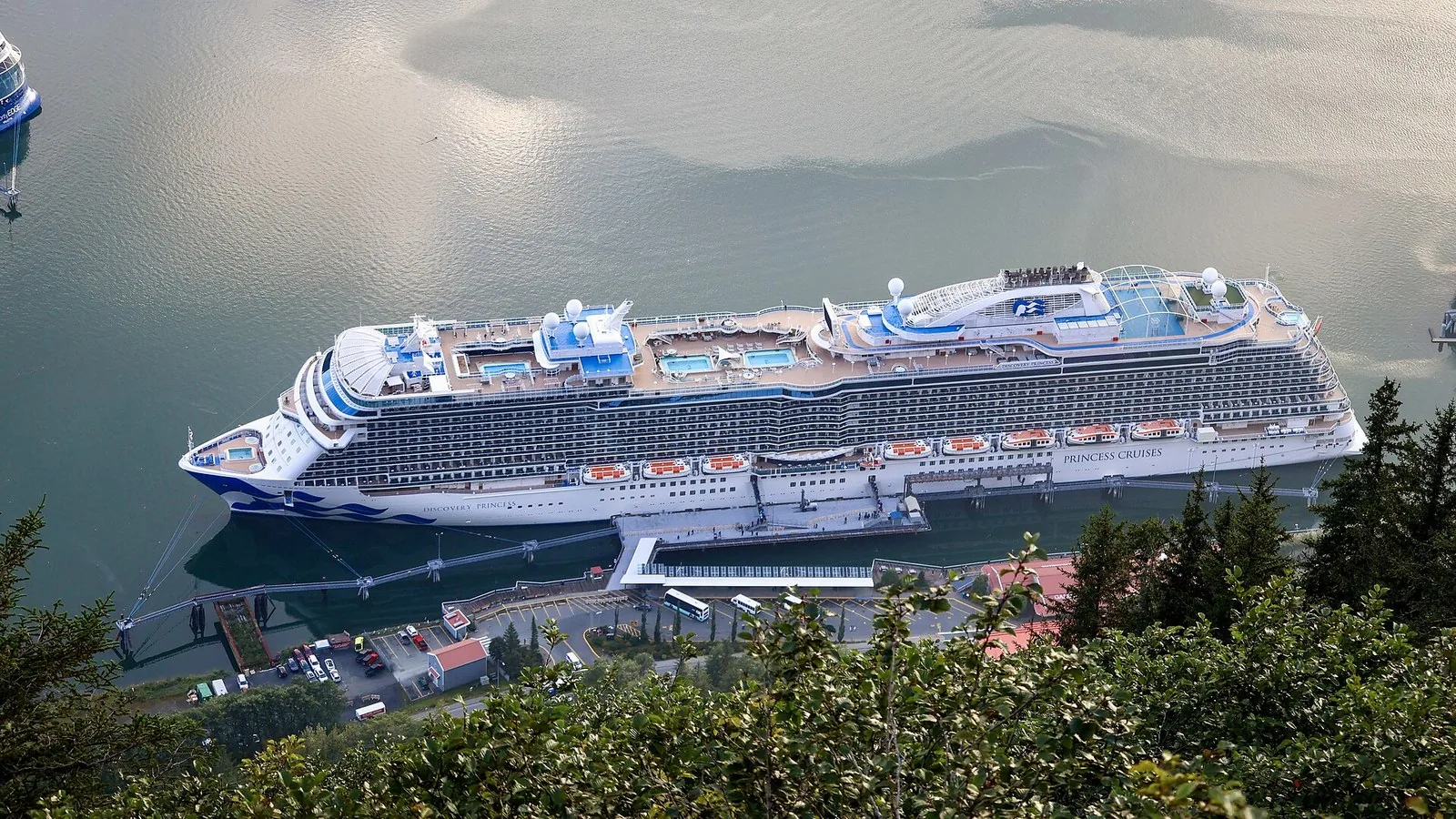
- Discovery Princess docked in Juneau: photo by Matthew Groh, via Wikimedia Commons (CC BY-SA 4.0)
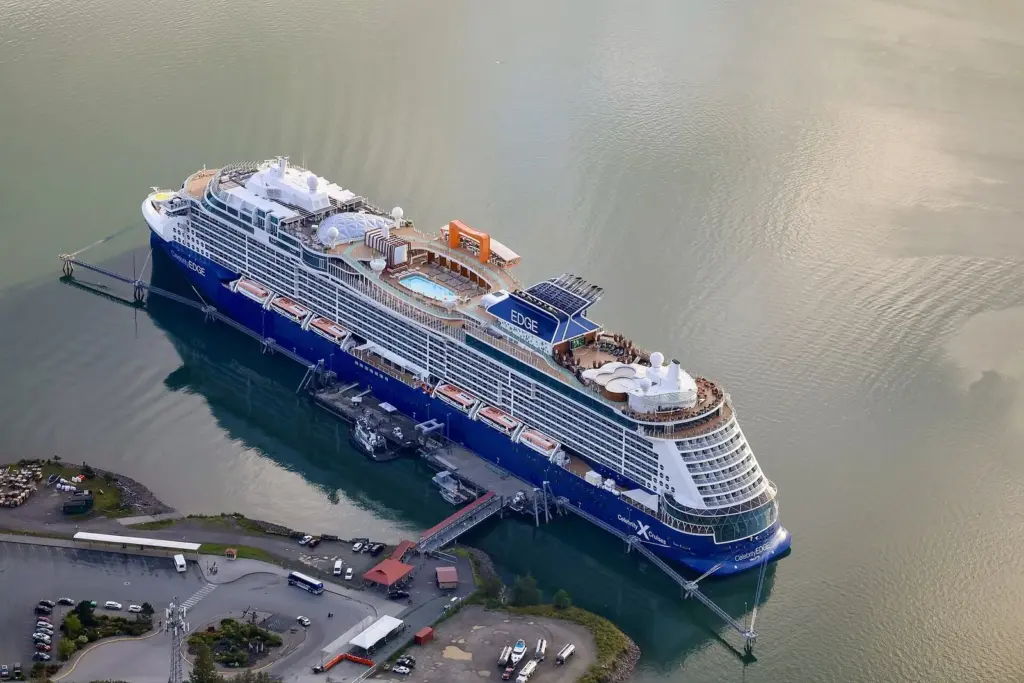
- Celebrity Edge docked in Juneau: photo by Matthew Groh, via Wikimedia Commons (CC BY-SA 4.0)
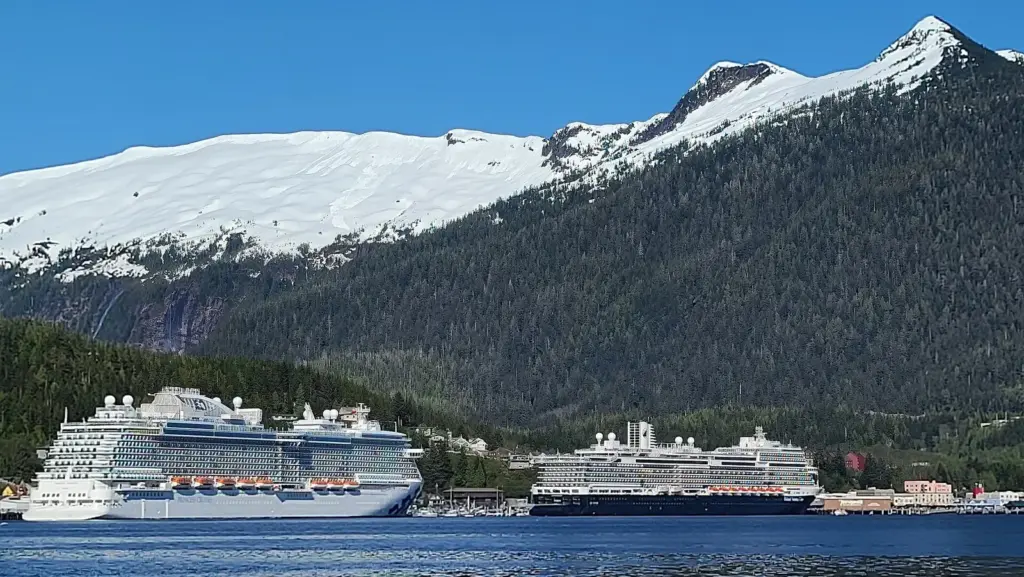
- Cruise ships in Ketchikan: photo by KetchikanMan, via Wikimedia Commons (CC BY-SA 4.0)
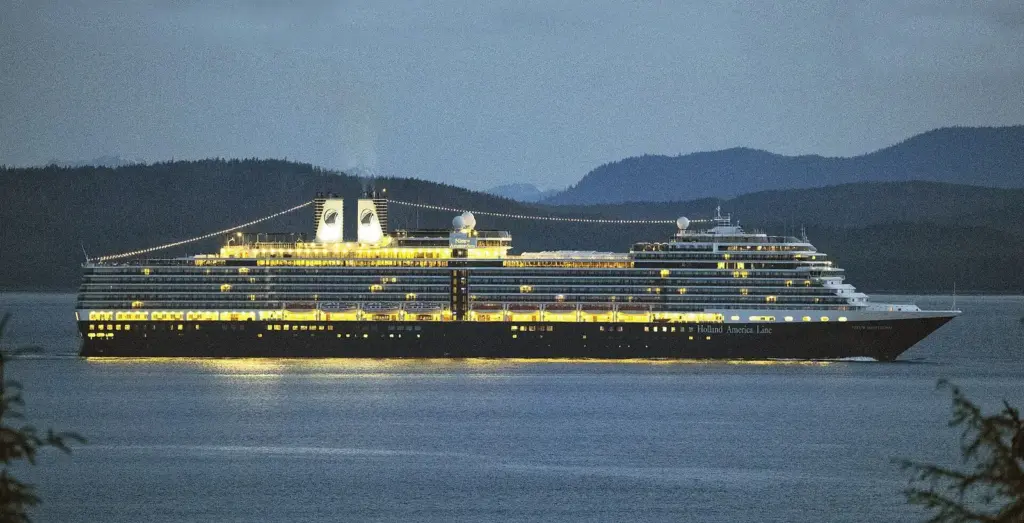
- Nieuw Amsterdam in the Alaska Panhandle: photo by Gillfoto, via Wikimedia Commons (CC BY-SA 4.0)
- Quantum of the Seas and floatplanes in Juneau: photo by Thank You (23 Millions+) views from Los Angeles, USA, via Wikimedia Commons (CC BY 2.0)
- Norwegian Bliss in Juneau: photo by Michaelh2001, via Wikimedia Commons (CC BY-SA 4.0)