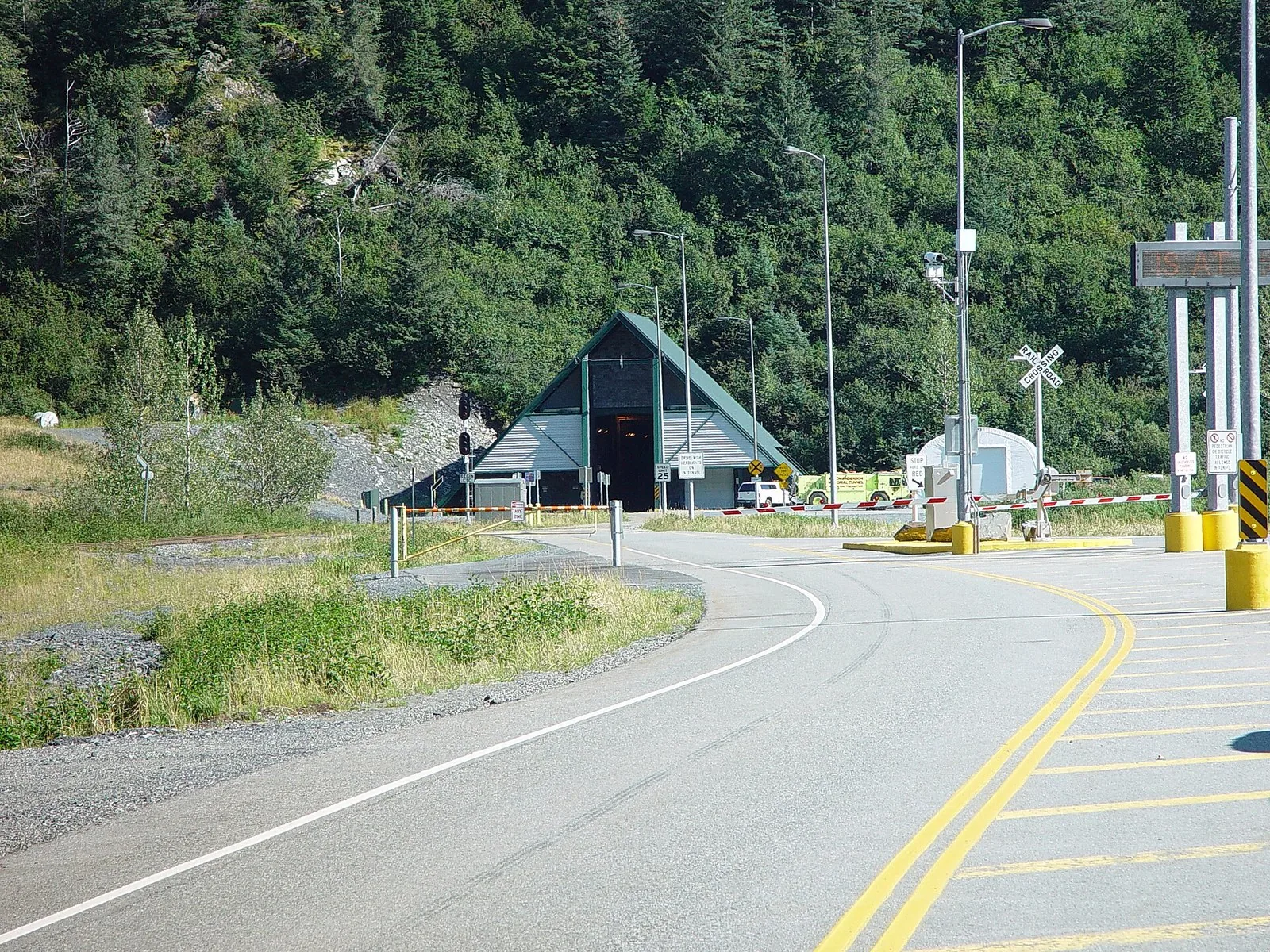
The Whittier tunnel, officially the Anton Anderson Memorial Tunnel, is the only road into Whittier, the port where many Alaska cruises begin or end. It’s a roughly 2.5-mile, single-lane tunnel shared with the Alaska Railroad, and it opens in one direction at a time on a fixed schedule. In summer 2026 it ran from 5:30 a.m. to 11:15 p.m.: traffic toward Whittier goes on the half hour, traffic out toward Bear Valley and Anchorage goes on the hour, and a standard car pays a $13 round-trip toll.
This page is for cruise passengers sailing to or from Whittier by car, cruise-line bus or train. The caveat that matters: the tunnel runs to the clock, and trains take priority. Miss an opening and you wait an hour; miss the last one of the night and you’re in Whittier until morning. Last updated October 26, 2026. Every price, fee and schedule below is dated, and the sources are listed at the end.
The tunnel is one piece of the bigger puzzle of an Alaska cruise from Anchorage, where ships use Whittier or Seward rather than Anchorage itself. Here’s how to plan around it.
Whittier Tunnel at a Glance
| Question | Answer (2026) |
|---|---|
| Official name | Anton Anderson Memorial Tunnel |
| Length | About 2.5 miles |
| Lanes | One, shared by cars, buses and trains, one direction at a time |
| Summer season | May 1 to September 30 |
| Summer hours | 5:30 a.m. to 11:15 p.m. daily |
| Toward Whittier | On the half hour (:30 to :45) |
| Toward Bear Valley and Anchorage | On the hour (:00 to :15) |
| Last opening | 11:00 to 11:15 p.m., leaving Whittier |
| Toll | $13 round trip for a car or motorcycle; $22 with a trailer or for an RV; $137 for a bus of 30 or more |
| Delays | Unscheduled trains can add 15 to 30 minutes |
| Schedule hotline | 1-877-611-2586 |
How the Whittier Tunnel Works
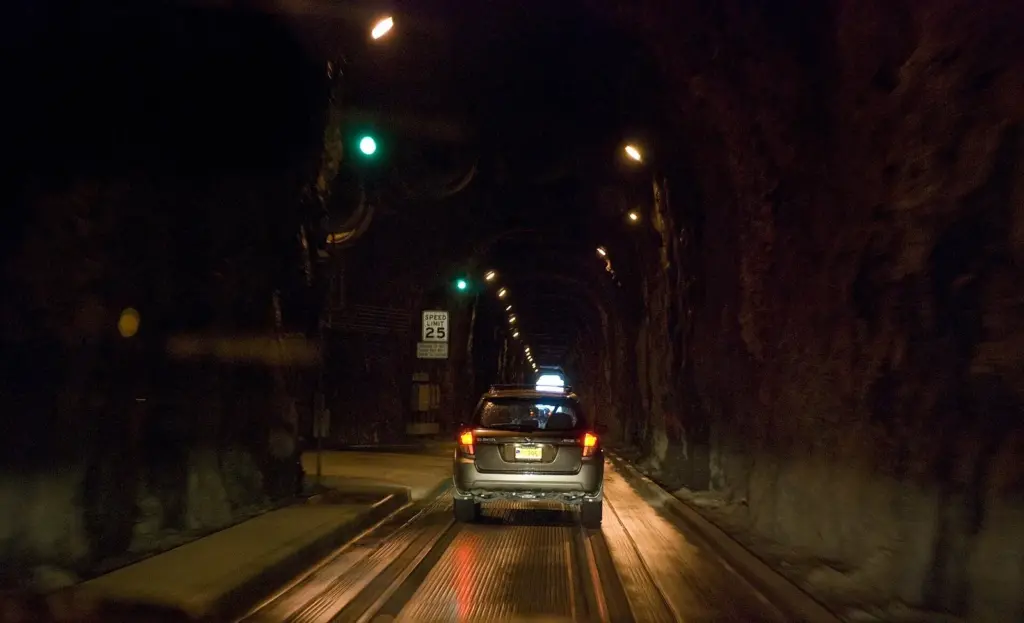
The Alaska Department of Transportation and Public Facilities (DOT&PF) calls it the longest combined vehicle-railroad tunnel in North America. It’s a single lane, with the railroad tracks set into the road surface, so cars drive on top of the rails. That means traffic can only flow one way at a time, and road traffic has to fit around the trains.
The system works in timed windows. Traffic heading into Whittier gets a 15-minute window starting on the half hour; traffic heading out toward Bear Valley, on the Portage side, gets a window starting on the hour. Scheduled passenger trains are slotted in between, and the tunnel is cleared and checked between passages. Guides say the tunnel was built to handle temperatures of minus 40°F and winds of 150 mph, and that jet-turbine fans air it out between trips.
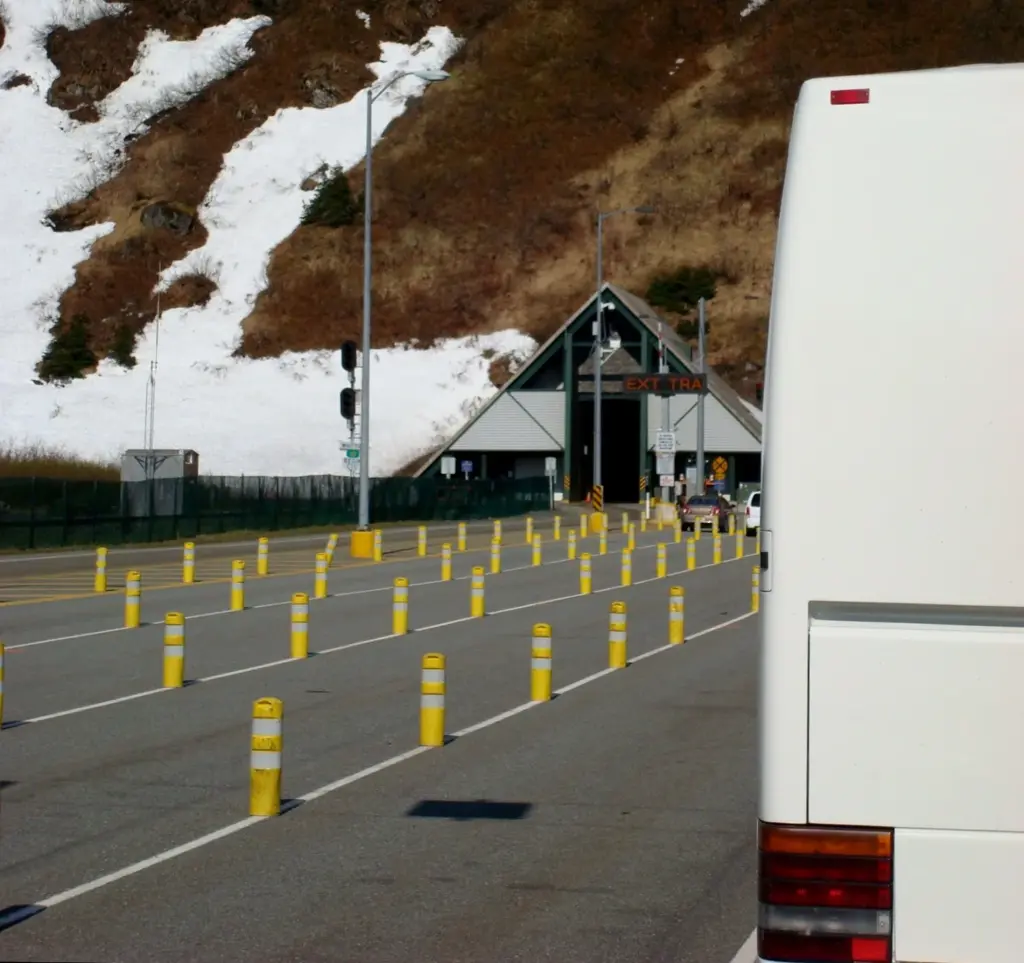
Driving through is simple but a little eerie. You wait in marked staging lanes until the signal changes, then follow the car ahead at the posted speed through a long, dimly lit bore, bumping gently over the rails. Lit safe houses are set into the walls for emergencies. Keep your headlights on, don’t stop, and don’t pass.
The Whittier Tunnel Schedule, Hour by Hour
Here’s how a typical summer hour works, based on the DOT&PF schedule for May 1 to September 30:
| Minutes past the hour | What happens |
|---|---|
| :00 to :15 | Traffic leaves Whittier toward Bear Valley and Anchorage |
| :15 to :30 | Tunnel clears; trains may use it |
| :30 to :45 | Traffic enters Whittier from Bear Valley |
| :45 to :00 | Tunnel clears; trains may use it |
The first opening of the day is toward Whittier at 5:30 a.m. The last opening toward Whittier is at 10:30 p.m., and the very last opening of the night leaves Whittier at 11:00 p.m. DOT&PF asks drivers to be at the staging area ten minutes before the scheduled opening, and it warns that unscheduled trains can cause occasional delays of 15 to 30 minutes. For the current schedule, check the DOT&PF tunnel schedule page or call the hotline at 1-877-611-2586.
Shoulder-season and winter hours
A few Alaska cruises sail in April or October, outside the summer schedule. From October 1 to April 30, the tunnel is open 7:00 a.m. to 10:45 p.m., with the last opening at 10:00 to 10:15 p.m. toward Bear Valley and the gates locked at 11:00 p.m. When the temperature is 32°F or below, DOT&PF opens the tunnel only for the last five minutes of each scheduled opening, so be in line early on a cold morning.
Whittier Tunnel Toll: How Much and How to Pay
DOT&PF’s toll schedule, in place since July 1, 2015, charges round-trip rates only:
| Vehicle | Round-trip toll |
|---|---|
| Car, pickup or motorcycle (Class A) | $13 |
| Vehicle with a trailer, or an RV (Class B1) | $22 |
| Bus carrying 30 or more passengers | $137 |
You pay once, for the round trip. DOT&PF sells round-trip tickets online through its YODEL ticket portal, which saves time at the booth. If you’re on a cruise-line motorcoach or a transfer bus, the operator pays the bus toll, so you won’t handle it yourself. If you’ve rented a car to drive to Whittier, the $13 toll is the only fee; budget the time, not the money.
Planning Around Your Ship: The Tunnel on Cruise Day
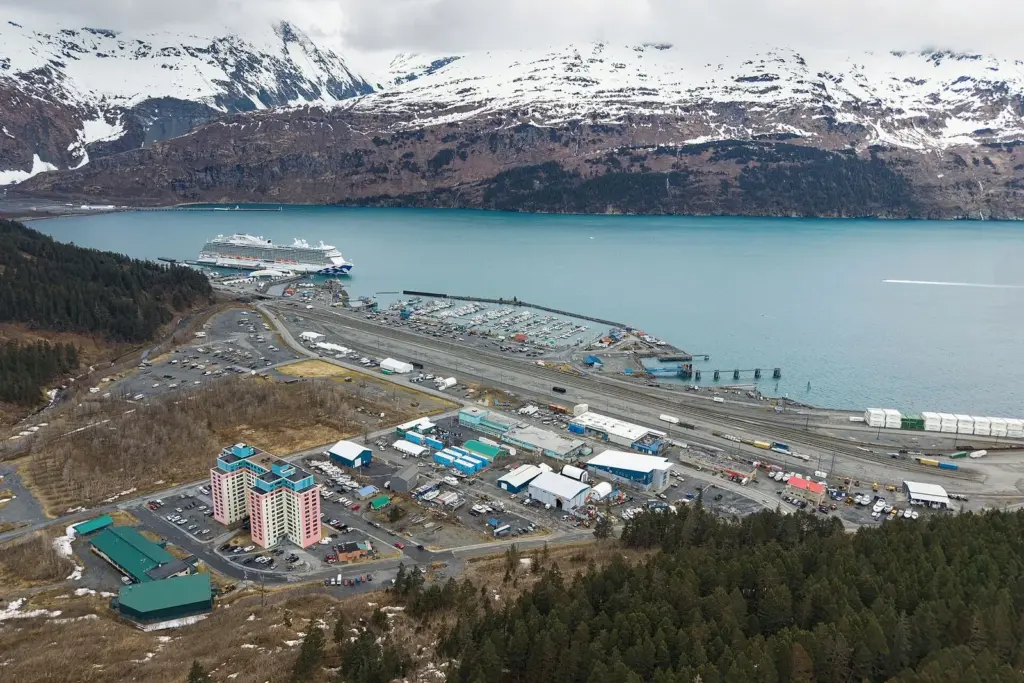
Whittier is about 60 miles from Anchorage, roughly an hour and a half by road including the tunnel, according to Alaska transport guides. Most of that is an easy drive down the Seward Highway along Turnagain Arm; the tunnel is the part you plan around.
Getting to the ship
Work backward from your boarding window, then add the tunnel. Traffic goes into Whittier on the half hour, so if you want to be at the terminal by 1 p.m., aim for the 11:30 a.m. opening and be in the staging lane by 11:20. On a busy day, the line at the staging area can be longer than one opening clears, so leave room for the next one. A good rule is to plan on reaching the staging area an hour before you’d need the last opening that still works, which absorbs a train delay and a full line.
If you’re taking the train instead, the Alaska Railroad’s Glacier Discovery left Anchorage at 9:45 a.m. and reached Whittier at 12:05 p.m. in 2026, and the Grandview Cruise Train is chartered to run between Anchorage and Whittier or Seward in step with ship arrivals. Trains use the same tunnel but get priority, so they rarely wait.
If you’re driving yourself, this planning table builds in about 75 minutes from Anchorage to the staging area plus a 30-minute cushion for traffic, a full line or a train:
| Want to reach the ship by | Aim for the opening at | Leave Anchorage by |
|---|---|---|
| 11:00 a.m. | 10:30 a.m. | 8:45 a.m. |
| Noon | 11:30 a.m. | 9:45 a.m. |
| 1:00 p.m. | 12:30 p.m. | 10:45 a.m. |
| 2:00 p.m. | 1:30 p.m. | 11:45 a.m. |
These are planning numbers, not promises. Add time for a rental car return, a grocery stop in Girdwood or summer roadwork on the Seward Highway, and check your ship’s latest boarding time, not just its departure time.
The least stressful approach of all is to fly into Anchorage the day before. Our list of things to do in Anchorage before cruise departures helps fill the extra day, and you’ll reach the tunnel rested, with hours to spare.
Getting home after the cruise
Disembarkation morning is when the tunnel bites. Hundreds of passengers leave at once, most of them on buses, and traffic out of Whittier goes only on the hour. Here’s how a morning can play out:
| Time | What happens |
|---|---|
| 7:30 a.m. | Off the ship and onto a transfer bus |
| 8:45 a.m. | Bus in the staging lane |
| 9:00 a.m. | Through the tunnel toward Bear Valley |
| About 10:30 a.m. | Anchorage airport, after about 60 miles |
| 12:30 p.m. or later | A sensible earliest flight, leaving time for check-in and security |
Miss the 9:00 opening and everything slides an hour. That’s why cruise lines tend to steer passengers toward afternoon flights on disembarkation day. Verdict: don’t book a flight before early afternoon out of Anchorage if your ship ends in Whittier, and consider a night in Anchorage if your only flight is early.
If you miss the last opening
The last opening out of Whittier is at 11:00 p.m. in summer, and the next one isn’t until the morning. If you’re arriving on a late flight and planning to drive to the ship, or finishing a late tour in Whittier, that’s a hard stop. Whittier is a very small town with limited lodging, so if there’s any chance you’ll be caught, book a room ahead or plan to stay in Anchorage or Girdwood instead.
Driving, Bus or Train: Your Options Through the Tunnel
| Option | Cost (2026) | Tunnel hassle | Best for |
|---|---|---|---|
| Cruise-line motorcoach transfer | Set by the line | None for you; the bus handles it | Most cruise passengers, especially on disembarkation day |
| Alaska Railroad | $119 one way, Anchorage or Girdwood to Whittier (Glacier Discovery) | None; trains get priority | Scenery lovers and anyone avoiding the drive |
| Rental car | Rental plus the $13 toll | You manage the schedule | Travelers exploring Girdwood or the Kenai before or after |
| Private shuttle or taxi | Varies | The driver manages it | Small groups on a tight schedule |
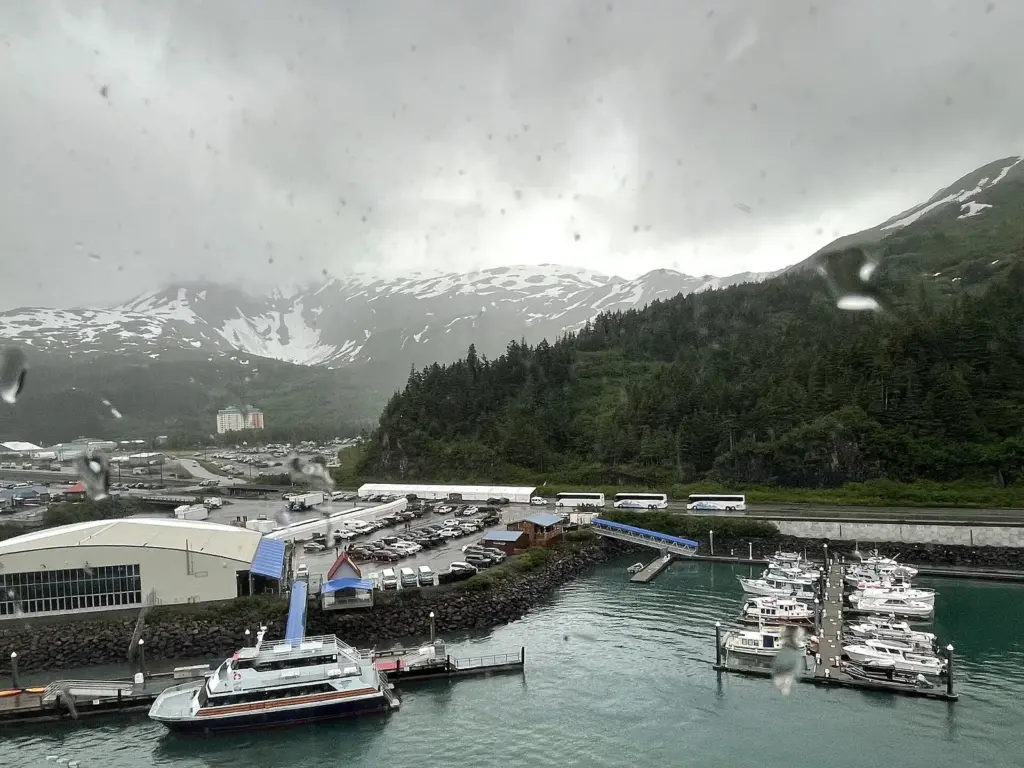
For a door-to-door comparison of every way to make the trip, see our guide to getting from Anchorage to Whittier. In Whittier, trains load and unload under a white tent across from the cruise terminal, so rail passengers walk a short distance to the ship. If your cruise ends in Seward instead, the trip is longer but has no tunnel at all, and the Alaska Railroad Coastal Classic runs there from Anchorage in summer. The Anchorage airport to Seward cruise terminal transfer gets its own guide, too.
The drive to the tunnel
From Anchorage, the route follows the Seward Highway south along Turnagain Arm, past Girdwood, to Portage, then turns east up the Portage Glacier Road through the Portage Valley to the Bear Valley staging area on the near side of the tunnel. It’s one of the most scenic drives in the state, with Dall sheep on the cliffs above the highway in summer and bore tides on the Arm, so don’t plan it as a race. If you reach the valley early, the Begich, Boggs Visitor Center on Portage Lake is a few minutes back down the road and makes a better place to wait than the staging lane.
What the cruise lines do
If you book a transfer through your cruise line, the tunnel becomes the line’s problem. Motorcoach transfers are scheduled around the openings, buses are marshaled in the staging lanes together, and the Grandview Cruise Train runs as a charter in step with ship arrivals. That coordination is the main reason to buy the line’s transfer on disembarkation day, even though it usually costs more than doing it yourself. If something goes wrong, you’re not alone at the booth.
The Tunnel for Kids, Seniors and Nervous Drivers
Most people find the crossing more interesting than scary. It’s a long, straight, lit tube, and at the posted speed you’re through in roughly ten minutes. Still, a 2.5-mile single-lane tunnel isn’t for everyone:
- If tunnels make you anxious, let a bus or the train do the work. Being a passenger, with windows and company, is much easier than driving.
- If you’re driving with children, explain what’s coming. The rails in the road and the safe houses in the walls are fascinating to kids once they know what they are.
- If you’re driving an RV or towing, you pay the $22 Class B1 toll; check DOT&PF’s current regulations before you go.
- If you have mobility needs, the train and the cruise-line buses are the simplest ways to reach the ship, because both deliver you close to the terminal.
Whittier Tunnel Terms You’ll Hear
- Anton Anderson Memorial Tunnel. The official name; almost everyone just says the Whittier tunnel.
- Bear Valley. The staging area and toll plaza on the Anchorage side of the tunnel. “Toward Bear Valley” means leaving Whittier.
- Portage. The valley and old railroad junction where the Whittier road leaves the Seward Highway.
- Opening. A 15-minute window when traffic can enter the tunnel in one direction.
- Staging lanes. The marked lanes where vehicles wait for the next opening.
- Class A and Class B1. The toll classes for ordinary vehicles ($13) and vehicles with trailers or RVs ($22).
- Glacier Discovery and Grandview Cruise Train. The Alaska Railroad’s scheduled train and its cruise charter, both of which use the tunnel ahead of road traffic.
A boarding-day checklist
- Confirm your ship’s latest boarding time, not just its sailing time.
- Pick the tunnel opening that gets you there with an hour to spare.
- Buy the toll online if you’re driving.
- Check the DOT&PF schedule or hotline that morning.
- Be in the staging lane ten minutes before the opening, and earlier on busy days.
- Keep passports, boarding documents and medications in your hand luggage, not in a bag headed for the ship’s hold.
Common Whittier Tunnel Mistakes
- Arriving at the staging area at the exact opening time. DOT&PF asks for ten minutes early, and a full line may not all get through.
- Forgetting the direction. Into Whittier on the half hour, out on the hour. Mixing them up costs 30 minutes.
- Booking a morning flight after disembarkation. The outbound openings, bus loading and the 60-mile drive add up fast.
- Ignoring trains. Unscheduled trains can delay an opening by 15 to 30 minutes, and they always win.
- Planning a late evening in Whittier. The last opening out is 11:00 p.m. in summer, and there’s little lodging if you miss it.
- Assuming April and October run on summer hours. The winter schedule starts October 1 and runs through April 30.
Seward or Whittier? Why the Tunnel Matters When You Choose
If you’re choosing between cruises that end in Whittier and ones that end in Seward, the tunnel is one of the trade-offs. Whittier is roughly 60 miles from Anchorage against about 125 for Seward, so it’s the quicker transfer, but it comes with fixed tunnel openings. Seward takes longer by road, about 2.5 to 3 hours by the same guides’ estimate, but you can leave when you like.
Whittier’s share has been growing. Seward handled 140,700 cruise passengers in 2025, about 80,000 fewer than in 2024, while Whittier’s cruise traffic rose about 25%. In 2026, when Seward’s new dock missed its planned May opening, several Royal Caribbean Group, Viking and Windstar calls were moved to Whittier. For 2027, Princess sails its “Voyage of the Glaciers” to Anchorage (Whittier), Holland America’s “Glacier Discovery” runs between Vancouver and Whittier, and Norwegian Jade sails between Vancouver and Whittier from May 10 to September 20.
If your ship uses Seward, you trade the tunnel for a longer, lovelier drive and a town with more to do. Our guides to the Seward cruise port, getting from Anchorage to Seward, things to do in Seward, the Alaska SeaLife Center and Seward hotels near the cruise terminal cover that side. On the Whittier side, the Whittier cruise port guide covers the terminal, and there are a few things to do in Whittier if you arrive early, from glacier cruises to short hikes.
A Short History of the Anton Anderson Memorial Tunnel
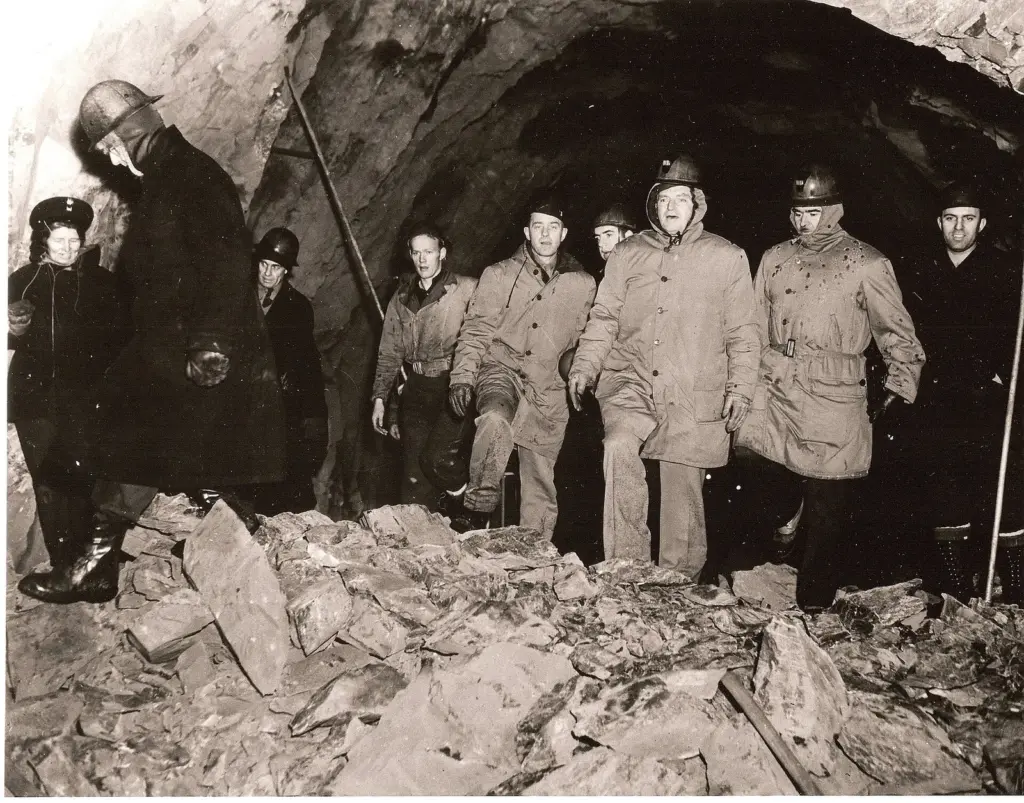
The tunnel is a World War II project. The U.S. Army wanted a port closer to Anchorage and less exposed to Japanese submarine and air attack than the existing route, so it decided to extend the railroad from Portage to Whittier through the mountains. Construction began in spring 1941. The main tunnel holed through on November 20, 1942, and the line opened to trains on June 1, 1943. The main Whittier Tunnel was measured at 13,900 feet, with a separate 4,910-foot Portage Tunnel on the approach.
The tunnel is named for Anton Anderson, an engineer who, with Olavi Kukkola, surveyed the final tunnel locations and routes in spring 1941. For more than half a century it was rail only: cars reached Whittier on flatcars. In 1998 the tunnel was modified to carry both trains and road vehicles, and it opened to public traffic in 2000, turning Whittier into a practical cruise port.
Tips for a Smooth Tunnel Crossing
- Check the schedule on the day. Call 1-877-611-2586 or check the DOT&PF page; hours and train slots can change.
- Arrive ten minutes early, as DOT&PF asks, and earlier on disembarkation or boarding days.
- Buy your toll online through the YODEL portal to skip the booth.
- Fill up before you go. Whittier is tiny, and you don’t want to be low on fuel in the staging lane.
- Drive steadily. Headlights on, no stopping, no passing, and keep a steady distance from the car ahead.
- Don’t book tight connections. A missed opening costs an hour, and an unscheduled train can add up to 30 minutes.
- Have a Plan B for late nights. Know where you’ll sleep if you miss the 11:00 p.m. opening.
For the bigger picture, from flights and hotels to which lines sail from which port, see our complete Anchorage cruise planning guide.
Whittier Tunnel FAQ
What time does the Whittier tunnel close?
In summer (May 1 to September 30) the tunnel is open 5:30 a.m. to 11:15 p.m. The last opening toward Whittier is at 10:30 p.m., and the last opening of the night leaves Whittier at 11:00 p.m. In winter the hours are 7:00 a.m. to 10:45 p.m., with the gates locked at 11:00 p.m.
How much is the Whittier tunnel toll?
Since July 1, 2015, the round-trip toll has been $13 for a car, pickup or motorcycle, $22 for a vehicle with a trailer or an RV, and $137 for a bus carrying 30 or more passengers. You pay once for the round trip, and tickets can be bought online through DOT&PF’s YODEL portal.
How often does the Whittier tunnel open?
Every half hour, alternating direction. Traffic toward Whittier goes on the half hour, from :30 to :45, and traffic toward Bear Valley and Anchorage goes on the hour, from :00 to :15. Trains use the gaps. DOT&PF asks drivers to be in the staging area ten minutes before an opening.
Do cruise passengers pay the Whittier tunnel toll?
Only if they drive themselves. Cruise-line motorcoaches and transfer buses pay the $137 bus toll, and Alaska Railroad passengers don’t pay a toll at all. If you rent a car to drive to the ship, you’ll pay the $13 round-trip toll for a standard vehicle.
What happens if you miss the last Whittier tunnel opening?
You wait until morning. In summer the last opening leaves Whittier at 11:00 p.m., and the first one toward Whittier is at 5:30 a.m. Whittier has very little lodging, so if a late flight or tour could leave you stranded, book a room ahead or stay in Anchorage or Girdwood.
How long does it take to get from Anchorage to Whittier?
Plan on about an hour and a half by road for the roughly 60 miles, including the tunnel, and more if you just miss an opening. The Alaska Railroad’s Glacier Discovery took about two hours and 20 minutes from Anchorage to Whittier in 2026, leaving at 9:45 a.m. and arriving at 12:05 p.m.
Is the Whittier tunnel open in winter?
Yes, but with shorter hours. From October 1 to April 30 it runs 7:00 a.m. to 10:45 p.m., with the last opening leaving Whittier at 10:00 p.m. When the temperature is at or below freezing, each opening lasts only its final five minutes, so be in line early.
Related Alaska Cruise Guides
Sources and How We Checked
We checked the prices, rules, schedules and ship deployments in this guide against the sources below on September 26, 2026, and we log each one in our research database with the date it was checked. Cruise lines change ships, fares and fees every season, so confirm anything that affects your booking with the line or the agency concerned. Alaska Cruise Guide (AlaskaCruise.org) is an independent publication. It is not affiliated with any cruise line, port, tour operator or tourism office, and no one paid to be included.
- Alaska DOT&PF: Whittier tunnel
- Alaska DOT&PF: Whittier tunnel
- Alaska DOT&PF: Whittier tunnel
- Alaska Public Media: Seward cruise terminal
- Alaska Railroad: Alaska Railroad
- Alaska Railroad: Alaska Railroad
- Alaska Railroad: Alaska Railroad
- Alaska Railroad: 26 Glacier Cruise
- alaska.org: Seward transfers
- cookinlethistoricalsociety.org: Whittier tunnel history
- Holland America Line: Holland America Line
- Norwegian Cruise Line: Norwegian Cruise Line
- Princess Cruises: Anchorage gateway, Princess Cruises
- Travel Alaska (State of Alaska): typical fares
Photo Credits
- Whittier tunnel portal: photo by Laura Alier, via Wikimedia Commons (CC BY 4.0)
- Interior of the Anton Anderson Memorial Tunnel: photo by Mark Fickett, via Wikimedia Commons (CC BY-SA 3.0)
- Whittier tunnel staging lanes: photo by Barbara Ann Spengler from Arizona & Florida, USA, via Wikimedia Commons (CC BY 2.0)
- Aerial view of Whittier: photo by Quintin Soloviev, via Wikimedia Commons (CC BY 4.0)
- Whittier harbor and rail platform: photo by Richard N Horne, via Wikimedia Commons (CC BY-SA 4.0)
- Whittier tunnel holing-through, 1942: photo by Unknown authorUnknown author, via Wikimedia Commons (Public domain)
- Whittier across Passage Canal: photo by Forest Service Alaska Region, USDA, via Wikimedia Commons (Public domain)