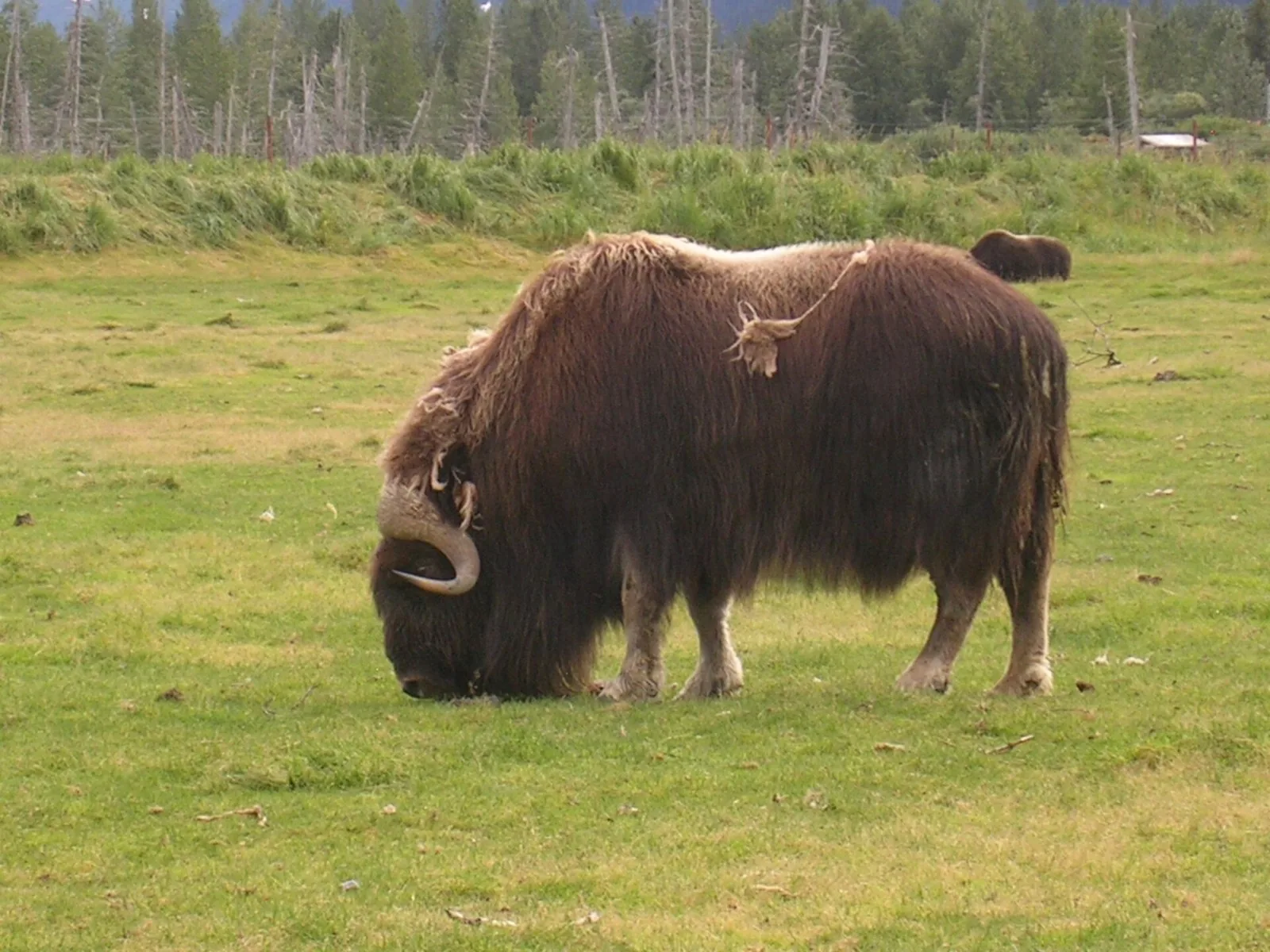
The Alaska Wildlife Conservation Center is a 200-acre wildlife sanctuary at Mile 79 of the Seward Highway near Portage, about 47 miles south of Anchorage and a few minutes from the road to Whittier. You drive, cycle or walk a 1.5-mile loop past brown bears, moose, wood bison, musk oxen and wolves, most of them orphaned, injured or otherwise unable to live in the wild. In summer 2026 it was open 8:30 a.m. to 7 p.m. daily and cost $30 for adults and $26 for children aged 4 to 12. Allow 1.5 to 2 hours.
This page is for cruise passengers heading between Anchorage and a ship in Whittier or Seward who want to know whether the center is worth a stop, how to fit it into the transfer and which tours include it. The one caveat: these are rescued and captive animals in large enclosures, not a wild sighting, and it’s worth going in with that clear. For the wild side of the trip, see our guide to an Alaska wildlife cruise. Last updated November 3, 2026. Every price, fee and schedule below is dated, and the sources are listed at the end.
Alaska Wildlife Conservation Center at a glance
| As of September 2026 | Details |
|---|---|
| Location | Mile 79 Seward Highway, 43520 Seward Highway, near Portage and Girdwood |
| From Anchorage | About 47 miles south, roughly an hour’s drive along Turnagain Arm |
| From Whittier | About 13 miles, through the Whittier tunnel |
| From Seward | About 79 miles north on the Seward Highway |
| Summer hours | 8:30 a.m. to 7 p.m. daily, May to September 15, last entry 6 p.m. |
| Admission (2026) | $30 ages 13 and up, $26 ages 4 to 12, free for 3 and under; discounts for active military and Alaska residents |
| Time needed | 1.5 to 2 hours; 45 minutes if you drive the loop and stop only for the stars |
| Getting around | A 1.5-mile loop on foot, by bike or by car |
| Pets | Must stay in your vehicle |
| Food and shop | Dining on site and a gift shop |
What is the Alaska Wildlife Conservation Center?
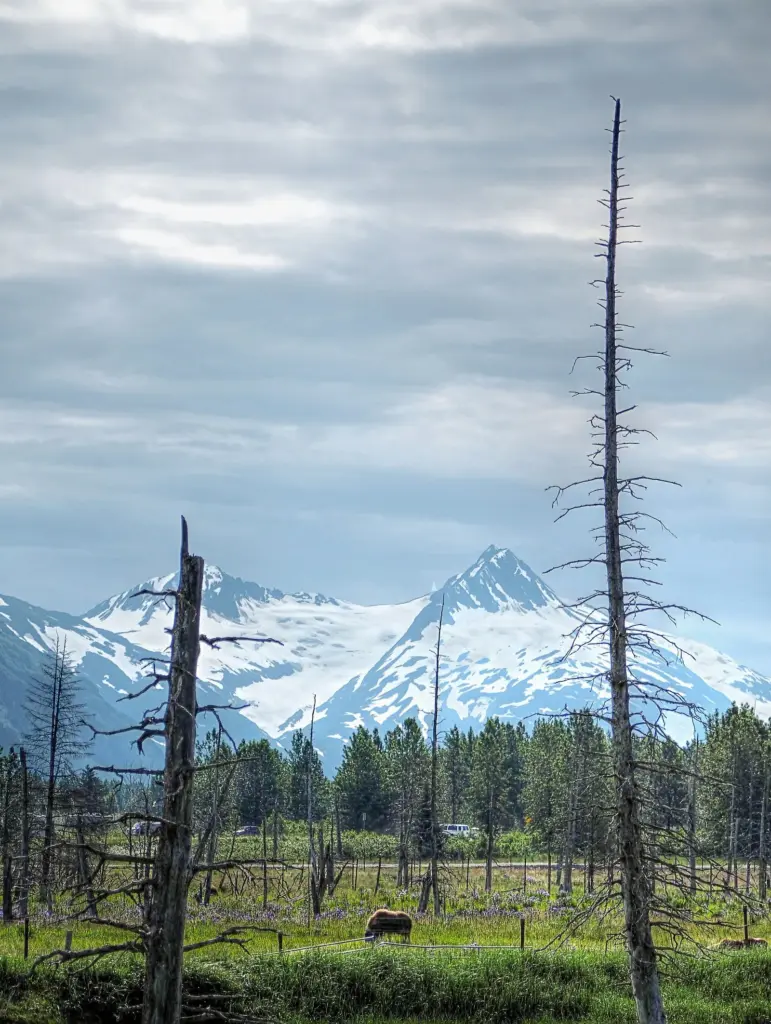
The center began in 1993 as a for-profit roadside attraction called Big Game Alaska, became a nonprofit in 1999 and took its current name in 2007, according to its published history. Today it describes its mission as preserving Alaska’s wildlife through conservation, research, education and animal care. In practice, that means two things you’ll see on a visit.
First, it’s a sanctuary. Many of the animals arrived as orphans or were injured, and most can’t be released because they never learned to survive on their own or grew too used to people. A moose calf found beside its dead mother, or a bear cub that learned to raid garbage, has few good options. Here it gets a large enclosure, food, veterinary care and a job as an ambassador for its species.
Second, it’s a conservation project. The center has been a home or temporary home for captive-born and translocated wood bison, a subspecies that had disappeared from Alaska and that the center helped prepare for a return to the wild. The bison herd is one of the best reasons to visit, because you won’t see wood bison anywhere on a cruise.
The setting helps. The center sits at the head of Turnagain Arm, where the Portage Valley opens between steep, glacier-topped mountains. The gray, standing dead trees you’ll notice on the flats are a reminder of the 1964 earthquake, when the land here dropped and salt water killed the spruce forest.
Which animals will you see?
Visitor listings put the collection at about 17 Alaska species. The exact line-up changes as animals arrive and age, but these are the ones most visitors come for.
| Animal | Chance of a good look | Why it’s worth seeing here |
|---|---|---|
| Brown bears | Very high | Close views you’ll never get safely in the wild; they sometimes swim in their pond |
| Moose | Very high | The animal every visitor wants to photograph, at eye level |
| Wood bison | Very high | The largest land mammal in North America, and absent from cruise itineraries |
| Musk oxen | High | An Arctic animal you won’t meet anywhere on a cruise route |
| Wolves | Moderate | Often resting out of sight in the middle of the day |
| Reindeer | High in fall | Meet-and-greet encounters on some afternoons |
Brown bears
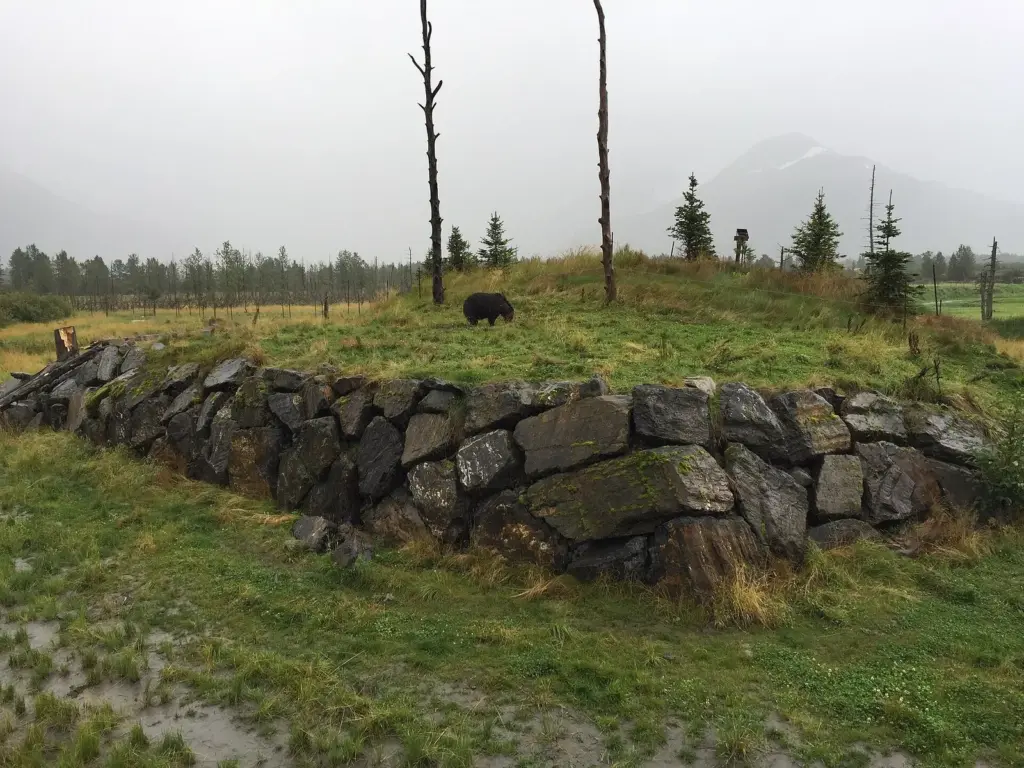
The bears are the headline. The center’s brown bears live in large, natural enclosures with ponds, and on a warm afternoon one may be swimming or wrestling with a log. Early and late in the day they’re usually more active. If you’re hoping to see bears in the wild on your cruise, our guide to bear viewing on an Alaska cruise covers the ports and tours where that happens. Seeing them here first helps you know what you’re looking at later.
Moose
Moose are common in Southcentral Alaska, and you may well see one on the drive, but a close, calm look is rare. At the center you’ll see them at eye level from the loop road. If a moose on your own terms is what you want, our page on where to see moose in Alaska lists the best places along the cruise routes.
Wood bison
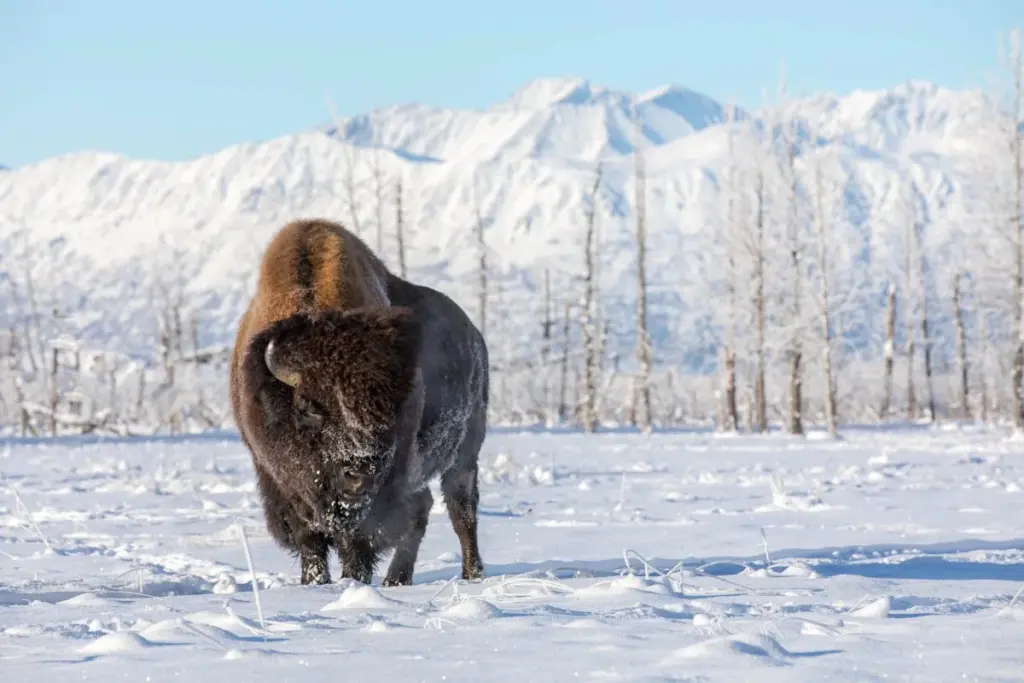
Wood bison are the larger of the two surviving subspecies of American bison, and a bull can stand about 6 feet at the shoulder and weigh more than 2,000 pounds, according to the U.S. Fish and Wildlife Service. The herd grazes the wide meadows along the loop, so you’ll usually see them from a distance, which is how you want to see a 2,000-pound animal anyway.
Musk oxen, wolves and the rest
Musk oxen look prehistoric in the best way: long shaggy coats, curled horns and a stocky build made for the Arctic. The wolves are harder to spot and often sleep through midday. The rest of the cast changes over time, but the center’s own programs in 2026 included reindeer encounters, and other species include smaller mammals and birds that are hard to see in the wild. Take the loop slowly and read the signs; each animal’s story is posted.
Alaska Wildlife Conservation Center tickets, hours and tours
General admission covers the loop, the viewing areas and the exhibits. In 2026 it cost $30 for anyone 13 and older, $26 for children aged 4 to 12 and nothing for children 3 and under, with discounted rates for active U.S. military and Alaska residents with ID. Summer hours run from May to September 15, 8:30 a.m. to 7 p.m. seven days a week, with last entry at 6 p.m. From November through February, the center opens only Friday to Monday, 10 a.m. to 5 p.m., so check the calendar if you’re traveling in the shoulder season.
The center also sells small-group add-ons, and its homepage warns that tours fill up fast. Its 2026 schedule, as listed on its own site:
| Program (2026) | When | Price |
|---|---|---|
| Moose Encounter | June 1 to September 15; Tuesday, Thursday, Saturday and Sunday at 10:30 a.m. | $30 plus admission |
| Bear Encounter | June 1 to August 15; Monday, Wednesday and Friday, 3:45 to 4:15 p.m. | $175, admission included |
| Reindeer Experience | September 1 to October 31; Monday, Wednesday and Friday at 3:45 p.m. | $30 plus admission |
| Walk on the Wild Side tours | Scheduled on the center’s website | Check when booking |
Verdict: general admission is plenty for most cruise passengers. The Bear Encounter is expensive, but for a bear-mad teenager, it may be the highlight of the trip. Book any add-on before you leave home, because the times are fixed and they won’t wait for a late bus.
How to fit it into a Whittier or Seward transfer
Most cruise passengers who visit the center do it on the way between Anchorage and the ship. It works because the center is on the only road south from Anchorage, right where the road to Whittier branches off. Here’s how to make it fit.
From or to Whittier
Whittier is the port for many one-way Gulf of Alaska cruises, about 60 miles from Anchorage. The only road in runs through the Anton Anderson Memorial Tunnel, the longest combined road and rail tunnel in North America, and road and rail traffic take turns in a single lane. In summer the tunnel is open about 5:30 a.m. to 11:15 p.m.; traffic leaves Whittier on the hour and enters on the half hour, and trains take priority. You can buy toll tickets online through the state’s YODEL portal, and the toll is collected on the way into Whittier.
The center is about 13 miles from Whittier, so it slots in neatly. Leaving a ship, a sample morning looks like this:
| Time | Step |
|---|---|
| 8:00 a.m. | Off the ship with your luggage |
| 9:00 a.m. | Through the tunnel on the hourly departure |
| 9:25 a.m. to 11:00 a.m. | Alaska Wildlife Conservation Center |
| About 12:10 p.m. | Anchorage airport, after about an hour on the Seward Highway |
| 2:30 p.m. or later | The earliest flight we’d book with this plan |
Going the other way, to board a ship, the center opens at 8:30 a.m. in summer, and ships usually board around midday or later, so a morning visit on the drive down from Anchorage is easy. Just time your arrival at the tunnel for a half-hour opening into Whittier and leave margin for a missed slot.
From or to Seward
Seward’s mileposts count up from Seward, so Mile 79 is roughly 79 miles north of the cruise dock, and the center makes a natural halfway stop on the road to Anchorage. Seward to Anchorage is about 125 road miles, reported at 2.5 to 3 hours without stops. With a 90-minute visit, count on 4 to 4.5 hours door to door, which still leaves time for an evening flight.
On the train? Skip it this time
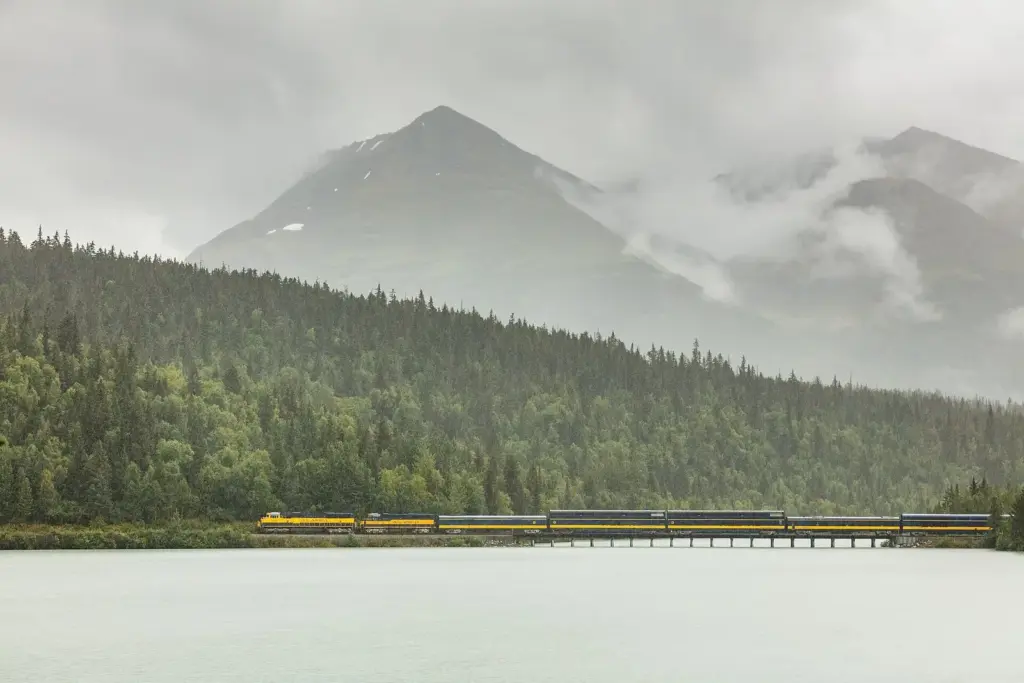
The Alaska Railroad’s Glacier Discovery runs daily in summer between Anchorage and Whittier, and its Grandview Cruise Train is chartered for cruise passengers between Whittier or Seward and Anchorage, timed to the ships. Both are great ways to travel, but neither stops at the center. If the wildlife center matters to you, go by road.
Tours and transfers that include the center
You don’t need to rent a car. Several kinds of trip include the center:
- Cruisetours. Holland America’s “Ultimate Alaska & Denali” cruisetours, offered from 2026, include a visit to the Alaska Wildlife Conservation Center along with nights at the line’s Denali lodge. Other lines’ land tours may include it too; check the day-by-day plan.
- Cruise line transfers. Some cruise line transfers and sightseeing packages between Whittier or Seward and Anchorage stop at the center. Ask your line whether its transfer includes the stop and the admission.
- Local tours. Anchorage and Girdwood tour companies run Turnagain Arm day trips that pair the center with Portage Valley and Girdwood, and Alyeska Resort in Girdwood sells center visits.
- Private transfers. For a family or group, a private driver between the ship and Anchorage with a planned stop is often the easiest option.
If you’re driving yourself, the Seward Highway along Turnagain Arm is one of the prettiest roads in the state, with pullouts every few miles. Our Anchorage to Whittier guide covers the drive, the tunnel and the transfer choices in detail.
Is the Alaska Wildlife Conservation Center worth it?
For most cruise passengers passing through, yes, with one honest qualification: it isn’t wildlife watching. It’s a sanctuary, and the animals are fed and fenced. Some travelers feel uneasy about any animal in an enclosure. What persuades most people is the purpose. These animals couldn’t survive in the wild, and the center uses them to teach visitors, fund care and support conservation work like the wood bison program.
| Worth it if | Skip it if |
|---|---|
| You’re transferring by road between Anchorage and Whittier or Seward anyway | You’re taking the train and would need a special trip |
| You’re traveling with kids who want guaranteed moose and bears | You’ve booked serious wild bear viewing and want only the real thing |
| Someone in your group can’t walk far (drive the loop) | Your flight leaves Anchorage before about 1 p.m. after a Whittier arrival |
| You want close photos of animals you may only glimpse elsewhere | Captive animals make you uncomfortable |
Verdict: the best 90-minute stop between Anchorage and the ship, especially with children or anyone with limited mobility. Don’t count it as your Alaska wildlife sighting. Count it as the place where you learn what you’re looking for.
How it compares with other wildlife stops on a cruise
The center isn’t the only place on an Alaska cruise where you can see animals up close in care. Sitka’s Alaska Raptor Center is the other big one, and it’s worth knowing how they differ before you spend your time and money.
| Stop | What you see | 2026 adult price | Best for |
|---|---|---|---|
| Alaska Wildlife Conservation Center (Portage) | Bears, moose, wood bison, musk oxen, wolves and more in large enclosures | $30 | Big mammals, families, limited mobility |
| Alaska Raptor Center (Sitka) | Bald eagles and other raptors in rehabilitation, with a flight-training center | $17 | Bird lovers on a Sitka port day |
| Anan Wildlife Observatory (near Wrangell) | Wild black and brown bears fishing for salmon | A floatplane trip, often $750 and up from Ketchikan | The real thing, if your line sells it |
They complement each other. The Raptor Center is about birds and rehabilitation, the Portage center is about big mammals and restoration, and a place like Anan is where you see wild animals doing what they do. If your trip starts or ends in Anchorage, the Portage center is the one you can reach on the way.
Visiting with kids, and in May or September
Children love this place, and the pricing helps: in 2026, ages 4 to 12 paid $26 and children 3 and under got in free. The loop is flat enough for strollers, the car is always nearby when little legs give out, and seeing a moose at eye level beats any number of museum exhibits. Pack snacks and a warm layer, because the wind at the head of Turnagain Arm catches out families dressed for Anchorage.
Shoulder-season cruisers should check the calendar. Summer hours of 8:30 a.m. to 7 p.m. run through September 15, and after that the hours shrink. The Moose and Bear Encounters run in the summer window only (the Bear Encounter ended August 15 in 2026), while the Reindeer Experience took over from September 1. May visits have one big bonus: it’s calving season for many Alaska mammals, and wild moose calves are sometimes visible along the highway on the drive.
A half-day along Turnagain Arm with the center
If you have a spare day before or after your cruise, the center is best as part of a slow drive rather than a rushed stop. Here’s a relaxed half-day from Anchorage heading toward Whittier, reversible if you’re coming off a ship:
- Leave Anchorage by 8 a.m. and follow the Seward Highway south along Turnagain Arm, stopping at pullouts for the views over the water and the cliffs above the road.
- Stop in Girdwood for coffee and a look at the valley, or ride the aerial tram at Alyeska if the clouds are high.
- Spend 90 minutes at the center, arriving by about 10:30 a.m., before the midday tour buses.
- Drive into Portage Valley for the lake below Explorer Glacier and a picnic.
- Time the Whittier tunnel for a half-hour opening into town, with a margin in case you miss one.
That’s a full, easy morning that turns a transfer into a sightseeing day, and it costs less than most shore excursions.
Tips for your visit
- Go early or late. The animals are usually more active in the morning and evening, and midday is when tour buses arrive.
- Drive the loop once, then walk it. A slow drive shows you where the animals are; a walk gets you the photos.
- Dress for wind. The head of Turnagain Arm funnels cold air off the glaciers, and it can be much windier here than in Anchorage.
- Bring binoculars and a zoom lens. The enclosures are big. Our Alaska wildlife photography guide has settings for animals at a distance.
- Don’t touch or feed. The center says so in capital letters, and it’s the rule most often broken.
- Leave pets in the car. They must stay in your vehicle, which on a warm day means leaving them at the hotel.
- Use it for limited mobility. You can see almost everything from a car on the loop road.
Nearby stops on the same road
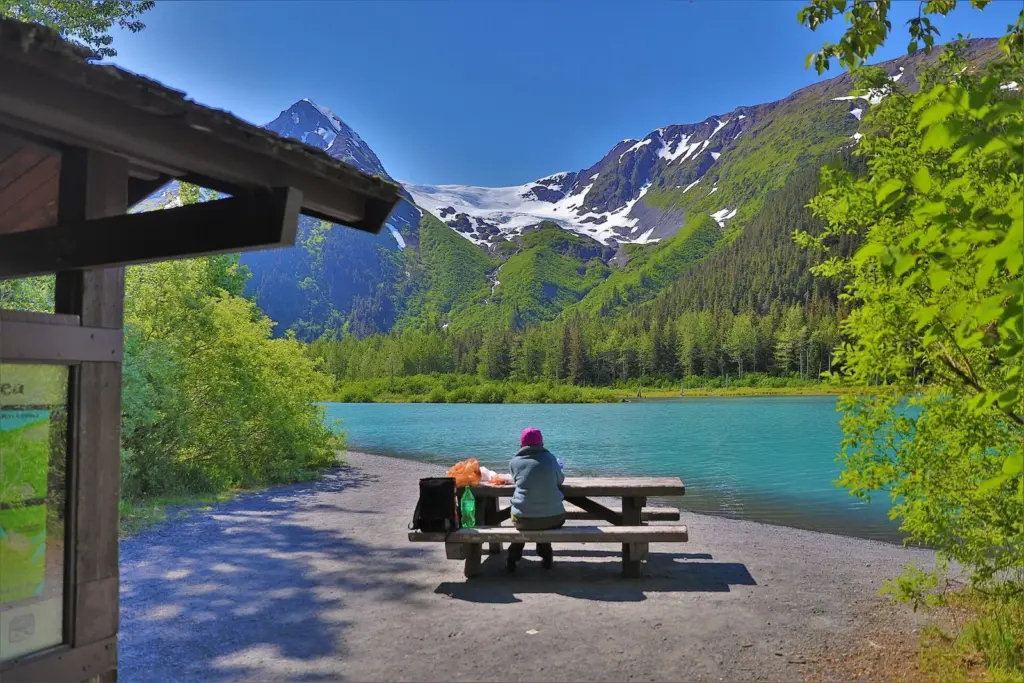
The center sits at the mouth of Portage Valley, and a few extra minutes buy you some of the best roadside scenery near Anchorage. The valley road passes hanging glaciers, including Explorer Glacier, and leads toward Portage Lake. North along the Seward Highway, Girdwood has a ski resort and an aerial tram, and the Turnagain Arm pullouts are known for Dall sheep on the cliffs and, with luck, beluga whales in the water. If you have a full day between ship and plane, you can combine two or three of these with the center without rushing.
More Alaska wildlife guides
The center is a warm-up for the real thing. On the water, our whale watching Alaska cruise guide covers the best ports and tours, with more on humpback whales in Alaska and orcas in Alaska. Bird lovers should read about bald eagles in Alaska and puffins in Alaska, and our pages on sea otters in Alaska, sea lions in Alaska and dolphins in Alaska cover the rest of the marine cast. For the land, see the Alaska salmon run, when bears come to the rivers, and mountain goats in Alaska, which you’ll spot as white dots on cliffs from the ship.
For the full picture of what you’ll see from the deck and ashore, go back to our guide to Alaska wildlife on a cruise.
Alaska Wildlife Conservation Center FAQ
How much are Alaska Wildlife Conservation Center tickets?
In 2026, general admission cost $30 for ages 13 and up, $26 for children aged 4 to 12, and nothing for children 3 and under, with discounts for active U.S. military and Alaska residents with ID. Add-ons cost extra: the Moose Encounter was $30 plus admission and the Bear Encounter $175 including admission.
How far is the Alaska Wildlife Conservation Center from Anchorage?
About 47 miles south of Anchorage at Mile 79 of the Seward Highway, near Portage. The drive takes about an hour along Turnagain Arm without stops, longer if you pull over for the views. It’s about 13 miles from Whittier and about 79 miles from Seward, so it’s on the way to both cruise ports.
Is the Alaska Wildlife Conservation Center in Girdwood?
Its mailing address is Girdwood, but the center sits about 11 miles southeast of Girdwood at the head of Turnagain Arm, at the entrance to Portage Valley. If you’re staying in Girdwood or at Alyeska Resort, it’s a short drive, and the resort sells center visits.
Can you drive through the Alaska Wildlife Conservation Center?
Yes. The center’s 1.5-mile loop can be toured by car, by bike or on foot, which makes it one of the best Alaska wildlife stops for travelers with limited mobility. Pets must stay in your vehicle. Most people drive once to find the animals and then walk the stretches they want to photograph.
How long do you need at the Alaska Wildlife Conservation Center?
Plan on 1.5 to 2 hours for a relaxed visit with photos and a look at the gift shop. If you’re squeezing it into a transfer, you can drive the loop and stop only for the bears, moose and bison in about 45 minutes. Add-on encounters run on fixed schedules, so plan around those times.
Can you visit on the way from Seward to Anchorage?
Yes, and it’s a natural halfway stop. The center is at Mile 79 of the Seward Highway, roughly 79 miles north of Seward and 47 miles south of Anchorage. With a 90-minute visit, the drive from the Seward cruise dock to Anchorage takes about 4 to 4.5 hours, leaving time for an evening flight.
Is the Alaska Wildlife Conservation Center ethical?
It’s a nonprofit sanctuary for orphaned and injured animals that mostly can’t return to the wild, and it supports conservation projects such as wood bison restoration. The animals live in large, natural enclosures. If captive animals bother you, skip it; if not, it’s a responsible way to see Alaska’s big mammals up close.
Related Alaska Cruise Guides
Sources and How We Checked
We checked the prices, rules, schedules and ship deployments in this guide against the sources below on September 26, 2026, and we log each one in our research database with the date it was checked. Cruise lines change ships, fares and fees every season, so confirm anything that affects your booking with the line or the agency concerned. Alaska Cruise Guide (AlaskaCruise.org) is an independent publication. It is not affiliated with any cruise line, port, tour operator or tourism office, and no one paid to be included.
- Alaska Department of Fish and Game: Anan Wildlife Observatory
- Alaska DOT&PF: Whittier tunnel
- Alaska DOT&PF: Whittier tunnel
- Alaska Railroad: Alaska Railroad
- alaska.org: Seward transfers
- alaskaitinerary.com: Ketchikan bear viewing
- alaskaraptor.org: Alaska Raptor Center
- alaskawildlife.org: Alaska Wildlife Conservation Center
- alaskawildlife.org: Alaska Wildlife Conservation Center
- alaskawildlife.org: Alaska Wildlife Conservation Center
- anchorage.net: Alaska Wildlife Conservation Center
- commons.wikimedia.org: Wood bison
- Holland America Line: Holland America Line
- Princess Cruises: Anchorage gateway
Photo Credits
- Musk ox at the Alaska Wildlife Conservation Center: photo by U.S. Department of the Interior, via Wikimedia Commons (CC BY-SA 2.0)
- Alaska Wildlife Conservation Center, Portage: photo by joiseyshowaa from Freehold, NJ, USA, via Wikimedia Commons (CC BY-SA 2.0)
- Brown bear at the Alaska Wildlife Conservation Center: photo by Sunnya343, via Wikimedia Commons (CC BY-SA 4.0)
- Wood bison bull (USFWS, Doug Lindstrand): photo by Alaska Region U.S. Fish & Wildlife Service from Anchorage, United States, via Wikimedia Commons (CC0)
- Alaska Railroad passenger train on the Kenai Peninsula: photo by Diego Delso, via Wikimedia Commons (CC BY-SA 4.0)
- Lake below Explorer Glacier, Portage Valley: photo by Enrico Blasutto, via Wikimedia Commons (CC BY-SA 4.0)