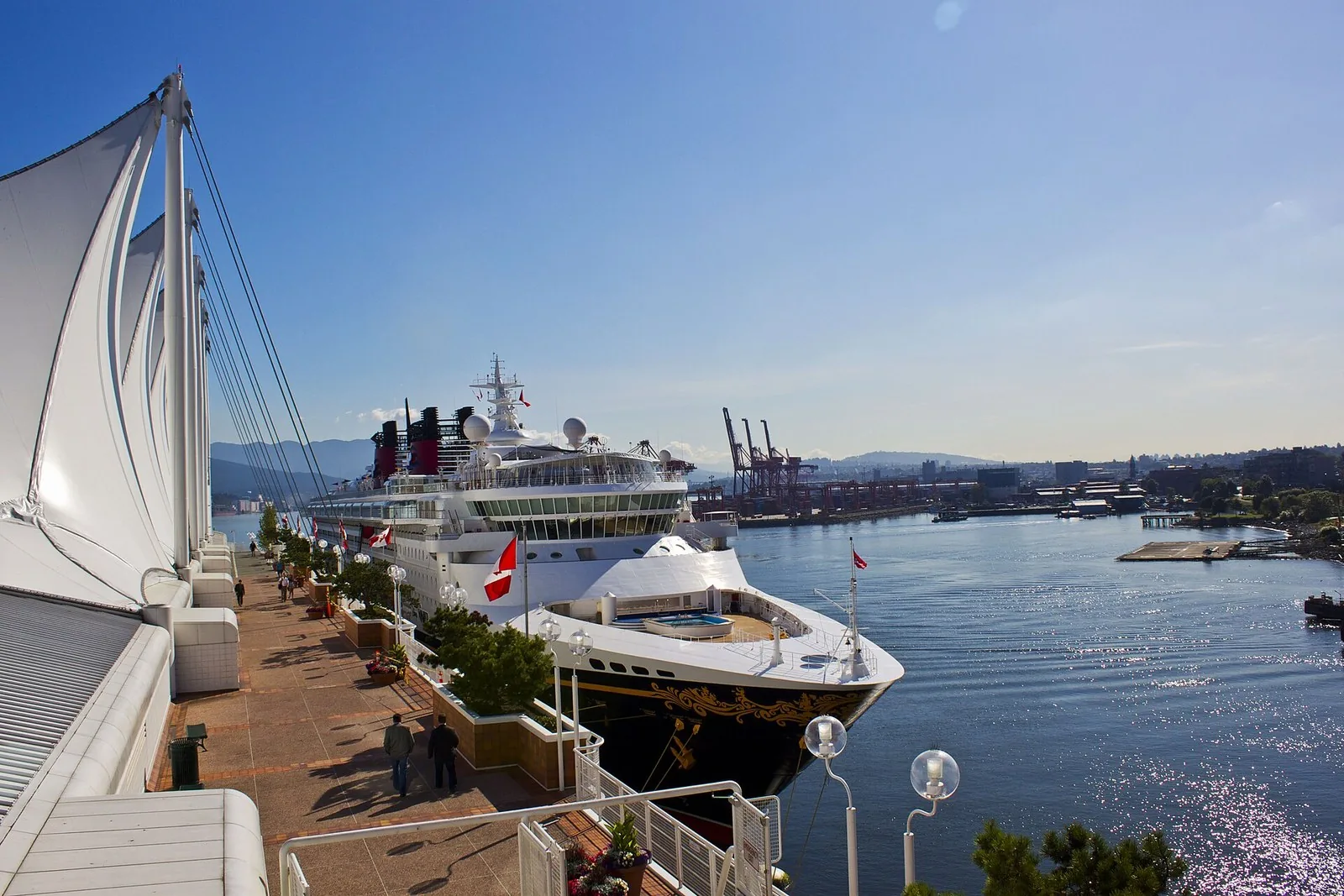
The Canada Place cruise terminal is Vancouver’s cruise port, at 999 Canada Place on the downtown waterfront, next to Waterfront Station and under the landmark white sails. Before you board an Alaska-bound ship there, you pass through a U.S. Customs and Border Protection check inside the terminal. It’s U.S. pre-inspection, which covers whether you can be admitted to the United States, not full preclearance. The Port says bags can be checked from about 10 to 10:30 a.m. on sailing day, drop-offs of 15 minutes or less are free, and the SkyTrain from the airport costs about $10.70 Canadian.
This page is for travelers starting or ending an Alaska cruise in Vancouver who want to know how check-in, the border process and the logistics work. The caveat that matters: because U.S. officers check you in Vancouver, your documents have to be right before you reach the ship, and a problem there means you don’t sail. Travelers often ask, do you need a passport for an Alaska cruise? From Vancouver, the practical answer is yes. For the wider trip, see our guide to an Alaska cruise from Vancouver. Last updated November 5, 2026. Every price, fee and schedule below is dated, and the sources are listed at the end.
Canada Place cruise terminal logistics at a glance
| As of September 2026 | Details |
|---|---|
| Address | 999 Canada Place, Vancouver, BC, beside Waterfront Station |
| Run by | The Vancouver Fraser Port Authority |
| Size | Three berths, described as able to handle up to four ships at once |
| 2026 traffic | A record of about 1.4 million passengers and nearly 360 ship calls expected |
| Drop-off and pickup | Free for 15 minutes or less at the Canada Place parkade, reached by the vehicle ramp at the foot of Howe Street |
| Parking | Run by Indigo Park Canada; pay by machine or online; weekly cruise parking available |
| From YVR airport | Canada Line SkyTrain to Waterfront Station, about 25 minutes; $4.20 plus the $6.50 YVR AddFare by contactless card (CAD, from July 1, 2026) |
| Bag drop | From about 10 to 10:30 a.m. Pacific on sailing day |
| U.S. border check | CBP pre-inspection (admissibility only), the last step before boarding |
| Arriving by air | Fly in the day before; a same-day flight is a gamble |
| Flying home | For U.S.-bound flights, allow time for U.S. preclearance at YVR; book about 12:30 p.m. or later |
What’s changed for 2027
- The airport train costs more. TransLink raised the YVR AddFare from $5 to $6.50 on July 1, 2026, so the SkyTrain from the airport to Canada Place now runs about $10.70 Canadian by contactless card.
- ESTA costs more. For Visa Waiver travelers, CBP lists the ESTA fee at $40 since September 30, 2025, up from $21.
- A new way back to Seattle. Canada announced a U.S. preclearance facility at Pacific Central rail station for Amtrak Cascades in June 2026, which matters if you finish a one-way cruise in Vancouver and head south by train.
- Record crowds. Vancouver expected about 1.4 million cruise passengers in 2026, beating its 2024 record, so the peak weekends are busier than ever.
Where is Canada Place, and how is the terminal laid out?
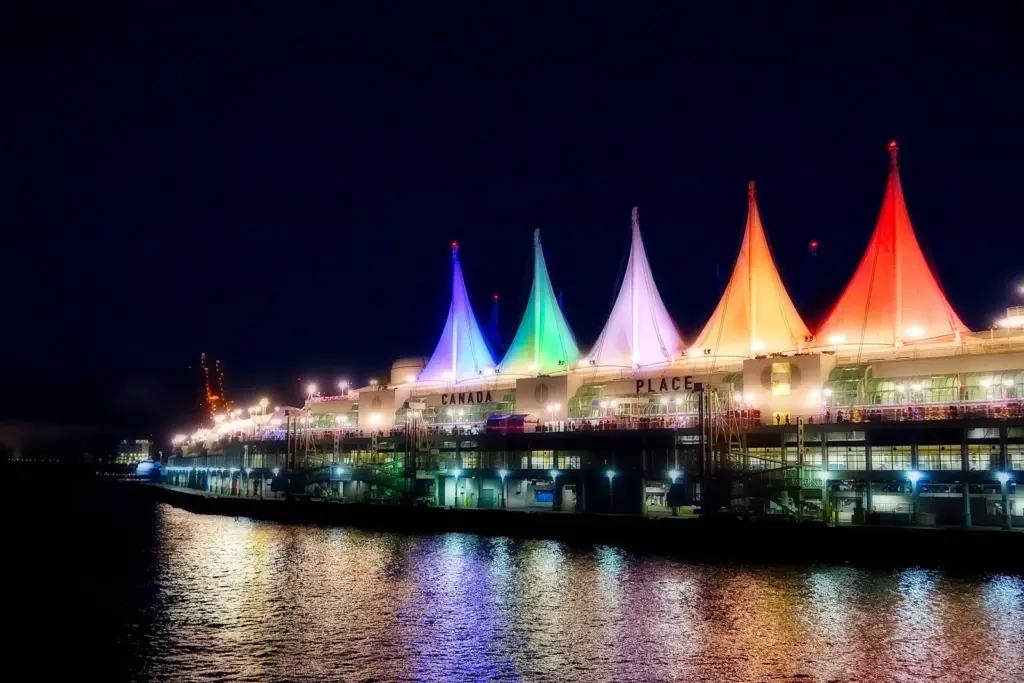
Canada Place is a pier on Burrard Inlet at the foot of downtown Vancouver, shaped like a ship with five white fabric sails on its roof. It’s a mixed building: the cruise terminal shares it with part of the Vancouver Convention Centre, a hotel, the FlyOver Canada ride and a public promenade that wraps around the outside. The cruise berths run along the sides and end of the pier, and on a busy day you’ll see ships on both sides.
For passengers, the geography is simple. Vehicles come down the ramp at the foot of Howe Street to the parkade and drop-off area at the lower level. From there, you follow signs and cruise line staff to baggage drop and check-in, then up through screening and the U.S. border check to the ship. If you’re walking from a downtown hotel or from Waterfront Station, you’ll enter from street level and staff will point you the right way.
The terminal is right downtown, which is its great advantage over most cruise ports. Gastown, the Coal Harbour seawall and dozens of restaurants are within a short walk, and the SkyTrain is across the street.
Check-in at Canada Place, step by step
- Arrive at your assigned time. Lines give each passenger a check-in window. The Port says baggage can be checked from about 10 to 10:30 a.m. Pacific on the day of sailing.
- Drop your checked bags. Tag them with your line’s luggage tags first. The Port says checked baggage is delivered to your cabin.
- Follow the signs to check-in. Have your passport, boarding documents and any visa or ESTA details ready.
- Security screening. Like an airport, but usually quicker.
- U.S. CBP pre-inspection. The Port describes this as the final step before boarding.
- Board. Once past CBP, you walk onto the ship.
Here’s how a smooth sailing day looks for a couple who flew in the day before and stayed downtown, with an assigned check-in of 12:30 p.m.:
| Time | Step |
|---|---|
| Morning | Breakfast, a walk along the Coal Harbour seawall, hotel checkout |
| 11:45 a.m. | Taxi or a short walk to Canada Place |
| Noon | Checked bags to the porters at the drop-off level |
| 12:30 p.m. | Check-in, then security screening |
| About 1:00 p.m. | U.S. CBP pre-inspection, the last step |
| About 1:15 p.m. | On board, lunch, and a first look at the harbor from the top deck |
| Late afternoon | Sail-away under the Lions Gate Bridge |
Keep medication, documents, a jacket and anything valuable in your carry-on. Checked bags may not reach your cabin until the evening, and Vancouver sail-aways are usually cool on deck.
How the U.S. border process works at Canada Place
This is the part most people find confusing, and much of what’s online gets it wrong. Here’s what CBP itself says.
Pre-inspection, not preclearance
Alaska-bound cruise ships from Vancouver have used U.S. pre-inspection for more than 30 years. According to CBP, pre-inspection covers only admissibility, meaning whether you may travel to the United States. Full preclearance, the kind you get at Vancouver’s airport, would also cover the customs and agriculture parts of the inspection. CBP officers who staff the airport’s preclearance area travel to the cruise port as needed to do the pre-inspection. That’s why you won’t find a Vancouver seaport on CBP’s list of preclearance locations, even though you really do meet U.S. officers in the terminal.
The Port of Vancouver says the terminal uses facial biometrics at this step, comparing a photo taken as you board with the photo in your travel document. For most travelers, it’s fast: a look at your passport, a photo, a question or two, and you’re through.
What the officers are checking
| Traveler | What you need for the U.S. check |
|---|---|
| U.S. citizens | A U.S. passport book is the practical choice, since you’ll also need one to fly to or from Canada |
| Canadian citizens | A valid passport or other document accepted for U.S. entry |
| U.S. green card holders | Your green card, plus the passport Canada requires you to carry |
| Visa Waiver Program travelers | An approved ESTA, which CBP says is needed for entry by air, sea or land; CBP lists the fee as $40 since September 30, 2025 |
| Everyone else | A valid passport and the right U.S. visa |
What’s not done at Canada Place
Because pre-inspection covers admissibility only, the customs and agriculture side isn’t handled in Vancouver. Your cruise line coordinates the rest with CBP once the ship is in U.S. waters, and it will tell you if you need to do anything. In practice, most passengers never notice. Declare what you’re carrying when asked, and don’t pack fresh fruit, meat or plants you can’t account for. Our Vancouver cruise US customs guide goes deeper on declarations and duty-free limits.
Verdict: treat the Canada Place check as a real U.S. border crossing, because it is one. If your documents wouldn’t get you into the United States at an airport, they won’t get you onto the ship.
Documents, and the Canadian side of the trip
Starting a cruise in Vancouver means entering Canada first, usually by air, so both countries’ rules apply. A few points trip people up every season:
- U.S. citizens need neither a visa nor an eTA to enter Canada, and Canada recommends always carrying a valid passport for air travel. Flying in means a passport book in practice.
- Other visitors may need Canada’s electronic travel authorization (eTA), which costs CAN$7, on top of the U.S. ESTA or visa for the cruise.
- Green card holders have been exempt from the eTA since April 26, 2022, but must carry both a valid passport and the green card.
- Impaired driving convictions can make a person inadmissible to Canada for “serious criminality,” wherever the conviction happened. People with a DUI conviction outside Canada can apply for criminal rehabilitation five years after completing their sentence, and a temporary resident permit may allow a short visit. Deal with this months before you sail.
- Cannabis, including CBD, can’t legally cross the Canadian border in either direction without Health Canada authorization, even if it’s legal where you live.
- Children traveling without both parents should carry a signed consent letter from every parent or guardian not on the trip, as the Canada Border Services Agency advises.
Getting to Canada Place
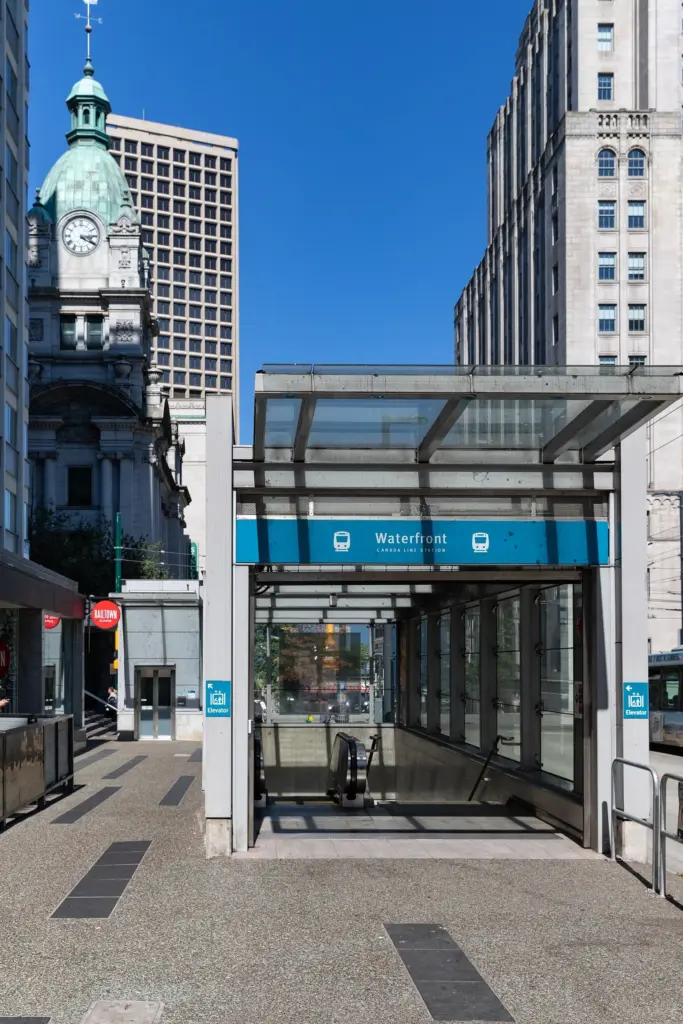
From Vancouver International Airport (YVR)
The Canada Line SkyTrain runs from YVR-Airport Station to Waterfront Station, across the street from Canada Place, in about 25 minutes, according to TransLink. TransLink’s fares from July 1, 2026 are $4.20 for a two-zone adult trip by contactless card or Stored Value ($5.10 by Compass Ticket), plus a $6.50 YVR AddFare charged at all times on trips that start at the airport stations. That’s about $10.70 Canadian by tapping a credit card, which is by far the cheapest way into town. It’s easy with a carry-on and a medium suitcase, and harder with a family’s worth of luggage.
A taxi or rideshare is usually reported at 30 to 45 minutes, depending on traffic. Cruise lines also sell airport transfers. Our Vancouver airport to cruise terminal guide compares all the options and costs.
From a downtown hotel
If you stayed downtown, you may be able to walk, which is one of the pleasures of sailing from Vancouver. Otherwise it’s a short taxi ride. Our list of hotels near Canada Place covers the ones within an easy roll of a suitcase.
From Seattle
Many Americans fly into Seattle and travel north. Our Seattle to Vancouver cruise transfer guide covers the bus, train and car options. One recent change affects the trip back south: the Government of Canada announced in June 2026 that it had opened a U.S. preclearance facility at Vancouver’s Pacific Central rail station for Amtrak Cascades, which it called the first rail preclearance in Canada.
Drop-off, parking and luggage
Drop-off and pickup use the Canada Place parkade, reached by the vehicle ramp at the foot of Howe Street. Stops of 15 minutes or less for dropping off or collecting cruise passengers are free. Stay longer and you need to take a stall and pay at a machine or online. Cruise parking is run by Indigo Park Canada, and weekly cruise parking is available. The Port’s pages we checked didn’t show a daily rate, so confirm with Indigo when you book; our Vancouver cruise port parking guide compares the lots.
If you’re in town for the day before an evening flight, or you arrive early, look at luggage storage options; our Vancouver cruise terminal luggage storage page lists them.
How early should you arrive?
Arrive at the check-in time your line gives you, not hours before. The terminal is busy: Vancouver expected a record of about 1.4 million cruise passengers and nearly 360 ship calls in 2026, and Daily Hive reported peak weekends of 40,000 to 56,000 cruise passengers. On a day when three or four ships are turning around, the drop-off lanes, escalators and check-in halls are all under pressure, and arriving at the same moment as everyone else slows you down.
If you’re flying in, fly in the day before. A delayed connection, a long line at Canada’s border at YVR, and a 25-minute train ride add up quickly, and a ship on a tight schedule won’t wait. Check our Vancouver cruise ship schedule to see how busy your sailing day is, and use the spare evening for things to do in Vancouver before a cruise.
If you’re early: what’s around Canada Place
Canada Place is one of the few cruise terminals where arriving early isn’t a punishment. If you have time before your check-in window, or a gap before a flight on the way home, there’s plenty within a few minutes’ walk:
- The promenade. The public walkway around the pier gives you close views of the ships, the North Shore mountains and the floatplanes landing in the harbor.
- FlyOver Canada. The flight-simulation ride inside Canada Place is a good rainy-hour fill-in.
- Coal Harbour and the seawall. Walk west along the water toward Stanley Park for an hour of easy scenery.
- Gastown. Vancouver’s oldest neighborhood, with its cobbled streets and the steam clock, is a short walk east past Waterfront Station.
Just don’t wander so far that you’re late for your window. If you’re carrying bags, check them first or use a storage service rather than towing them around.
Accessibility at Canada Place
If you’ll need a wheelchair inside the terminal, the Port says to arrange it with your cruise line before you arrive. Lines provide wheelchair assistance from the curb through check-in and onto the ship when it’s requested in advance. The Port also notes that the terminal is covered by Canada’s Accessible Transportation for Persons with Disabilities Regulations. For drop-off, the 15-minute free zone in the parkade is the easiest place for a driver to help someone out of a car. If you’re coming by SkyTrain, plan for elevators at both stations and allow extra time.
Disembarkation in Vancouver
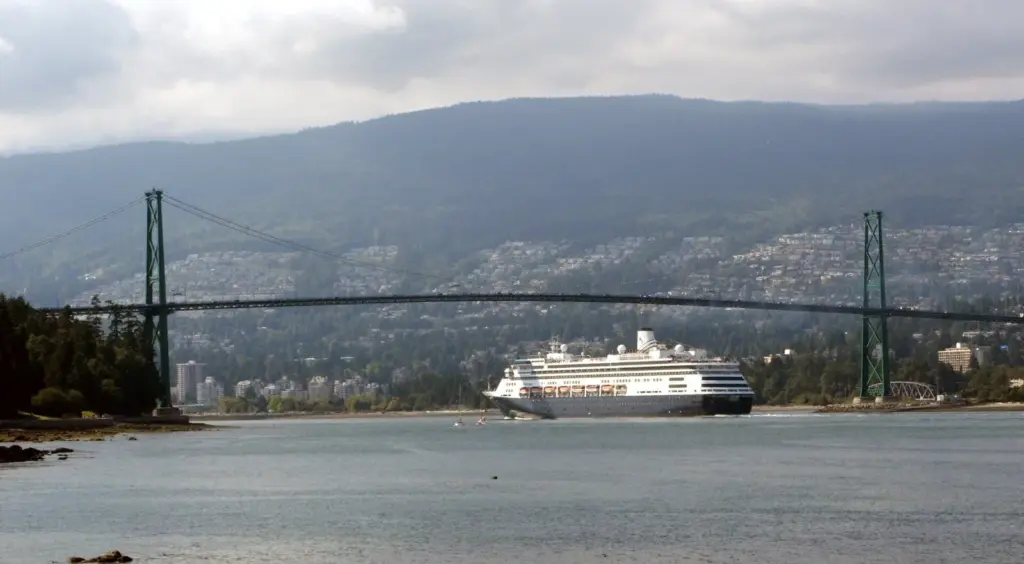
If your cruise ends in Vancouver, you’re entering Canada from the ship. The Port says passengers disembarking in Vancouver complete a declaration card (E311) and clear Canadian customs with the Canada Border Services Agency after collecting their baggage. Ships usually arrive early in the morning, and passengers leave by group in the order the ship sets.
Flying home to the United States? YVR has full U.S. preclearance, so you’ll clear U.S. customs and immigration at the airport before your flight, not when you land. That adds time and a second line to your morning. We’d book U.S.-bound flights for about 12:30 p.m. or later, and later still on a busy weekend.
| Direction | Border steps in Vancouver | Allow |
|---|---|---|
| Boarding for Alaska | CBP pre-inspection in the terminal | Arrive at your check-in time; fly in a day early |
| Ending a cruise, staying in Canada | E311 card and CBSA after collecting bags | A relaxed morning |
| Ending a cruise, flying to the U.S. | CBSA at Canada Place, then U.S. preclearance at YVR | Book flights from about 12:30 p.m. |
Ending a one-way cruise from Alaska
Travelers who start in Seward or Whittier and sail south finish at Canada Place, often after a scenic last morning through the Inside Passage and under the Lions Gate Bridge. The process is the same: collect your bags, fill in the E311 card, clear CBSA, and head out to the taxis, the SkyTrain or a transfer. If you’re continuing to Seattle by train, the Pacific Central preclearance means you clear U.S. entry in Vancouver before boarding the Amtrak Cascades. If you have a free afternoon, Vancouver is a far better place to spend it than an airport lounge.
Money, phones and other small details
- Currency. Vancouver prices are in Canadian dollars, while your ship runs on U.S. dollars. Tap-to-pay credit cards work on the SkyTrain gates and nearly everywhere downtown, so you rarely need cash.
- Phones. Check your plan’s Canada roaming before you land. Many U.S. plans include Canada, but not all, and the last thing you want is a surprise bill for a taxi-booking app.
- Timing on the day. Sailing day at Canada Place often coincides with other ships turning around, so taxis and restaurants near the waterfront are busy from late morning. Eat an early lunch or eat on board.
- Weather. Vancouver summers are mild and often dry, but the harbor breeze on deck at sail-away is cool. Keep a layer handy.
Canada Place vs Seattle’s terminals
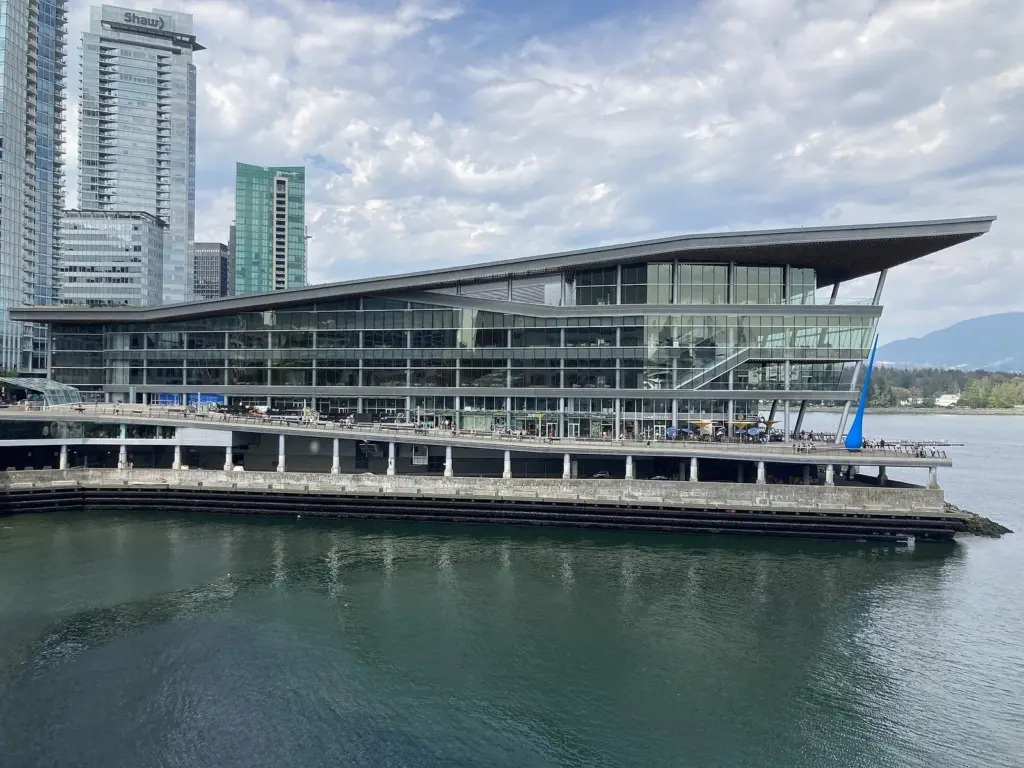
Canada Place’s big advantages are its location and the one-way cruises it makes possible. You can walk from the ship to Gastown, and ships can sail one way between Vancouver and Alaska’s Gulf ports, which foreign-flagged ships can’t do from Seattle. The trade-offs are an international flight for most Americans, the Canadian and U.S. document rules, and a U.S. border check before you board rather than at the end.
Verdict: if you don’t mind the passport paperwork, Canada Place is the most pleasant big cruise terminal on the West Coast to start a trip from. Build in a night in the city.
Mistakes to avoid
- Saying “preclearance” and expecting airport-style customs. It’s pre-inspection for admissibility; customs comes later, through the ship.
- Flying in the morning of the cruise. One delay and you watch the ship leave from Stanley Park.
- Bringing cannabis or CBD. Illegal across the border in both directions without authorization.
- Ignoring an old DUI. It can keep you out of Canada entirely.
- Booking an early flight home to the U.S. CBSA at the terminal and U.S. preclearance at YVR take time.
- Circling for parking. Use the 15-minute free drop-off, or reserve with Indigo.
For ships, itineraries and the city itself, go back to our Vancouver homeport guide.
Canada Place cruise terminal FAQ
Do you clear U.S. customs at Canada Place?
You clear U.S. immigration, not full customs. CBP carries out pre-inspection at Canada Place, which covers only whether you can be admitted to the United States. Full preclearance would also cover customs and agriculture, and those parts aren’t done in Vancouver. Your cruise line coordinates the rest with CBP once the ship reaches U.S. waters.
What is the address of the Canada Place cruise terminal?
The terminal is at 999 Canada Place, Vancouver, BC, on the downtown waterfront next to Waterfront Station. Drivers use the vehicle ramp at the foot of Howe Street to reach the parkade and the drop-off area, where stops of 15 minutes or less for dropping off or picking up cruise passengers are free.
How early should I arrive at Canada Place for my cruise?
Arrive at the check-in time your cruise line assigns. The Port says bags can be checked from about 10 to 10:30 a.m. Pacific on sailing day. On busy days with several ships, arriving well before your window just means waiting. If you’re flying in, arrive the day before so a delay can’t cost you the cruise.
How do I get from YVR airport to Canada Place?
Take the Canada Line SkyTrain from YVR-Airport Station to Waterfront Station, about 25 minutes, then cross the street to Canada Place. From July 1, 2026 the fare is $4.20 plus a $6.50 YVR AddFare by contactless card, about $10.70 Canadian. A taxi or rideshare takes roughly 30 to 45 minutes.
Do I need a passport to cruise from Vancouver to Alaska?
In practice, yes. You’ll fly into Canada, pass a U.S. border check at Canada Place and often fly home from Canada. U.S. citizens should carry a passport book. Visa Waiver travelers need an approved ESTA for the U.S. and may need Canada’s eTA. Green card holders need both a passport and the green card.
Where do I park for a cruise from Canada Place?
The Canada Place parkade, reached by the ramp at the foot of Howe Street, has weekly cruise parking run by Indigo Park Canada; pay at a machine or online. Drop-offs and pickups of 15 minutes or less are free. Confirm the current daily rate with Indigo before you drive, and reserve in peak season.
What happens when my cruise ends in Vancouver?
You complete a declaration card (E311) and clear Canadian customs with the Canada Border Services Agency after collecting your bags, the Port says. If you’re flying to the U.S., you’ll then clear U.S. preclearance at YVR before your flight, so book flights for about 12:30 p.m. or later.
Related Alaska Cruise Guides
- Alaska Cruise from Vancouver: Canada Place, Routes and Pre-Cruise Planning
- Do You Need a Passport for an Alaska Cruise? Documents, Canada Rules and the PVSA
Sources and How We Checked
We checked the prices, rules, schedules and ship deployments in this guide against the sources below on September 26, 2026, and we log each one in our research database with the date it was checked. Cruise lines change ships, fares and fees every season, so confirm anything that affects your booking with the line or the agency concerned. Alaska Cruise Guide (AlaskaCruise.org) is an independent publication. It is not affiliated with any cruise line, port, tour operator or tourism office, and no one paid to be included.
- 19 CFR 4.80a (Legal Information Institute): PVSA
- Canada Border Services Agency: Canada entry – cannabis
- dailyhive.com: Vancouver Canada Place
- Government of Canada: minors consent letter
- Government of Canada: Canada entry – DUI
- Government of Canada: Canada entry
- Government of Canada: Canada entry
- Government of Canada: US preclearance Vancouver
- Government of Canada: green card holders
- Port of Vancouver: Vancouver Canada Place
- Port of Vancouver: Vancouver Canada Place
- Port of Vancouver: Vancouver Canada Place
- The Maritime Executive: Vancouver Canada Place
- translink.ca: Vancouver Canada Place
- translink.ca: TransLink fares
- translink.ca: YVR transit
- U.S. Customs and Border Protection: US preclearance Vancouver
- U.S. Customs and Border Protection: ESTA
- U.S. Customs and Border Protection: passport rules
Photo Credits
- Cruise ship at Canada Place: photo by Pan Pacific, via Wikimedia Commons (CC BY 2.0)
- Canada Place sails lit at night: photo by Edna Winti, via Wikimedia Commons (CC BY 2.0)
- Waterfront SkyTrain station, Vancouver: photo by dronepicr, via Wikimedia Commons (CC BY 2.0)
- Cruise ship under the Lions Gate Bridge: photo by PerryPlanet, via Wikimedia Commons (Public domain)
- Vancouver Convention Centre: photo by DarkNight0917, via Wikimedia Commons (CC BY-SA 4.0)