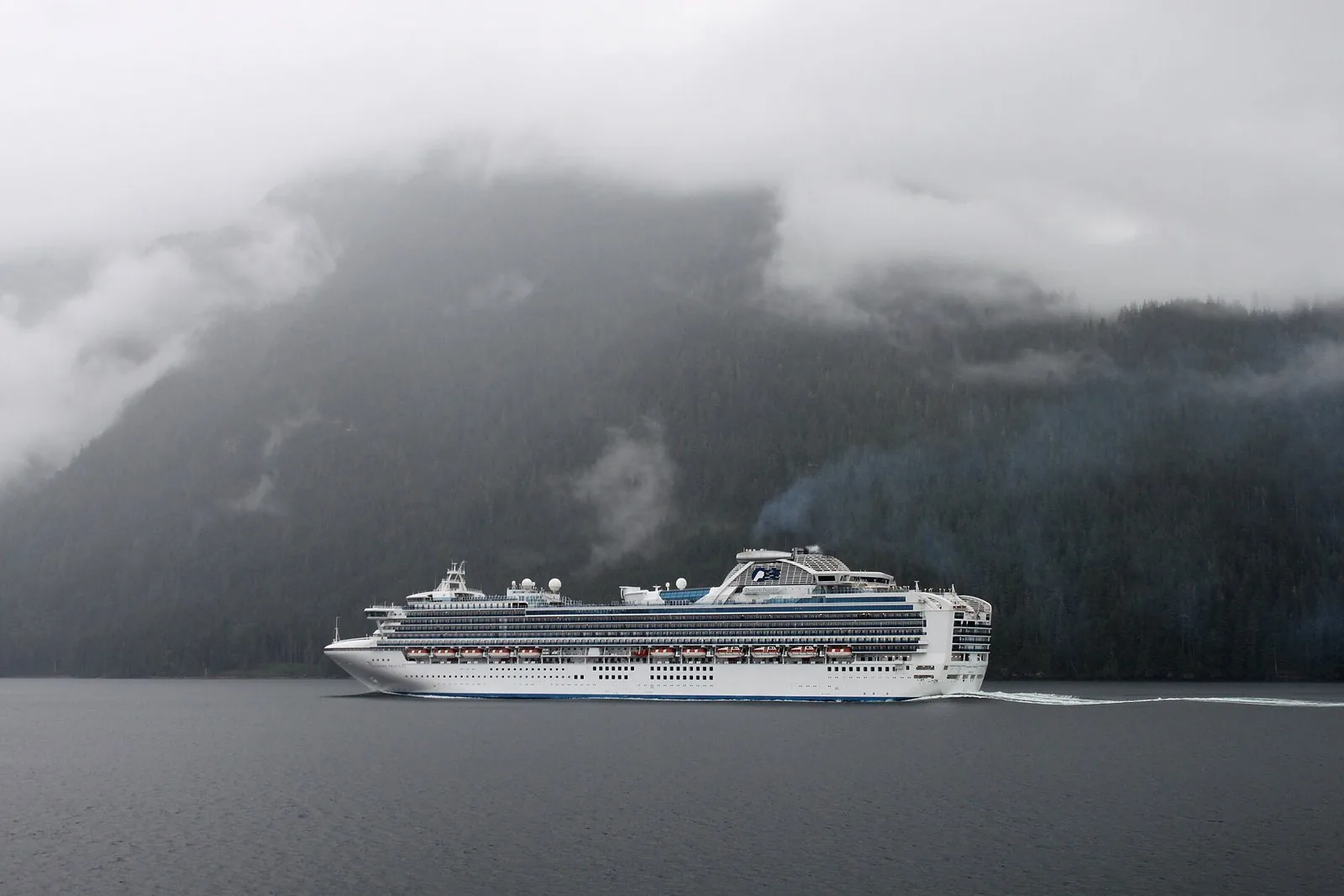
An Inside Passage cruise sails the sheltered channels between the islands and mainland of British Columbia and Southeast Alaska, calling at towns such as Ketchikan, Juneau and Skagway and spending a day at a glacier. Most trips are seven-night round trips from Seattle or Vancouver on big ships, with Glacier Bay National Park, Endicott Arm or another fjord as the glacier day. The best scenery comes in the narrow passages, the best months for wildlife are June and July, and small ships reach the tight channels and tiny towns the big ones can’t.
This page is for first-time Alaska cruisers trying to understand what “Inside Passage” really means on an itinerary: where the route goes, which parts are worth staying up for, which glaciers you can reach, and which lines and ships fit. The caveat: “Inside Passage” is a marketing label as much as a route, and some of the voyage runs through open water, so read the day-by-day plan rather than the headline. For the full range of routes, start with our guide to choosing an Alaska cruise itinerary. Last updated November 9, 2026. Every price, fee and schedule below is dated, and the sources are listed at the end.
Inside Passage cruise at a glance
| Question | Short answer |
|---|---|
| What is it? | A sheltered sea route through the islands of British Columbia and Southeast Alaska, more than 1,000 miles from Seattle to Skagway by Britannica’s measure |
| Typical trip | 7 nights round trip from Seattle or Vancouver |
| Usual ports | Ketchikan, Juneau, Skagway, plus Sitka, Icy Strait Point or Wrangell on some trips; Victoria on Seattle round trips |
| Glacier day | Glacier Bay National Park (permitted lines only), Endicott Arm and Dawes Glacier, or another fjord |
| Best scenery | The narrow channels: Seymour Narrows and Johnstone Strait in BC, the narrows and fjords of Southeast Alaska |
| Best time | June and July for whales and daylight; May and September for lower fares |
| Big ship or small? | Big for price and onboard life; small for narrow passages, wildlife and small towns |
What is the Inside Passage?
The Inside Passage is a natural, sheltered sea route along the Pacific coast of North America. Britannica describes it as running more than 1,000 miles from Seattle northwest to Skagway, threading between the mainland and thousands of offshore islands that break the force of the open Pacific. The Alaska part runs through the Alexander Archipelago, which Britannica puts at about 1,100 islands, the tops of a drowned mountain range.
For cruise passengers, the route has two halves:
- The British Columbia section, from the Strait of Georgia north past Vancouver Island and up the long, lightly settled BC coast to Dixon Entrance at the Alaska border.
- The Alaska section, Southeast Alaska’s panhandle, from Ketchikan north through a maze of straits, sounds and narrows to Juneau, Glacier Bay and Skagway at the head of Lynn Canal.
“Sheltered” is relative. Even on the inside route, ships cross a few stretches exposed to the ocean swell, notably Queen Charlotte Sound north of Vancouver Island and the waters of Hecate Strait and Dixon Entrance near the border. Those are the likeliest places on the trip to feel the ship move. Most of the rest is calm, with mountains and forest close on both sides.
The typical Inside Passage route and ports
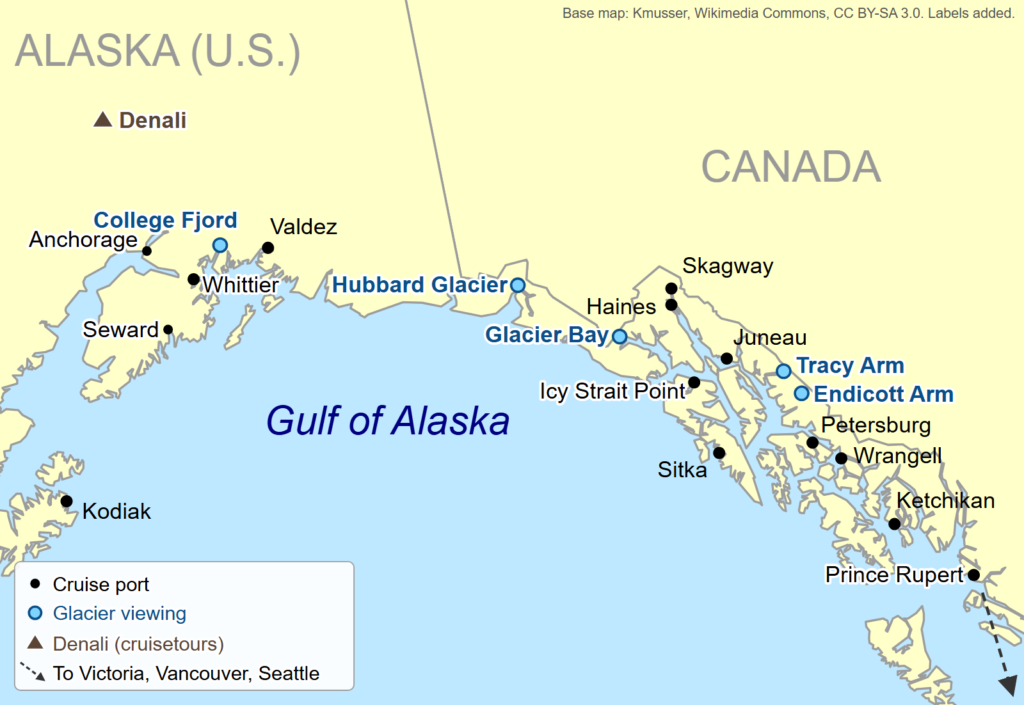
Nearly every big-ship Inside Passage cruise follows a version of the same pattern: two sea days getting north and back, three port days in Southeast Alaska, one glacier day and, on Seattle round trips, a stop in Canada. Here’s how the main options compare.
| Trip type | Typical ports | Notes |
|---|---|---|
| 7-night Seattle round trip | Ketchikan, Juneau, Skagway (or Sitka, Icy Strait Point), a glacier day, Victoria | Must call at a Canadian port; Victoria is often an evening stop |
| 7-night Vancouver round trip | Ketchikan, Juneau, Skagway, a glacier day | Starts and ends in Canada; the full inside route through BC |
| 8-night Vancouver round trip | Adds a port such as Prince Rupert | Holland America’s new 2027 option includes Glacier Bay |
| Small-ship expedition | Small towns, bays and narrows between Juneau, Sitka, Petersburg and Ketchikan | Wildlife, kayaking and remote coves |
| One way to Seward or Whittier | Inside Passage ports, then the Gulf of Alaska | Really a Gulf of Alaska cruise; see below |
Why the Canadian stop on Seattle trips? A federal cabotage law, the Passenger Vessel Services Act, stops foreign-flagged ships from carrying you one way between two different U.S. ports on a trip like this, and a round trip from Seattle must call at a foreign port, usually Victoria. That’s also why one-way Alaska cruises start or end in Vancouver.
A real 7-night example, day by day
To see how the pieces fit, here’s Carnival Spirit’s 7-day Alaska Inside Passage and Glacier cruise from Seattle as the line listed it in September 2026. Other lines shuffle the order and swap ports, but the rhythm is typical.
| Day | Port or passage | Listed times |
|---|---|---|
| 1 | Seattle | Departs 3:30 p.m. |
| 2 | At sea | Heading north |
| 3 | Tracy Arm Fjord (scenic cruising) | Treat as provisional; many 2026 sailings used Endicott Arm instead |
| 4 | Skagway | 7:00 a.m. to 8:00 p.m. |
| 5 | Juneau | 7:00 a.m. to 3:00 p.m. |
| 6 | Ketchikan | 7:00 a.m. to 1:00 p.m. |
| 7 | Victoria, British Columbia | 8:00 p.m. to 11:59 p.m. |
| 8 | Seattle | Arrives 7:00 a.m. |
Notice two things. The Victoria call is a late-evening stop that exists largely to satisfy the cabotage law, so don’t plan a big sightseeing day there. And the Ketchikan call is short, six hours, which shapes which shore excursions you can book. Our guide to a 7 day Alaska cruise walks through these trade-offs across the main lines.
Where the Inside Passage scenery is best
Not every hour of an Inside Passage cruise is spectacular. Long stretches are open straits with distant shores, and some of the best passages happen at night. Here’s where to be on deck.
British Columbia: Seymour Narrows and Johnstone Strait
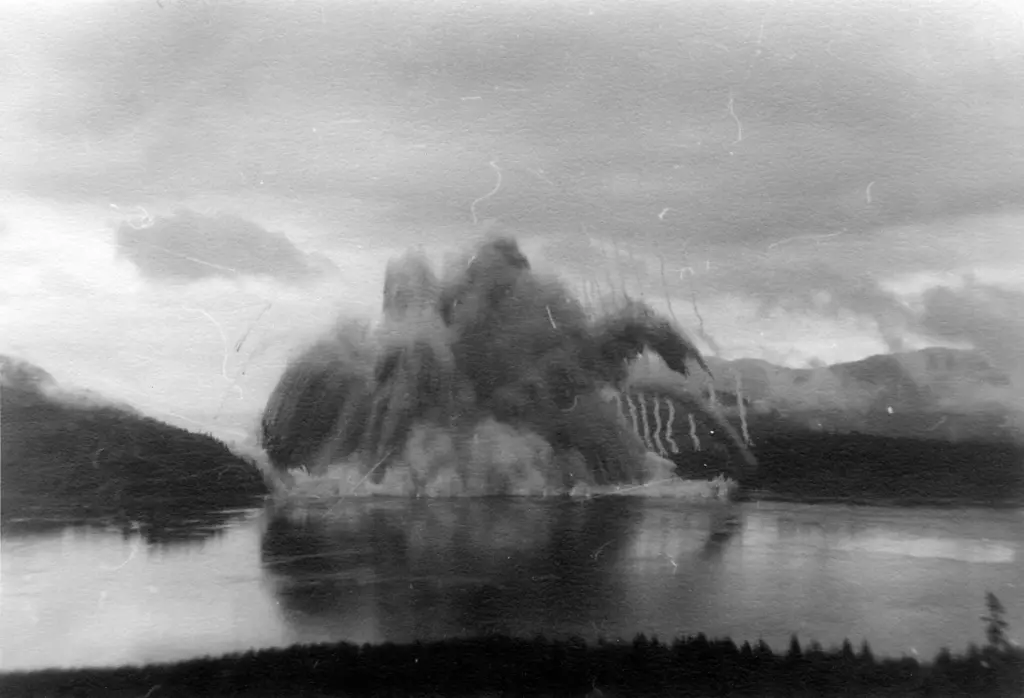
Ships leaving Vancouver for Alaska head north up the Strait of Georgia and into Discovery Passage between Vancouver Island and the mainland. Its narrowest point, Seymour Narrows, is a stretch of about 3 miles where tidal currents can reach roughly 15 knots, by most accounts, so ships time their transit to the tide. For decades the narrows hid Ripple Rock, a twin-peaked underwater mountain about 9 feet below the surface that wrecked or damaged many vessels. On April 5, 1958, it was blown apart with 1,375 tons of explosive, described as the largest commercial non-nuclear blast in North America.
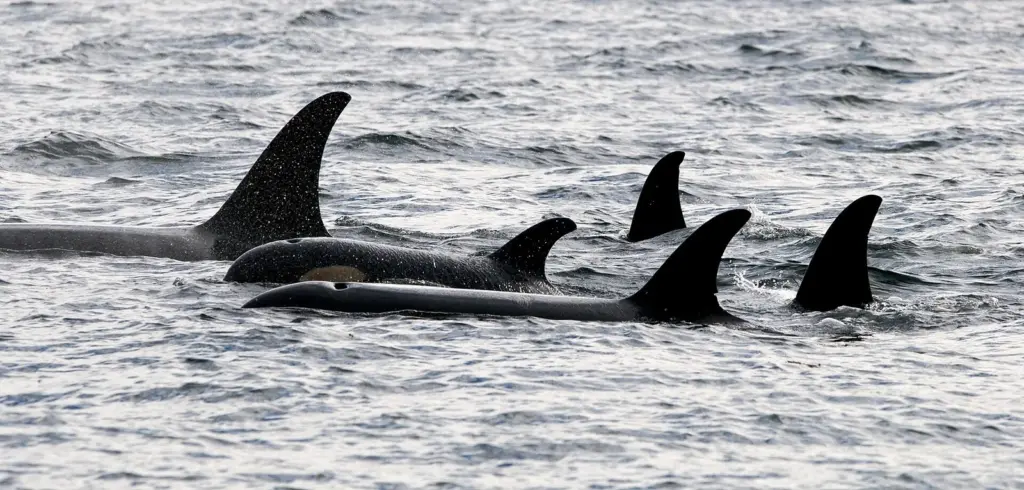
North of the narrows, Johnstone Strait runs between Vancouver Island and the mainland mountains, and it’s one of the best places on the whole coast to see orcas in summer. Because the tide sets the timing, your ship may pass through at night; check the navigation notes in the ship’s daily program and ask at guest services.
One important note for Seattle passengers: depending on the line and schedule, ships leaving Seattle may head out the Strait of Juan de Fuca and up the open outer coast of Vancouver Island rather than taking this inside route through Seymour Narrows. If the BC inside passages matter to you, check your line’s route map or sail from Vancouver.
The north coast of British Columbia
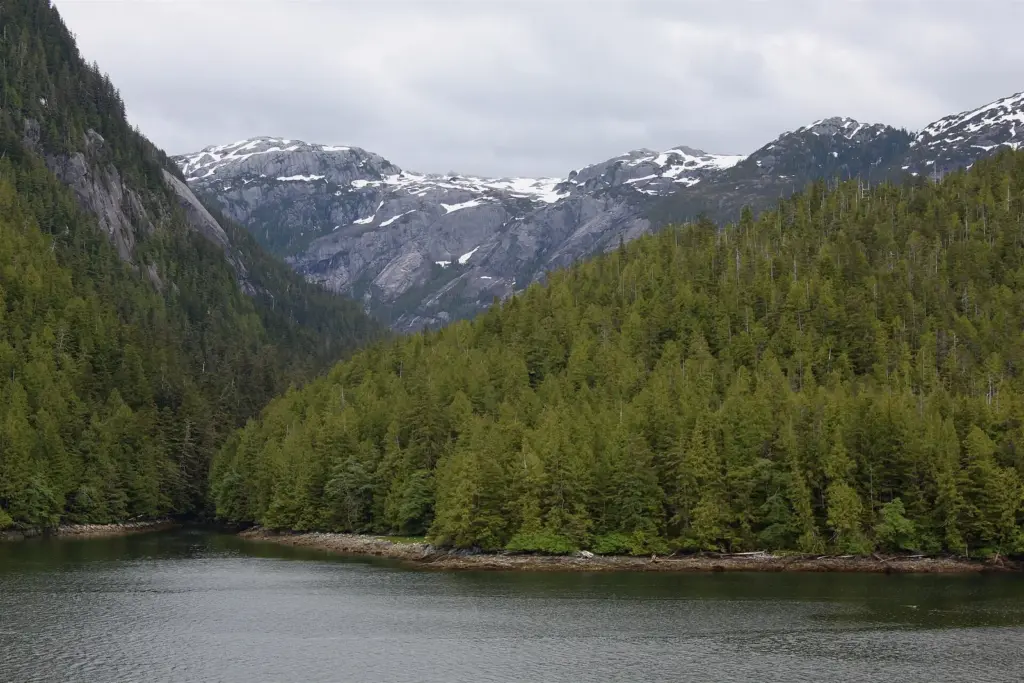
North of Vancouver Island, the ship crosses Queen Charlotte Sound, one of the open stretches, then follows the long, empty north coast of British Columbia, where the mountains and forest roll by for a day with barely a house in sight. Narrow passages such as Grenville Channel are the dramatic highlights of this coast, though the biggest ships often take wider routes. Prince Rupert, near the Alaska border, is a port of call on some itineraries, including Holland America’s new eight-day Vancouver round trip.
Southeast Alaska: narrows, sounds and Lynn Canal
After Dixon Entrance, the ship enters Alaska and the Alexander Archipelago. Highlights to watch for:
- The approach to Ketchikan, often the first Alaska port, where floatplanes buzz overhead as you dock.
- Snow Passage, a narrow channel between Sumner Strait and Clarence Strait near Zarembo Island. Holland America and Seabourn list “Transit Snow Pass” as a scenic stop on some itineraries.
- Frederick Sound and Stephens Passage, prime humpback water on the way north to Juneau.
- The Gastineau Channel, the narrow waterway leading to Juneau’s docks below steep mountains.
- Lynn Canal, the long, deep fjord to Haines and Skagway, lined with glaciers and waterfalls.
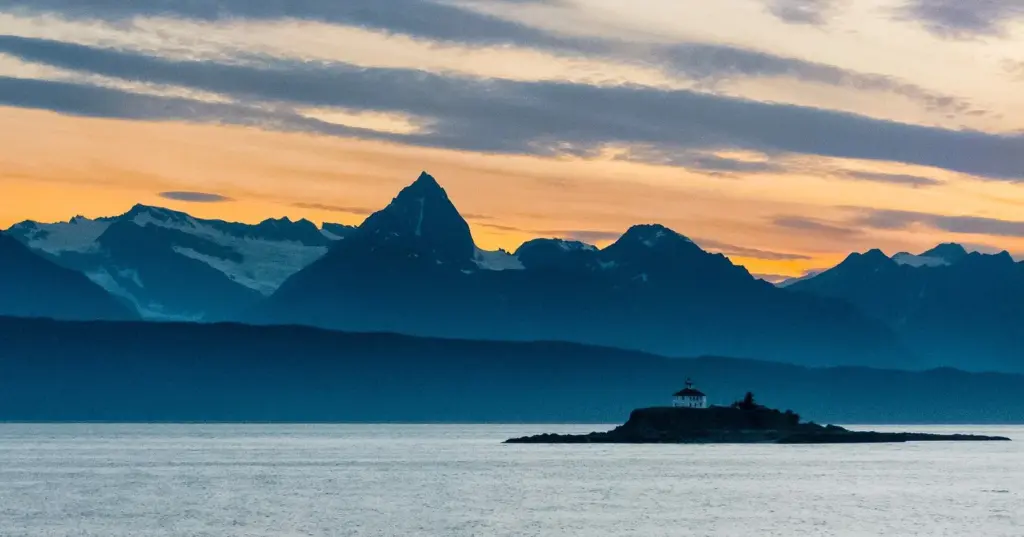
Verdict: the Alaska half of the route is where most passengers remember the scenery, but the BC inside route on a Vancouver sailing is a genuine bonus. Stay on deck for any narrow passage in daylight.
Wildlife along the Inside Passage
The Inside Passage is one of the richest wildlife corridors in North America, and you’ll see a surprising amount from the deck of even a large ship.
- Humpback whales are the stars. Alaska’s Department of Fish and Game says the Inside Passage holds the state’s highest concentration of humpbacks, more than 500 whales, and that June and July are the best months to see them bubble-net feeding. Watch for blows in Frederick Sound, Stephens Passage and Icy Strait.
- Orcas travel the whole route, and Johnstone Strait in British Columbia is famous for them in summer.
- Dall’s porpoises sometimes race along a ship’s bow wave, flashing black and white.
- Steller sea lions and harbor seals haul out on rocks and buoys near the ports.
- Bald eagles are everywhere, especially around Ketchikan, Juneau and Haines.
- Black and brown bears fish the salmon streams in late summer, though you’ll usually need a shore excursion to see them well.
- Mountain goats show up as white dots on the cliffs of the fjords; binoculars turn them into animals.
For the best odds, spend time on the open decks in the early morning and during narrated scenic passages, when naturalists often point out wildlife.
Alaska Native and First Nations homelands along the route
The Inside Passage isn’t wilderness in the empty sense. It has been home to Indigenous peoples for thousands of years, and their presence is still strong along the route. In British Columbia, the coast is the territory of many First Nations, including the Tsimshian around Prince Rupert. In Southeast Alaska, it’s the homeland of the Tlingit, Haida and Tsimshian peoples, whose clan houses, totem poles, art and languages remain part of daily life.
You’ll meet that heritage in port: the totem parks at Saxman and Totem Bight near Ketchikan, Sitka’s Tlingit history, the Huna Tlingit village of Hoonah beside Icy Strait Point, and Juneau’s downtown totem pole trail. Tours led by Native guides and corporations are the best way to learn, and buying art with the state’s Silver Hand label supports Alaska Native artists directly.
Which glaciers can you see on an Inside Passage cruise?
Glaciers are the high point for most people, and an Inside Passage cruise usually includes one full glacier day plus the chance to visit one from a port. Here’s what’s reachable, and what’s changed.
- Glacier Bay National Park: the most famous option, and limited. The park allows at most two cruise ships a day, and only lines holding a park concession may enter; the park’s concessions page lists Princess, Holland America, Norwegian, Seabourn, Cunard and Viking. A typical visit covers more than 120 miles, up to Johns Hopkins Inlet and the head of Tarr Inlet.
- Endicott Arm and Dawes Glacier: the usual substitute since Tracy Arm’s landslide. After the August 10, 2025 landslide and tsunami in Tracy Arm, Carnival, Holland America and Royal Caribbean switched their 2026 scenic cruising to Endicott Arm and Dawes Glacier. Treat any 2027 itinerary that names Tracy Arm as provisional.
- Mendenhall Glacier: reached by land from Juneau, not by ship.
- Glaciers near Petersburg and Wrangell: small ships can visit fjords and glaciers the big ships don’t.
- Hubbard Glacier: strictly on the Gulf route, but some longer Inside Passage sailings, such as Holland America’s 14-day Great Alaska Explorer from Seattle and, per Virgin Voyages’ site, its 12-night Inside Passage and Hubbard Glacier voyage, include it.
For every glacier option and how to see each best, see our Alaska glacier cruise guide.
Inside Passage vs the Gulf of Alaska route
Alaska cruises come in two main shapes: the Inside Passage round trip, and the one-way Gulf of Alaska cruise between Vancouver and Seward or Whittier, the ports for Anchorage. Our Gulf of Alaska cruise page covers the one-way trip in detail; here’s the short comparison.
| Question | Inside Passage round trip | Gulf of Alaska one way |
|---|---|---|
| Where you start and end | Seattle or Vancouver, same port | Vancouver and Seward or Whittier |
| Flights | One round-trip ticket | Open-jaw, often pricier |
| Glaciers | One glacier day | Usually two, such as Glacier Bay and Hubbard or College Fjord |
| Sea conditions | Mostly sheltered | Adds the open Gulf of Alaska |
| Add Denali? | Awkward | Easy, as a cruisetour |
| Best for | First-timers, families, shorter trips | Glacier lovers and cruisetours |
If you’re torn, our guide to a one way vs round trip Alaska cruise weighs the costs and trade-offs, and our northbound vs southbound Alaska cruise page explains which direction to sail a one-way trip.
Big ship or small ship on the Inside Passage?
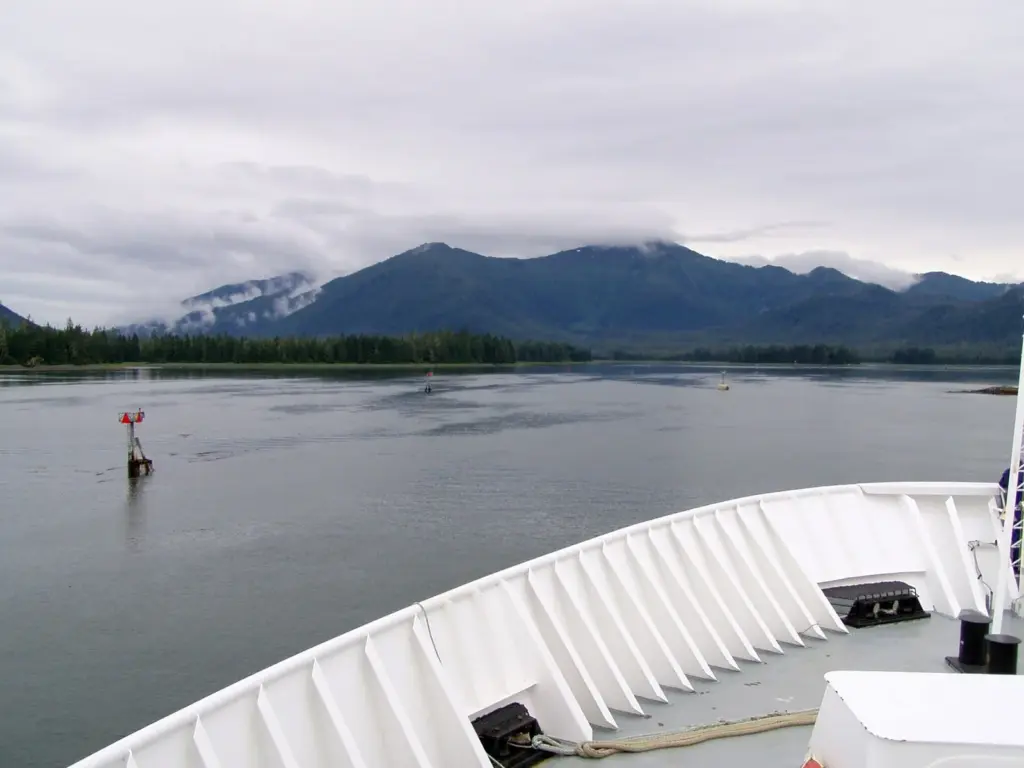
This is the biggest choice after the route, and it changes the trip completely.
Big ships (roughly 2,000 to 4,000-plus passengers) follow the main channels and call at the big ports. They’re the best value, have the most to do on board and suit families and first-timers. The trade-off is crowded ports and less time close to shore.
Small ships go where the big ones can’t. Petersburg’s borough says the town has no deep-water port for large cruise ships and that the 21-mile Wrangell Narrows between Frederick Sound and Sumner Strait is too narrow and shallow for the biggest ships; small-ship lines call there instead. UnCruise’s Alaska ships carry 22 to 86 guests, Lindblad-National Geographic says its Inside Passage ships carry about 100, and American Cruise Lines, a U.S.-flagged line, sails the Inside Passage with small ships too. Expect kayaking, skiff trips, naturalists, and towns like Petersburg and Wrangell; our guide to things to do in Wrangell on an Alaska cruise covers one of them.
| Question | Big ship | Small ship |
|---|---|---|
| Price | Roughly $500 to $5,000 a person for 7 nights, by Travel Alaska’s range | Often several thousand to over $10,000 a person |
| Ports | Ketchikan, Juneau, Skagway, Sitka, Icy Strait Point | Small towns and remote bays |
| Narrow passages | Main channels only | Wrangell Narrows and tight fjords |
| Wildlife | From a distance | Close, with naturalists |
| Onboard life | Shows, pools, many restaurants | Lectures, kayaks, a lounge |
Verdict: for a first Alaska trip on a budget, a big ship is the smart choice. If you’ve done Alaska before, or you care most about wildlife and quiet, a small ship on the Inside Passage is one of the best trips in North America.
Inside Passage cruise lines and ships for 2027
Almost every line that sails to Alaska sells an Inside Passage trip. A few examples from their 2027 announcements:
- Princess: Star Princess sails weekly seven-day Inside Passage round trips from Seattle every Sunday, and Royal Princess sails seven-day Seattle round trips with Glacier Bay.
- Holland America: a new eight-day Vancouver round trip calls at Skagway, Ketchikan, Prince Rupert and Juneau, with Glacier Bay and a late night in Juneau; seven-day trips sail from Vancouver on Koningsdam, Zaandam and Westerdam, and from Seattle on Eurodam and Noordam.
- Royal Caribbean: Serenade of the Seas sails seven-night Inside Passage round trips from Vancouver, and Quantum and Voyager of the Seas from Seattle.
- Norwegian: Encore, Bliss and Joy sail seven-day voyages from Seattle’s Pier 66.
- Carnival: Carnival Spirit’s seven-day Seattle trip lists Tracy Arm, Skagway, Juneau, Ketchikan and an evening in Victoria; treat Tracy Arm as provisional.
- Viking: its 11-day “Alaska & the Inside Passage” sails one way from Vancouver to Seward, listed from $6,499 a person in September 2026.
- Small ships: UnCruise listed a 12-night Seattle-to-Juneau voyage through the San Juan Islands and the Inside Passage with Glacier Bay from $7,300 a person.
Our Alaska cruise line guides compare them in detail, and if you’re weighing ship length, see our 7 day Alaska cruise, 10 day Alaska cruise and 14 day Alaska cruise pages, or short Alaska cruises if you only have a few days.
Inside Passage cruise from Seattle or Vancouver?
Both are excellent, and the right answer depends on where you live and what you want to see.
- From Seattle: a domestic flight for most Americans, U.S. citizens can use a birth certificate and photo ID on a closed-loop sailing (a passport is safer), and you get an evening in Victoria. The trade-off is that ships may skip the BC inside passages.
- From Vancouver: the full inside route through BC, a lovely city to start in, and one-way options. The trade-off is an international flight and a passport for most Americans.
Our Seattle vs Vancouver Alaska cruise guide lays out the trade-offs, and there are also West Coast departures further south: an Alaska cruise from San Francisco or an Alaska cruise from Los Angeles adds days at sea, while an Alaska repositioning cruise at the start or end of the season can be a bargain. East Coasters should read our Alaska cruise from East Coast page for the flight planning.
The best time for an Inside Passage cruise
The season runs from May to September. Each month has a personality:
| Month | Why go | Why not |
|---|---|---|
| May | Lower fares, snow on the peaks, waterfalls running | Cooler; some tours not yet running |
| June | Longest days, the driest summer month in Juneau and Ketchikan, whales arriving | Busy |
| July | Peak whales, warmest weather, bubble-net feeding | Busiest and priciest |
| August | Salmon runs and bears, whales still feeding | Rain increases; busy |
| September | Lower fares, fewer crowds, fall color | The wettest month; shorter days |
Two data points help. Alaska’s Department of Fish and Game says June and July are the best months to see humpback whales bubble-net feeding, and that the Inside Passage has the state’s highest concentration of humpbacks, more than 500 whales. And rain rises through late summer everywhere in Southeast Alaska: Ketchikan’s airport averages 7.02 inches in June and 14.30 inches in September, and Juneau’s 3.82 inches and 9.15 inches, according to NOAA’s 1991-2020 normals.
Verdict: June is the sweet spot for most people. July if whales are the priority and you don’t mind crowds. May or September if the fare matters most.
What an Inside Passage cruise costs
Prices vary more than almost any other cruise region, because the same route is sold on everything from mass-market ships to small expedition vessels. Travel Alaska, the state’s official tourism site, puts a seven-night Alaska cruise at roughly $500 to $5,000 depending on line and stateroom. At the top end, Viking’s 11-day one-way voyage was listed from $6,499 a person in September 2026, and UnCruise’s 12-night Seattle-to-Juneau small-ship trip from $7,300.
On a big ship, budget beyond the fare for daily gratuities (Royal Caribbean, for example, charges $18.50 per person per day in standard staterooms), taxes and port fees, shore excursions, drinks and Wi-Fi. On a small ship, far more tends to be included, from excursions and kayaks to drinks on some lines, which narrows the real gap.
Which side of the ship is best?
On a round trip, it barely matters: you’ll pass the same coast in both directions, and ships usually turn on glacier days so both sides get a view. On a one-way trip, heading north, the mainland mountains and fjords are generally to starboard (the right side), and the islands to port; heading south, it’s the reverse. If you’re booking a balcony for scenery, that’s the side to ask for, but don’t pay a large premium for it. The open decks forward and aft give you both sides for free.
The Inside Passage without a cruise ship
A cruise isn’t the only way to travel the route. The Alaska Marine Highway, the state ferry system, sails the Inside Passage between Bellingham, Washington, and Southeast Alaska’s towns, carrying cars, campers and passengers who sleep in cabins or on deck. It’s slower, simpler and far less polished than a cruise, but it stops in towns the big ships skip and lets you stay as long as you like. For most first-time visitors, a cruise is the easier choice. For independent travelers with time, the ferry is a classic Alaska adventure.
Tips for enjoying the Inside Passage
- Read the daily program. Ships list scenic passages, and naturalists often narrate the best ones.
- Get up early on scenic days. The light is better, the decks are quieter and wildlife is often most active.
- Bring binoculars. Whales, eagles and bears on the shore are often too far for the naked eye.
- Dress in layers. It’s colder on deck than in port, especially on a moving ship near ice.
- Don’t overpay for a balcony. On a port-heavy Inside Passage trip, the best views are often from the open decks forward.
- Look at the map. Our Alaska cruise map shows where you are each day, which makes the scenery far more meaningful.
Inside Passage cruise FAQ
What is an Inside Passage cruise?
It’s a cruise along the sheltered coastal route between the islands and mainland of British Columbia and Southeast Alaska. Most are seven-night round trips from Seattle or Vancouver, calling at Ketchikan, Juneau and Skagway, with a glacier day in Glacier Bay or a fjord such as Endicott Arm. Small ships offer longer, more remote versions.
Is an Inside Passage cruise from Vancouver or Seattle better?
Vancouver sailings take the full inside route through British Columbia, including Seymour Narrows, and offer one-way options. Seattle sailings are easier for most Americans, with domestic flights and a stop in Victoria, but may take the outer coast of Vancouver Island. Both reach the same Alaska ports and glaciers.
Is the Inside Passage rough?
Mostly not. The islands shelter most of the route, but ships cross a few open stretches, especially Queen Charlotte Sound north of Vancouver Island and the waters near Dixon Entrance at the Alaska border. Those are the likeliest spots to feel motion. A mid-ship cabin on a lower deck helps if you’re prone to seasickness.
Does an Inside Passage cruise go to Glacier Bay?
Some do. Glacier Bay National Park allows at most two cruise ships a day and only lines with a park concession, which the park lists as Princess, Holland America, Norwegian, Seabourn, Cunard and Viking. Other lines use Endicott Arm and Dawes Glacier or another fjord. Check your itinerary for the words “Glacier Bay National Park.”
What is the best month for an Inside Passage cruise?
June offers the longest days, drier weather and arriving whales. July is the peak for whales and warmth but the busiest. May and September have lower fares and fewer crowds, with cooler weather in May and more rain in September. For bubble-net feeding humpbacks, June and July are best.
Can small ships go places big ships can’t in the Inside Passage?
Yes. Petersburg’s borough says the town has no deep-water port for large cruise ships and that the 21-mile Wrangell Narrows is too narrow and shallow for the biggest ships, but small-ship lines call there. Small ships also visit remote coves, narrow fjords and tiny towns, often with kayaks and skiffs for getting close to shore.
How long is an Inside Passage cruise?
Most big-ship trips are seven nights round trip from Seattle or Vancouver, with some eight-night options. Longer voyages of 10 to 14 nights add more ports, and small-ship expeditions run about 7 to 15 nights. One-way trips that continue to Seward or Whittier are usually seven nights but count as Gulf of Alaska cruises.
Related Alaska Cruise Guides
- Alaska Cruise Itineraries: Every Route, Port Combination and Length Compared
- Alaska Glacier Cruise Guide: Hubbard, Tracy Arm, College Fjord and Every Glacier You Can Sail To
Sources and How We Checked
We checked the prices, rules, schedules and ship deployments in this guide against the sources below on September 26, 2026, and we log each one in our research database with the date it was checked. Cruise lines change ships, fares and fees every season, so confirm anything that affects your booking with the line or the agency concerned. Alaska Cruise Guide (AlaskaCruise.org) is an independent publication. It is not affiliated with any cruise line, port, tour operator or tourism office, and no one paid to be included.
- 19 CFR 4.80a (Legal Information Institute): PVSA
- Alaska Department of Fish and Game: Humpback whales
- Alaska Public Media: Tracy Arm 2026 itineraries
- britannica.com: Inside Passage
- carnival.com: Carnival Cruise Line
- cruiseind.com: American Cruise Lines
- en.wikipedia.org: Seymour Narrows
- expeditions.com: Lindblad-National Geographic
- Holland America Line: Snow Passage
- Holland America Line: Holland America Line
- National Park Service: Glacier Bay cruise permits
- National Park Service: Glacier Bay cruise visit
- nauticalcharts.noaa.gov: rough water
- NOAA National Centers for Environmental Information: Juneau weather
- NOAA National Centers for Environmental Information: Ketchikan weather
- Norwegian Cruise Line: Norwegian Cruise Line
- petersburgak.gov: Petersburg port
- PR Newswire (line press release): Royal Caribbean
- Princess Cruises: Princess Cruises
- Royal Caribbean: gratuities – Royal Caribbean
- Travel Alaska (State of Alaska): typical fares
- U.S. Customs and Border Protection: passport rules
- U.S. Geological Survey: Tracy Arm landslide
- UnCruise Adventures: UnCruise Adventures
- vikingcruises.com: Viking
- virginvoyages.com: Virgin Voyages
Photo Credits
- Cruise ship in the Inside Passage, British Columbia: photo by Eli Duke, via Wikimedia Commons (CC BY-SA 2.0)
- Alaska cruise region map: map by Kmusser, via Wikimedia Commons (CC BY-SA 3.0); ferry routes removed; cruise ports, glacier-viewing areas and Denali added by Alaska Cruise Guide
- Ripple Rock explosion, Seymour Narrows (City of Vancouver Archives): photo by Lett, Sherwood (1895-1964), via Wikimedia Commons (Public domain)
- Orcas in Johnstone Strait: photo by Winky from Vancouver, Canada, via Wikimedia Commons (CC BY 2.0)
- Grenville Channel, Inside Passage: photo by Roy Luck, via Wikimedia Commons (CC BY 2.0)
- Eldred Rock Lighthouse, Lynn Canal: photo by Jeff Miller, via Wikimedia Commons (CC BY 2.0)
- Wrangell Narrows, Southeast Alaska: photo by gillfoto, via Wikimedia Commons (CC BY-SA 4.0)