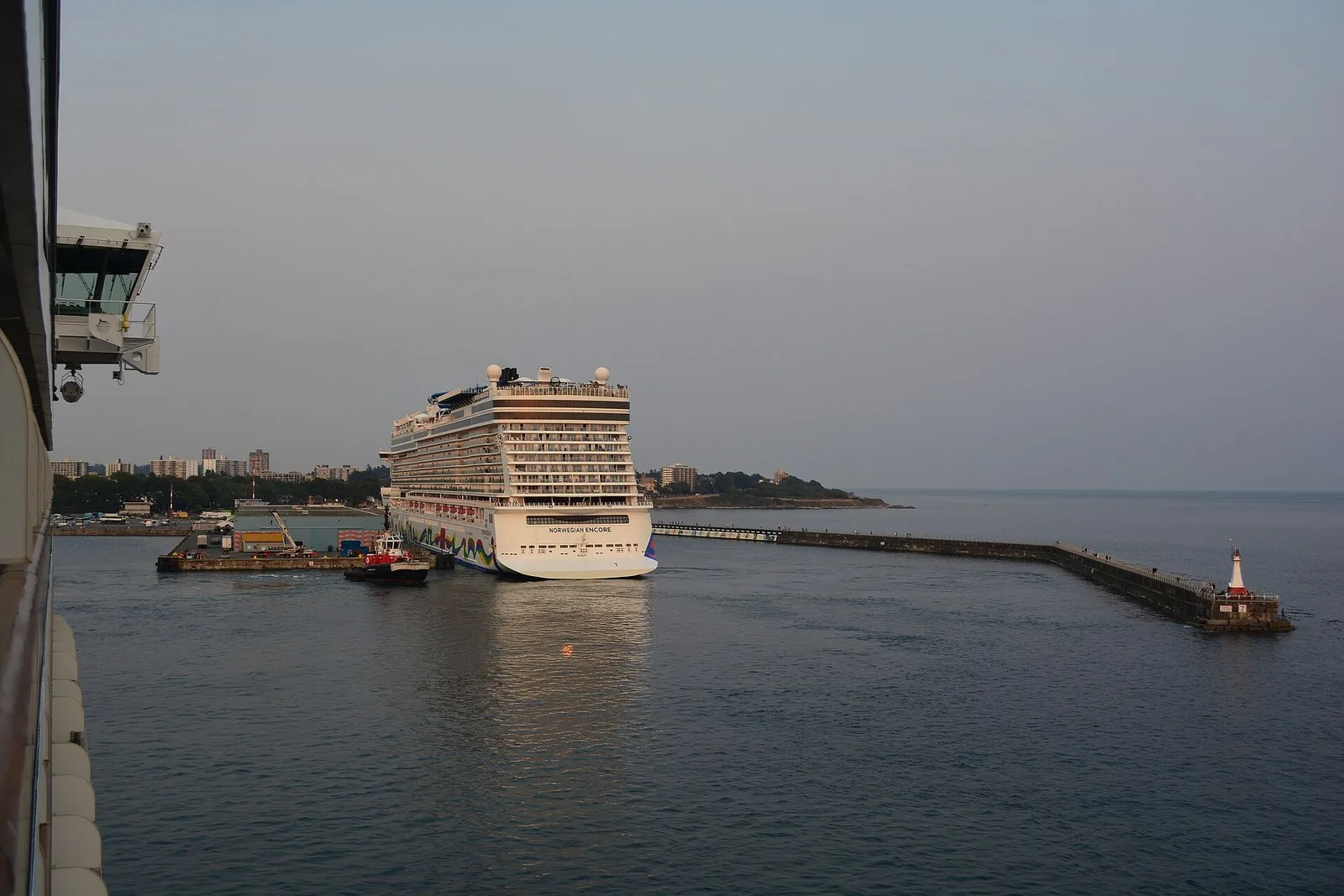
Do you need a passport for an Alaska cruise? If you’re a U.S. citizen on a round trip that starts and ends in Seattle, not legally: U.S. Customs and Border Protection accepts a birth certificate plus a government-issued photo ID on these “closed-loop” cruises. On a cruise from Vancouver, or a one-way between Vancouver and Seward or Whittier, you need a travel document such as a passport, passport card or Enhanced Driver’s License, and a passport book if you fly home from Canada. Non-U.S. citizens need a passport on every Alaska cruise. Our advice for everyone is the same: bring a passport book anyway.
This guide is for U.S. and Canadian travelers, green card holders and international visitors working out which documents to pack. The caveat that catches people: the documents that get you back into the United States aren’t the only rules that matter. Canada decides who can go ashore in Victoria or board in Vancouver, and a past DUI can keep you on the ship. Last updated October 10, 2026. Every price, fee and schedule below is dated, and the sources are listed at the end.
Do you need a passport for an Alaska cruise? The quick answer by itinerary
Find your cruise in the left column. This covers U.S. citizens; green card holders and other nationalities have their own section below.
| Your cruise | Legal minimum for U.S. citizens | What we recommend |
|---|---|---|
| Round trip from Seattle (closed loop) | Birth certificate plus government-issued photo ID; children under 16 need only proof of citizenship | A passport book, in case you need to fly home from Canada |
| Round trip from Vancouver | A WHTI document for sea travel: passport, passport card, Enhanced Driver’s License or trusted traveler card; plus Canada’s entry rules | A passport book, because you’ll almost certainly fly into or out of Canada |
| One-way, Vancouver to Seward or Whittier (or the reverse) | A WHTI document; closed-loop rules don’t apply | A passport book |
| Round trip from San Francisco or Los Angeles | Closed-loop rules, like Seattle | A passport book |
| U.S.-flagged small ship staying in U.S. waters | Photo ID, according to the line | A passport if any excursion enters Canada |
| Any cruise with a train or hike into Canada | A passport for that excursion (for example, White Pass trains to Fraser, Bennett or Carcross) | A passport book |
Verdict: the birth-certificate option is real, and it’s fine for a family who can’t get passports in time. But it leaves you stuck if something goes wrong in Canada, and it doesn’t work on half the itineraries in Alaska. If you have time to get a passport book, get one.
Documents by traveler
The itinerary table above is for U.S. citizens. Here’s the same question from the other direction: who you are, and what you should carry on a typical cruise that stops in Canada.
| Traveler | Minimum for a Seattle round trip | For a Vancouver cruise or one-way |
|---|---|---|
| U.S. citizen adult | Birth certificate plus government photo ID, or a WHTI document | A WHTI document; a passport book if flying from Canada |
| U.S. citizen child under 16 | Proof of citizenship, such as a birth certificate | Proof of citizenship for the cruise; a passport to fly |
| U.S. green card holder | Passport from your country of nationality plus green card | Passport plus green card |
| Canadian citizen | A document CBP accepts for entry to the U.S., such as a passport or NEXUS card | The same |
| Visa Waiver Program visitor | Passport plus an approved ESTA | Passport, ESTA, and a Canadian eTA if flying into Canada |
| Other international visitor | Passport plus a U.S. visa | Passport, U.S. visa, and a Canadian visa or eTA as your nationality requires |
Mixed-nationality families should plan around the strictest requirement in the group. If one person needs a passport and a visa, build the trip around that person’s documents rather than the rest of the family’s.
What’s changed for 2027
- REAL ID is enforced at airports. Since May 7, 2025, the TSA no longer accepts state licenses or IDs that aren’t REAL ID-compliant at checkpoints, and since February 1, 2026 travelers without acceptable ID can pay $45 for TSA ConfirmID identity verification. This affects your flight to the port, not the cruise itself.
- The pandemic waiver is long gone. The Alaska Tourism Restoration Act of 2021 let Seattle ships skip Canada temporarily. It has expired, so foreign-flagged ships from Seattle must again call at a Canadian port, which is why Victoria is on almost every Seattle round trip.
- ESTA costs more for international visitors. U.S. Customs and Border Protection raised the ESTA fee for Visa Waiver Program travelers from $21 to $40, effective September 30, 2025.
- Vancouver’s border check is more automated. Canada Place uses facial biometrics during U.S. processing before boarding, according to the port.
- Passport processing is slower than you’d like. State Department materials have cited routine processing of 4 to 6 weeks and expedited processing of 2 to 3 weeks for an extra fee. Apply at least three months before you sail.
Why most Alaska cruises stop in Canada: the PVSA
Almost every Alaska cruise from Seattle calls at Victoria, British Columbia, and it isn’t for the gardens. It’s the law. Nearly all big cruise ships are registered in other countries (the Bahamas, Bermuda, Malta and so on), and a 19th-century U.S. law, the Passenger Vessel Services Act, limits what foreign-flagged ships can do between U.S. ports.
Under the current regulation, a passenger on a foreign-flagged ship who travels between two different U.S. ports, with calls only at nearby foreign ports, is making a coastwise trip the law doesn’t allow. A voyage that returns to the same U.S. port is fine, as long as it calls at a foreign port along the way. So a Seattle round trip adds Victoria, and U.S. Customs and Border Protection notes that because almost all Seattle Alaska cruises stop there, they count as foreign travel for document purposes.
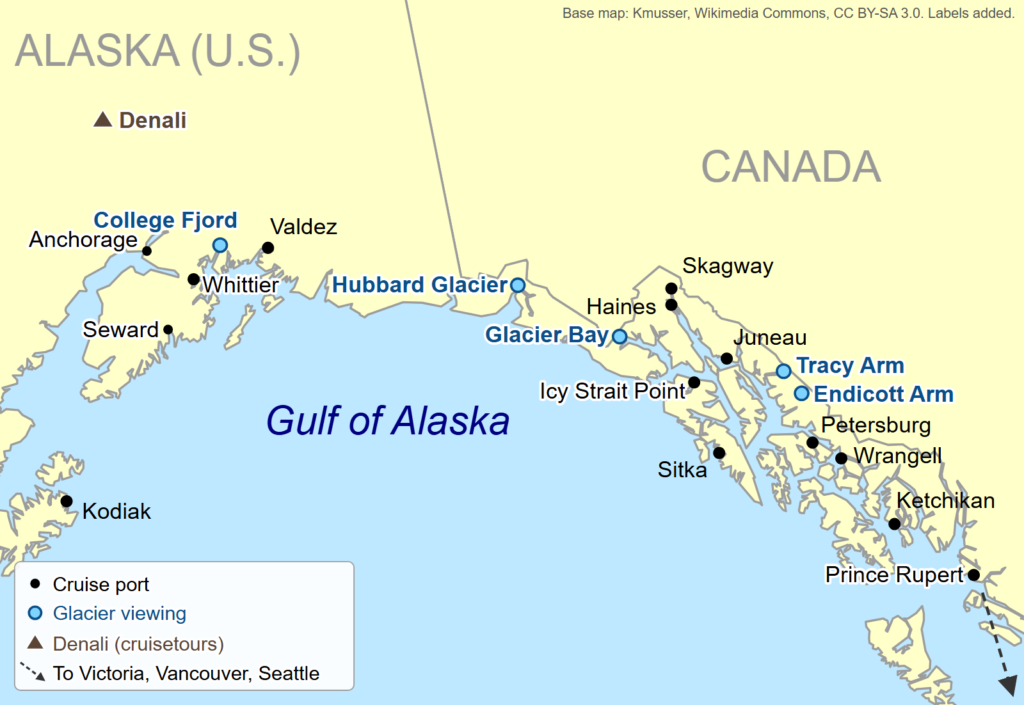
The same law explains why one-way Gulf of Alaska cruises start in Vancouver rather than Seattle: Seattle to Seward on a foreign-flagged ship would be a trip between two U.S. ports. In 2021, with Canada’s ports closed to cruise ships, Congress passed the Alaska Tourism Restoration Act to treat Washington-Alaska cruises temporarily as foreign voyages. That waiver has expired, and the old rules are back.
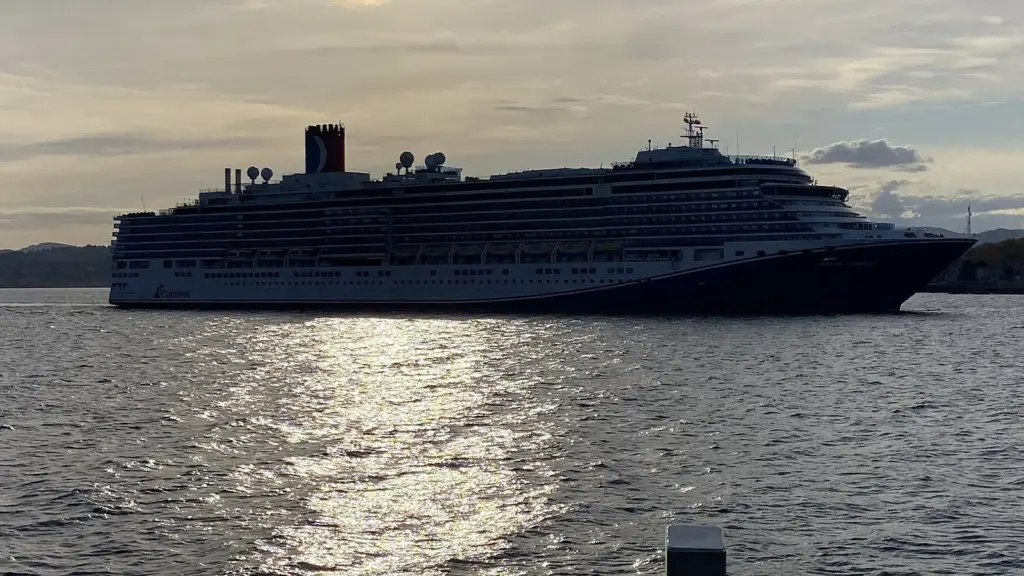
There’s one way around it: a ship registered in the United States. U.S.-flagged small ships can sail between Alaska ports, or from Washington to Alaska, without a Canadian stop. American Cruise Lines says its entire fleet of 90- to 180-passenger ships is U.S.-flagged, with Alaska cruises departing from Juneau, Ketchikan and Tacoma, Washington. For the full list of options, see our guide to an Alaska cruise without a Canada stop.
Which documents work? Every option, ranked
U.S. Customs and Border Protection lists the documents that meet the Western Hemisphere Travel Initiative (WHTI), the rules for U.S. citizens returning from Canada and nearby countries. Here they are, ranked by how useful they are on an Alaska cruise.
1. U.S. passport book
The gold standard. It works for sea, land and air travel, so it covers every Alaska itinerary, every excursion into Canada, and the flight home if something goes wrong. If you’re buying one document, buy this one.
2. U.S. passport card
A wallet-sized card that works for land and sea crossings between the U.S. and Canada, Mexico, the Caribbean and Bermuda, but not for international air travel. It covers the cruise itself on any itinerary, and a White Pass train into Canada. It won’t get you on a plane home from Vancouver or Victoria. Our page on the passport card for an Alaska cruise explains when it’s enough.
3. Enhanced Driver’s License or Enhanced ID
A few states issue Enhanced Driver’s Licenses, marked with a flag, that prove both identity and U.S. citizenship. CBP accepts them for land and sea travel, like the passport card. Washington is one of the states that issues them, which is convenient for Seattle cruisers.
4. Trusted traveler cards: NEXUS, SENTRI and FAST
CBP accepts these cards for sea travel, and NEXUS, the U.S.-Canada program, is also accepted for air entry to the United States. If you already have NEXUS, you’re well covered for a Vancouver cruise.
5. Birth certificate plus photo ID (closed loop only)
On a cruise that starts and ends at the same U.S. port, CBP allows U.S. citizens to re-enter with a government-issued photo ID plus proof of citizenship: an original or copy of a birth certificate, a Consular Report of Birth Abroad, or a Certificate of Naturalization. It doesn’t work on one-way cruises or cruises from Vancouver. Our guide to using a birth certificate on an Alaska cruise covers which certificates cruise lines accept.
6. Enhanced Tribal Card
CBP includes Enhanced Tribal Cards issued by participating federally recognized tribes among its WHTI documents, alongside the passport and the enhanced license.
7. U.S. military ID with travel orders
Service members traveling on official orders can use a military ID with those orders. For a vacation cruise, you’ll need one of the other documents.
| Document | Cruise (sea) | Flying home from Canada | Excursions into Canada |
|---|---|---|---|
| Passport book | Yes | Yes | Yes |
| Passport card | Yes | No | Yes (land and sea) |
| Enhanced Driver’s License | Yes | No | Yes (land and sea) |
| NEXUS card | Yes | Yes, for U.S. entry | Yes |
| Birth certificate plus photo ID | Closed-loop cruises only | No | Not a WHTI document; check before any border crossing |
One more rule from CBP: verbal claims of citizenship alone aren’t enough to enter the United States. Carry the document itself.
Round trips from Seattle: the closed-loop rules
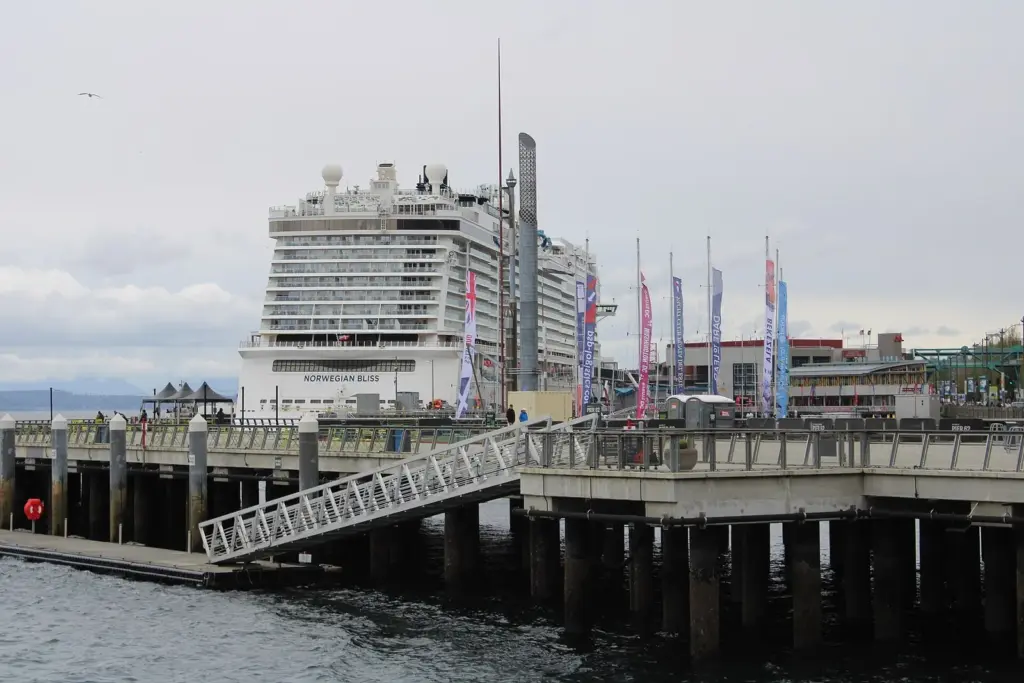
A closed-loop cruise starts and ends at the same U.S. port. Most Alaska cruises from Seattle are closed loop, and so are the longer round trips from San Francisco and Los Angeles. For these, U.S. citizens have two legal options:
- A WHTI document, such as a passport book, passport card or Enhanced Driver’s License.
- Proof of citizenship plus a government-issued photo ID: a birth certificate (original or copy), a Consular Report of Birth Abroad or a Certificate of Naturalization, with a driver’s license or other photo ID.
Children under 16 who are U.S. citizens need only proof of citizenship, such as a birth certificate, when they return by land or sea.
So why do cruise lines still push passports? Because the closed-loop exception only covers your return to the U.S. at the end of the cruise. If you’re injured in Victoria, if a family emergency sends you home from a Canadian port, or if the ship has to drop you in Canada for any reason, you’ll need to fly, and that takes a passport book. Cruise lines routinely recommend one for exactly that reason.
Which birth certificate counts?
CBP’s closed-loop rule accepts an original or a copy of a birth certificate, together with a government-issued photo ID. Cruise lines can be stricter than the law, though, and many ask for a certified copy issued by a state or county vital records office rather than a photocopy or a hospital’s souvenir certificate. Check your line’s document page before you sail, and if your certificate is old or damaged, order a certified replacement early. Vital records offices can take weeks too.
Cruises from Vancouver and one-ways to Alaska
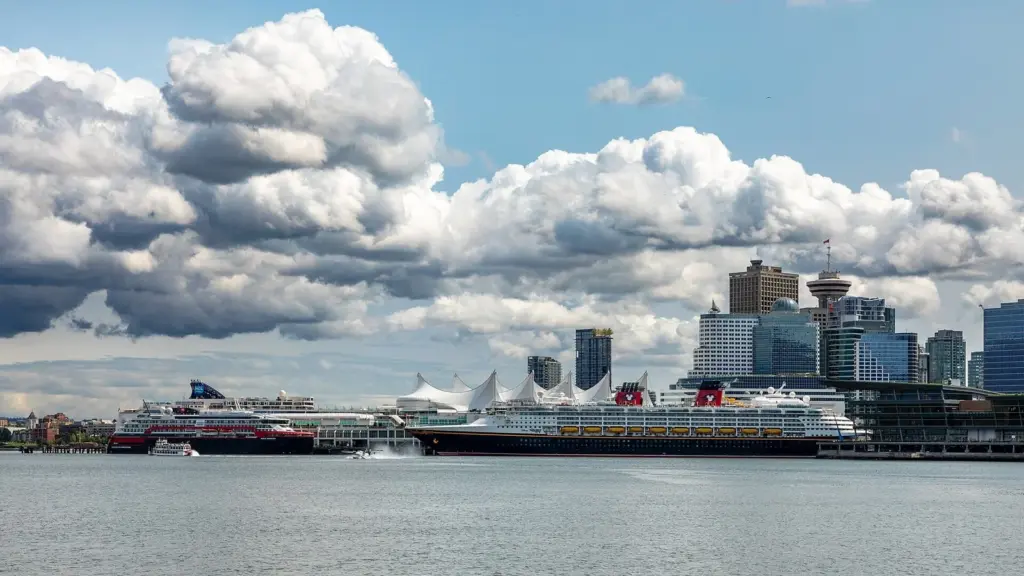
Cruises that start in Vancouver are different in two ways. First, closed-loop rules don’t apply to one-way cruises between Vancouver and Seward or Whittier, so you need a WHTI document such as a passport, passport card or Enhanced Driver’s License. Second, you enter Canada before you board, and most people do that by air, which requires a passport book for the flight home.
Before boarding at Canada Place, you go through U.S. pre-inspection. U.S. Customs and Border Protection says Alaska-bound ships from Vancouver have used it for more than 30 years; it checks that you’re admissible to the United States, which is why your first Alaska port feels like a domestic stop. For the full Vancouver process, from YVR transfers to the terminal, see our guide to an Alaska cruise from Vancouver.
If you’re choosing between Vancouver and Seattle partly on documents, the rule of thumb is simple: without a passport book, sail from Seattle. For help choosing between routes more broadly, see our guide to picking an Alaska cruise itinerary.
Driving or taking the train to Vancouver

Plenty of Americans reach a Vancouver cruise by land: they fly into Seattle, where fares are often lower, and drive, take the train or ride a bus north. The land border has slightly different document rules from the air.
- For the drive north, a U.S. citizen can cross with any WHTI document for land travel: a passport book, passport card, Enhanced Driver’s License or NEXUS card. Canada decides entry on its side, with the same rules on criminal records and cannabis as anywhere else.
- For the cruise, the same document then covers your U.S. pre-inspection at Canada Place and your return by sea.
- For the trip home, if you finish in Vancouver and head back to Seattle by train, Canada opened a U.S. preclearance facility for Amtrak Cascades at Vancouver’s Pacific Central Station in June 2026, according to Canadian government reports, so you clear U.S. border formalities before boarding.
- If you fly at any point, into or out of Canada, only a passport book, a NEXUS card or military ID on orders works for U.S. air entry.
A passport card is the budget choice for a family that will drive to Vancouver, sail a round trip, and drive home. It isn’t enough if the trip includes a flight from Canada, and it’s a poor fallback in an emergency.
Canada’s rules: who can go ashore
The documents above get you back into the United States. Canada has its own rules for letting you into Canada, whether that’s boarding in Vancouver or stepping ashore in Victoria or Prince Rupert.
- U.S. citizens don’t need a visa or an electronic travel authorization (eTA) to enter Canada. For air travel, Canada recommends always carrying a valid passport.
- Visa-exempt citizens of other countries who fly into Canada, for example into Vancouver for a cruise, generally need an eTA, which costs C$7.
- Anyone with a criminal record, including a DUI, may be inadmissible (see below).
- Cannabis can’t cross the border in either direction without Health Canada authorization, even though it’s legal in parts of both countries. That includes CBD products.
The DUI problem
This is the rule most likely to ruin an Alaska cruise. A conviction for driving while impaired by alcohol or drugs, including cannabis, can make you inadmissible to Canada for “serious criminality,” wherever it happened. Since December 18, 2018, impaired driving has been treated as serious criminality under Canadian law, and many older web pages still describe it as a minor issue.
In practice, an inadmissible passenger may be refused permission to go ashore in Victoria, and a one-way cruise via Vancouver can be blocked altogether. Canada offers two routes: people can apply for criminal rehabilitation five years after completing their sentence, and a temporary resident permit may allow a short visit if justified, at an officer’s discretion. Both take time, so deal with this months before you book. Our guide to an Alaska cruise with a DUI in Canada explains the options in detail.
What if something goes wrong in Canada?
This is the scenario the birth-certificate option doesn’t cover, and it’s why nearly every cruise line tells you to bring a passport book. Some real possibilities:
- A medical emergency. If you’re taken off the ship in Victoria or Prince Rupert, you’ll need to get home by air, which requires a passport book or another document valid for air entry.
- A family emergency at home. Leaving the cruise early from a Canadian port means flying, with the same requirement.
- Missing the ship. If you’re left behind in a Canadian port, you’ll have to reach the next port or get home on your own, and neither is simple without a passport.
- An itinerary change. Weather or mechanical problems occasionally change a cruise’s ports or its final port. A passport book keeps your options open.
None of these is likely on any given cruise. But when one happens, the difference between a passport book and a birth certificate can be days of paperwork at a consulate. That’s the whole case for the passport, and it’s a strong one.
How the document check works on the day
You’ll show your documents more than once. At check-in, the cruise line checks that you have what your itinerary requires; lines can deny boarding if you don’t, because they’re responsible for carrying passengers who can be admitted at each stop. In Vancouver, U.S. pre-inspection follows. In a Canadian port of call, you’ll carry your ship card and ID ashore, and Canadian officers may check them. At the end of a U.S. round trip, U.S. Customs and Border Protection processes everyone before you leave the terminal.
Keep your documents in your carry-on bag on embarkation day, never in checked luggage, which you won’t see until it reaches your cabin. During the cruise, the ship’s safe is the best place for them, with photocopies or phone photos in your day bag.
Can you just stay on the ship in Canada?
Yes. Nobody has to go ashore at a port of call, and some travelers with admissibility problems simply stay aboard in Victoria or Prince Rupert. On a Seattle round trip, that can be a reasonable solution for a passenger with a DUI: you give up an evening in Victoria, not the cruise. It doesn’t work for a Vancouver cruise, because you have to enter Canada to reach the ship, or for a one-way that begins or ends in Vancouver. Tell your cruise line ahead of time if you plan to stay aboard, and don’t book shore excursions for that day.
Green card holders and international travelers
U.S. green card holders
Lawful permanent residents need two documents. For Canada, Immigration, Refugees and Citizenship Canada says green card holders have been exempt from the eTA since April 26, 2022, but must show both a valid passport from their country of nationality and a valid green card for all methods of travel. For the return to the United States, CBP says the green card is enough, without a U.S. visa. Carry both. Our page on the Alaska cruise green card rules covers the details, including renewals.
Citizens of other countries
Everyone who isn’t a U.S. citizen needs a passport on an Alaska cruise, plus whatever the United States requires for their nationality: a U.S. visa, or an approved ESTA for travelers from Visa Waiver Program countries. CBP requires an ESTA for Visa Waiver Program travelers arriving by air or sea, and raised the fee to $40 in September 2025. If you fly into Vancouver, add Canada’s requirements too: an eTA for visa-exempt travelers, or a Canadian visa. Check both countries’ rules for your passport well before booking.
Traveling with children
U.S. citizen children under 16 can return from a closed-loop cruise with just proof of citizenship, such as a birth certificate. But if your cruise involves Canada, which almost all do, there’s another document worth carrying.
The Canada Border Services Agency advises adults traveling with children to carry a signed consent letter from every parent or guardian who isn’t on the trip. Without one, officers may ask more questions. That applies to a single parent, grandparents traveling with grandchildren, or a friend’s child joining your family. Our guide to the Alaska cruise minor consent letter includes what to put in it.
Excursions that cross into Canada
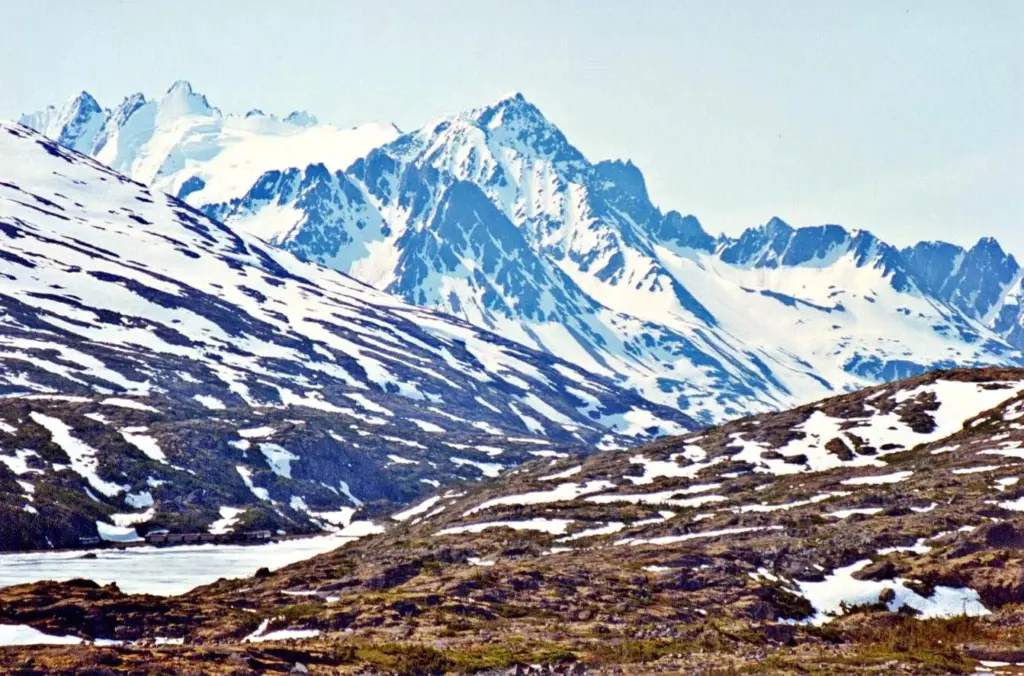
Even on a closed-loop cruise with no document problems, a few popular excursions leave the United States:
- White Pass & Yukon Route trains: trips to Fraser in British Columbia, or on to Bennett and Carcross in the Yukon, require a passport. The White Pass Summit round trip turns around before the border and doesn’t.
- The Chilkoot Trail: the historic trail from near Skagway crosses into Canada, so hiking it requires a passport, according to the National Park Service.
- Yukon tours from Skagway: road trips toward Carcross and Whitehorse cross the border too.
If you’re sailing on a birth certificate, pick the White Pass Summit trip and skip the Yukon. Expect to show your documents before the bus or train crosses the border.
REAL ID and flying to your cruise
REAL ID matters for the flight, not the cruise. Since May 7, 2025, the TSA has required a REAL ID-compliant license or another acceptable ID, such as a passport, for travelers 18 and older at airport checkpoints. Since February 1, 2026, travelers without acceptable ID can pay $45 for TSA ConfirmID identity verification, valid for a 10-day travel period. A passport book or passport card works as airport ID, which is one more reason to have one. Our page on REAL ID for an Alaska cruise explains how the two systems fit together.
Customs on the way home
At the end of a Seattle round trip, you go through U.S. customs and immigration at the terminal before you leave. Have your documents ready and your purchases declared. On a Vancouver round trip, you clear Canadian customs at Canada Place and then U.S. preclearance at the airport if you’re flying home to the United States. One thing never to carry across a border is cannabis, in either direction. Our guide to Alaska cruise customs covers duty-free allowances, food and what to declare.
Getting a passport in time
If you’ve decided on a passport book, don’t leave it late. State Department materials have cited routine processing of 4 to 6 weeks and expedited processing of 2 to 3 weeks, for an extra fee, and summer is the busiest season. Those same materials list a $130 application fee plus a $35 acceptance fee for a first-time adult passport book, and $30 plus $35 for a passport card; check the State Department’s current fee chart before you apply, because fees change. For a sense of where document costs sit in the overall budget, see our guide to Alaska cruise cost.
- Apply at least three months before sailing, earlier if your cruise is in June or July.
- Check expiration dates now. A passport that expires during or soon after the trip can cause trouble with airlines and other countries.
- Consider the card too. If you drive to Canada often, a passport card is cheap and handy, but it doesn’t replace the book for flights.
- Book the cruise before the passport arrives if you must, but check your line’s document deadline.
Passport book, card or enhanced license: which should you get?
If you don’t have any WHTI document yet, here’s how the options compare for an Alaska cruiser. Fees are from State Department materials and can change; check the current fee chart before applying.
| Document | Cost for a first-time adult | Works for | Best for |
|---|---|---|---|
| Passport book | $130 application fee plus $35 acceptance fee | Sea, land and air, worldwide | Almost everyone |
| Passport card | $30 application fee plus $35 acceptance fee | Land and sea to Canada, Mexico, the Caribbean and Bermuda; not air | Frequent drivers to Canada, on a budget |
| Both together | Book and card in one application | Everything | Travelers who want a wallet-sized backup |
| Enhanced Driver’s License | Set by your state | Land and sea; also a driver’s license | Residents of states that issue them |
Verdict: for an Alaska cruise, the passport book is worth the extra money. It’s the only one that gets you home by air from Canada, and it’s valid for ten years for adults, so it will cover many trips after this one.
Common document mistakes
- Assuming Alaska means no passport. Alaska is part of the U.S., but most cruises there stop in Canada.
- Using the birth-certificate rule on the wrong cruise. It works only on closed-loop cruises from U.S. ports, not from Vancouver and not on one-ways.
- Forgetting Canada’s own rules. A DUI or cannabis can stop you at the Canadian border whatever your U.S. documents say.
- Booking a Yukon excursion without a passport. White Pass trains beyond the summit and the Chilkoot Trail cross into Canada.
- Leaving the consent letter at home. Canada’s border agency advises carrying one for children traveling without both parents.
- Packing documents in checked bags. You need them at check-in, before your suitcase reaches your cabin.
- Applying for a passport too late. Allow months, not weeks, before a summer sailing.
Special situations
Your name doesn’t match your birth certificate
If you’re sailing on a birth certificate and your name has changed since birth, by marriage for example, bring the document that links the two names, such as a marriage certificate or a court order, along with your photo ID. The cruise line and the officers at the terminal need to see that the birth certificate and the ID belong to the same person. Your booking name should match your ID exactly.
Grandparents, guardians and blended families
Anyone traveling with a child who isn’t their own, or with a child whose other parent stays home, should carry a signed consent letter from each parent or guardian not on the trip, as Canada’s border agency advises, plus the child’s proof of citizenship. Where custody arrangements are formal, a copy of the relevant court papers can answer questions quickly. It’s rare for officers to ask, but when they do, the letter saves a long conversation.
Flights and tours inside Alaska
Floatplane trips, flightseeing and flights between Alaska towns are domestic travel, so you won’t need a passport for them, though you’ll need photo ID for any commercial flight. The Alaska Railroad and the land parts of a Denali tour are domestic too.
Documents for cruisetours
Most Alaska cruisetours stay inside Alaska, so the land portion adds no border crossings: Denali, Fairbanks, Talkeetna and the Kenai Peninsula are all in the United States. The exception is the Yukon. Holland America is the only line that runs cruisetours through the Yukon and Dawson City, and those trips cross into Canada by road and air, so every traveler needs a passport book. If your cruisetour starts or ends in Vancouver, the Vancouver rules above apply to that end of the trip too.
A document timeline for your cruise
| When | What to do |
|---|---|
| When you book | Check everyone’s passport and expiration date, and confirm the itinerary type (closed loop, Vancouver or one-way) |
| At least 3 months before | Apply for or renew passports; allow longer before a summer sailing |
| 2 months before | Deal with any criminal record, including a DUI, with Canadian authorities |
| 1 month before | Get consent letters signed; apply for an ESTA or Canadian eTA if you need one |
| 1 week before | Photocopy or photograph every document; store copies apart from the originals |
| Embarkation day | Documents in your carry-on, not your checked bag |
What if you lose your passport during the cruise?
Tell the ship’s guest services desk right away; they deal with this more often than you’d think and can advise on the next port. If you’re still sailing a closed-loop cruise and have other proof of citizenship with you, such as a birth certificate copy and your driver’s license, you may be able to finish the trip and re-enter the U.S. at the end. If you need to leave the cruise in Canada, or your trip ends with a flight from Canada, you’ll need an emergency travel document from a U.S. consulate, such as the U.S. Consulate General in Vancouver.
The best protection costs nothing: photograph the photo page of every passport before you leave, keep paper copies apart from the originals, and leave the passports in the cabin safe on port days unless you’re crossing a border.
A document checklist for every cruiser
- Passport book (or your chosen WHTI document), valid for the whole trip
- Birth certificate and photo ID, if that’s your plan on a closed-loop cruise
- For green card holders: your passport and your green card
- For international travelers: passport, U.S. visa or ESTA, and a Canadian eTA or visa if you fly into Canada
- Consent letters for any children traveling without both parents
- REAL ID-compliant license or other acceptable ID for the flight
- Copies of everything, stored separately from the originals and on your phone
Do you need a passport for an Alaska cruise? FAQ
Do I need a passport to go on an Alaska cruise?
Not always. U.S. citizens on a closed-loop cruise, one that starts and ends at the same U.S. port such as Seattle, can use a birth certificate plus a government-issued photo ID. Cruises from Vancouver and one-ways need a WHTI document such as a passport or passport card. Everyone else needs a passport.
Can I cruise to Alaska with a birth certificate?
Yes, if you’re a U.S. citizen on a closed-loop cruise from a U.S. port like Seattle. Bring an original or copy of your birth certificate plus a government-issued photo ID; U.S. citizen children under 16 need only the birth certificate. It won’t work on cruises from Vancouver, one-ways or flights home from Canada.
Why do Alaska cruises from Seattle stop in Canada?
Because of the Passenger Vessel Services Act. Most cruise ships are foreign-flagged, and U.S. rules require a foreign-flagged ship on a round trip from a U.S. port to call at a foreign port. That’s why Seattle cruises stop in Victoria, and why CBP treats them as foreign travel for document purposes.
Is a passport card enough for an Alaska cruise?
For the cruise itself, yes: CBP accepts the passport card for land and sea travel, including cruises from Vancouver and one-ways. It isn’t valid for international flights, though, so it won’t get you home by air from Canada in an emergency. A passport book covers both.
Can I go on an Alaska cruise with a DUI?
Possibly, but Canada may not let you ashore. A DUI can make you inadmissible to Canada for serious criminality, wherever it happened, which can mean staying aboard in Victoria or being unable to board in Vancouver. Look into criminal rehabilitation or a temporary resident permit well before you book.
What do green card holders need for an Alaska cruise?
Your passport from your country of citizenship and your valid green card. Canada requires both for entry by any means, and CBP accepts the green card for your return to the United States. You don’t need a U.S. visa or a Canadian eTA as a green card holder.
Do kids need a passport for an Alaska cruise?
U.S. citizen children under 16 can use a birth certificate on closed-loop cruises and when returning by land or sea. On cruises from Vancouver or trips that involve flying from Canada, they need a passport. If one parent isn’t traveling, carry a signed consent letter, as Canada’s border agency advises.
Is there an Alaska cruise without a Canada stop?
Yes, on U.S.-flagged ships. Because the PVSA only restricts foreign-flagged ships, U.S.-flagged small ships can sail entirely within U.S. waters. American Cruise Lines, for example, says its guests need only a photo ID on itineraries that stay in the United States.
Related Alaska Cruise Guides
- Alaska Cruise Itineraries: Every Route, Port Combination and Length Compared
- Alaska Cruise from Vancouver: Canada Place, Routes and Pre-Cruise Planning
- How Much Does an Alaska Cruise Cost? 2027 Prices, Budgets and Hidden Fees
Sources and How We Checked
We checked the prices, rules, schedules and ship deployments in this guide against the sources below on September 24, 2026, and we log each one in our research database with the date it was checked. Cruise lines change ships, fares and fees every season, so confirm anything that affects your booking with the line or the agency concerned. Alaska Cruise Guide (AlaskaCruise.org) is an independent publication. It is not affiliated with any cruise line, port, tour operator or tourism office, and no one paid to be included.
- 19 CFR 4.80a (Legal Information Institute): PVSA
- americancruiselines.com: American Cruise Lines
- Canada Border Services Agency: Canada entry – cannabis
- congress.gov: PVSA
- cruiseind.com: American Cruise Lines
- Government of Canada: minors consent letter
- Government of Canada: Canada entry – DUI
- Government of Canada: Canada entry
- Government of Canada: Canada entry
- Government of Canada: US preclearance Vancouver
- Government of Canada: green card holders
- National Park Service: Klondike Gold Rush NHP
- Port of Vancouver: Vancouver Canada Place
- Transportation Security Administration: REAL ID
- Transportation Security Administration: REAL ID
- travel.state.gov: US passport fees
- U.S. Customs and Border Protection: US preclearance Vancouver
- U.S. Customs and Border Protection: passport rules, green card holders
- U.S. Customs and Border Protection: ESTA
- U.S. Customs and Border Protection: passport rules
- U.S. Customs and Border Protection: passport rules
- White Pass & Yukon Route: White Pass & Yukon Route
Photo Credits
- Norwegian Encore in Victoria (2023): photo by Photo by Joe Mabel, via Wikimedia Commons (CC BY-SA 4.0)
- Alaska cruise region map: map by Kmusser, via Wikimedia Commons (CC BY-SA 3.0); ferry routes removed; cruise ports, glacier-viewing areas and Denali added by Alaska Cruise Guide
- Carnival Luminosa in Victoria (2025): photo by Jack Adamenko, via Wikimedia Commons (CC BY 4.0)
- Norwegian Bliss at Pier 66, Seattle: photo by Chris Light, via Wikimedia Commons (CC BY-SA 4.0)
- Canada Place, Vancouver: photo by Dietmar Rabich, via Wikimedia Commons (CC BY-SA 4.0)
- US-Canada border mountains near White Pass: photo by Unknown photographer, via Wikimedia Commons (CC BY-SA 4.0)
- Peace Arch (2009): photo by US Embassy Canada, via Wikimedia Commons (Public domain)